

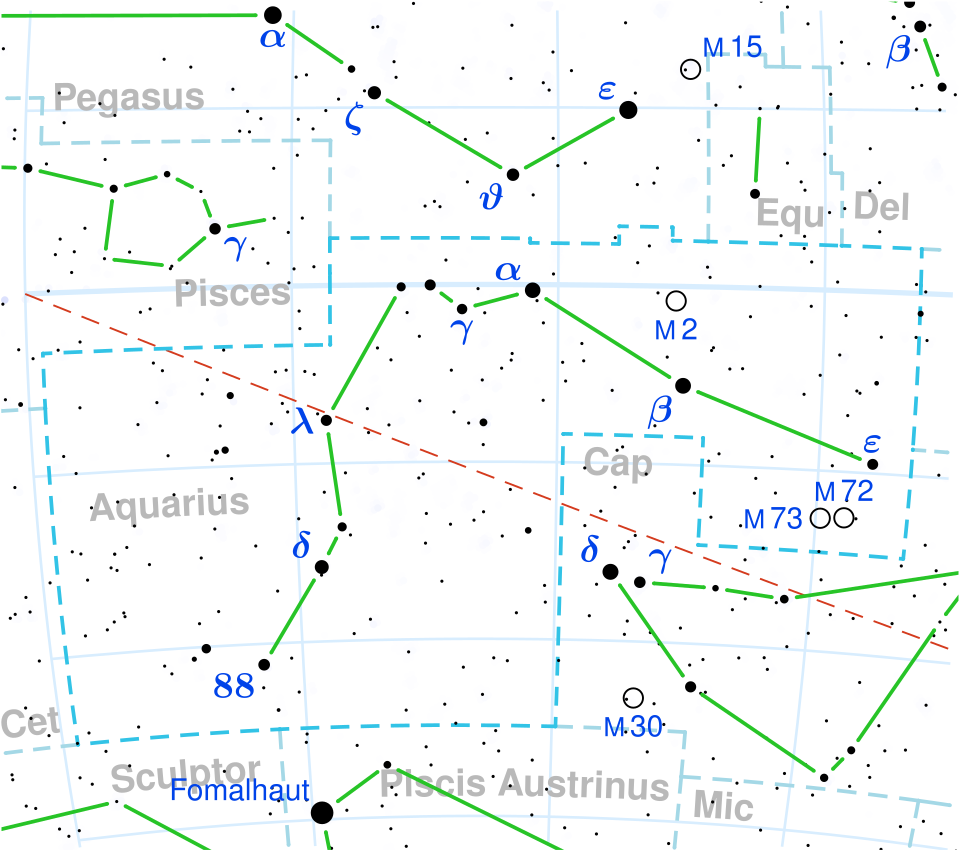
Aquarius is a prominent constellation of the zodiac, through which the Sun transits on February 16. Although it is substantial in size, it appears relatively sparse due to the absence of significantly bright stars. Nevertheless, is it truly devoid of interest?

Aquarius in the sky
On February 16, the Sun enters Aquarius. As is customary, astrologers dispute this fact, asserting that it entered the constellation on January 21 and will be in Pisces by February 20. This can be verified with any planetarium software. Nevertheless, advocates of the belief that celestial bodies exert direct influence on our lives persist in promoting their own interpretation.
You can find information regarding the reasons for this in the referenced article. In summary, the primary cause is the precession of the Earth’s axis, which results in a continuous shift of the vernal equinox point, thereby affecting the precise timing of our Sun’s entry into each constellation. Additionally, the establishment of their exact boundaries at the start of the twentieth century also contributes to this phenomenon.
An intriguing historical fact about the transition of the vernal equinox is that, over 4,000 years ago, during a period when distinctions between astronomy and astrology were still developing, the winter solstice (for the northern hemisphere; in the southern hemisphere, it corresponds to the summer solstice) was accurately positioned in Aquarius. Since that time, it has shifted through Capricorn to Sagittarius.
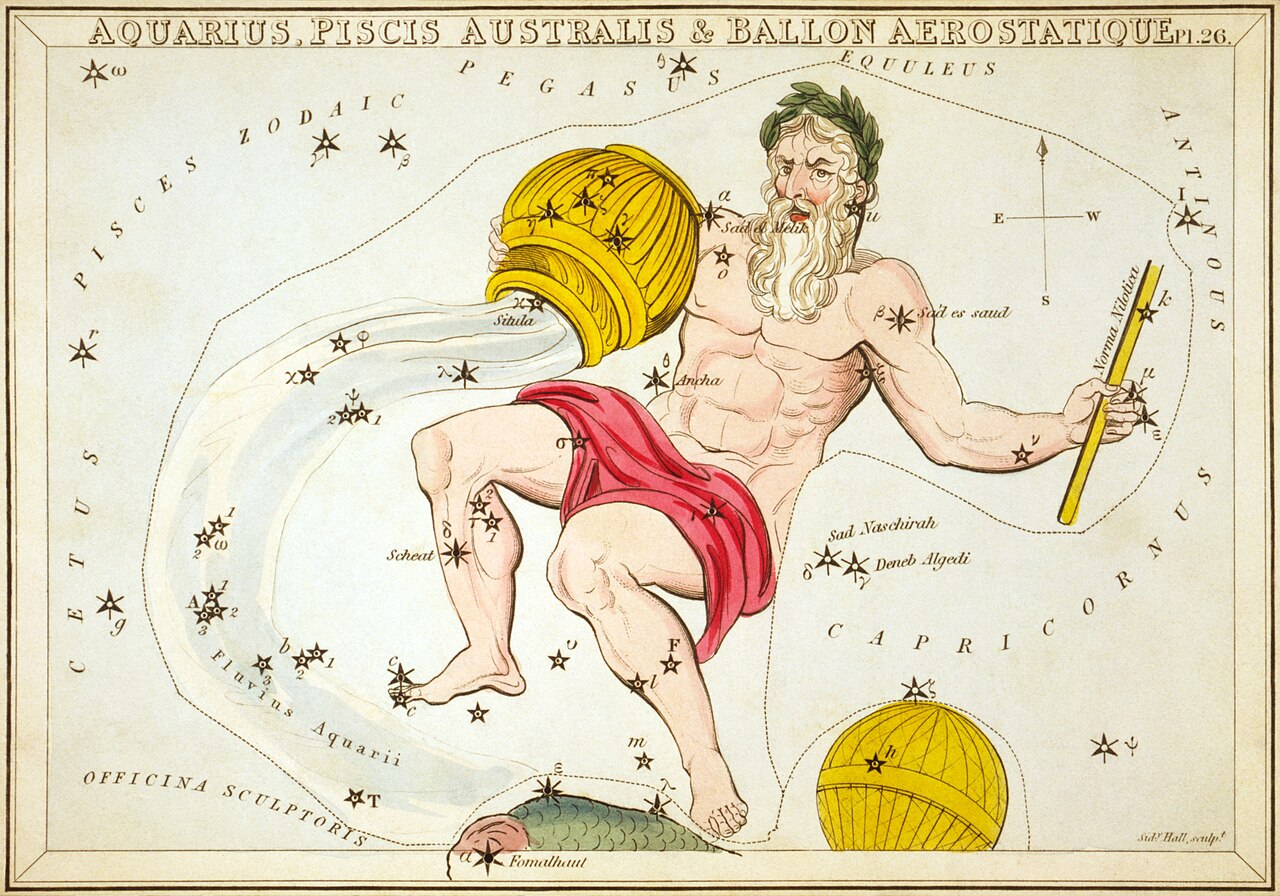
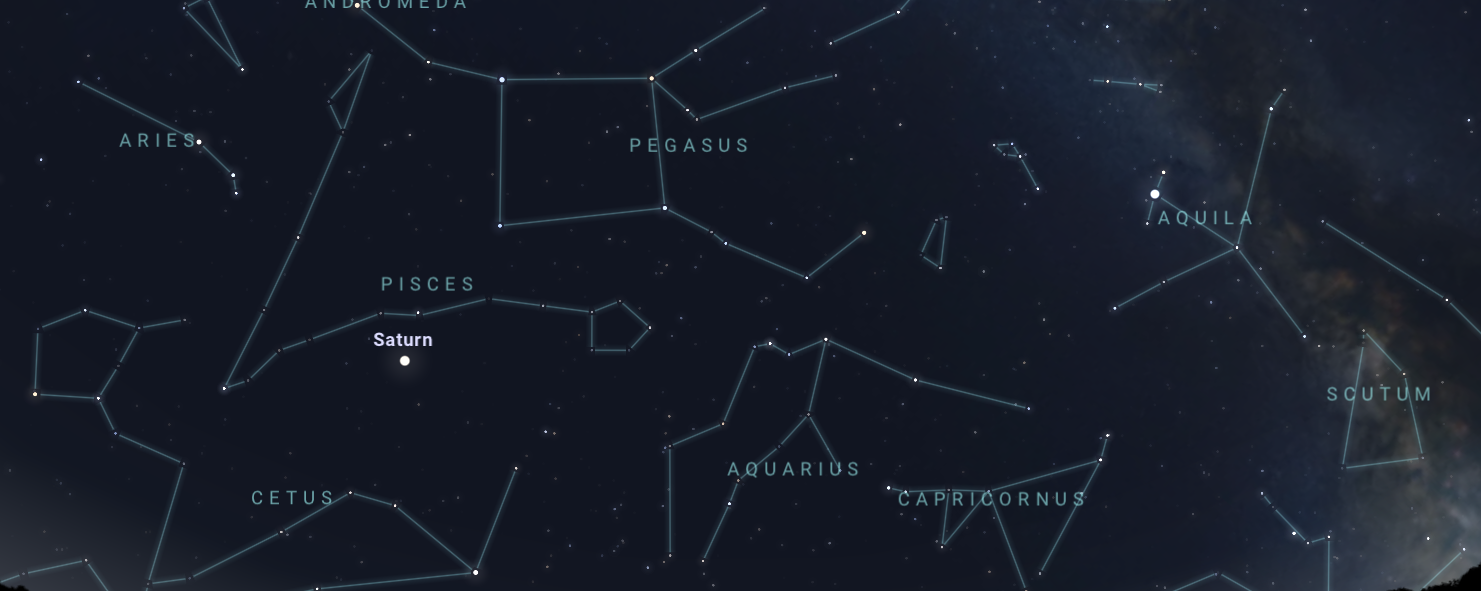
Generally, February represents the least favorable period for observing Aquarius in the night sky. This is primarily due to the Sun’s position within the constellation during this time frame. Consequently, the constellation emerges and descends with the Sun, making it invisible during nighttime hours.
The optimal period for observing the constellation Aquarius is during the latter half of summer. During this time, it emerges in the sky shortly after sunset and attains its highest point at midnight. It is situated adjacent to the prominent quadrangle of Pegasus. Subsequently, one should locate the constellation Capricorn, as outlined in this article. Aquarius will be positioned between these two constellations.
The primary issue with this constellation lies here. It appears as a vast expanse of space, usually distinguished by a small grouping of stars forming the shape of the letter Y. This grouping is known as the asterism of the Water Jar. In addition, a faint, scarcely perceptible strip of stars, seemingly emanating from this asterism, is among the few visible features in Aquarius to the naked eye.
The constellation appears sparse and lacking in notable objects. However, is that truly the case? Let us investigate further together.
Who is Aquarius?
Like other zodiac constellations, Aquarius originated in ancient Mesopotamia. However, the true identity of this symbol remains uncertain. The issue is not that, unlike Capricorn, there are no myths explicitly elucidating the figure of Aquarius; rather, numerous myths exist, but they narrate entirely different stories.
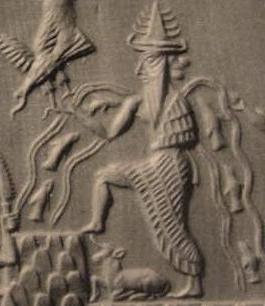
In ancient Sumer, Aquarius was associated with the deity Ea (Enki), regarded as the god of wisdom, fresh waters, and the underworld. Consequently, Aquarius represented an extension of Capricorn, which was associated with similar elements. The two dark constellations, in which the sun was positioned during the longest days, were intricately connected to the dark subterranean waters, symbolizing the serenity of death, and were subsequently followed by springtime rebirth.
However, even in ancient Egypt, this constellation, with the same image of water pouring from a jug, had almost as gloomy associations. It was during the Sun’s stay in it that the Nile flooded, and immediately after that, the time for spring field work began.
When Aquarius was introduced to the Greeks, they associated it with their own myths. One such myth connects it with Deucalion, the son of the Titan Prometheus. According to the legend, after Prometheus stole fire from the Olympian gods and bestowed it upon humanity, the gods decided to punish mortals. Consequently, they initiated a worldwide flood, but Deucalion and his wife, Pyrrha, escaped and subsequently gave rise to a new generation of humans.
Another ancient Greek myth links the figure of Aquarius in the sky with a boy named Ganymede. He was famous for his extraordinary beauty, so Zeus took him to Olympus to serve them at the table during celebrations. So, it is quite possible that the water is not actually pouring from the jug.
The brightest stars of Aquarius
Although the constellation Aquarius appears dark and empty, it still contains several intriguing objects. Its brightest star is Beta Aquarii, also known as Sadalsuud. Translated from Arabic, its name signifies “the happiest of the happy.”

In our sky, it appears as a conspicuous yet not exceptionally luminous star with a magnitude of 2.87. This object is, in fact, a relatively rare yellow supergiant situated approximately 540 light-years from Earth. Its luminosity exceeds that of the Sun by a factor of 2,000. Furthermore, it has a mass 5 to 6 times that of our Sun and a radius 48 times that of our Sun.
The rarity of yellow supergiants such as Sadalsuud is attributable to their transient existence during the stellar lifecycle, which is characteristic of massive stars that are relatively uncommon. These stars originate as hot blue stars and, after several tens of millions of years, evolve through the entire spectral range to become red. Subsequently, they either transition into white dwarfs or undergo supernova explosions.
An intriguing characteristic of Sadalsuud is that two diminutive stars can be observed near it through a telescope. Nonetheless, scientists remain uncertain as to whether these are its companions or merely unrelated stars located at considerable distances behind it.
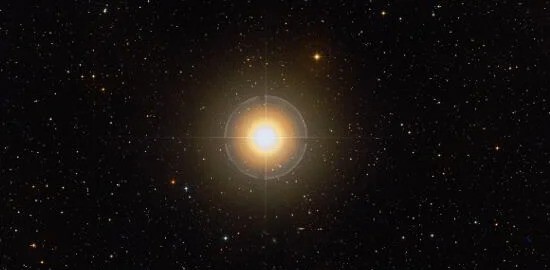
The second brightest star within the constellation is Alpha Aquarii, also known as Sadalmelik, which derives from Arabic as “the happy star of kings.” From Earth’s perspective, it has an apparent magnitude of 2.94. In actuality, it is the same uncommon yellow supergiant as Sadalsuud. Its distance from Earth is approximately 691 light-years; however, alternative estimates vary from 660 to 760 light-years.
The star’s radius exceeds that of the Sun by a factor of 70, its mass is approximately 6.31 times greater, and its luminosity is 3,917 times higher. No satellites or planets have been observed in orbit around it. It is presumed that both Sadalsuud and Sadalmelik originated from the same stellar group approximately 53 million years ago.
The third brightest star in the constellation is Delta Aquarii, also known as Skat. It possesses an apparent magnitude of 3.3 and is located 113 light-years from the Sun. This star is characterized by a white hue, with a mass approximately 3.19 times that of the Sun and a radius that exceeds it by a factor of 4.16. In terms of luminosity, Skat is approximately 100 times more luminous than the Sun. To date, no companions or planets have been detected orbiting this star. Its estimated age is approximately 300 million years.
The nearest stars of Aquarius
The nearest star in our constellation is EZ Aquarii, located merely 11.3 light-years from Earth. It is, in fact, a system comprising three red dwarfs, none of which exhibit sufficient luminosity to be observable unaided by a telescope.
Furthermore, these stars cannot be considered prominent due to their size. Two of them have masses accounting for only 11% of the Sun’s mass, while the third has a mass accounting for only 9%. Notably, components A and C are separated by a mere 0.03 AU and complete an orbit in 3.8 Earth days. This pair, along with component B, orbits a common center of mass, completing a revolution every 2.2 Earth years.
The second closest star within the constellation is Gliese 876. It is situated at a distance of 15.3 light-years. This star is classified as a relatively large red dwarf. Its mass constitutes approximately 34% of the Sun’s mass, and its radius is about 37% of the Sun’s radius. The surface temperature of Gliese 876 is 3200 K, which is nearly half the temperature of the Sun.
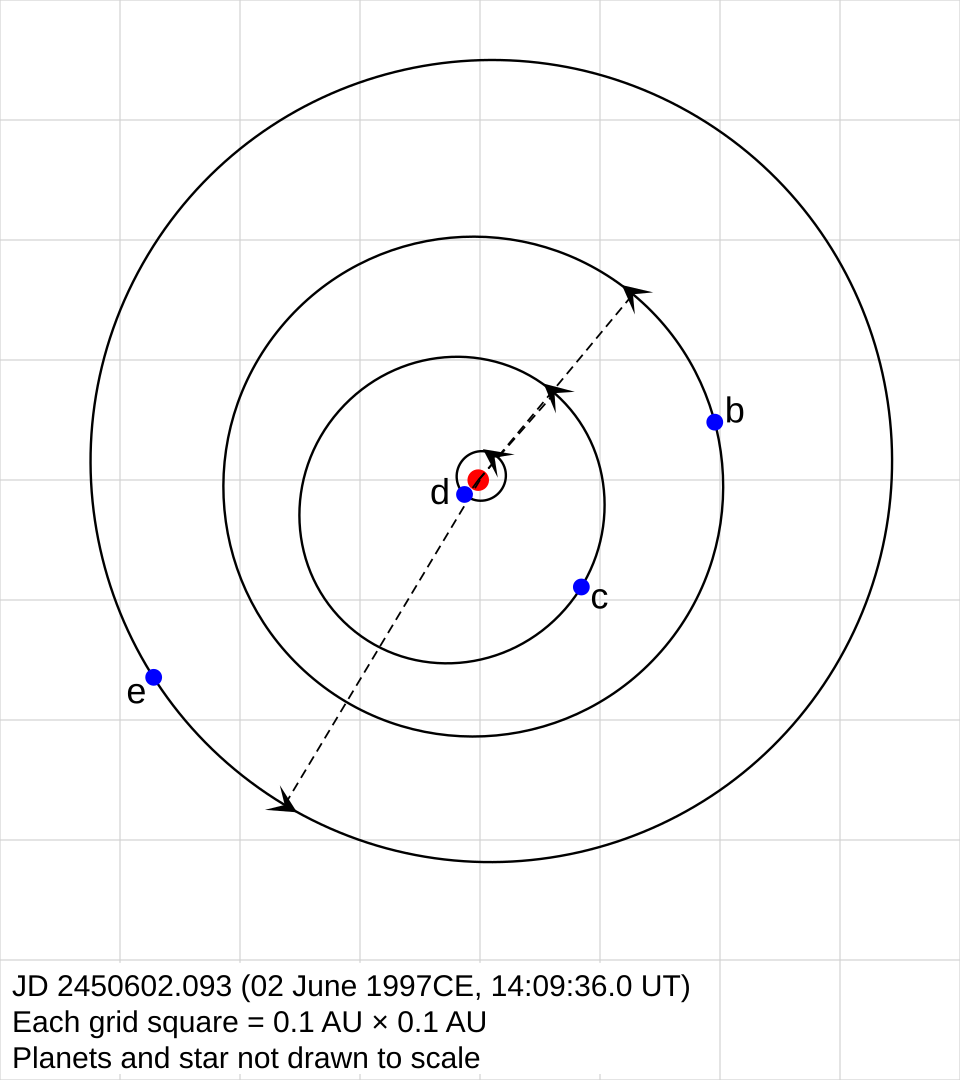
The intriguing aspect of Gliese 876 lies in its system, comprising four planets. Gliese 876 d, the closest to the star, completes an orbit in merely 1.94 days, indicating its proximity to the stellar body. The characteristics of this planet, given its mass, which is 6.7 times that of Earth, present an interesting subject of inquiry. It is generally believed to resemble Earth; however, it may alternatively be a small “water giant” that migrated inward and subsequently lost some of its mass.
Gliese 876 c is classified as a brown dwarf, positioned at an average distance of 0.13 AU from its parent star, with an orbital period of 30 Earth days. Possessing a mass that is 74% of Jupiter’s, it is a relatively substantial and warm gas giant.
The third planet in the system, Gliese 876 b, is a gas giant with a mass 2.3 times that of Jupiter. Notably, it completes one rotation in 61 days and orbits within the “habitable zone” of the red dwarf. This suggests that, if it has large moons, liquid water could exist on them. The fourth planet in the system, Gliese 876, has a mass 16 times that of Earth and completes one revolution around its star in 123 days. Its characteristics are comparable to those of Uranus.
The third most distant star in the constellation Aquarius is Gliese 884, located 26.8 light-years away from us. It is a single orange dwarf with a mass of 63% and a radius of 67% of the Sun. No planets have been discovered around it yet.
Other interesting objects
Notwithstanding, a planetary system within the constellation Aquarius has garnered the interest of scientists worldwide for several years. This concerns the red dwarf TRAPPIST-1, located 40 light-years from Earth. It has been discovered to host a system of seven planets, all comparable in size and mass to Earth.
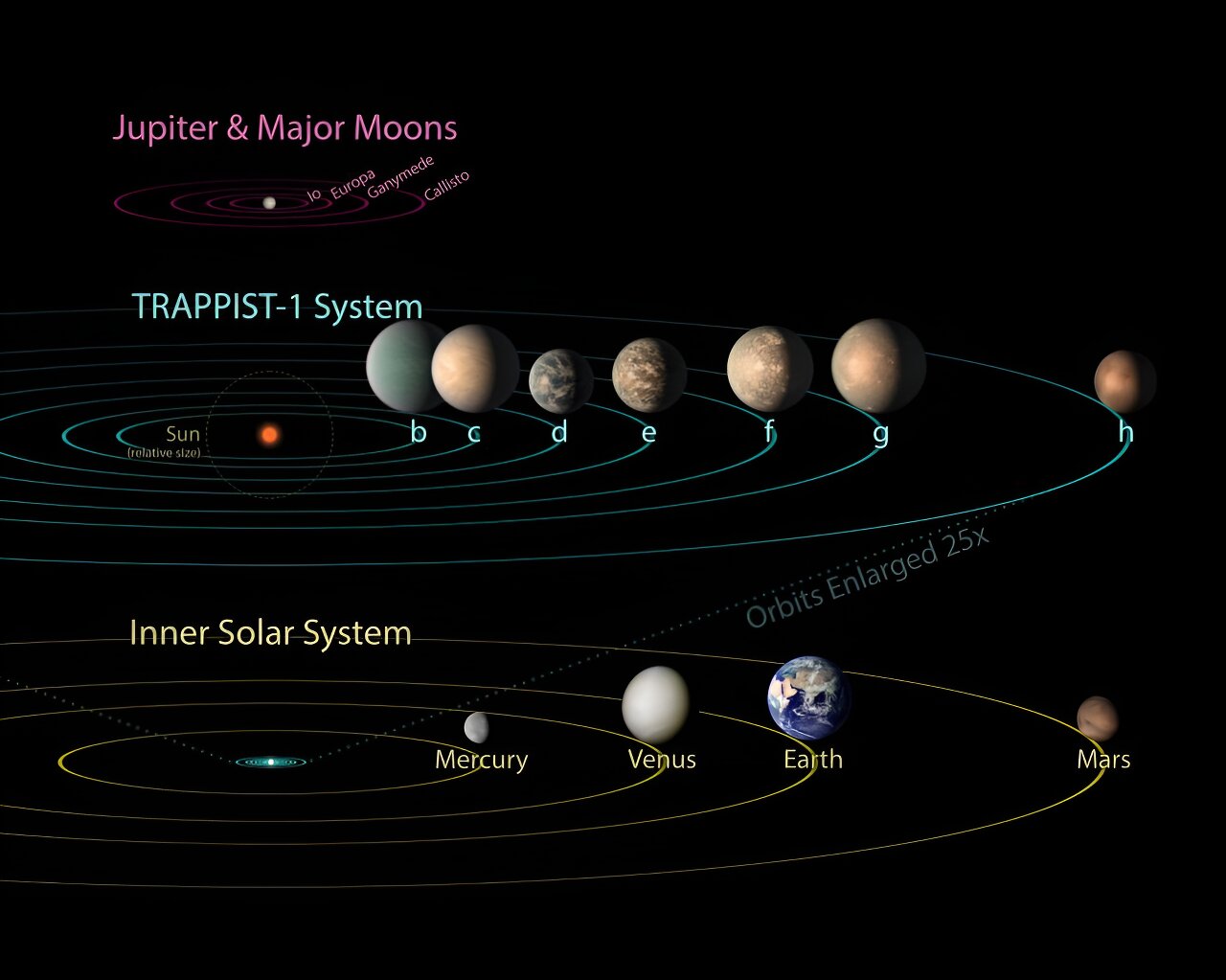
The question of how many of these celestial bodies possess conditions remotely comparable to those on Earth remains a subject of scientific debate. It is generally believed that at least three planets are situated within the “habitable zone.” However, recent spectroscopic analyses of their atmospheres and surfaces cast doubt on the presence of oxygen-rich atmospheres and hydrospheres in these worlds. Nonetheless, research in this domain persists.
Another interesting object in the constellation Aquarius is M73. Charles Messier included this group of four stars in his catalog as a cluster, and it was considered as such for a long time. However, modern research shows that these stars are actually too far apart to form a gravitationally bound system. So, in reality, it is just an asterism.
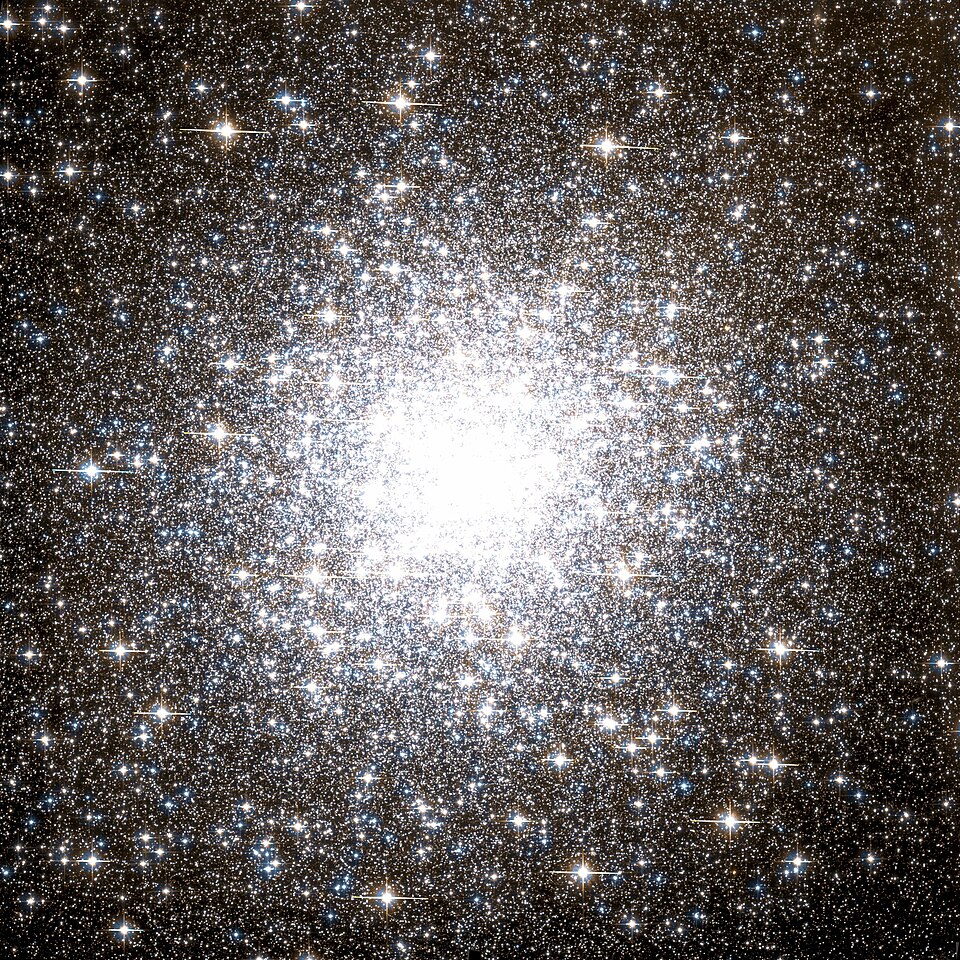
Another notable object is the globular cluster M2, situated north of Beta Aquarii. It is remarkable because, under optimal visibility conditions and with good eyesight, it can be observed with the unaided eye. Binoculars or a small telescope facilitate detailed observation.
In fact, M2 is a spherical region of space with a diameter of 175 light-years, containing at least 150,000 stars. It is located 55,000 light-years away. It is 12.5 billion years old and was once part of a dwarf galaxy absorbed by the Milky Way.
Aquarius also possesses several intriguing nebulae. NGC 7009, commonly known as the Saturn Nebula, indeed bears a resemblance to the ringed planet in the Solar System. Nevertheless, it is, in fact, the remnant of a red giant’s ejected shell expanding into space.
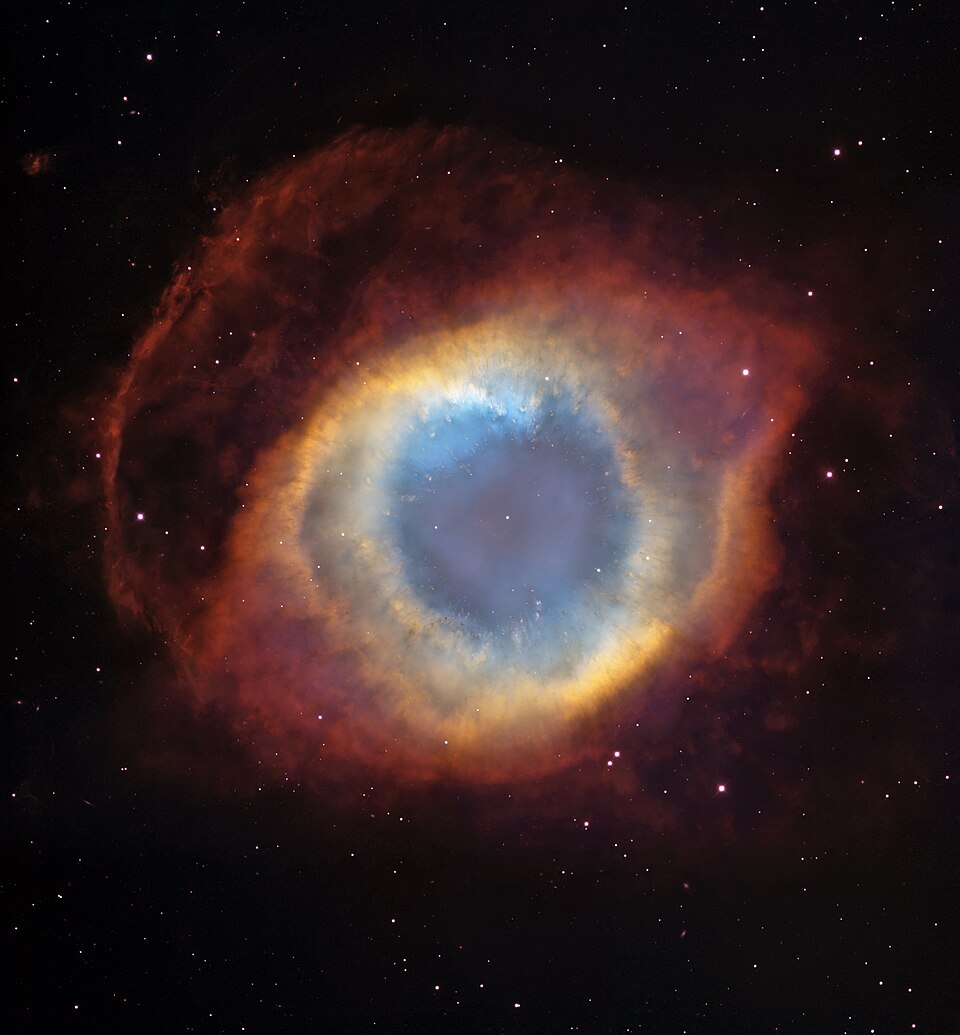
Another intriguing celestial object is the Helix Nebula, designated as NGC 7293. Due to its distinctive appearance, it is also referred to as the Eye of God or the Eye of Sauron. Although it is indeed a planetary nebula, it is centered around a white dwarf that originally formed it. It is the nearest planetary nebula to Earth, situated at a distance of merely 650 light-years.
Among the galaxies in Aquarius, NGC 7727 is particularly notable. It appears as a spiral system whose arms have not been smoothed out. This is because it results from a relatively recent merger of two distinct systems. Evidence supporting this includes the presence of two supermassive black holes separated by 1,600 light-years.
Meteor showers
Although Aquarius cannot boast of bright stars, it regularly provides astronomy enthusiasts with spectacular meteor showers. There are three radiants in this constellation. The most powerful is the Eta Aquariids, which can be observed from April 21 to May 12. At its peak and under ideal conditions, the number can reach 35 per hour. It was formed thanks to the famous Halley’s Comet.
The second meteor shower is the Eta Aquariids, which is notable for having two radiant points close together. The apex of the “shooting stars” from the first radiant is observed on July 29, while that from the second radiant occurs on August 6. The third meteor stream, the Iota Aquarids, is relatively weak, with its peak occurring on August 6.

