
The question of life beyond Earth is a question of how organisms that have arrived there naturally or with human assistance can survive. To understand this, researchers are studying how it conquers the most inhospitable environments on our own planet.
Unfriendly environments
People still know very little about space. It is entirely possible that somewhere in its depths lie worlds whose temperature, humidity, and chemical composition are much more suitable for life than Earth. But so far, we only see planets whose conditions are harsher than anything we see on our own planet.
Ultimately, the question arises: Is life anywhere other than Earth even possible? To answer this, we need to look at how it survives in the most challenging conditions on our planet. For example, a new study published in the journal Communications Biology focuses on how microscopic life is carving out a place for itself in basalt lava.
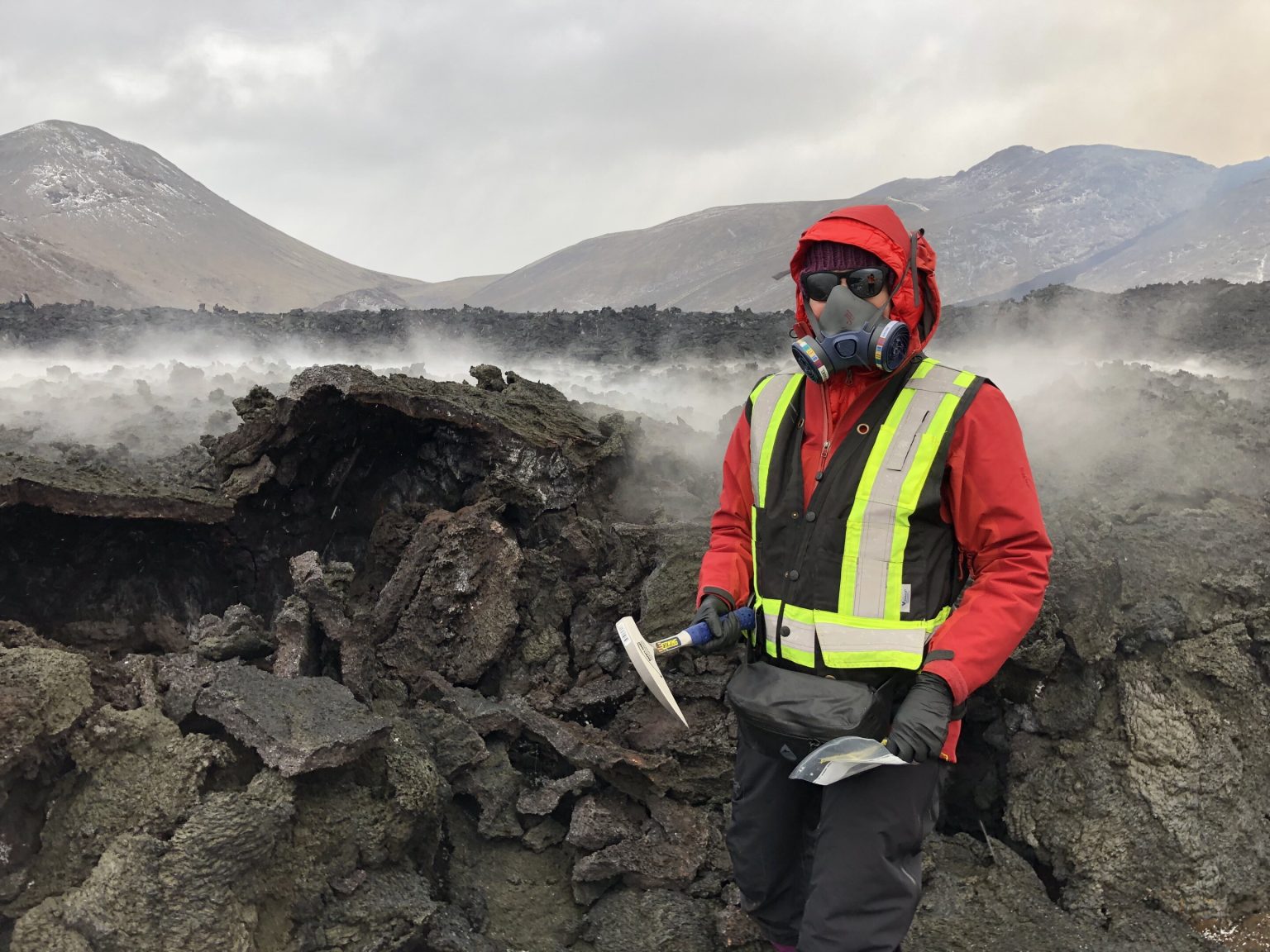
Iceland was chosen as the research site, more specifically, the Fagradalsfjall volcano, which erupted quite frequently between 2021 and 2023. After the lava cooled, it turned into porous basalt. It was one of the most inhospitable environments on our planet, even for microorganisms, on par with the Atacama Desert and Antarctica.
Ways of getting into life
Fresh basalt contains too few nutrients to feed even microorganisms. And all samples taken from it just a few months after the eruption show that tiny life is teeming on the bare rock.
The question arises: what are these microorganisms, and where do they come from? To answer it, scientists collected even more samples from all the surrounding environments. They collected them for several years in a row until they got a complete picture of what was happening.
Almost immediately after the eruption, the diversity of microorganisms increases dramatically. Soil plays a key role in this process. Its particles are carried by the wind to the surface of the basalt. Along with them, the microorganisms that are most resistant to external conditions also enter the lava.
However, after the first winter, biodiversity declines and then, over the course of the year, the number of microorganism species slowly begins to grow again. Microbes living in rainwater play a decisive role at this stage. This cycle repeats until biodiversity stabilizes at a certain level.
Understanding all this is very important in order to assess the extent to which eruptions can revive dead life in places such as Mars. After all, it is known that eruptions occur there from time to time, resulting in large amounts of ice melting on the surface.
Provided by: phys.org

