

Billions of years ago, a massive asteroid bombardment made the Earth’s crust more porous. This paved the way for hydrothermal systems, where the chemical processes that preceded the emergence of life could have begun.
What happened to the crust
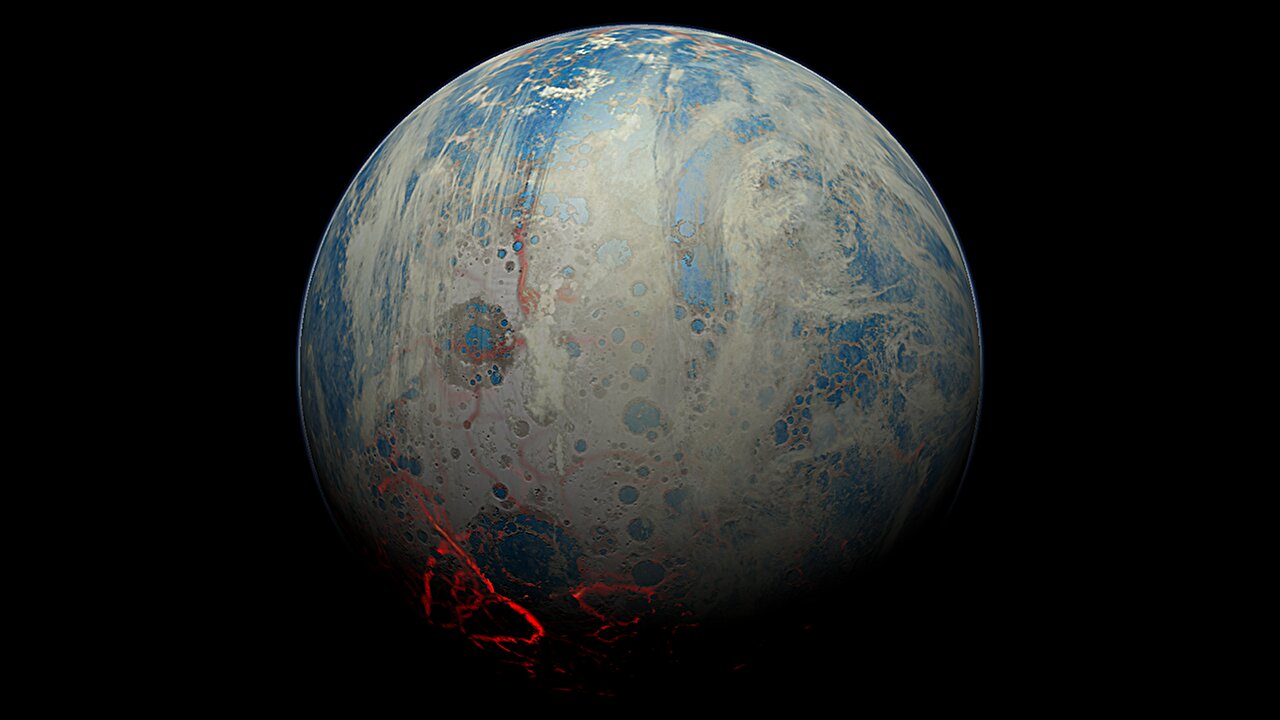
Between approximately 4.6 and 3.5 billion years ago, during the Hadean and Archean eons, Earth was regularly struck by asteroids and planetesimals. The shock waves from these impacts fractured the crust and increased its porosity, allowing underground fluids and gases to permeate through the rock.
Previous studies have already suggested that hydrothermal systems, such as the geyser field in Yellowstone National Park, may have provided the conditions necessary for the emergence and development of early life forms.
How the research was conducted
Scientists developed a comprehensive set of computer simulations based on the iSALE software code to model impact processes, varying parameters such as the thickness of the basaltic crust, the geothermal gradient, and the presence or absence of a five-kilometer-deep ocean. The simulations showed how surface collisions shaped the rock’s permeability at various depths.
The data obtained were integrated into a model of bombardment of the ancient Earth to assess the cumulative effect of repeated impacts over a long period of time.
What the simulations showed
The results indicate that up to 4.3 billion years ago, impacts could have significantly increased the permeability of the upper eight kilometers of the crust. The size of the porous zones depended on the impact energy, while the temperature of the mantle and the composition of the rocks influenced the extent of their destruction.
These porous regions created a potentially favorable environment within the early crust for prebiotic chemistry—that is, the chemical processes that preceded the emergence of life.
Significance for science
The study is the first comprehensive analysis of impact-induced permeability in the outer crust of the early Earth. It offers new approaches to assessing how space bombardment influenced hydrothermal circulation and geochemical changes during the Hadean and Archean eons. For example, how it could have created additional geological conditions favorable to the chemical processes that preceded the emergence of life.
These findings may deepen our understanding of where and how life originated and evolved during the earliest period of our planet’s history.
According to phys.org

