

American company Firefly Aerospace has announced that it has added a LightPort wireless energy receiver from Canadian company Volta Space Technologies to its Blue Ghost Mission 2 to the far side of the Moon. The device is intended to be a technological demonstration of Volta’s future lunar “energy grid” technology called LightGrid.
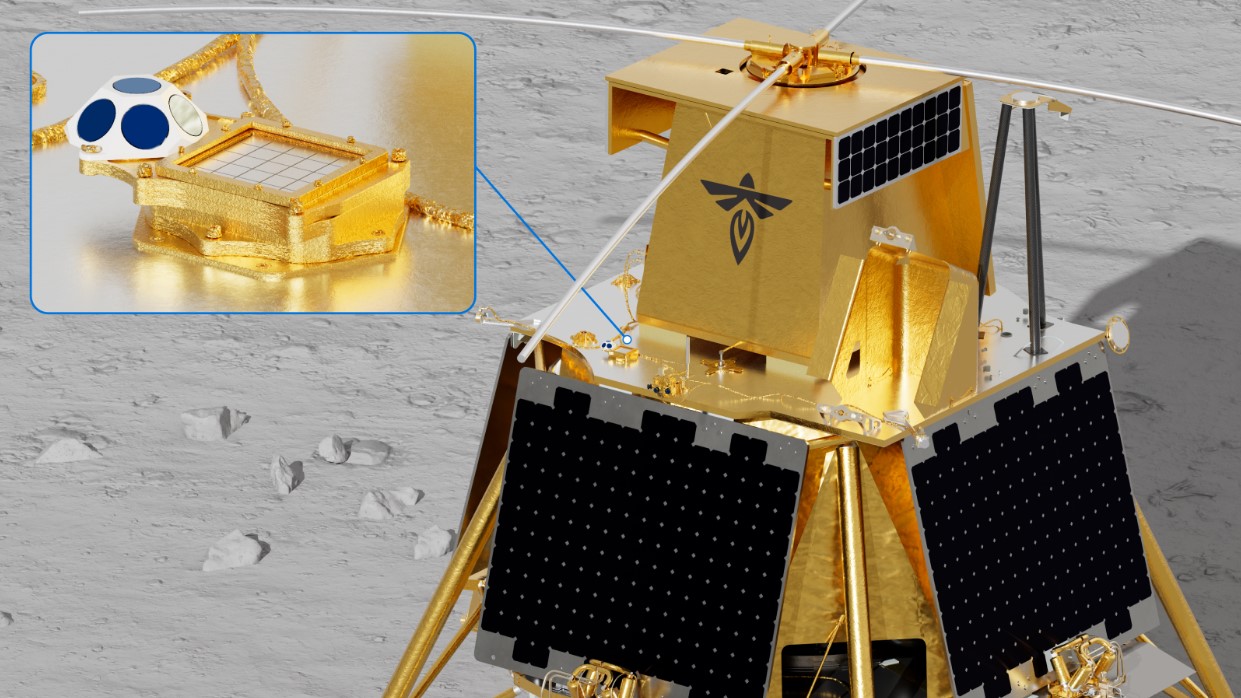
The LightGrid concept involves grouping satellites in lunar orbit that collect solar energy and transmit it via laser to the surface—to LightPort receivers integrated into landing modules, rovers, and infrastructure. The goal is to provide power during the long lunar night and create backup power channels for future bases and robotic missions.
According to Firefly, Blue Ghost Mission 2 is carrying six payloads from five countries, including NASA’s LuSEE-Night radio telescope and ESA’s Lunar Pathfinder communications satellite. After delivery, the Elytra Dark orbital vehicle will act as a relay and remain in orbit for more than five years for optical/UV imaging as part of the Ocula service. The mission is scheduled to launch in late 2026.
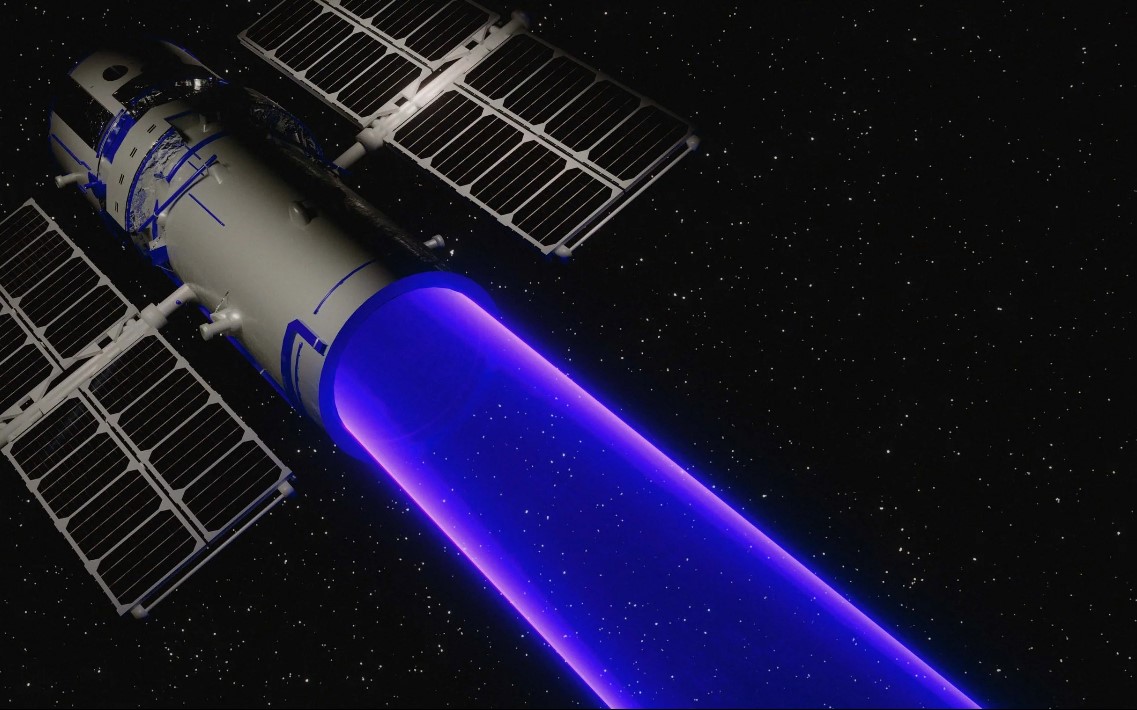
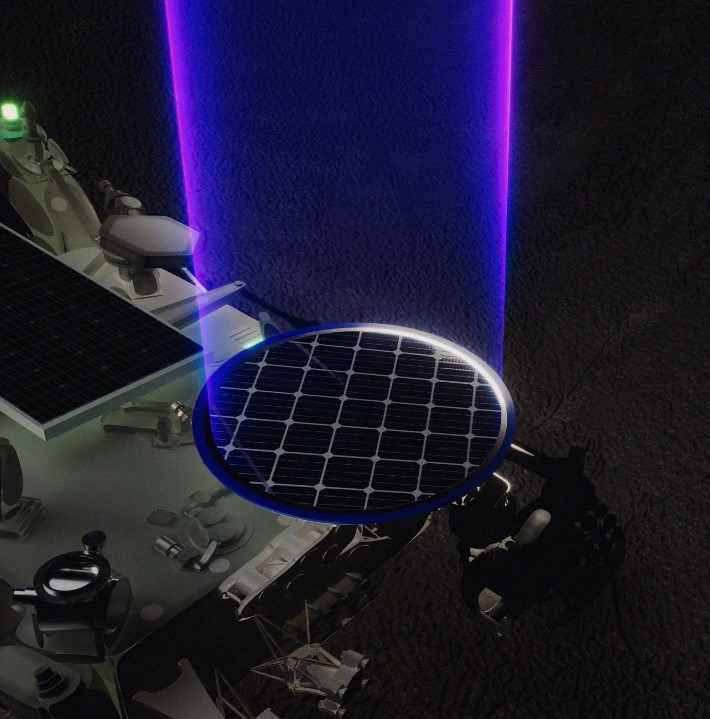
How does it work? Satellites in lunar orbit have solar panels and are almost constantly in the field of view of our Sun, so they generate electricity when there may be a two-week night on the surface. They then convert this electricity into a narrow beam of light (laser) and use it to illuminate a specific point—a receiver on the landing module or on the lunar base. The receiver is essentially like a highly efficient “solar panel for lasers”: it captures the beam and converts it back into electricity for batteries and equipment. The secret lies in two things: the beam can be aimed very precisely (so as not to scatter energy), and orbital devices can collect solar energy without interruption because it is easier for them to remain in the light than objects on the surface of the Moon.
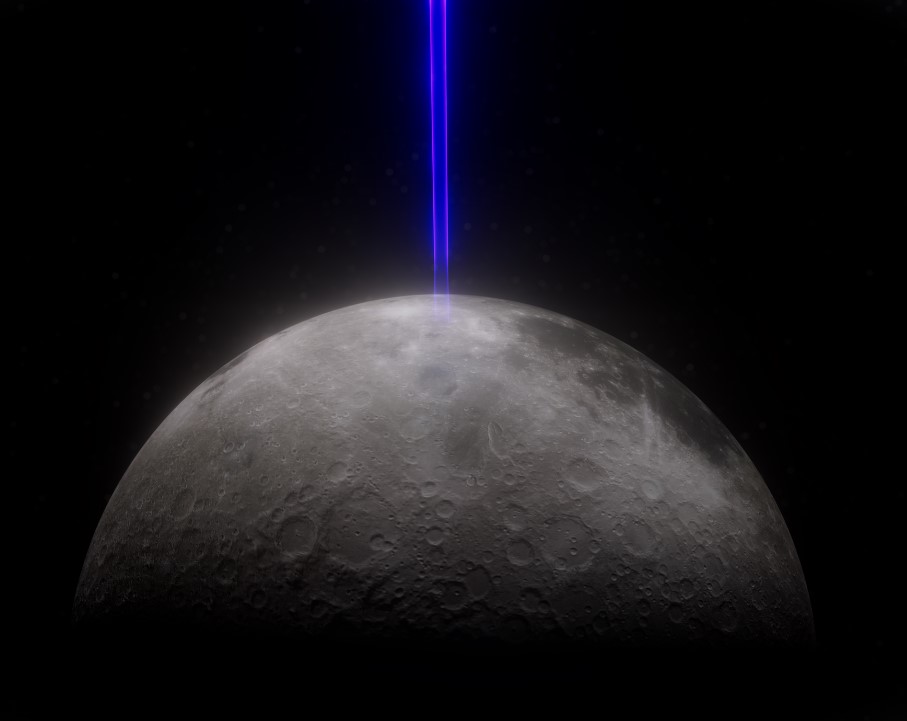
Why is this important? For space research and astronomy, such a power grid could become critically important: stable power and communications on the far side of the Moon open the way for long-term observations (especially radio astronomy in “radio silence”), night-time operation of instruments, and the deployment of more energy-intensive experiments — from seismology to future autonomous observatories.
If, after reading about “energy from orbit,” you are interested in how space missions find resources in places where every watt and every meter per second is worth its weight in gold, be sure to check out our article on gravitational maneuvers. In the article “The film “U Are the Universe” is in real life. How to calculate a gravitational maneuver around planets,” we explain step by step how probes accelerate around planets without additional fuel, what exactly changes in speed and trajectory, and how to calculate this using basic formulas. This is the very engineering life hack that allows humanity to reach distant worlds.
According to fireflyspace

