

A popular legend claims that the Voyager spacecraft are still being controlled by a handful of 80-year-old engineers using a programming language from the 1970s that has since been forgotten. However, the real story of these twin probes, launched back in 1977 to explore Jupiter and Saturn, is far more complex and fascinating.
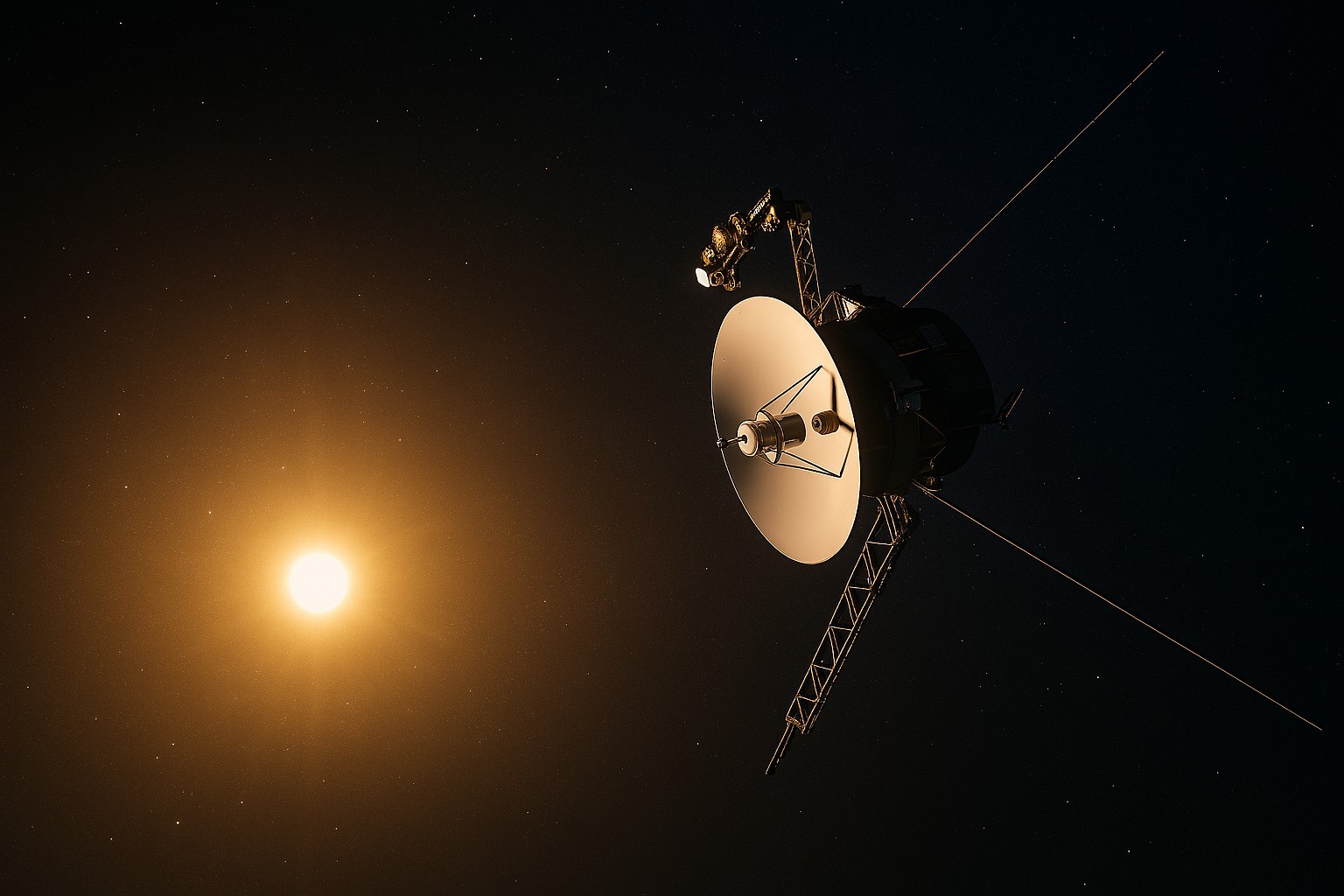
Today, Voyager 1 and Voyager 2 are the only human-made objects operating beyond the heliosphere—the Sun’s magnetic bubble—having entered interstellar space in 2012 and 2018, respectively. But the real wonder is that these deep-space explorers continue to operate on computer systems from a completely different technological era.
Technological minimalism in deep space
The onboard computers of the Voyager probes are very underpowered by today’s standards. Each spacecraft has a total memory capacity of 69.63 KB—that’s less than the size of a saved meme from the internet on your smartphone. The system can process only about 8,000 commands per second, whereas modern gadgets perform billions of operations.
Despite its modest specifications, this tiny spacecraft has successfully explored four giant planets and crossed the boundary of the Solar System. The secret to Voyager’s longevity lies not in its computing power, but in its unprecedented level of engineering discipline, redundant systems, and meticulous design.
Myths about Voyager
Does Voyager really run on the old Fortran programming language? Yes and no. The original ground-based software used for control and data analysis was indeed written in Fortran 5. However, the spacecraft’s onboard systems are a completely different story.
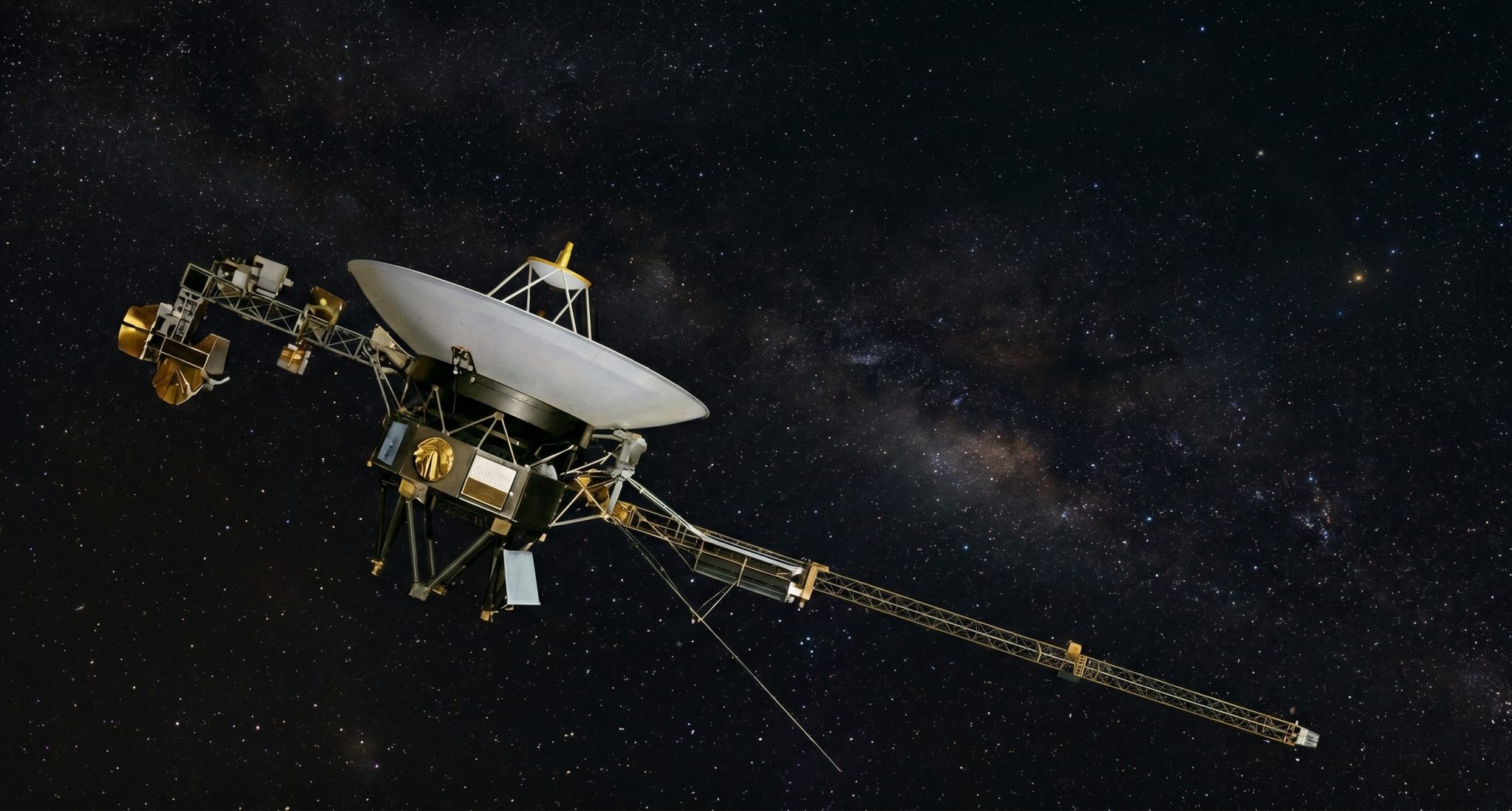
The Voyager flight systems are built on specialized hardware from the 1970s and use low-level assembly language programming. The problem isn’t finding people who know these obsolete languages—they are still taught and used in very specific scenarios. The main challenge is understanding the unique hardware architecture. Modern engineers need to know not only the syntax of the code, but also how a specific command will affect the probe’s systems and what hidden pitfalls the developers left behind half a century ago.
Lost institutional memory
The story of the “80-year-old engineers” is based on real events: in 2015, the last engineer from Larry Zottarelli’s original team actually retired. However, today the mission is led by a new generation of specialists.
Their main problem is the loss of institutional memory. The mission’s original creators have since retired, and the technical documentation has been partially lost or exists only in scanned paper form. Many critically important details were never recorded in detail at all. As a result, the current NASA team is often forced to focus on interpreting historical artifacts rather than on management.
Software archaeology at the edge of the Solar System
The crisis at the end of 2023 proved to be a real test for the team, when Voyager 1 suddenly stopped transmitting readable data. As NASA’s Jet Propulsion Laboratory discovered, one of the memory chips in the onboard computer had failed, damaging the software code responsible for data compression.
It is physically impossible to replace a component more than 24 billion kilometers from Earth. Therefore, the engineers resorted to a delicate maneuver: they divided the damaged section of code into small pieces and distributed them across available memory spaces, teaching the system to function as a single unit once again.
It was like repairing a mechanical watch over the radio. The delay in communication added to the drama—the signal took 22.5 hours to reach Voyager 1, and the team had to wait just as long for a response from Earth. Every command carried a huge risk.
A mission without instructions
The age of the spacecraft is taking its toll. The fuel lines in the Voyager engines are becoming clogged with fuel residue, which threatens to cause the antenna to lose its alignment with Earth—without it, the probe will literally “lose” its way in space and fall silent forever. In 2025, NASA even had to reactivate a set of backup engines on Voyager 1 that had been considered inoperative since 2004.
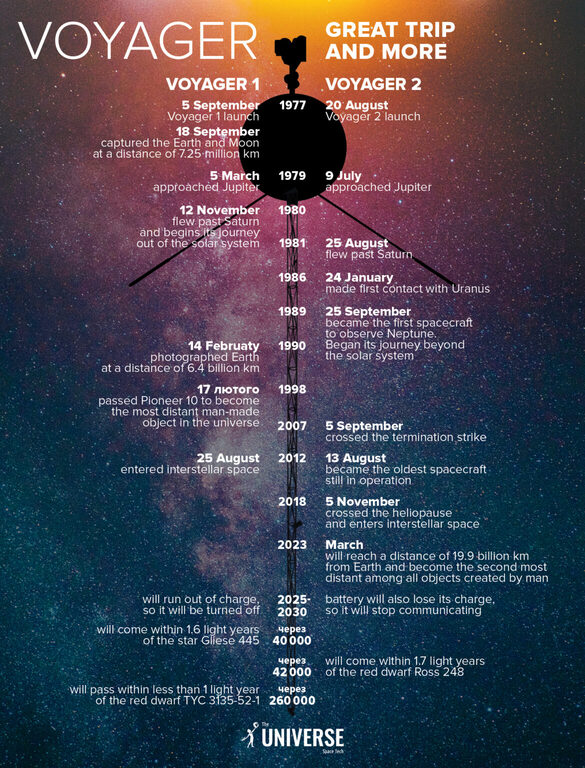
Voyager’s mission today is no longer simply about collecting scientific data. It is a daring and brilliant attempt to keep an aging spacecraft with deteriorating equipment and limited memory alive. As mission scientist Linda Spilker noted, engineers are facing challenges for which “there are simply no instructions.”
Voyager has become a living museum exhibit of the 1970s computer age, continuing its journey through the interstellar darkness. And somewhere on Earth, modern engineers are still patiently communicating with it in the language of an archaic technological era.
We previously speculated on whether Voyager 1 would survive until the 2030s.
According to maketecheasier.com

