

Specialists at the Kennedy Space Center have begun assembling the SLS rocket, which will be used in the Artemis III mission. As part of this program, people are expected to return to the Moon.
Artemis Program
NASA plans to launch the Artemis II mission early next year. According to the plan, the Orion spacecraft with four astronauts, who have already begun training, will fly around the Moon on a free capture trajectory and then return to Earth. This mission will be the first manned flight beyond Earth’s orbit since 1972.
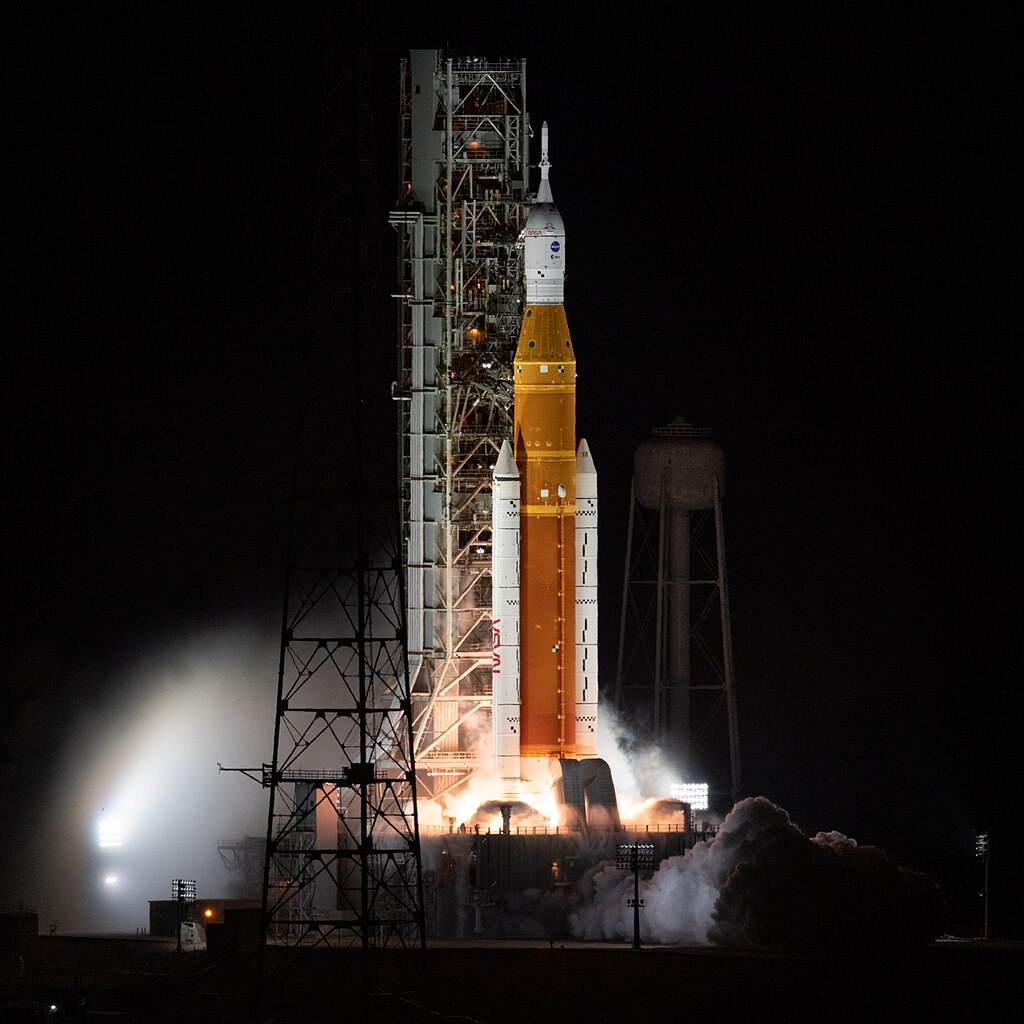
This mission will be followed by Artemis III. The flight plan calls for Orion to dock with the Starship spacecraft in lunar orbit, after which two astronauts will land at the South Pole of the Moon and spend a week there. Then they will take off, dock with Orion again, and return to Earth on it.
At present, the launch of Artemis III is scheduled for 2027. However, the announced date will almost certainly be postponed due to problems related to the development of the Starship spacecraft. However, despite this, NASA has already begun preparations for the future mission by starting to assemble the SLS rocket intended for it.
SLS rocket
The SLS rocket is designed to launch the Orion spacecraft. It is 98 meters long, weighs 2,600 tons (when fueled), and can carry up to 95 tons of cargo into low Earth orbit and up to 27 tons of cargo into a flight path to the Moon. The rocket consists of two stages and two solid-fuel boosters.
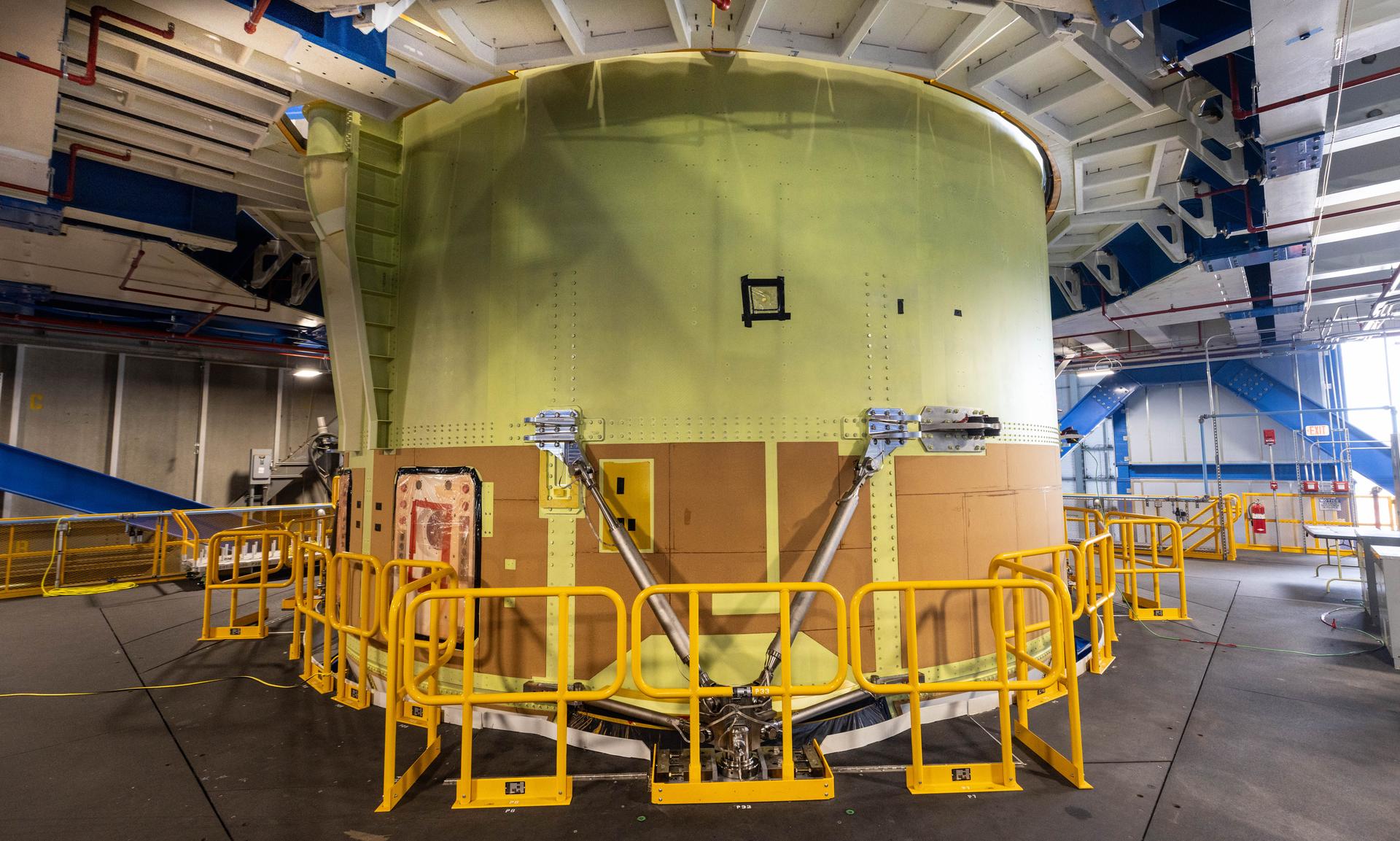
As part of the initial operations to prepare the lunar rocket, NASA specialists delivered the SLS engine section and tail section, which protects it during launch, to the Vertical Assembly Building. There they were connected. Engineers also installed a canopy on top of the motor section to provide air conditioning. This is necessary to prevent the accumulation of moisture and dirt. It is interesting to note that assembly work is being carried out just a few meters away from where the SLS rocket for the Artemis II mission is being assembled.
The remaining elements of the SLS first stage, including the liquid oxygen and hydrogen tanks, are currently located at the Michoud Assembly Facility in New Orleans, while the engines are at the Stennis Space Center. They will be delivered to Florida in early 2026, after which engineers will begin integrating them into the propulsion section.
According to NASA

