

The dream of Martian samples in Earth laboratories seems to be shattered by Earth’s realities — bureaucratic and financial. The ambitious joint NASA and ESA’s Mars Sample Return (MSR) mission, which was supposed to reveal the main secret of Mars, has been canceled due to sharp budget cuts by the US Congress.
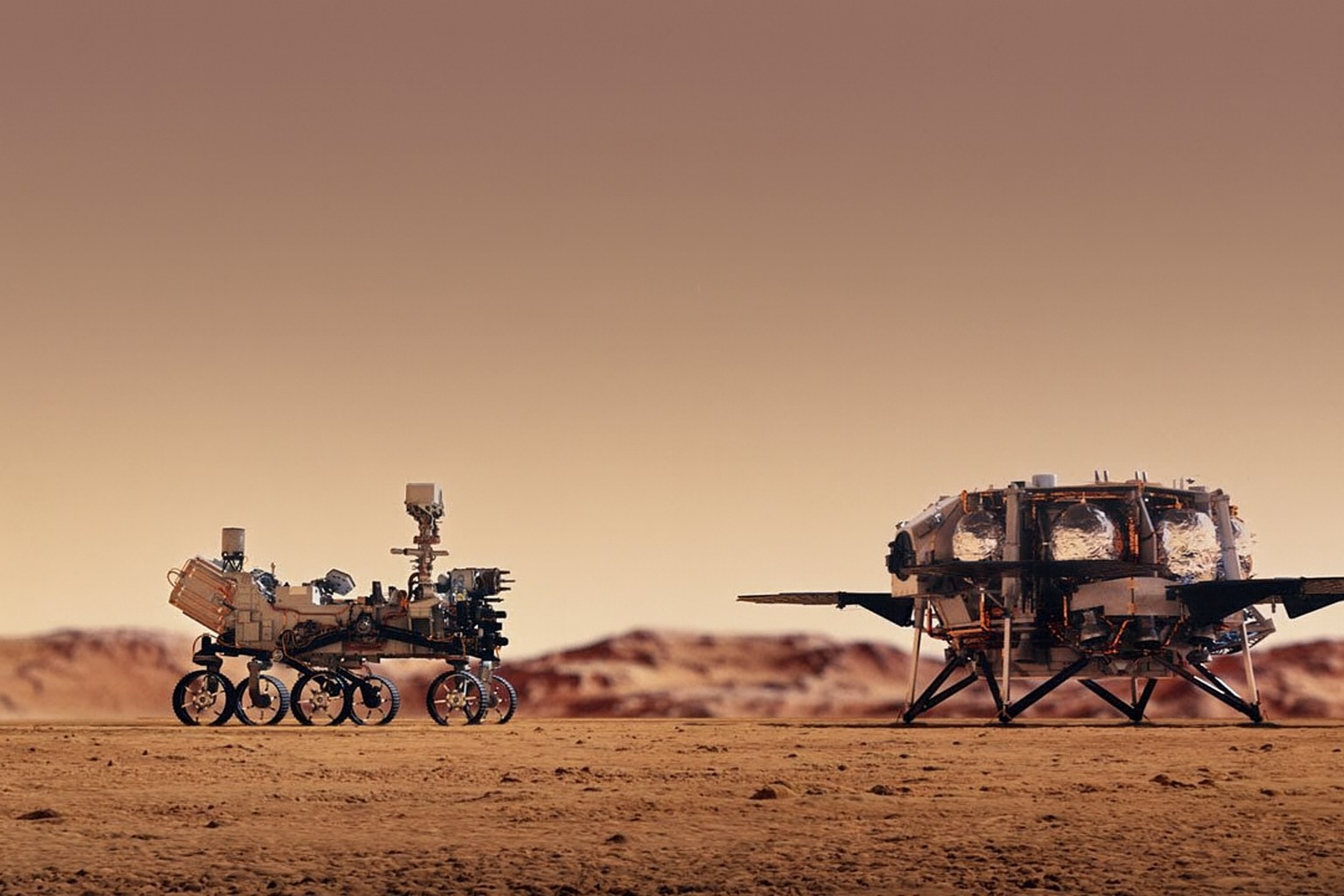
The question of whether life once existed on Mars remains a major unsolved mystery. The Curiosity and Perseverance rovers have found evidence of past warm and wet conditions suitable for life. However, only research in the most advanced laboratories on Earth can provide a definitive answer. That is why returning samples has been a priority for NASA since 2011.
As proposed in the budget, the agreement does not support the existing MSR program. However, the technological capabilities being developed under the MSR program are critical not only to the success of future scientific missions, but also to human exploration of the Moon and Mars.
Highly complex project
The Perseverance rover has already done its part excellently: it has collected and hermetically sealed 33 unique samples of Martian rocks and dust for the next mission to pick up and deliver to Earth. But now these “treasures” are stuck on the planet for an indefinite period.
The problem lies in the enormous complexity and prohibitive cost of the project. The initial budget was estimated at $11 billion, then reduced to $7 billion. However, even this amount proved too large against the backdrop of general cutbacks.
MSR logistics resemble a science fiction scenario: you need to send a landing module with a rocket to Mars, load samples into it (using a rover or even special helicopter drones), launch the capsule into Martian orbit, “catch” it with a spacecraft, and safely deliver it to Earth. The technology for this does not yet exist in a ready-made form.
Search for alternatives
Although the large-scale mission has been put on hold, a small amount of funding for technology development remains. Therefore, two scenarios are possible:
- New architecture. Scientists will try to find a cheaper and simpler way to collect samples.
- On-site laboratory. Technological advances may lead to the creation of devices capable of performing all necessary analyses directly on the surface of Mars, eliminating the need to return them.
In the meantime, Perseverance’s valuable samples can wait a long time for their moment in the cold Martian desert, if they can ever be returned at all. Paradoxically, the Chinese may be the first to return Martian samples. Their mission is planned for the 2030s and is technically simpler, although not as valuable from a scientific point of view, because the samples will not be selected as carefully as NASA’s.
The current decision is a heavy blow to the scientific community. However, the dream of Martian samples lives on. The only question is who will make it happen, when, and at what cost.
Earlier, we reported on how Lockheed Martin proposed to save the Mars Sample Return mission.
According to Universe Today

