

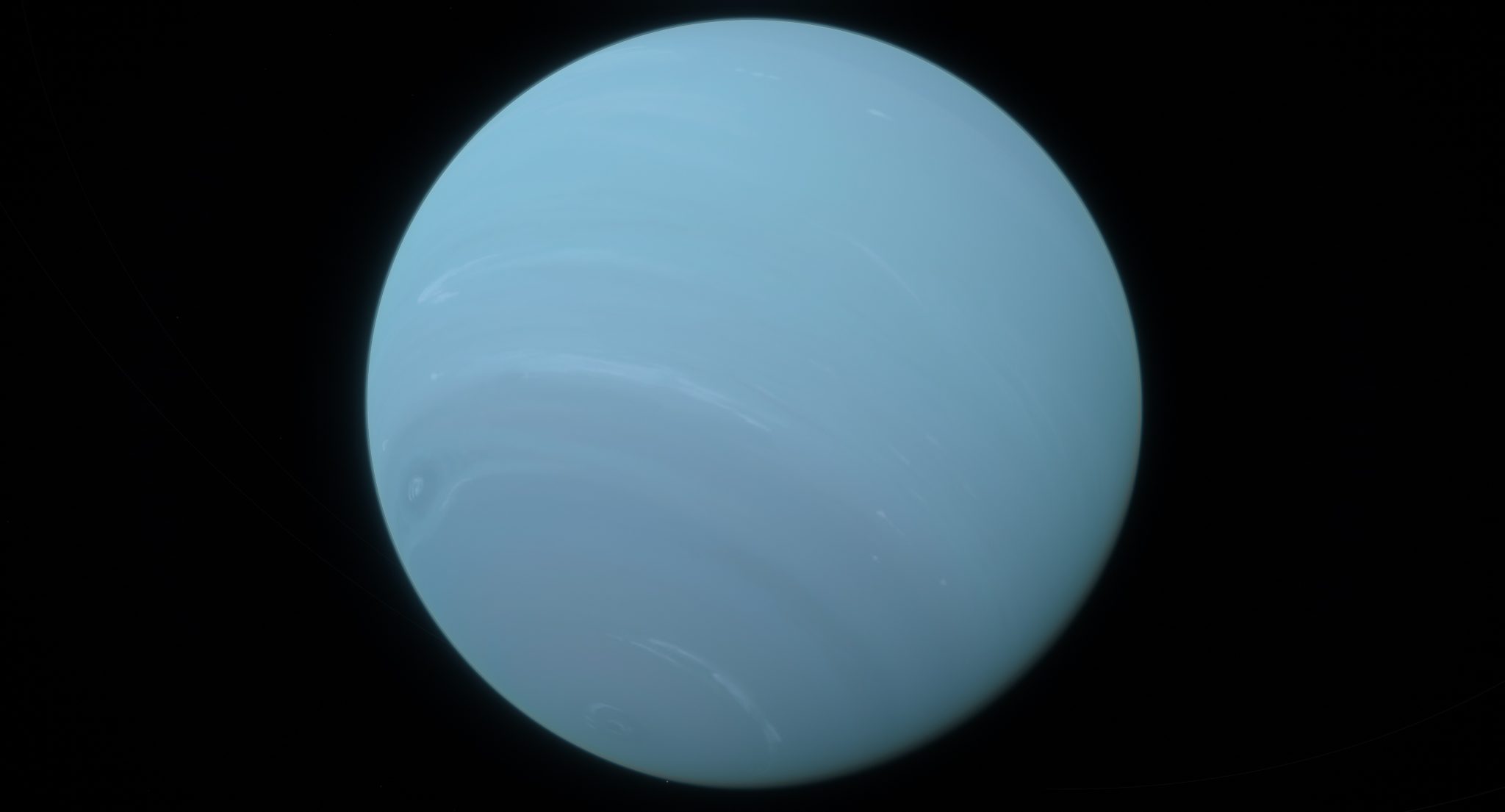
Neptune, the most distant planet in the Solar System, has always stood out from the other gas giants due to its unusual behavior. While Jupiter, Saturn, and Uranus have orderly families of moons that orbit in the same direction as the planets themselves, Neptune’s system is pure chaos.
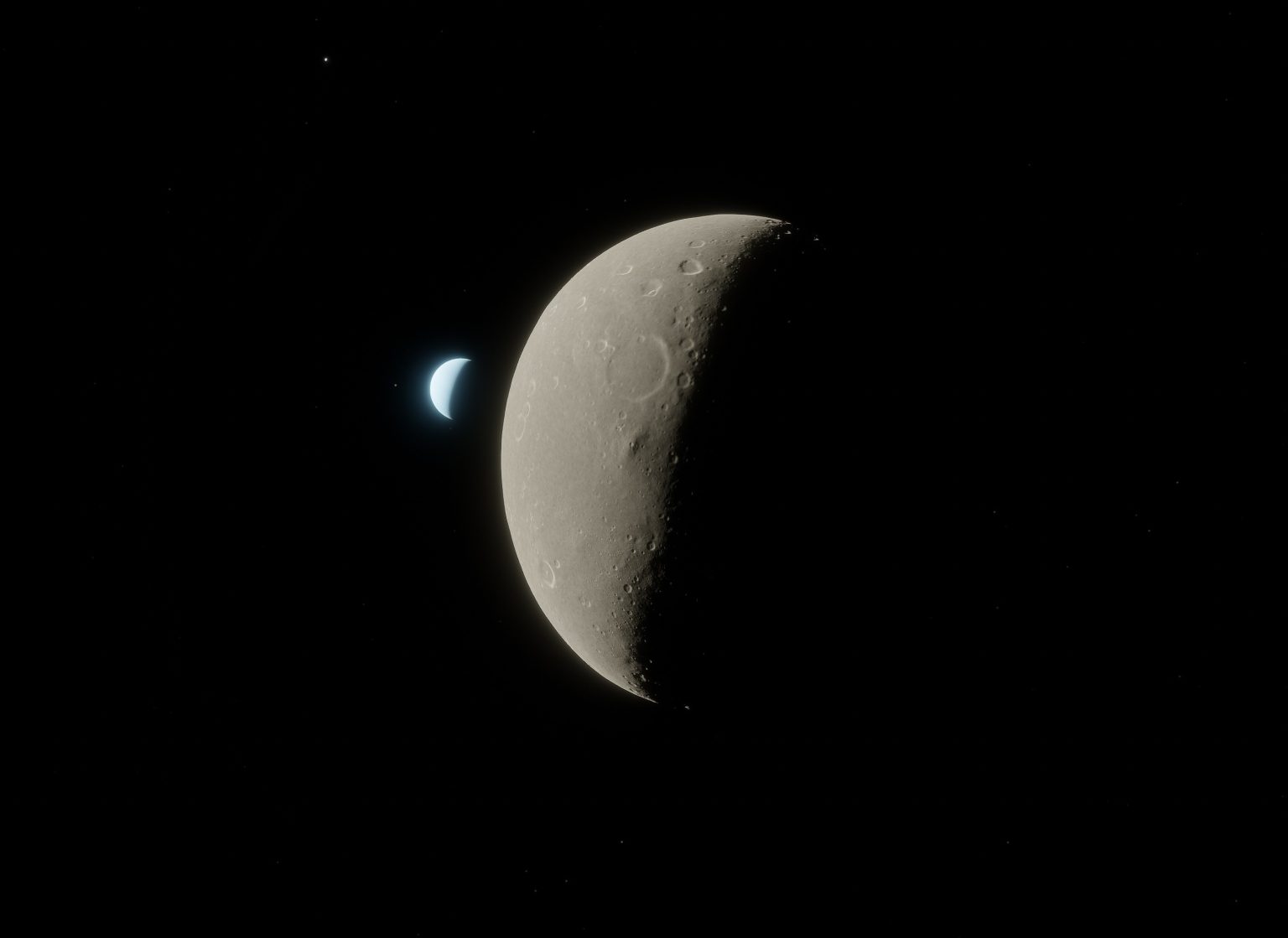
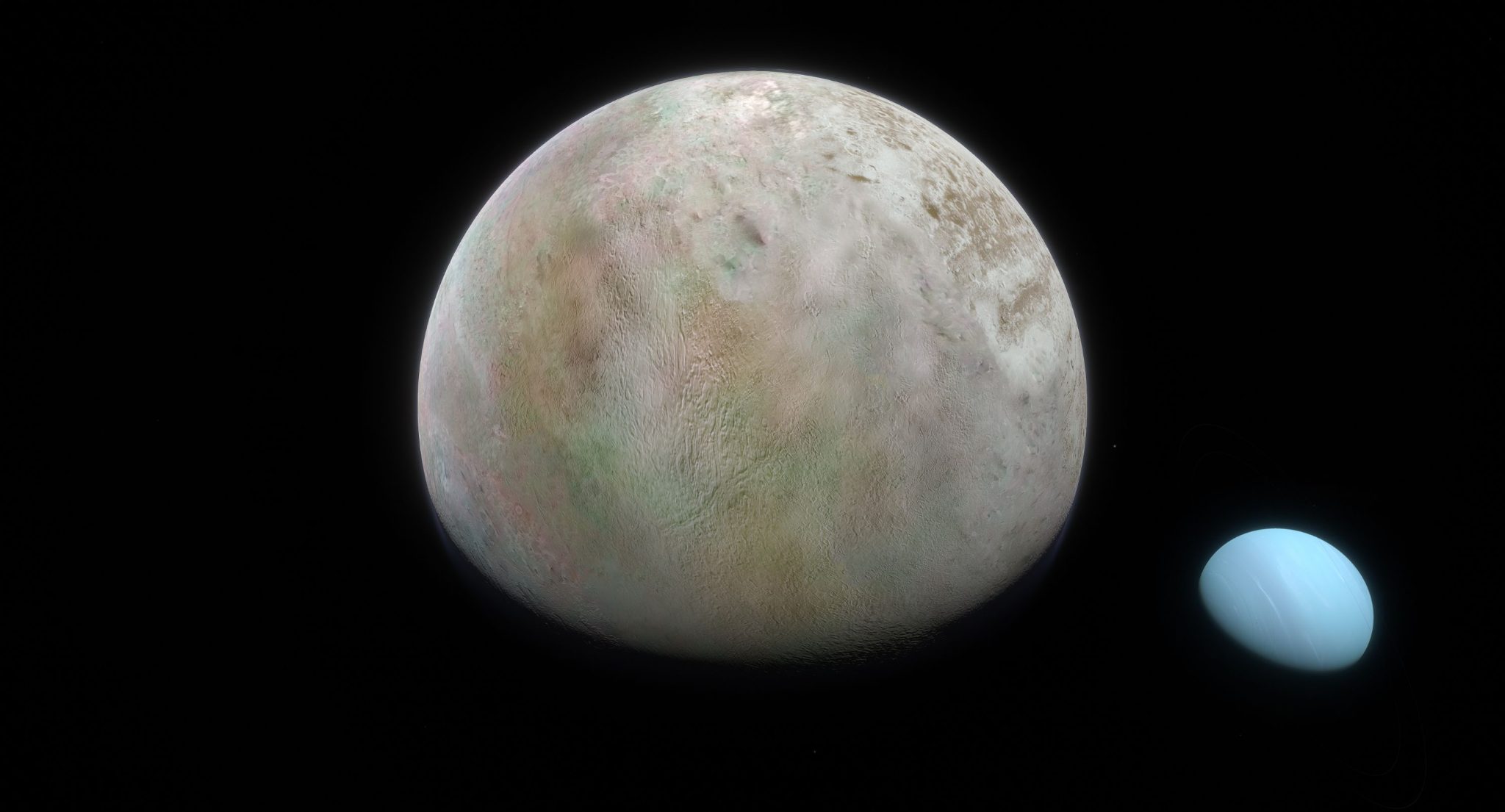
The main source of disruption here is Triton. This giant, which is larger than all the planet’s other moons, rotates in the opposite direction. This is a unique phenomenon among the large moons of the Solar System. Astronomers have long suspected that Triton is an intruder, a large icy body from the Kuiper Belt that was captured by Neptune’s gravity more than 4 billion years ago.
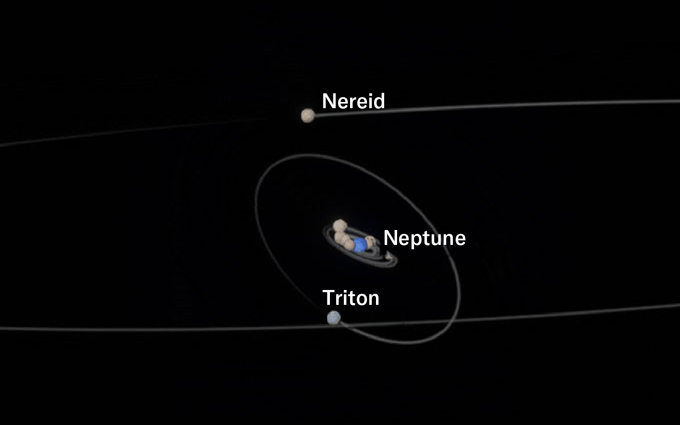
It is believed that this impact was a true catastrophe. The appearance of Triton, which is only slightly smaller than our Moon, acted like a bowling ball, shattering Neptune’s original system of moons into fragments. The small inner moons that exist today near the planet are not solid bodies—images captured by the Voyager 2 spacecraft show them as shapeless piles of debris clumped together. These are merely the pitiful remnants of that massive cosmic collision.
Nereida—the last surviving witness
But recently, the story of this system took an unexpected turn. A study published in the prestigious journal Science Advances, based on the latest data from the James Webb Space Telescope, puts forward a fascinating hypothesis: one object managed to completely escape this chaos. That object is Nereid—Neptune’s third-largest moon.
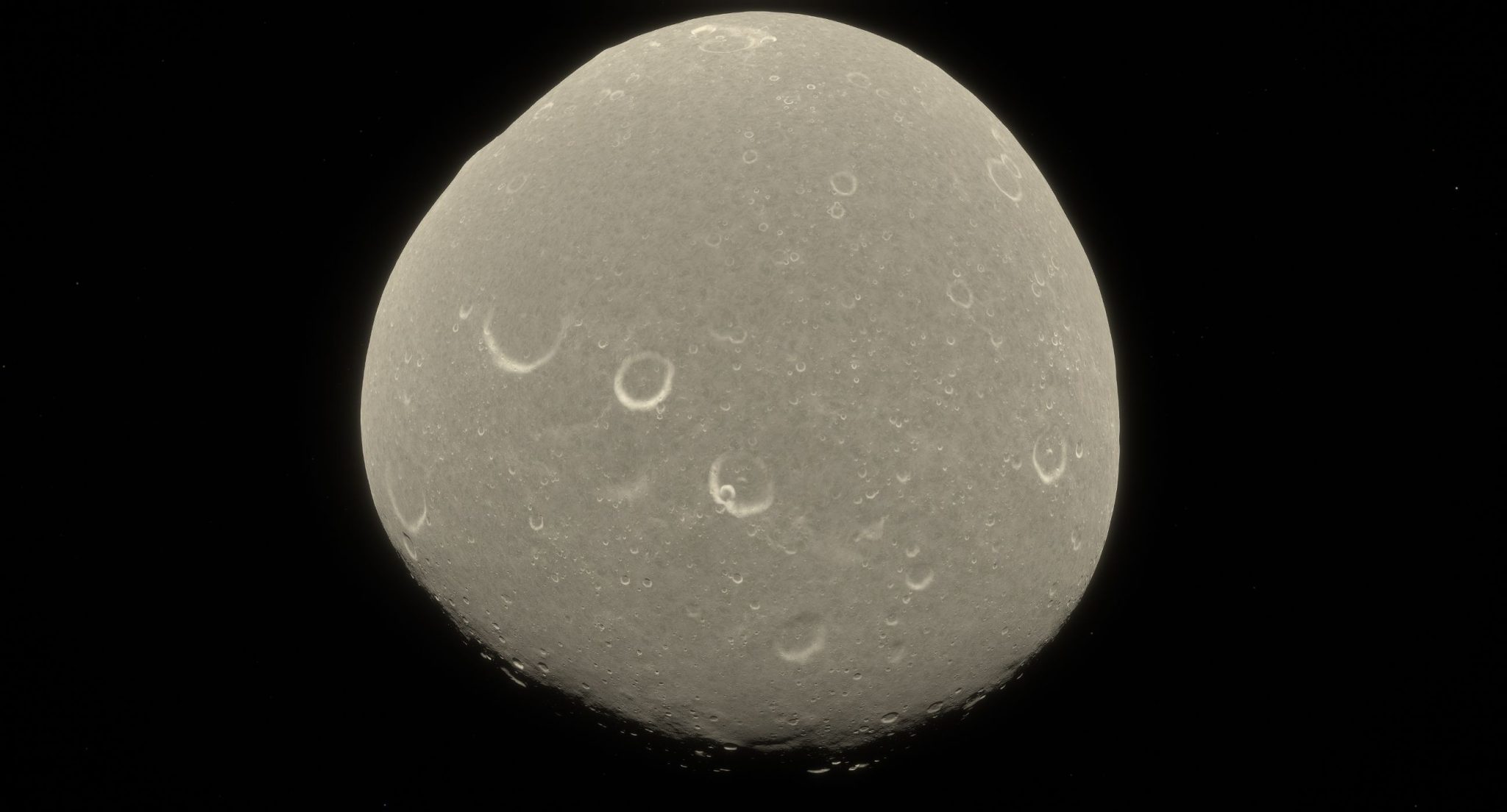
“I think Nereid is the only intact survivor of this process,” notes Matthew Belyakov, a graduate student in planetary science at the California Institute of Technology.
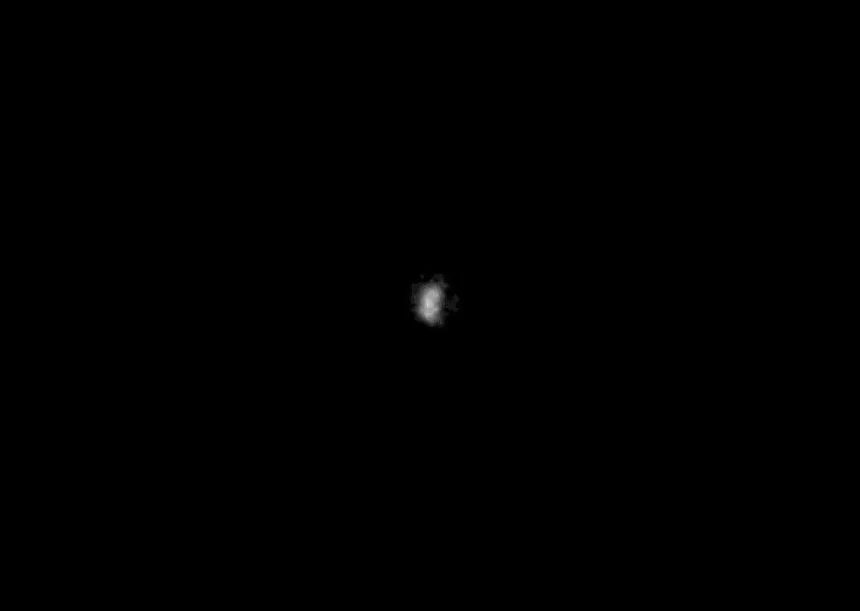
Prior to this discovery, scientists tended to believe that Nereida, like Triton, was merely a captured object. Astronomers had little information about this dim and distant world. The moon has an extremely elongated orbit, and it takes a full 360 Earth days to complete one orbit around Neptune. Furthermore, the only image of this body, which has a diameter of about 338 km, is a blurry photo taken by the Voyager 2 spacecraft during a brief flyby back in 1989.
Dispelling doubts
Doubts about the origin of Nereid, named after the sea nymphs of Greek mythology, have existed for some time. It is an exception even among so-called irregular moons. Its diameter is twice that of the next-largest such object—Saturn’s moon Phoebe—and it is located much closer to its planet than other similar bodies.
The debate was settled by infrared observations using the highly sensitive instruments of the James Webb Space Telescope. The observations lasted just 10 minutes and 40 seconds, but they made it possible to determine the chemical composition of this distant world. The data obtained were compared with measurements from 54 other objects in the Kuiper Belt.
“We have discovered an object with a surface that is extremely rich in water. It is significantly brighter than most objects in the Kuiper Belt and shows signs of carbon dioxide. Overall, these characteristics are much more similar to those of Uranus’s moons than to those of Kuiper Belt objects,” the scientist explains.
Computer simulation
To definitively test the hypothesis, a team of scientists created a series of computer models in an attempt to recreate the events of the first few million years of the Solar System’s existence. The results were impressive: in approximately 25% of the scenarios in which Triton survives after being captured by Neptune, one or more of the original moons may escape destruction.
Instead of breaking apart, such a moon would simply have been flung into a distant, eccentric orbit—exactly where Nereid is today. Moreover, this gravitational interaction would have helped Triton itself slow down and settle into its current trajectory.
A new perspective on the evolution of the ice giants
This discovery has generated great enthusiasm within the scientific community. Carolyn Porco, a renowned American planetary scientist who previously worked on the Voyager and Cassini missions, called the new study a “brilliant analysis.” She confirmed that this theory provides a logical explanation for why Nereid’s composition differs so markedly from that of other objects in the Kuiper Belt.
Lee Fletcher, a professor at the University of Leicester, also noted the incredible power of the JWST telescope: “Given all those destructive processes, I don’t think we expected to find anything intact from Neptune’s original satellite system, other than space debris.”
Although further observations by the James Webb Space Telescope will help us gain a deeper understanding of the moon’s composition, only a new large-scale mission to the icy giant will be able to provide definitive answers. For now, no such missions are planned, and the Voyager 2 probe, launched back in 1977, remains humanity’s only envoy to have seen this system up close. But now we know for certain: when we look at distant Nereida, we are seeing a unique relic that survived a true local-scale apocalypse billions of years ago.
Earlier, we discussed how Uranus and Neptune turned out to be rocky worlds.
According to CNN

