

In February 1932, a British physicist announced to the world the existence of an elementary particle called the “neutron.” The path to this discovery was much longer than one might think, and it resulted in the creation of the modern theory of atomic structure.
Physics at the beginning of the 20th century
In the second half of February 1932, physicist James Chadwick from Cambridge sent a letter to Nature magazine in which he presented the results of his research. But the most important thing for physics was the conclusion he drew from them: the radiation he was dealing with was a stream of particles called “neutrons,” whose existence scientists had been arguing about for several years.
To understand how important this announcement was for physics, we need to go back to the early 1920s. Physicists had just come to terms with the shocking idea that atoms, which for centuries had been considered the smallest indivisible particles of matter, actually had their own structure, and changes in that structure could not only lead to the birth of radiation invisible to the human eye, but also to the transformation of one element into another.
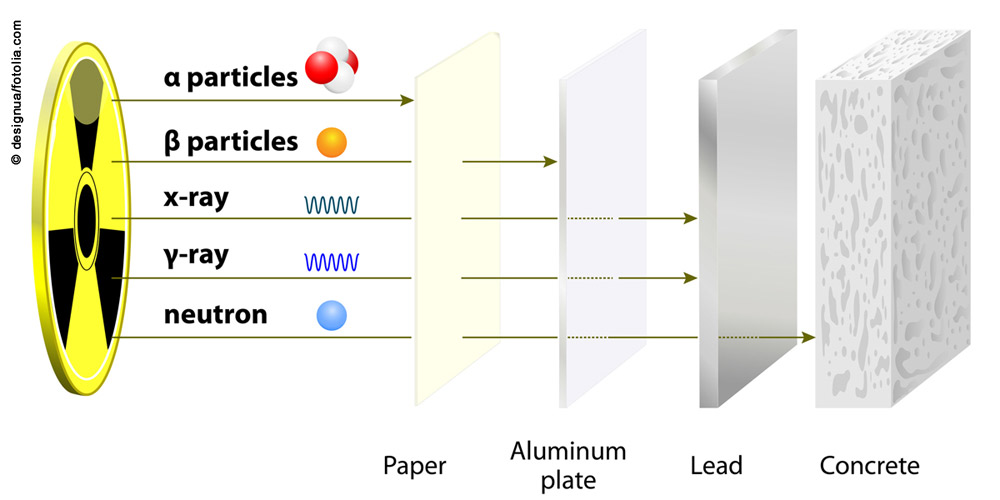
And in all this puzzle of particles and rays, they tried in every way to understand it. It was already clear that there was alpha radiation, which is essentially a stream of helium nuclei, beta radiation – a stream of neutrons, and a wide spectrum of rays, which are a stream of photons of different energies and frequencies, which, depending on the latter, can be called ultraviolet, X-ray, or gamma radiation.
However, the puzzle linking the structure of the atom with radiation was missing one important piece that could answer several questions that were still unresolved at the time. Namely, what else is in the nucleus of an atom besides protons?
What does an atom consist of?
The question was not so simple. After all, it was known that both the charges and masses of atomic elements were not random numbers, but multiples of the mass and charge of hydrogen. More precisely, they are multiples of some unit mass, namely the hydrogen nucleus, also known as a proton, which for some reason has a mass of 1.088 times the unit mass.
It was clear that this could only be the case if all atoms were composed of identical particles, but then it was unclear why their mass and charge numbers differed if both were equal to one in the proton.
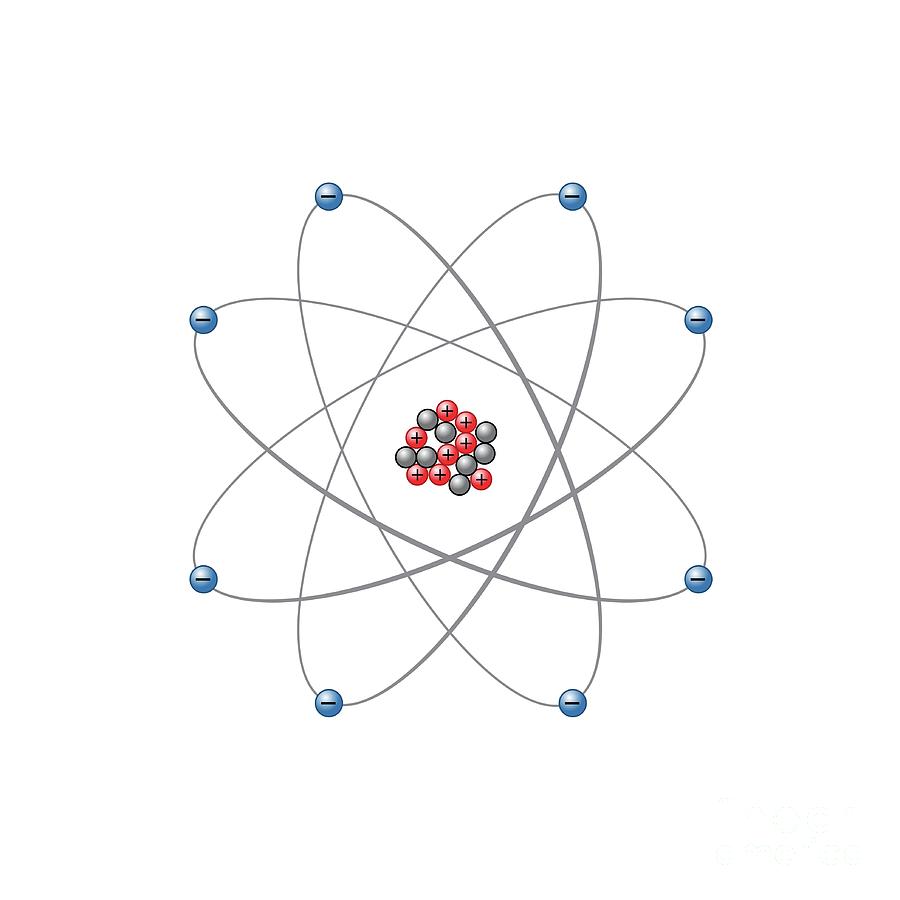
There could be two explanations for this. Either the nucleus consists of protons and electrons, and the latter, having almost no effect on mass, partially reduce the charge. Or there must be an elementary particle with approximately the same mass as a proton.
There was debate throughout the 1920s about which assumption was correct. Initially, the proton and electron theory prevailed. This was simply because the particle that British physicist James Chadwick named the “neutron” was a new entity that had never been observed before, and the scientific method dictates that such assumptions should be avoided at all costs.
However, in 1926, she encountered significant challenges. The issue was that the interaction of electrons in the shells with the atomic nucleus splits the lines on spectrograms. This is known as the fine structure, and it varies among different isotopes of elements because, although their nuclear charges are identical, their centers of mass differ due to their varying masses.
This means that electrons located in the nucleus should also contribute to the ultra-fine structure of the spectrum as they move. However, this phenomenon was not observed, which caused scientists to seriously doubt their presence in the nucleus. Then other observations appeared that were incompatible with the proton-electron theory.
In 1930, most scientists agreed that the proton-electron theory of atomic nucleus structure could not explain everything they observed, but the first evidence that another explanation was possible only appeared after two German scientists, Walter Bothe and Herbert Baker, conducted an experiment bombarding beryllium, boron, and lithium plates with radiation from a polonium sample. This caused these materials to emit something that passed very easily through various materials.
The radiation was invisible and did not react to magnetic fields. Therefore, everyone immediately thought that these were gamma particles. However, scientists had seen this type of radiation before, and it did not penetrate materials so deeply. In order to understand what it was, Frédéric Joliot-Curie and Irène Joliot-Curie repeated the experiment almost two years later.
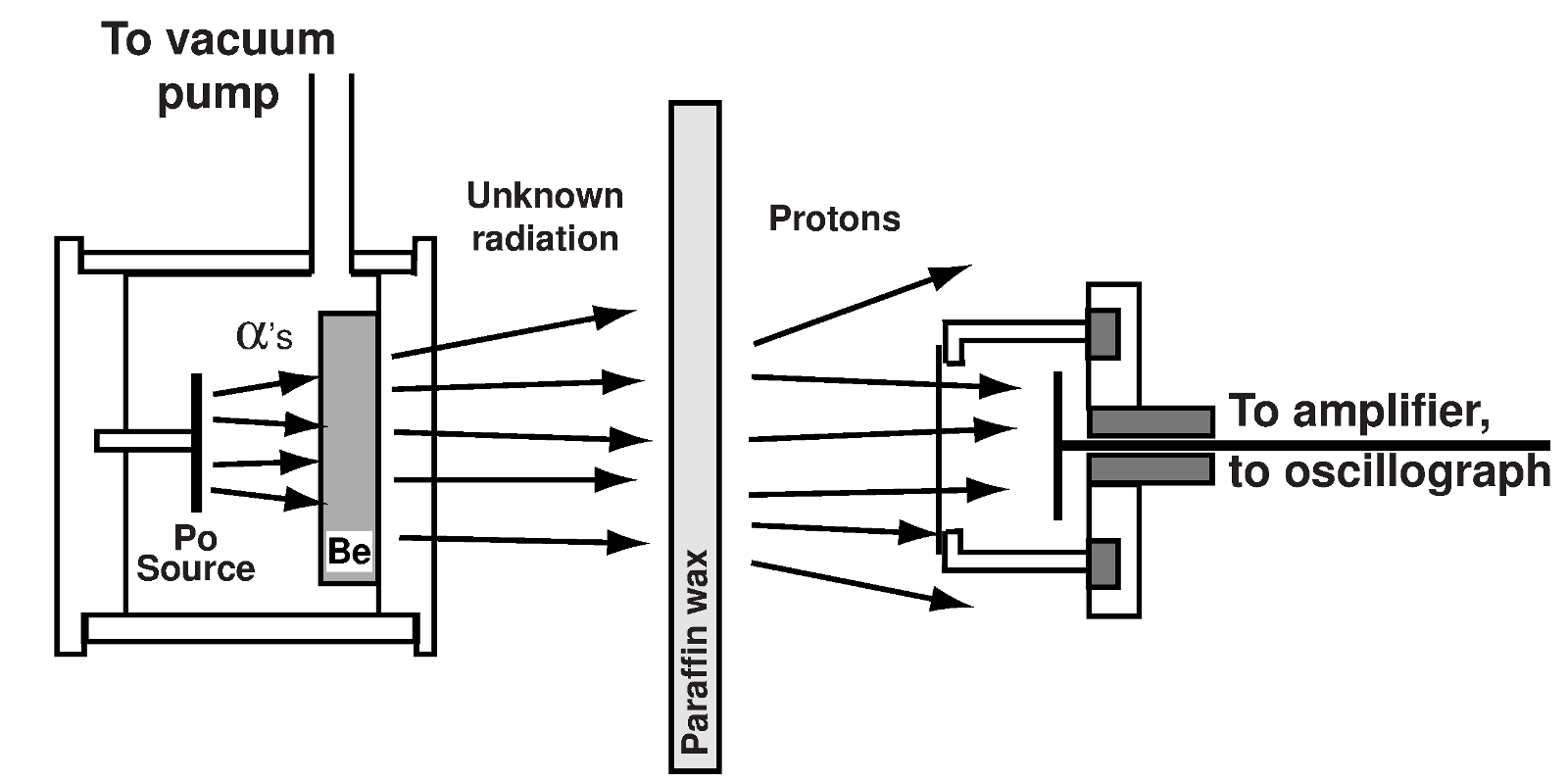
But they also placed a paraffin membrane and a particle detector behind the target. It turned out that the unknown radiation not only penetrated the material but was also capable of knocking protons out of it. Surprisingly, even this did not completely rule out the possibility that these were high-energy gamma particles.
However, many believed that it must be another particle – the neutron, the existence of which no one had yet seen evidence of. Among the physicists who believed this was James Chadwick. He repeated the experiment, but this time he carefully studied the range of proton scattering and how the new radiation interacts with different materials. This allowed him to estimate the mass of the particles it consists of, which turned out to be almost the same as that of a proton. The existence of the neutron was finally proven.
New physics
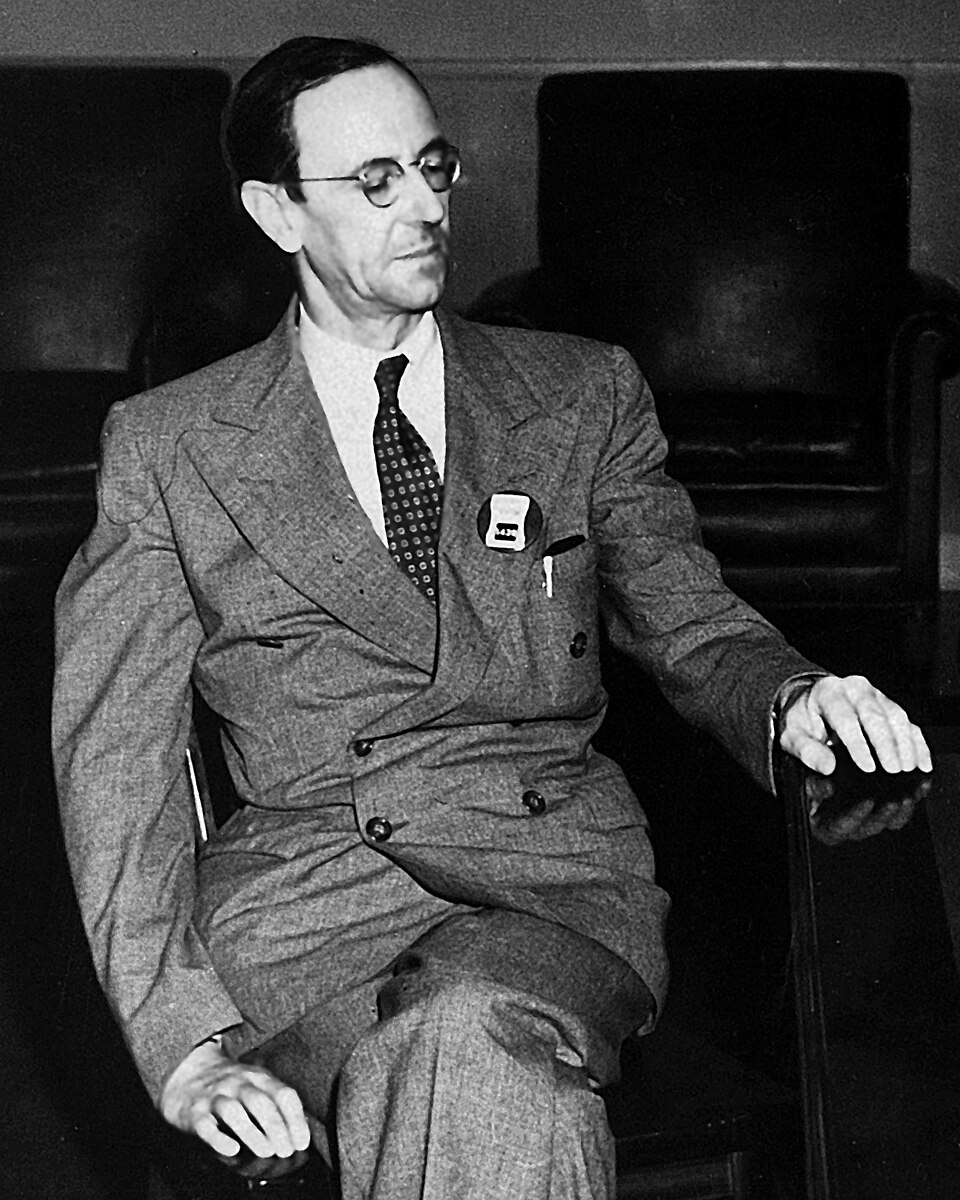
Chadwick’s research results were the final piece of the puzzle. That same year, German physicist Werner Heisenberg and Ukrainian physicist Dmytro Ivanenko independently developed the modern model of the atomic nucleus, consisting of protons and neutrons. It finally became clear what was flying out and where it was coming from. In 1935, James Chadwick received the Nobel Prize for his work.
Moreover, all this fits well with Einstein’s theory of the equivalence of mass and energy. Nuclear physics became a science of equations and precise calculations that could then be verified experimentally. And this transformed it from a subject of debate among highbrow scientists into a source of energy, which, admittedly, not everyone was happy about.
In 1934, Irène Joliot-Curie and Frédéric Joliot-Curie discovered the phenomenon of induced radioactivity. It turned out that for any material to begin emitting alpha and beta particles, it was sufficient to expose it to a dense stream of radiation. Now this effect is known to everyone because Geiger counters begin to react to ordinary household items brought out of the Chornobyl contamination zone.
In 1936, Italian physicist Enrico Fermi, who decades later formulated the paradox of the absence of visible traces of extraterrestrial life, became interested in the experiments of the Joliot-Curie couple. He experimented with bombarding various materials with neutrons and found that those that were already radioactive began to emit radiation much more intensely after such a procedure.
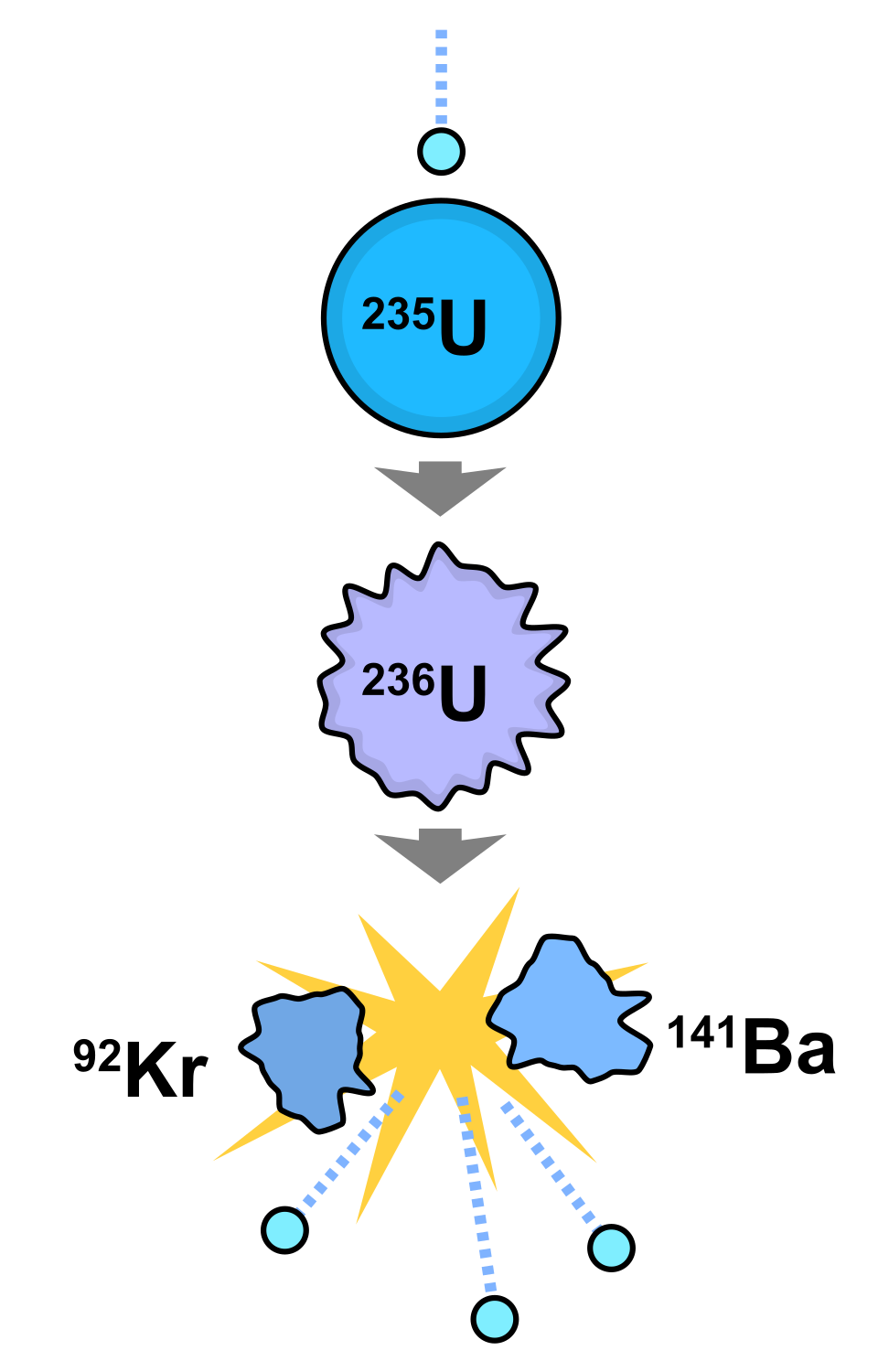
In January 1939, Lise Meitner and Otto Hahn repeated Fermi’s experiment with uranium and discovered that when a sufficiently large number of neutrons hit its atoms, they split, creating even more neutrons, and then the effect repeats itself over and over again with increasing energy release. This is called a nuclear chain reaction. Its embodiment is the atomic reactor and the atomic bomb.
But that’s not all. The discovery of the proton showed physicists that there could be other particles that had remained invisible until then, and that it would be worth waiting for. The first step in this direction was taken in 1934 by Enrico Fermi. He developed the theory of beta decay, which explained how a neutron transforms into a proton and emits an electron in the process.
However, at the same time, another particle was supposed to be born. Without charge and almost without mass, but quite real, capable of traveling thousands of light-years. Now it is called a “neutrino,” meaning “little neutron,” and this article describes the search for it and its properties.
But that’s not all. In 1935, Japanese physicist Hideki Yukawa wondered how protons and neutrons could stay together in the nucleus and suggested that there must be a particle with a mass intermediate between that of a proton and an electron. This article explains what this led to.
The discovery of the neutron was a turning point after which nuclear physics ceased to be a bizarre physical theory that interested only a handful of people and became a symbol of the next era, able to explain, with the help of the Standard Model and the four fundamental interactions, how the world really works and what lies at the heart of the processes that surround us.

