

The first launch of the new Neutron rocket will take place no earlier than the fourth quarter of 2026. Rocket Lab had to postpone the launch of its launch vehicle due to an accident in January that occurred during testing of its fuel tank.
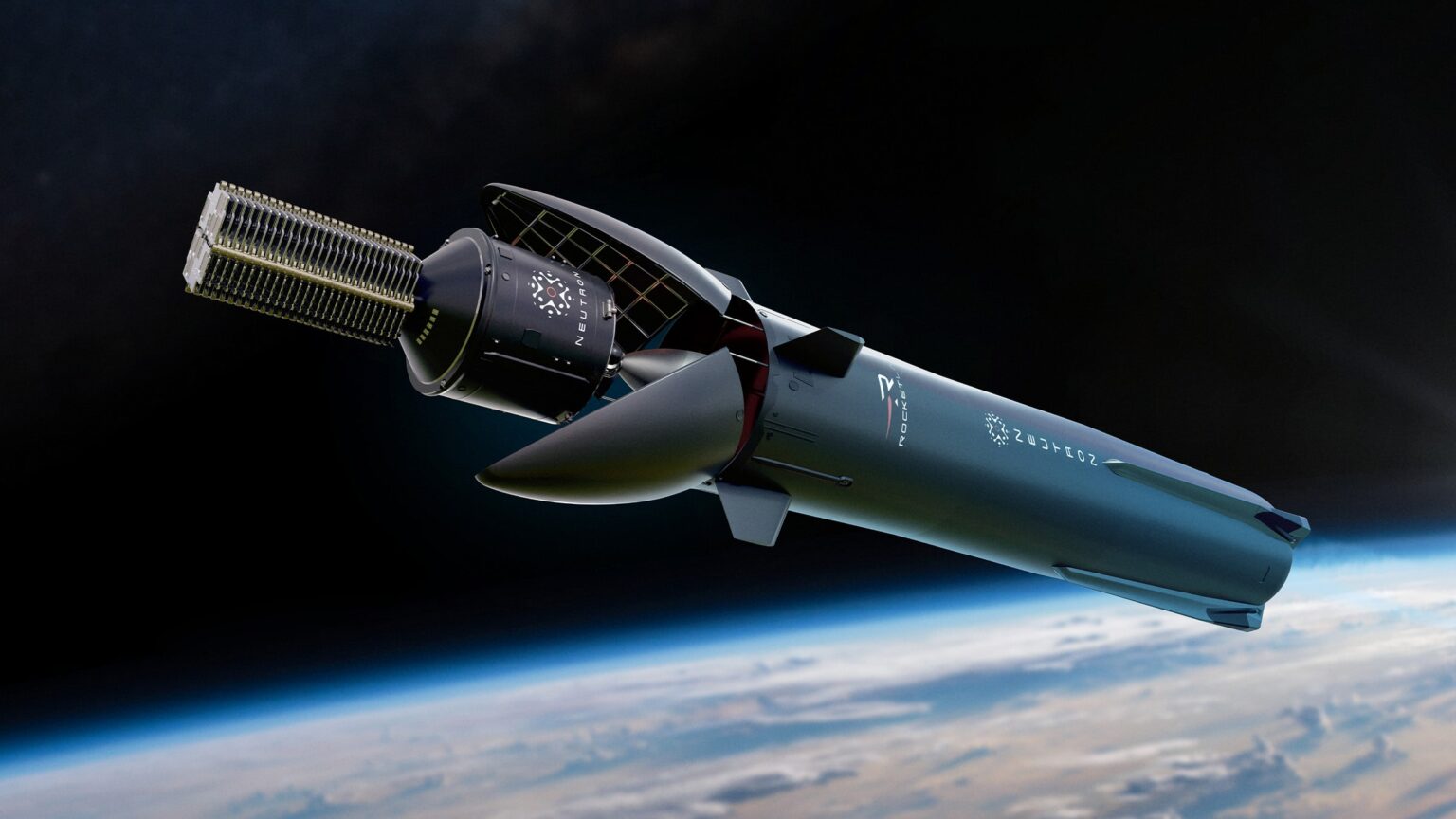
The Neutron rocket is a partially reusable medium-class launch vehicle capable of delivering up to 13 tons of payload to low Earth orbit in a configuration with first-stage return. The rocket has an innovative design, the main feature of which is that during launch, the second stage will be “hidden” inside the first stage, equipped with an opening head fairing.
The idea is that upon reaching the desired stage of flight, the first stage of Neutron will open the fairing and release the second stage with the payload. After that, the first stage will close again and land on the barge, while the second stage will activate its engine and deliver the cargo to the desired orbit.
This is typical for the space industry, as the date of Neutron’s first flight has been changed a few times. Initially, Rocket Lab announced its intention to launch it in 2024, then in 2025. It was then postponed to early 2026.
Now Rocket Lab has announced another postponement. The reason for this was an accident in January that occurred during a hydrostatic pressure test of the Neutron first stage tank. During these tests, it is filled with water and subjected to pressure, usually exceeding the nominal characteristics, in order to check for leaks and confirm structural integrity.
Rocket Lab CEO Peter Beck commented on the incident as follows: “I do want to point out that this was unexpected and, ultimately, we had anticipated that this tank would pass qualification. The tank did meet its anticipated flight loads, but as we prepared to open up the test bounds and push the pressures and loads beyond this to understand the margins and the structure, the tank let go earlier than we expected.”
The investigation revealed that the cause of the failure was a manufacturing defect that reduced the strength of a critical joint in the structure. This conclusion was confirmed by both engineering analyses and tests. The defect occurred during the manual installation of composite tank sections by the contractor.
The company plans to manufacture Neutron tanks in the future using an automatic fiber laying machine, which will ensure faster production and eliminate any possibility of such defects occurring. Rocket Lab will also make some changes to the tank design that will increase its margin of safety. Due to this additional work, the first launch of Neutron will not be possible until the fourth quarter of 2026 at the earliest.
According to Spacenews

