

Using the Hubble Space Telescope, astronomers have studied a mysterious gas cloud. It contains no stars and is currently the best candidate for a dark galaxy.
Modern cosmological models predict the existence of so-called dark galaxies in the universe. Such objects are clusters of gas and dust held together by dark matter and lacking the mass necessary to initiate the compression process that leads to the birth of stars. Astronomers also use the term RELHIC (Reionization-Limited H I Clouds) to refer to such systems.
Objects of the RELHIC type are of interest to astronomers in the context of understanding the nature of dark matter and the mechanisms of galaxy formation in the early universe. Until recently, they had several potential candidates for dark galaxies, but there was insufficient evidence of their nature.
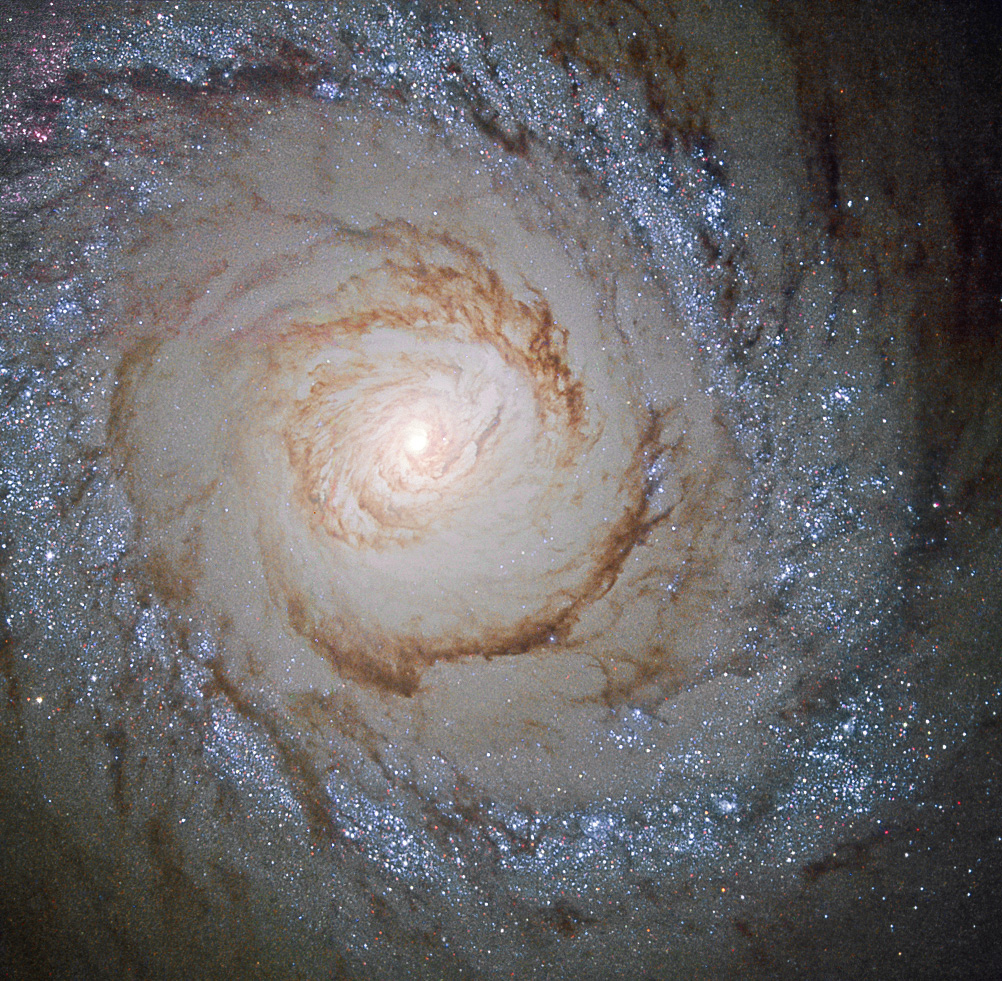
Everything changed thanks to the Hubble Telescope. An international team of researchers used it to study an object known as Cloud-9, located in the vicinity of the galaxy M94 (16 million light-years from Earth). It was discovered by the FAST ground-based radio telescope and identified as a potential dark cloud containing atomic hydrogen.
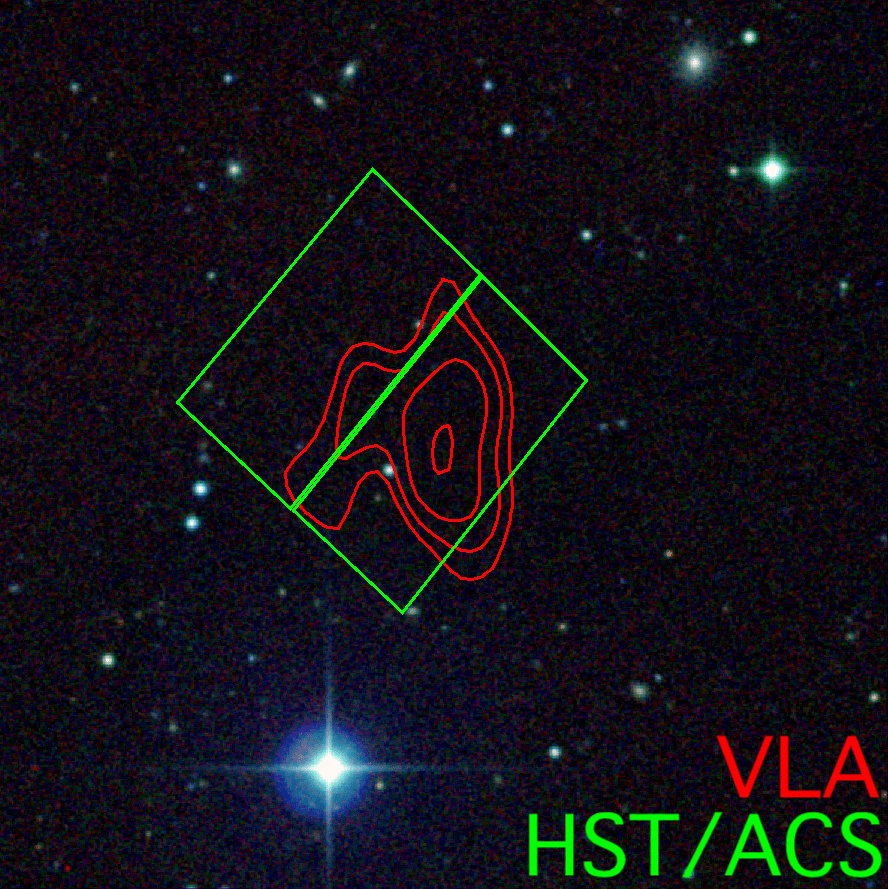
Hubble observations have made it possible to refine the characteristics of Cloud-9. Its diameter is 4,500 light-years, it does not rotate, is dynamically cold, and has a gas mass of about 100,000 solar masses. Hubble failed to find any signs of stars in it.
According to researchers, all characteristics of Cloud-9 are ideally suited to a RELHIC-type object. They also considered alternative scenarios for the nature of Cloud-9, ranging from a high-velocity gas cloud in the Milky Way to an isolated ultra-faint galaxy, but none of them satisfy all the observational data. This means that, with a very high degree of probability, we are looking at the first confirmed starless galaxy whose components are held together by dark matter.
Earlier, we reported on how dark matter can turn planets into black holes.
According to Arxiv.org

