

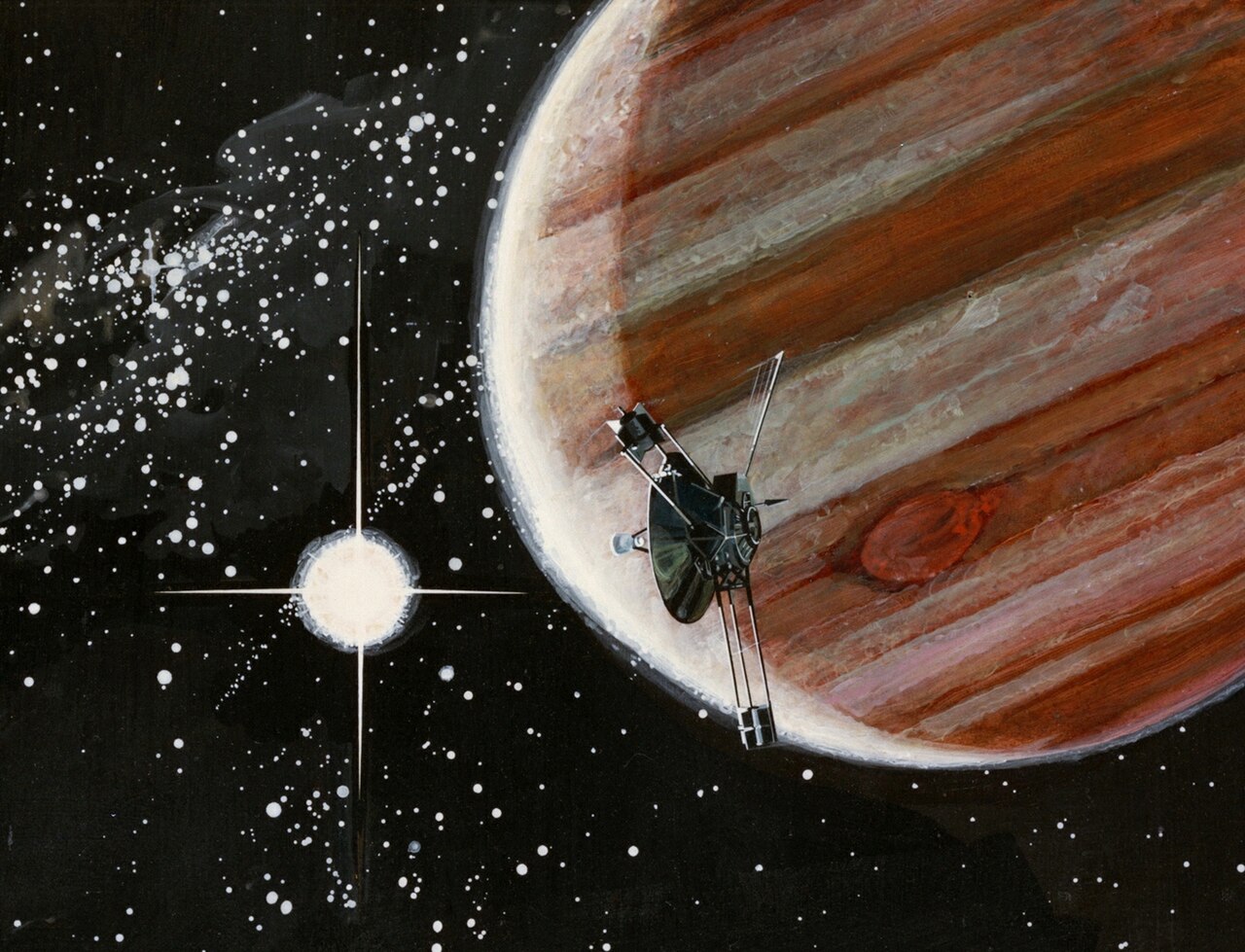
The Pioneer 10 probe became the first human-made object to traverse the Main Asteroid Belt. Subsequently, it became the pioneering spacecraft to reach Jupiter, traversed the orbits of all outer planets, and ultimately attained a velocity sufficient to escape the Sun’s gravitational influence, thereby earning the distinction of being the first interstellar spacecraft.
The Launch of Pioneer 10
Forty-three years prior, on June 13, 1983, an artificial object traversed Neptune’s orbit for the first time and explored the uncharted outer regions of the Solar System. This object was the American Pioneer 10 probe, which had already been in space for 12 years at that time.
By the early 1970s, humanity had already launched the first artificial satellite into space, sent the first human into space, commenced and completed the space race to the Moon, and even placed a satellite into orbit around another planet, achieving a soft landing on its surface.
However, all of these flights occurred exclusively within Jupiter’s orbit. At that time, no probe had yet traversed the Main Asteroid Belt, and the notion of its safety was purely theoretical.
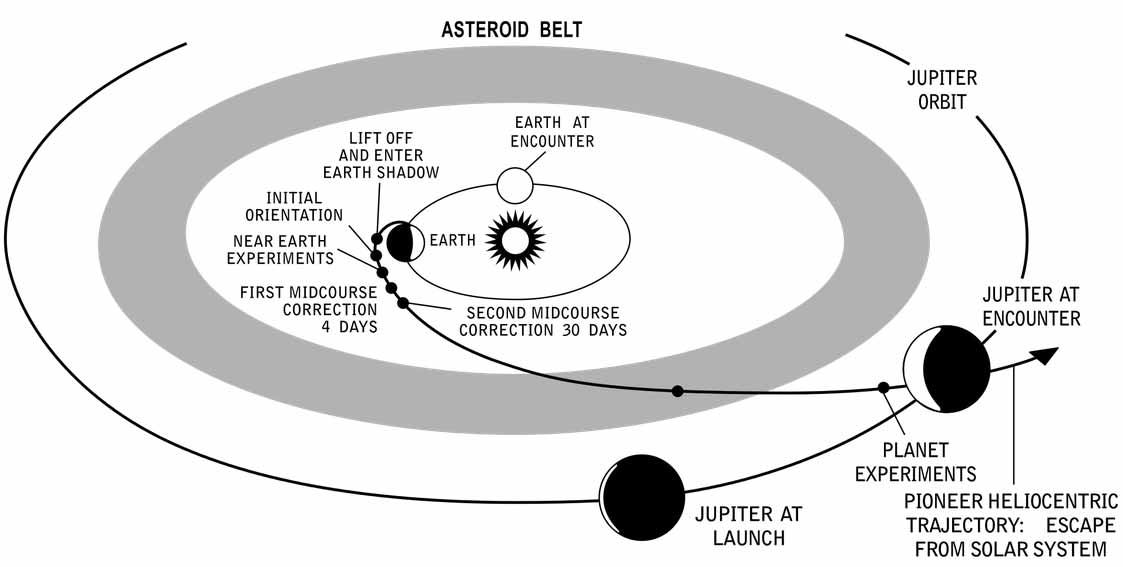
However, by that time, NASA already had a plan to explore the farthest reaches of the Solar System. And the first step on that path was to be a close flyby of Jupiter. As early as 1958, the U.S. had launched a series of Pioneer unmanned probes into space, and in 1964, engineers decided that the 10th and 11th spacecraft in this series should be specifically designed to explore the largest planet in the Solar System.
The launch of a spacecraft could have resulted in a catastrophic failure from the outset. Consequently, such spacecraft were dispatched in pairs to enhance the probability that at least one would accomplish its mission. In the cases of Mariner 8 and 9, this strategy proved to be entirely effective. Accordingly, a similar approach was adopted for Pioneer 10 and 11, with launch windows opening in 1972 and 1973, respectively, separated by thirteen months.
The Design of Pioneer 10
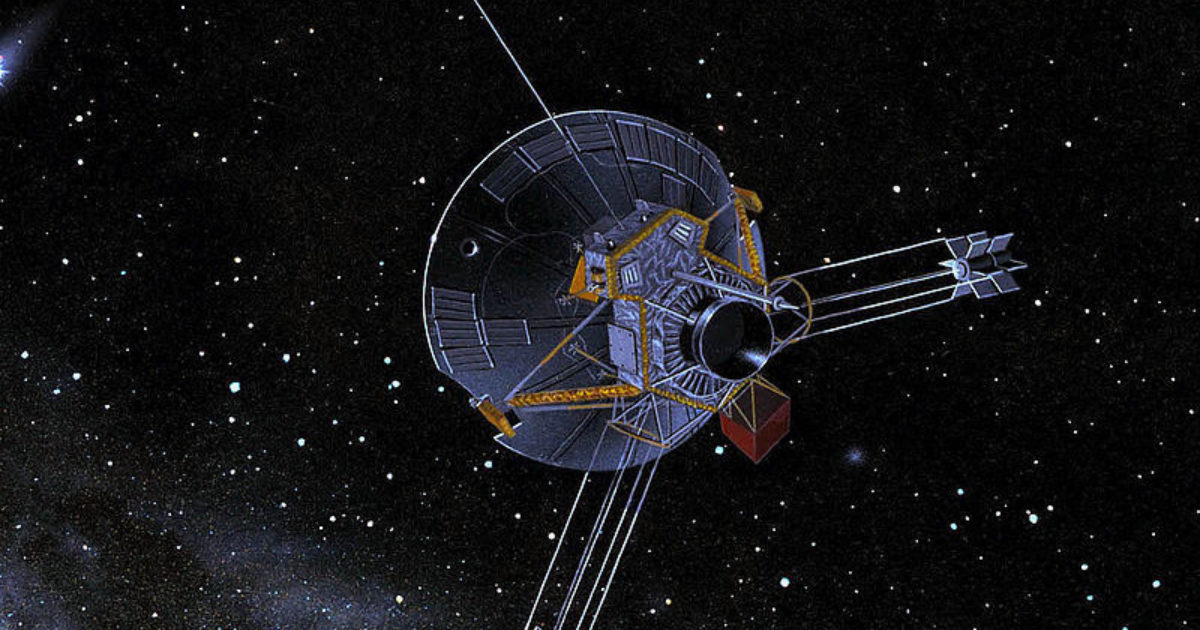
Pioneer 10 and its counterpart possessed a relatively straightforward design. They comprised a hexagonal nut-shaped enclosure containing the control system and various instruments. Affixed to this was a large parabolic antenna with a diameter of 2.7 meters. Its purpose was to enable the inaugural data transmission at a distance exceeding 3 astronomical units.
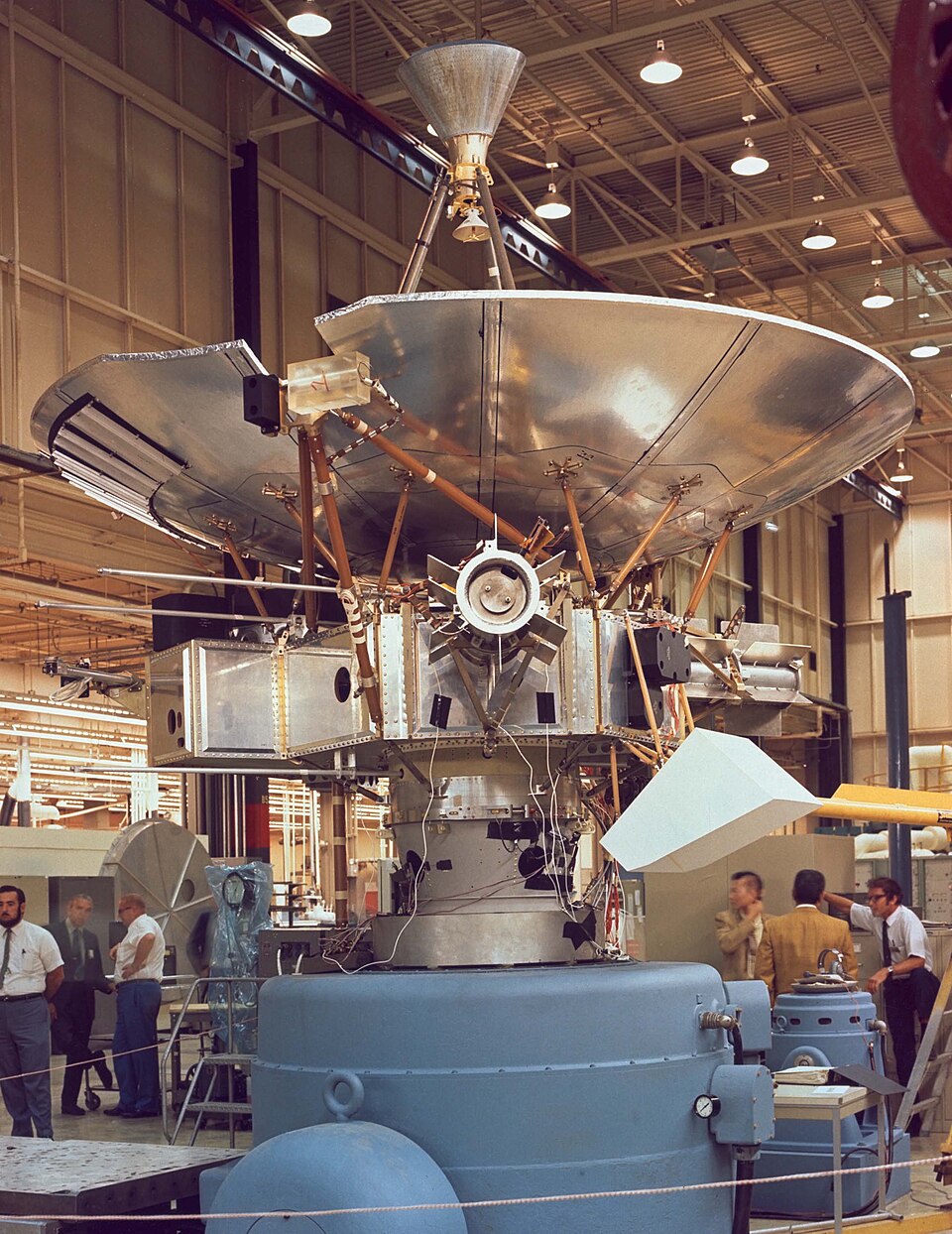
The scientific equipment comprised a three-axis magnetometer, a plasma analyzer, cosmic ray and charged particle detectors, a set of Geiger counters, a micrometeorite detector, an asteroid video detector (notably a rudimentary camera), an ultraviolet photometer, a scanning polarimeter, and an infrared radiometer.
Pioneer 10 required all of these measures to examine the radiation conditions in the vicinity of Jupiter and throughout interplanetary space.
The information was to be transmitted to Earth via a colossal antenna. However, it still had to be directed toward our planet. This was achieved using four maneuvering thrusters. They operated on hydrazine, which was utilized as a single-component propellant. The spacecraft carried 36 kg of propellant.
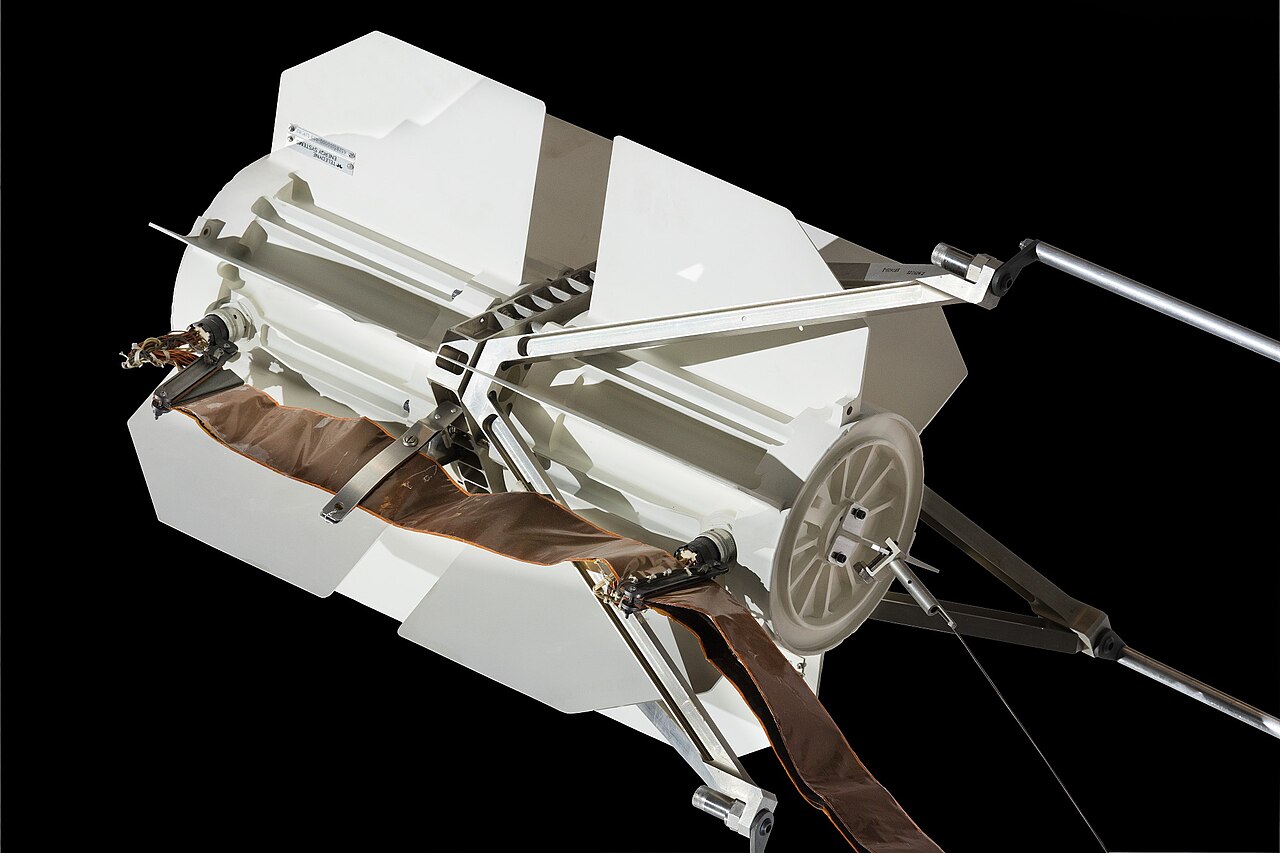
However, the scientific equipment necessitated electricity. For the spacecraft, which was intended to operate at a significant distance from the Sun, this power was to be supplied by a radioisotope thermoelectric generator (RTG). The underlying principle of its operation was that radioactive material, under the influence of a self-sustaining reaction, would heat up and consequently warm the thermoelectric elements, thereby generating electricity.
The Commencement of Pioneer 10’s Voyage
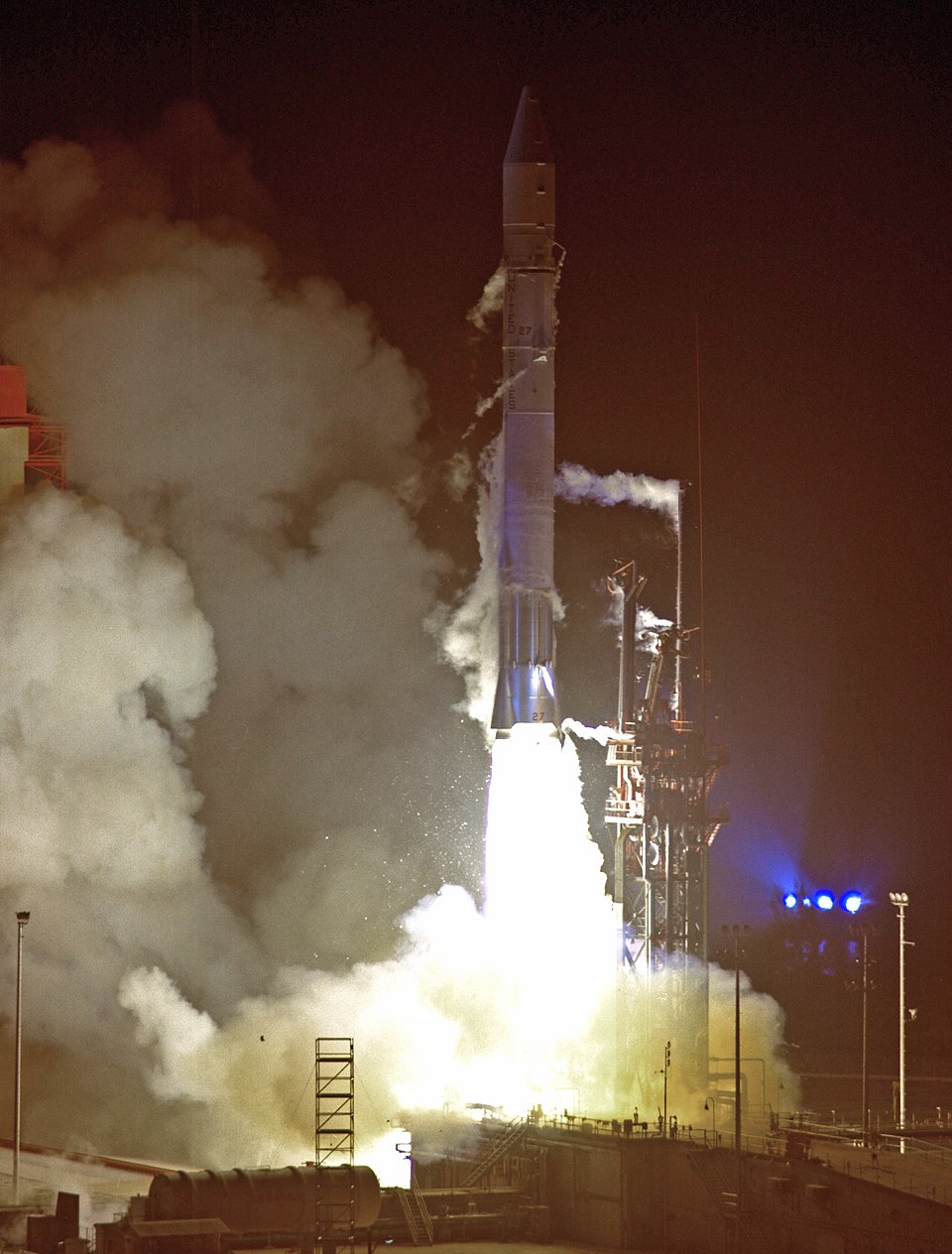
Pioneer 10 was launched on March 3, 1972, aboard an Atlas-Centaur rocket. Its three stages accelerated the spacecraft to 51,682 km/h. This achievement established it as the fastest human-made spacecraft at that time.
The probe deployed its antenna almost immediately after the booster stage separation; however, the scientific instruments were not activated until two days into the mission. By that time, Pioneer 10 had already advanced well beyond the Moon’s orbit.
Its objectives encompassed conducting photometry of Jupiter and investigating zodiacal light. The initial objective is self-explanatory — scientists aimed to assess the spacecraft’s capability to accurately observe its primary mission target. Conversely, the second objective warrants a more detailed explanation.
The term “zodiacal light” denotes a faint glow in the sky that can be observed after sunset or before sunrise. It occurs due to the scattering of sunlight by small particles of interplanetary dust that fill the inner part of the Solar System. Due to perspective, the glow usually has the form of a triangle, cone, or wedge directed upwards from the horizon. The name is associated with the zodiac, since the glow extends along the plane of the ecliptic, where the zodiacal constellations are located.
By the early 1970s, astronomers had already understood that the source of the zodiacal light was a cloud of fine dust scattered around the Sun near the ecliptic plane. On its way to Jupiter, Pioneer 10 studied this dust, as well as cosmic rays, the solar wind, and streams of interstellar particles. The data obtained convincingly showed that interplanetary space is a complex environment filled with particles of matter and fields. In particular, it was this probe that first registered neutral helium atoms of interstellar origin entering the Solar System.
In August of 1972, Pioneer 10, which was positioned at that time 2.2 astronomical units from the Sun, encountered a notably significant event. The Sun emitted a series of intense solar flares. On Earth, these disturbances resulted in communication interruptions, failures in power grid systems, and the detonation of sea mines. The spacecraft documented this event as a considerable shock wave that subsequently reached it during its journey.
However, Pioneer 10 did not encounter a flyby through the asteroid belt. It became the pioneering spacecraft to enter the belt on July 15, 1972, and subsequently exited it on February 15. During this period, its micrometeorite detector documented variations in the density of micrometeoroids.
Furthermore, another remarkable discovery awaited the scientists. Astronomers have long known that there are many more small bodies in the Main Belt than large ones. In general, the number of objects increases as their size decreases. So one might expect that there would be an incredible amount of dust the size of ordinary sand there, but it turned out that the concentration of fine interplanetary dust near Earth’s orbit is about several times higher than in the central part of the Main Asteroid Belt.
To Jupiter and Beyond into Interstellar Space
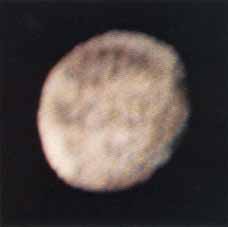
On December 3, 1973, Pioneer 10 reached its main destination, the Jupiter system. It became the first spacecraft to examine the largest planet in the solar system up close. During the flyby, the spacecraft returned hundreds of images of Jupiter and its moons. But by today’s standards, their resolution was low, so many of them look quite small and fuzzy today.
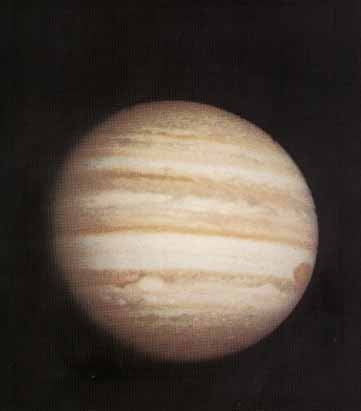
The reason is that there simply was not a high-resolution camera on board. There were only a few sensors operating at different wavelengths. The spacecraft had to be manually rotated, and the data from these sensors was then combined to create a color image. However, Pioneer 10 was still able to photograph the giant planet itself and several of its moons, and these images, which were broadcast live, even won an Emmy Award.
Nevertheless, the primary focus of the research was on investigating the radiation belts of the gas giant, its magnetic field, and their interaction with the solar wind and high-energy particles. On April 4, the spacecraft conducted a close approach within 132,252 kilometers of Jupiter’s cloud cover.
One of the important discoveries was Jupiter not only reflects and reradiates energy received from the Sun into space, but also generates a significant part of it itself. In total, the planet radiates about 2.5 times more energy than it receives from the Sun, indicating the presence of powerful internal heat sources in its depths.
Simultaneously, the gravitational influence of the giant planet increased the spacecraft’s velocity to 32,000 km/h relative to Jupiter itself. This velocity was adequate to surmount the Sun’s gravitational attraction and ultimately facilitate escape from our solar system. Officially, on January 1, 1974, the primary phase of the Pioneer 10 mission concluded, and a subsequent phase — interstellar travel — commenced.
Externally, there was little alteration in the operation of the spacecraft. It continued to monitor fluctuations in the number of micrometeorites, charged particles, and cosmic rays. The only notable distinction was that it transmitted this data from locations well beyond the boundaries of space familiar to humans. In February 1976, Pioneer 10 traversed Saturn’s orbit; on July 11, 1979, it crossed Uranus’s orbit; and on June 13, 1983, eleven years after launch, it surpassed Neptune’s orbit.
An Interstellar Message and the Mysterious Pioneer Effect
Officially, the Pioneer 10 mission lasted for over two decades until the mid-1990s. The mission was officially concluded on March 31, 1997. At that juncture, the probe was situated approximately 69 astronomical units (AU) away from Earth and remained the most distant man-made object from Earth until February 17, 1998, when that distinction was transferred to Voyager 1.
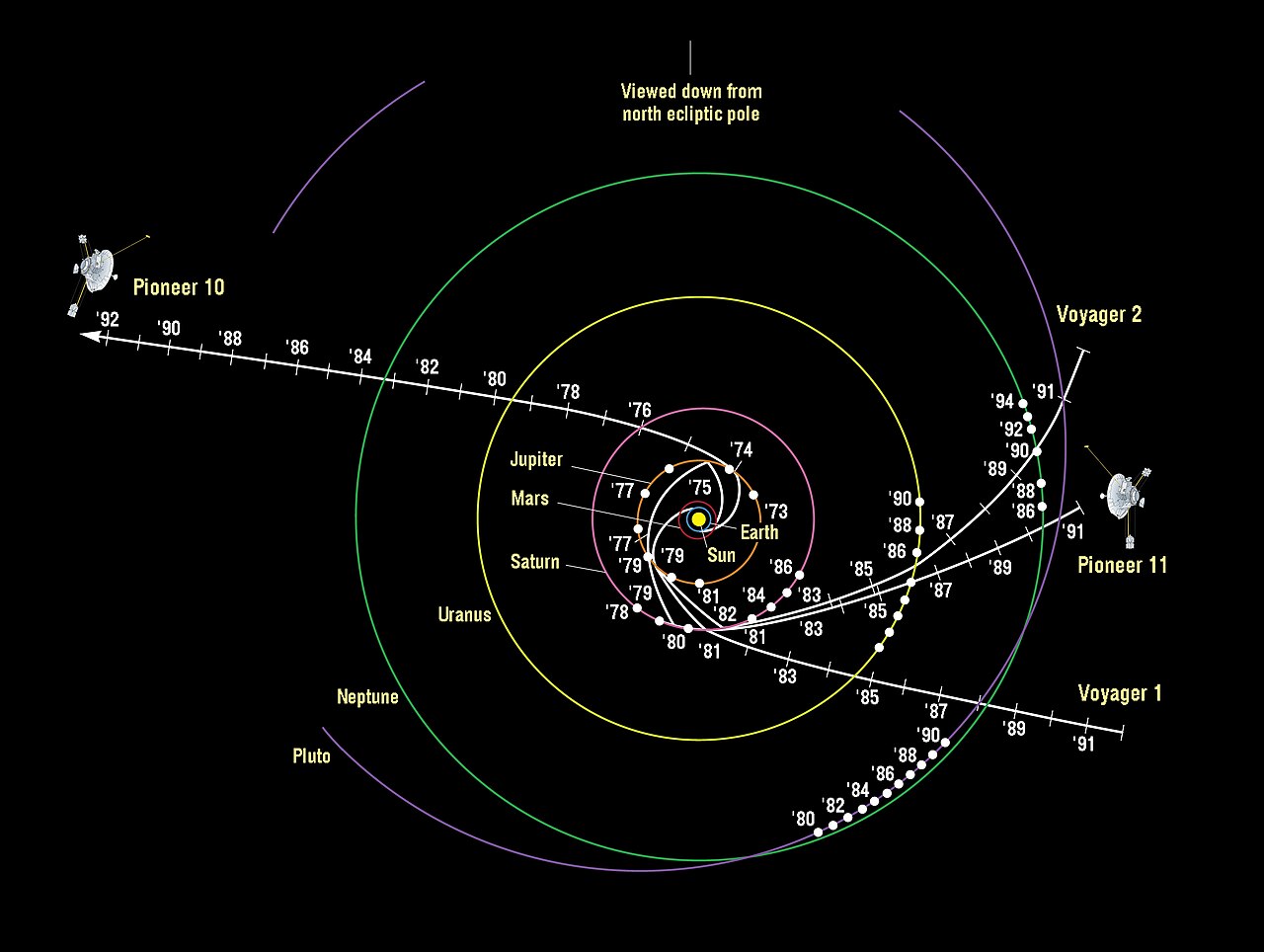
Nevertheless, the spacecraft progressively started to malfunction. The RTG’s power was diminishing, paralleling the current situation with the Voyager spacecrafts. Ultimately, on January 23, 2003, the final data transmission was received from the probe. At that moment, it was situated 82.19 astronomical units from the Sun. The probe continues its journey through space and will fly relatively close to Aldebaran in approximately two million years.
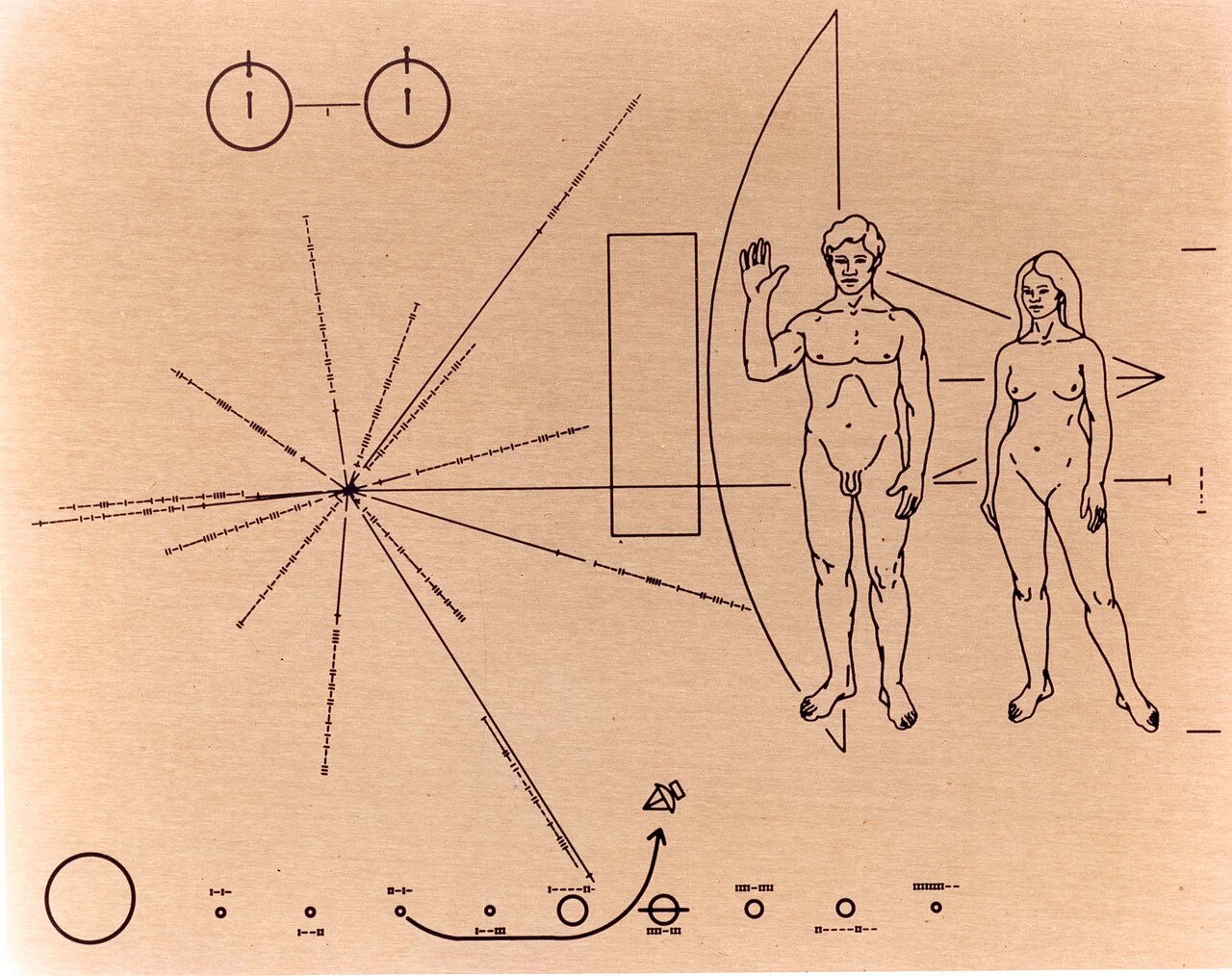
It is quite possible that an individual may discover it, be able to retrieve it, and read the plaque meticulously affixed to it on Earth. The inscription was authored by the esteemed astronomer and proponent of the search for extraterrestrial life, Carl Sagan.
The gold-plated aluminum plate schematically presents an image of the spacecraft itself, accompanied by two individuals — a man and a woman — illustrated to scale. The plate additionally features an image of a neutral hydrogen molecule, schematic representation of the Solar System’s planets and the trajectory of Pioneer 10 relative to them and Solar System’s location relative to the 12 brightest pulsars. All of these elements are intended to ensure that an extraterrestrial civilization discovering it in the future will be able to identify the origin and the entity responsible for its launch.
However, this is not the sole significant fact concerning Pioneer 10. Back when it was just approaching Neptune’s orbit, starting from a distance of about 20 AU, scientists commenced tracking its position and observed that the more it advanced, the greater the deviation from its initially calculated trajectory. It appeared as though the spacecraft was experiencing a slight deceleration.
This phenomenon was referred to as the “Pioneer effect,” and for numerous years, it stood as one of enigmas in space science. It was not until the 21st century that researchers ultimately understood it was attributable to the asymmetrical distribution of thermal radiation emanating from the onboard equipment of the probe.
Over the decades since its launch and the subsequent loss of contact, Pioneer 10 has evolved into a cultural icon, appearing as a character in various science fiction novels and films.

