

NASA Administrator Jared Isaacman’s statement that Pluto should be restored to planetary status has sparked a flurry of rumors that this might actually happen. However, it is highly unlikely that this will lead to anything other than pointless arguments, which are more likely to harm the space agency itself.
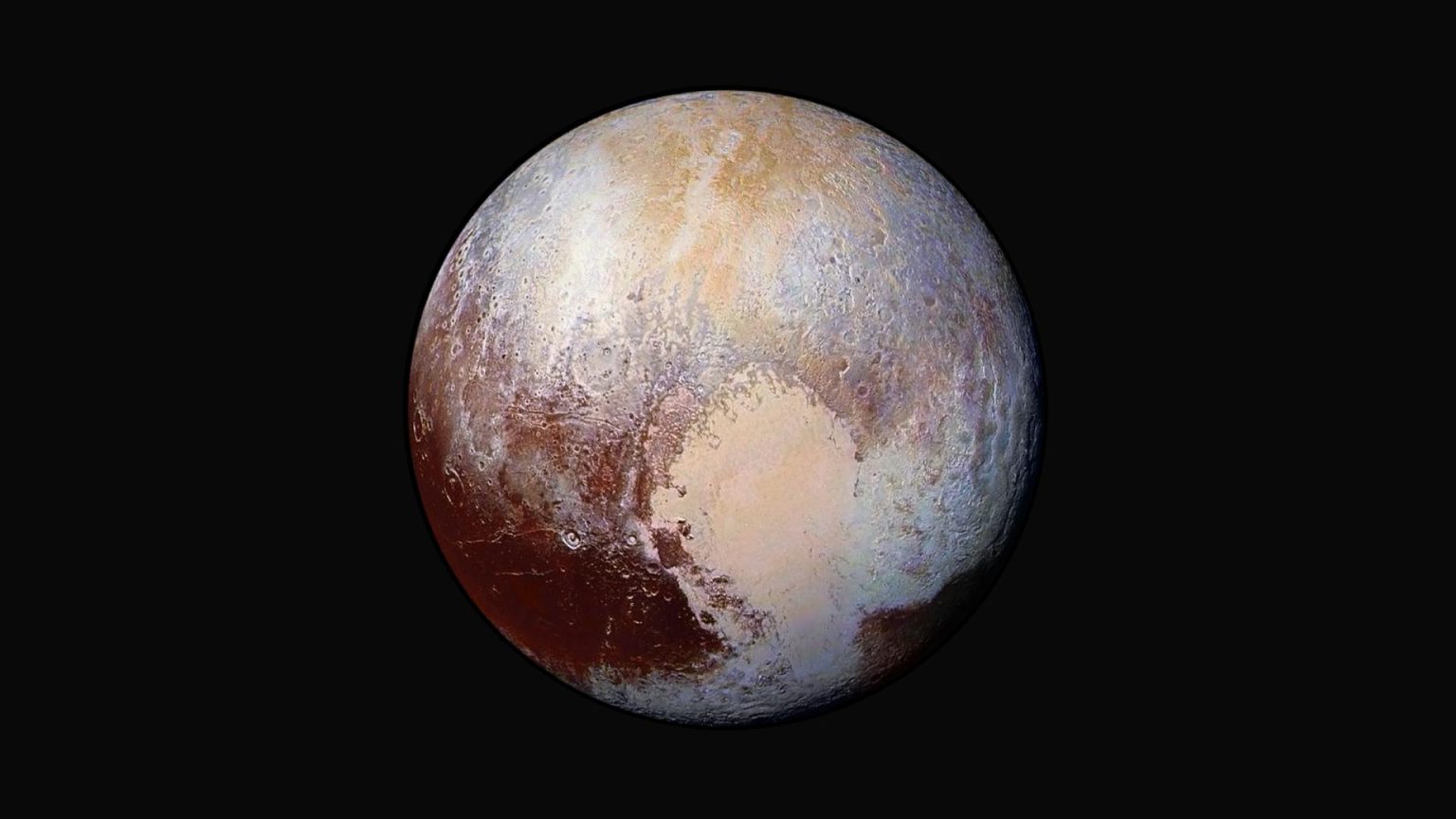
Statement by Isaacman
On April 28, a U.S. senator asked NASA Administrator Jared Isaacman whether Pluto could be restored to planetary status. The head of the space agency responded that he supports the idea, and scientists at his organization are already preparing a series of articles to demonstrate to the global scientific community that this is the right decision.
This was the second time in the past month that Isaacman had mentioned Pluto. Before that, there had been a letter from a little girl asking the same question. And at that time, the NASA administrator had also publicly stated that he supported restoring Pluto’s planetary status. This led many people to speculate that such a move reflected genuine intentions.
But in reality, things are much more complicated. The fact is that NASA does not have the authority to rename anything in space. These matters are handled by the International Astronomical Union, and Isaacman’s opinion carries very little weight with them.

Regular and dwarf planets
The ideas put forward by Isaacman are shared by many people around the world. After all, many feel sorry for Pluto, which was stripped of its planetary status by those “evil” scientists. But in reality, in 2006, at the General Assembly of the same International Astronomical Union, something else happened: scientists revised the classification of bodies in the Solar System.
Instead of two classes of celestial bodies (planets and asteroids), three were established: planets, dwarf planets, and asteroids. After all, the line between the first and second categories was far too blurred, and there were quite a few objects in that gray area that, upon closer inspection, did not really fit into either category.
But the worst part was that a few years earlier, American astronomer Michael Brown had discovered Eris beyond Neptune’s orbit – an object slightly larger than Pluto, yet orbiting roughly in the same region as Pluto. This is what prompted scientists to create a separate category of celestial bodies – objects large enough to resemble planets, yet capable of being part of asteroid belts.
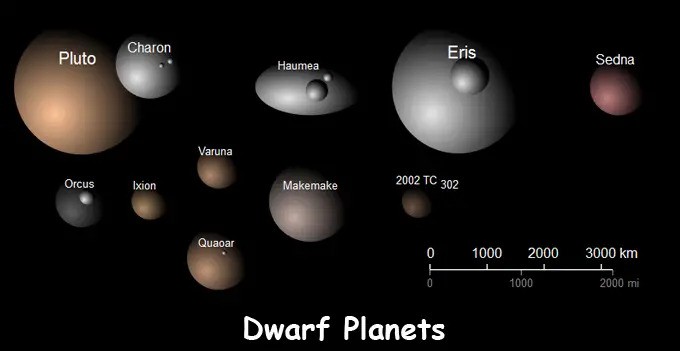
This category was named “dwarf planets,” and Pluto, which had long raised many questions due to its size and highly elongated, tilted orbit, was classified as one. Incidentally, it was not only Pluto that was reclassified, but also, for example, Ceres, which had previously been considered the largest asteroid in the Main Belt.
Ceres has quite an interesting story behind it, because it was discovered while scientists were searching for a planet between Jupiter and Mars that, according to some calculations, was supposed to be there. And asteroids themselves used to be called minor planets. So in Ceres’s case, it was a “promotion” – and a well-deserved one at that.
Make Pluto great again!
So, the International Astronomical Union has very good reasons not to accommodate those who “feel so sorry for Pluto.” After all, its status is merely the result of a new classification, and any attempt to restore its planetary status would immediately raise the question of what to do with the rest of the dwarf planets.

And their number has not decreased over the past 20 years. On the contrary, new ones have been discovered, so there are now 150 of them. So, should we classify all of them as planets? Technically, that would be possible, but the question arises: how would astrologers make a living then?
However, Isaacman’s stated desire to restore Pluto’s planetary status is of a somewhat different nature. It is closely linked to a sentiment currently prevalent in the United States – a desire to reexamine many of the concepts adopted over the past couple of decades that, in many people’s eyes, are making America weak.
This desire is embodied in the slogan under which the current U.S. president took office: “Make America Great Again.” Of course, the classification of celestial bodies adopted in 2006 has nothing to do with gender studies or the liberalization of immigration policy.

However, to many people with only a superficial understanding of astronomy, it seems like a phenomenon of the same order. And so, restoring Pluto’s planetary status fits perfectly into this very “Make America Great Again” narrative. Of course, there is nothing behind these ideas but populism based on ignorance. Nevertheless, this is enough for American senators to ask the NASA administrator about it.
At the same time, the fact that Pluto was the only planet discovered by an American – Clyde Tombaugh – is cited as a rational argument for restoring its former status. Yet, for some reason, no one mentions granting planetary status to Eris. And Michael Brown, its discoverer, is also American.
At the same time, he is one of the main proponents of the new classification and, of course, now dismisses Isaacman’s ideas as nonsense. Astronomers, unlike the general public, do not take his statements seriously at all.
However, Donald Trump’s team is known for being willing to make populist decisions, no matter how irresponsible they may be. Nothing is stopping Isaacman from issuing a document declaring that Pluto should be considered a planet. Likewise, nothing is stopping Trump from signing the corresponding executive order.
The only thing that remains unclear is what this should entail, since those advocating for Pluto’s restoration to planetary status are talking only about Pluto itself, not about dwarf planets in general. If Pluto is designated a planet as an exception, it will only spark further controversy over why it alone is being singled out. At most, Pluto will be called a planet in the American media and official NASA documents, and this will cause nothing but further confusion and controversy.

The proposed approach to updating the classification based on the internal structure of celestial bodies clearly reveals that it has been put forward by people who are not very knowledgeable about astronomy. For even with today’s knowledge, it is safe to say that, in addition to Pluto, several other large bodies would have to be recognized as planets, and an even greater number may be recognized as such in the future.
In other words, the situation comes down to a few dozen planets in the Solar System again. The result is a never-ending cycle. And the question here is to what extent Isaacman himself realizes just how nonsensical his statements are.
NASA – held hostage
In general, the very fact that Isaacman chose to take a stance for or against Pluto when asked about it – rather than explaining all of the above – does not exactly cast him in the best light in the eyes of those who truly understand the space sector. After all, he could have simply stated that Pluto is already a planet, albeit a dwarf one.
Isaacman was appointed to NASA as a compromise figure who is more or less capable of communicating with both Trump’s team and the scientific community. A businessman, as it were, who also knows something besides how to make money. And so far, he has looked like someone capable of finding solutions that, while not perfect, are effective – solutions that, though hard-won, have satisfied everyone.

To understand why he responded that way about Pluto, it is necessary to recall where he made that remark. He did so during Senate hearings on NASA’s 2027 budget. And that budget is set to be severely cut. Not even the fact that American astronauts flew around the Moon this spring – and that Trump, when welcoming them to the White House, called them heroes – changed the situation.
The Trump administration, just as it did in early 2025, believes that scientists are spending too much money on things they do not understand. They like achievements that can be proudly showcased on live television, but scientists are mostly not working on those.
And Jared Isaacman is not taking a hard line in defense of scientists on any of these issues. He is trying to secure funding while remaining loyal. And it is in this context that his statement about Pluto should be viewed. That is how he is trying to get the money.
And in fact, the main issue with all these statements is not whether to consider an icy body on the outskirts of the Solar System a planet or a dwarf planet, but rather that NASA has found itself held hostage by the U.S. government and is willing to discuss claims that have nothing to do with science.
Of course, one could always argue that NASA remains a major player in space science, and funding from the U.S. government plays no small part in this. And this influence could, in theory, be used to put pressure on the astronomical community. The only question that remains is how quickly the policy of underfunding will result in a decline in actual scientific results and the loss of that very authority.
Provided by phys.org

