

Recently, a Chinese spacecraft nearly collided with a Starlink satellite, passing just 200 meters away. However, according to the latest research, such dangerous situations are now constantly occurring in Earth’s orbit, and the likelihood of a catastrophe is increasing every year.
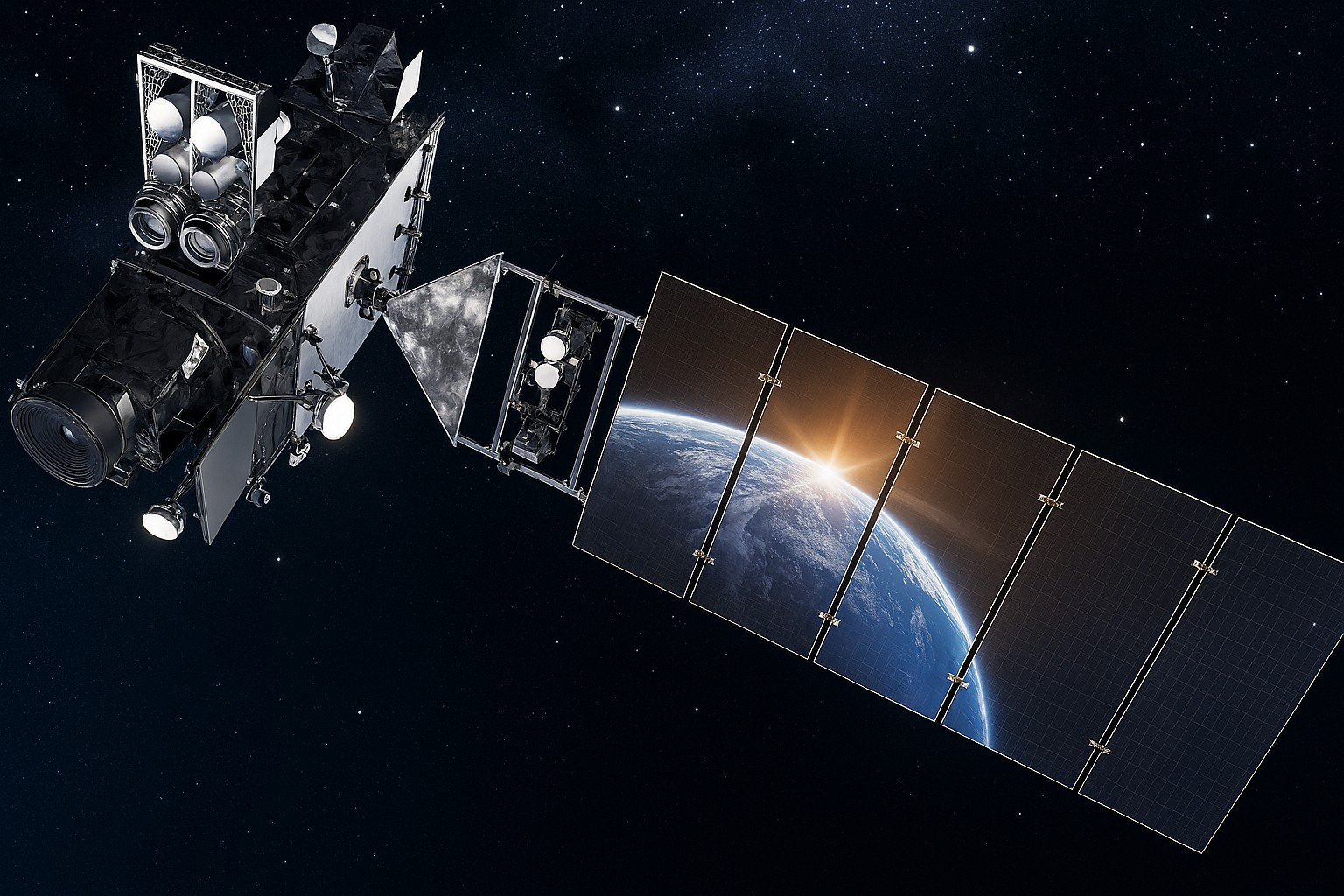
New expert assessments paint a grim picture. Given the number of objects in low Earth orbit as of June 2024, a catastrophic collision would likely occur within just 2.8 days if the ability to avoid a collision were suddenly lost. Such a collision could create debris that would be sufficient to cause even more collisions, possibly triggering Kessler syndrome.
Kessler syndrome is a theoretical phenomenon in which low Earth orbit becomes so crowded with satellites and debris that they begin to collide with each other, creating a snowball effect. This would make our communications satellites vulnerable and certain orbits unusable.
Kessler syndrome will take several decades to reach its final destructive stage. But we definitely don’t want to start it if we can avoid it. However, some say it’s already too late.
The clock of irreversible time
Before focusing on what is arguably the worst-case scenario, it is worth concentrating on more immediate dangers. This is precisely what the authors of this study attempted to quantify by creating a new tool known as the Collision Realization And Significant Harm Clock, or CRASH for short.
CRASH calculates the load on the orbital environment by determining the time required for a “catastrophic collision,” based on the assumption that the ability to maneuver to avoid a collision has been lost and situational awareness has been lost.
Calculations show that the CRASH time is 2.8 days, which is an incredible change compared to the 2018 level, when it was 121 days. Of course, this was before the advent of megaconstellations such as Starlink. The number of objects in low Earth orbit has indeed increased dramatically: from 13,700 in 2019 to nearly 24,200 in 2025.
According to this study, satellites in each mega-constellation in low Earth orbit currently pass within 1 km of another satellite every 22 seconds, giving them many opportunities to collide.
Heavy space traffic
Starlink is the largest of the mega-constellations. It has a total of 9,300 satellites in orbit, which accounts for the majority of satellites in low Earth orbit. This is according to Jonathan McDowell, an astronomer at Harvard University who tracks the total number of satellites. This number will continue to grow as SpaceX launches more satellites each year.
Today, Starlink satellites perform an average of 41 maneuvers per satellite per year to prevent collisions, which is one maneuver almost every 1.8 minutes for the entire mega-constellation. Consider this the best-case scenario, as it assumes that nothing is being done to mitigate these risks.
According to the researchers, the number of collision avoidance maneuvers performed by Starlink traditionally doubles every six months.
Fatal risks
A sudden loss of the ability to respond to potential collisions remains unlikely for now. But the study easily provides two potential circumstances that could destroy safety controls: a strong solar storm and a critical software error. It is very important for us to take these risks seriously, not only with regard to the Starlink satellite group itself, but also with regard to the entire population of vulnerable maneuverable satellites in low Earth orbit.
We previously reported on how to prevent collisions in lunar orbit.
According to Gizmodo

