

Scientists have found an explanation for the rust found on the Moon. It was formed as a result of the bombardment of the lunar surface by oxygen ions from the Earth’s atmosphere.
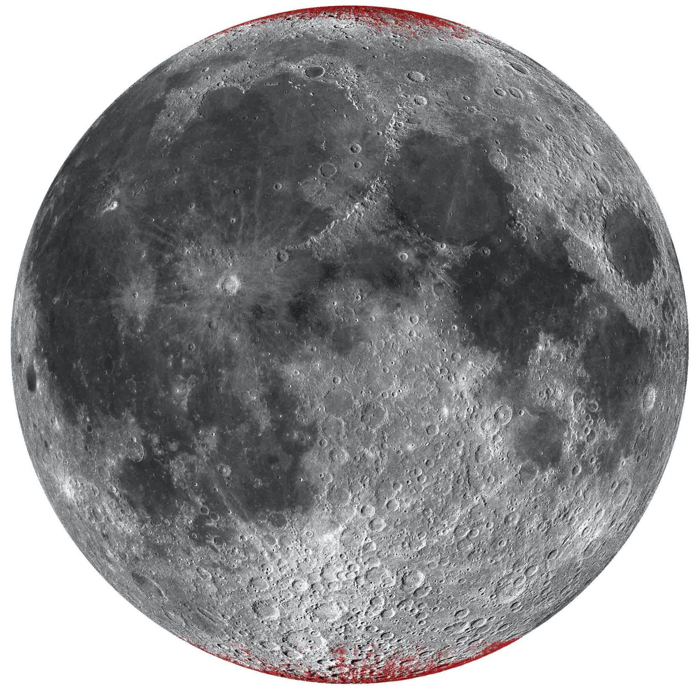
In 2020, scientists reported the discovery of hematite (iron oxide), better known as rust, on the Moon. It is most common in the high latitudes of the moon, especially on its near side. This discovery came as a complete surprise, given the low concentration of oxygen on the Moon, which is necessary for rust to form.
Researchers have proposed several theories to explain the origin of lunar rust, including the degassing of volatile substances from magma, asteroids, comets, or large impact events. However, the only explanation that could account for the distribution of hematite was that oxygen ions were transported to the Moon by Earth’s magnetosphere. This occurs for approximately five days each month when the Earth is between the Sun and the Moon, allowing part of its atmosphere to fall onto the Moon’s surface. This phenomenon is called “Earth wind.” The rest of the time, the Moon is mainly exposed to low-energy hydrogen ions from the solar wind.
A group of scientists recently presented additional evidence to support this theory. The study, published in the journal Geophysical Research Letters, aimed to test the hypothesis that terrestrial wind can produce hematite. In a series of experiments simulating conditions on the Moon’s surface, a team of scientists irradiated various iron-containing minerals found on the Moon with oxygen and hydrogen at energies expected from Earth’s wind particles, as well as hydrogen ions similar to those found in the solar wind.
The results showed that oxygen ions, similar to those found in Earth’s wind, can oxidize metallic iron, iron sulfide, and ilmenite found in lunar regolith to form hematite.
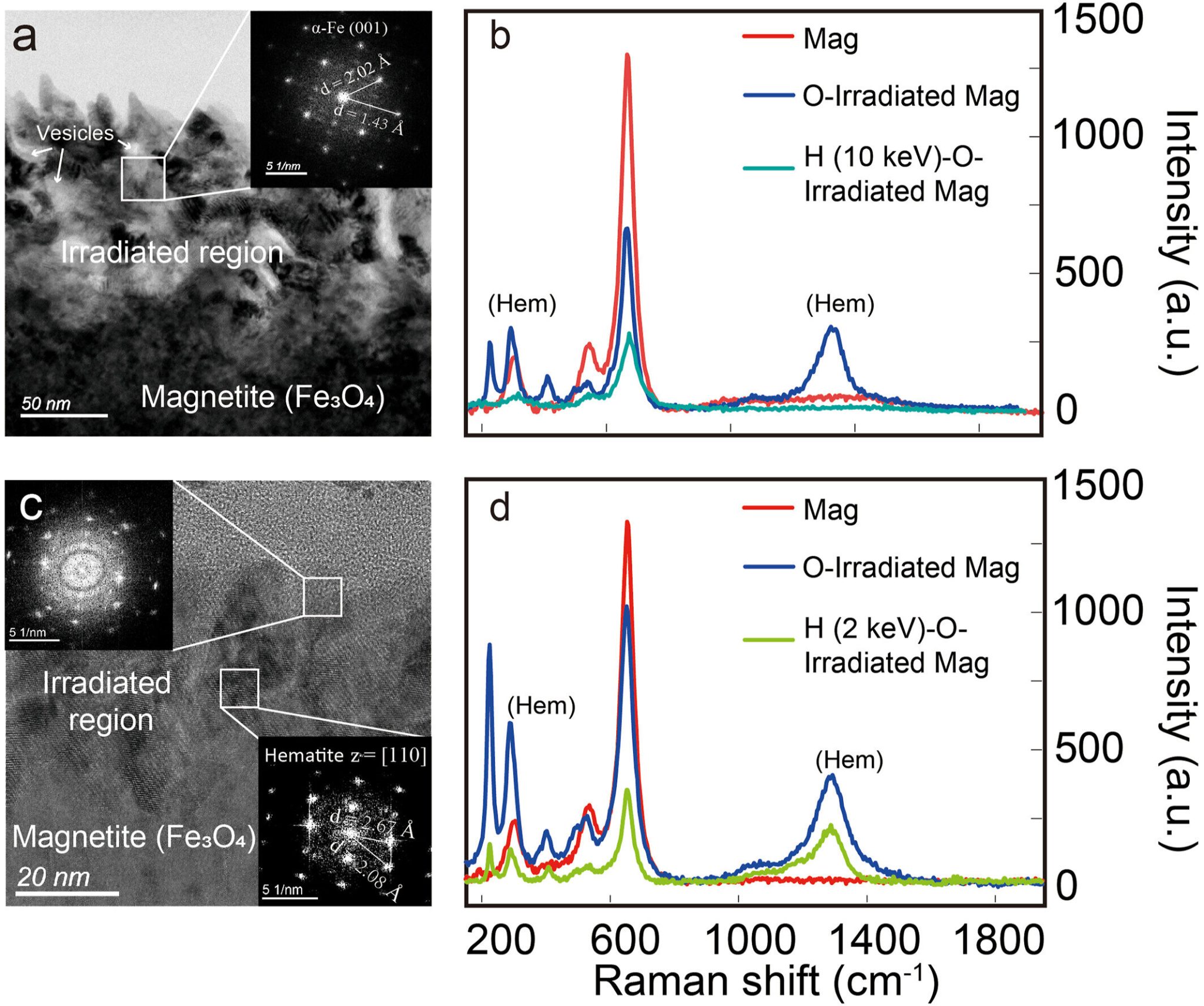
“Although these iron‐bearing minerals may occur as micro‐particles or small crystals in lunar regolith, they can undergo direct oxidation upon exposure to Earth wind. The resulting hematite on the outer surface of regolith particles is readily detectable via optical spectrometry” the authors of the article explain.
Overall, the study provides strong evidence in favor of the Earth wind theory. At the same time, laboratory conditions may not fully replicate the complex lunar environment. According to scientists, future lunar missions could help deepen our understanding of how these processes occur.
Earlier, we reported on how the Moon’s escape affected our planet
.According to Phys.org

