

A true cosmic wonder awaits observers on the evening of September 8. As soon as the Sun disappears below the horizon, turn your gaze to the east, where you will see an impressive encounter between the shining full Moon and bright Saturn. Two celestial bodies will come together in the sky, separated by only a few degrees. For comparison: this distance is approximately equal to the width of three fingers on an outstretched arm.
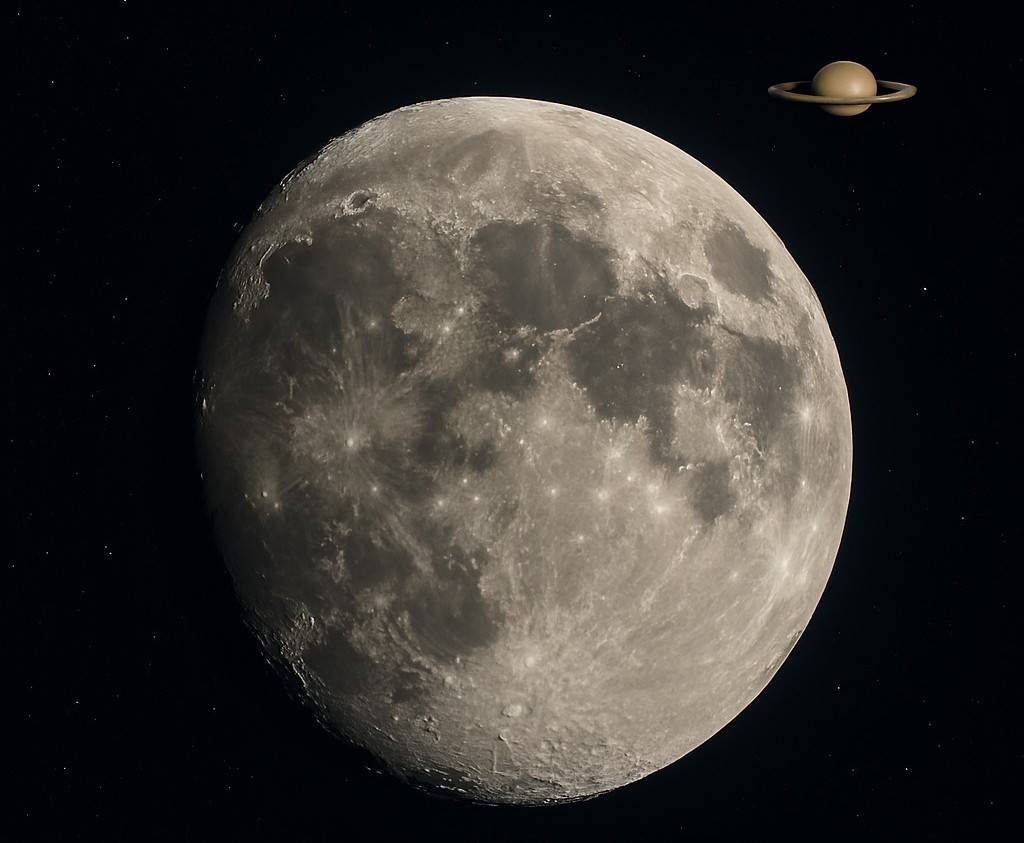
Although technically the full Moon occurred a day earlier, our natural moon will still appear almost fully illuminated. This is the perfect time to study its surface. The dark spots known as “seas” are actually vast plains formed billions of years ago by lava that solidified after powerful collisions with asteroids. Binoculars or a small telescope will allow you to see these ancient formations in all their glory.
Saturn through a telescope
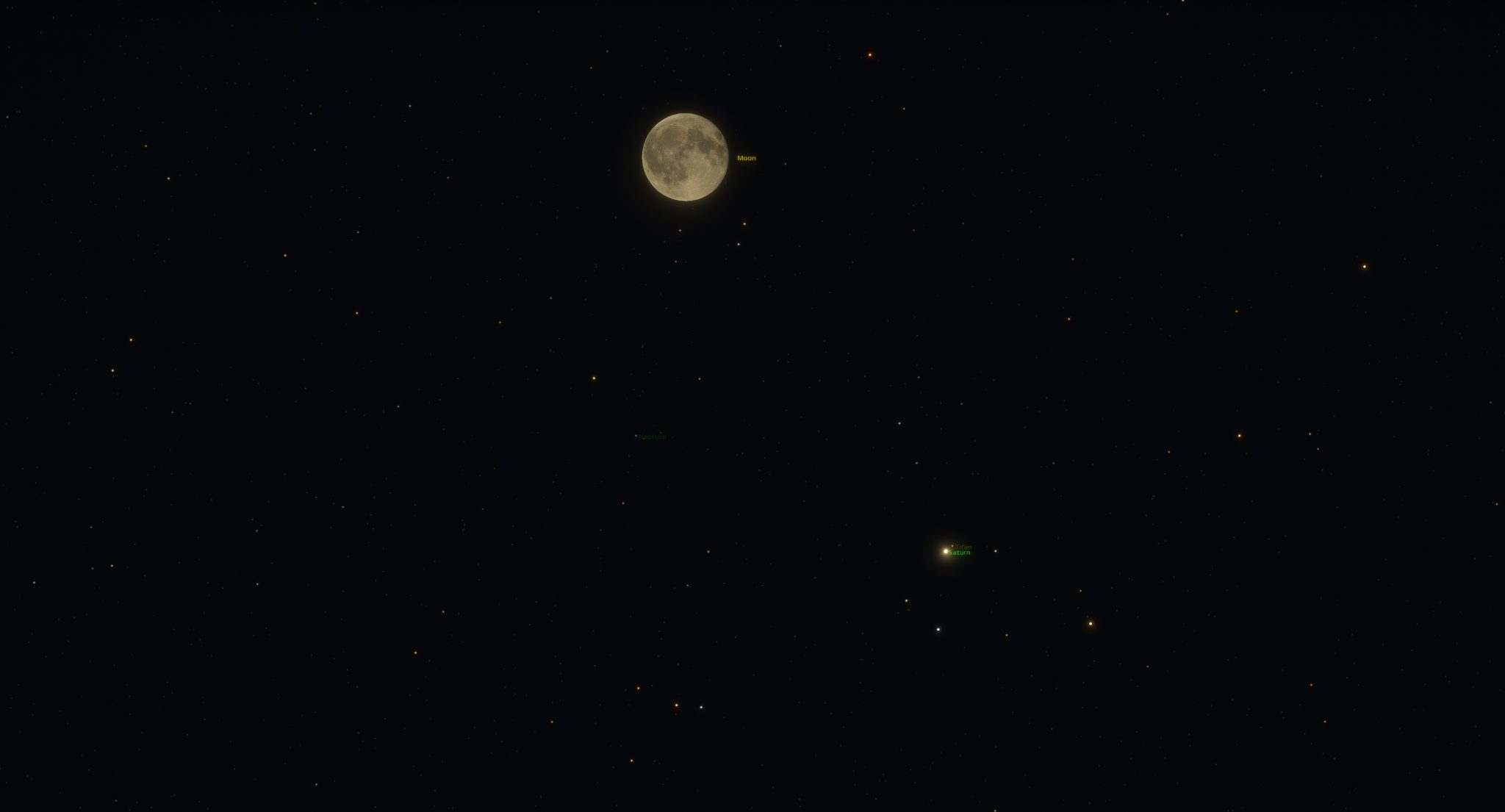
Saturn will undoubtedly be the main attraction of the evening. Even in a small telescope with an aperture of 200 mm, you can see the planet’s disk and a barely noticeable band, which is the rings temporarily turned perpendicular to us. And next to Saturn, less than 3° away, there will be another giant — the distant and mysterious Neptune, which will appear in the field of view as a bluish disk.
This astronomical event does not require any special equipment to observe — everything is visible to the naked eye. But for those who want to deepen their knowledge of space, it is worth equipping yourself with at least binoculars to observe this unique convergence. The main thing is to find a place with an open eastern horizon and clear skies. Don’t miss your chance to see this incredible dance of two worlds.
Earlier, we reported on how Saturn became “bare” for nine months.
According to space.com

