

The results of a study conducted by scientists from the Center for Earth and Planetary Research at the National Museum of Aviation and Cosmonautics have revealed traces of recent tectonic activity on the Moon. This is stated in an article published in The Planetary Science Journal.
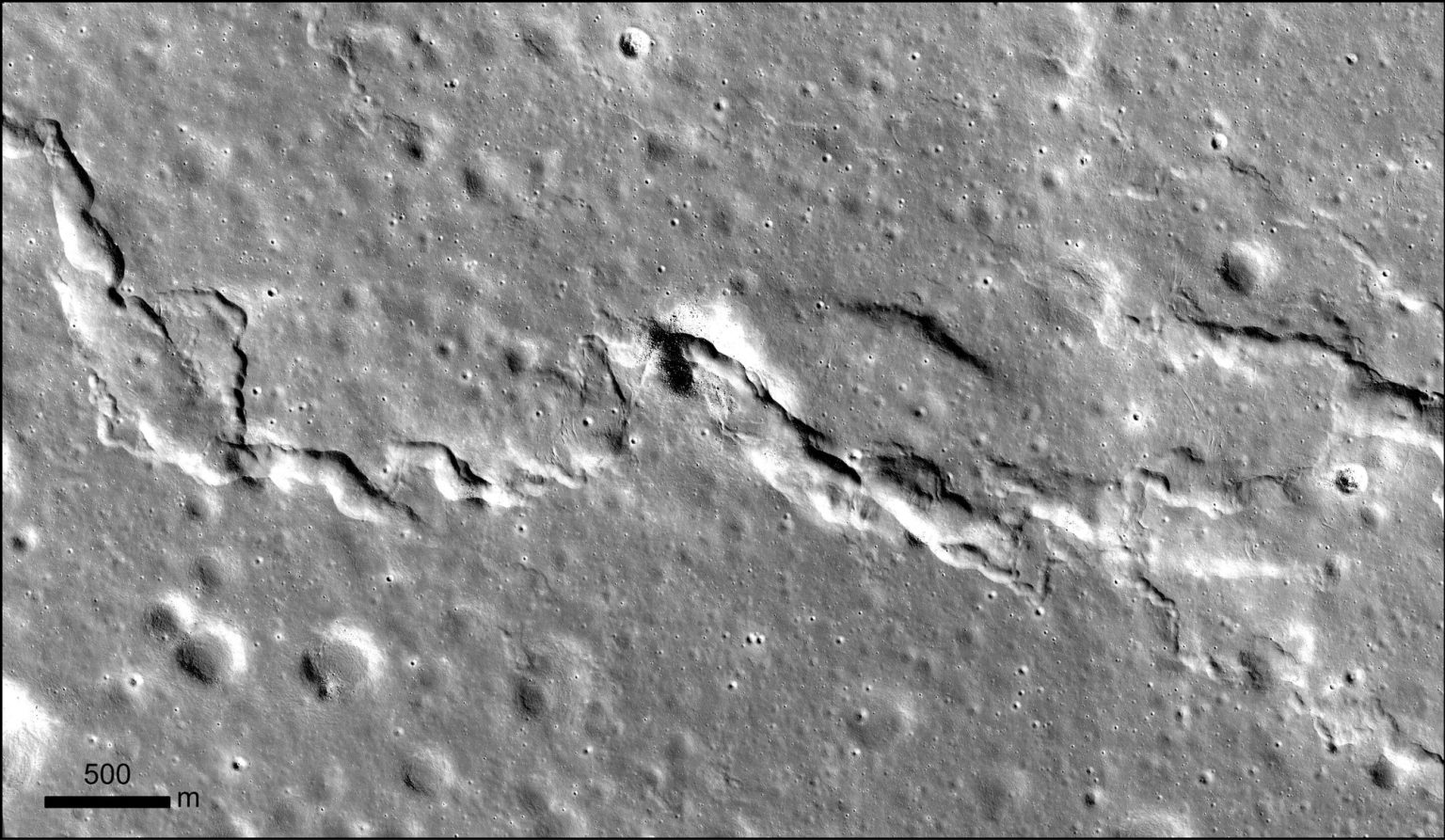
Both the Moon and Earth are tectonically active bodies, but the nature of the forces acting on them differ. The Earth’s crust is divided into plates that move closer together, drift apart, and slide over each other, forming vast mountain ridges, deep ocean trenches, and a ring of volcanoes around the Pacific Ocean. The Moon’s crust is not divided into plates, but stresses within it lead to the formation of several characteristic relief features.
One of the most common of these are lobate scarps, which form when the crust compresses and the resulting forces push material upward and over the adjacent crust along a fault, creating ridges. These scarps, discovered in the lunar highlands, were formed only during the last billion years.
In 2010, scientists also discovered that the Moon is slowly shrinking. This contraction has led to the formation of lobate scarps in the lunar highlands. However, this does not explain all of the “fresh” landforms on the Moon. One of these is a recently discovered class of tectonic features — small mountain ridges in the lunar maria (SMRs).
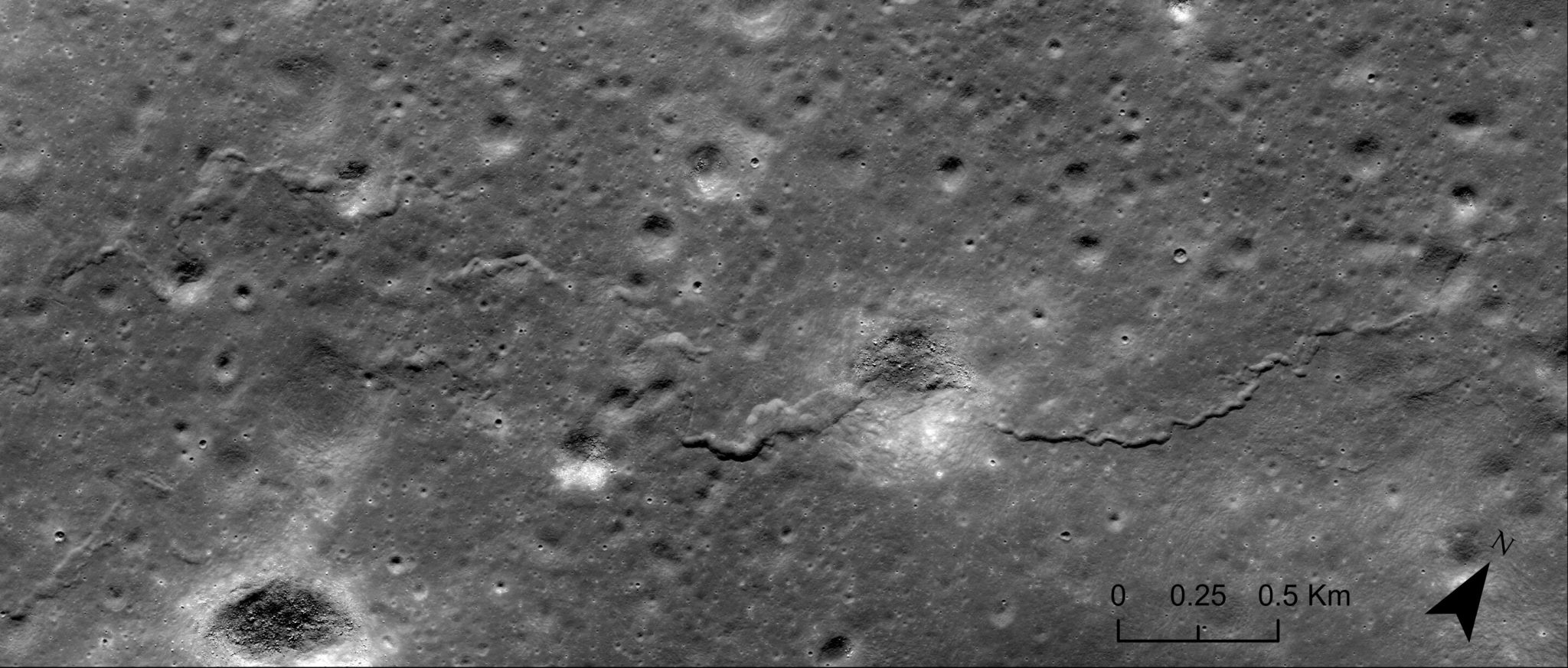
SMRs were created by the same forces that created the lobate scarps. But while lobate scarps are found in highlands, SMRs are only found in lunar mares. The research team attempted to map them and analyze their connection to recent tectonic activity.
The results led to the creation of the first comprehensive SMR catalog. Scientists have discovered 1,114 new SMR segments on the visible side of the Moon, bringing the total number to 2,634. They also determined that the average age of SMR is 124 million years, which corresponds to the average age of the lobate scarps (105 million years). This means that they are among the youngest objects on the Moon.
The analysis also showed that SMRs were formed as a result of the same type of faults as the lobate scarps in the highlands. This indicates a similar origin for these two structures and provides a more complete picture of recent tectonic activity on the Moon.
The discovery is significant in light of plans to establish bases on the Moon. Previously, scientists discovered a connection between lobate scarps and the frequency of moonquakes. Since SMRs originate from the same type of tectonic activity, this significantly expands the number of locations where moonquakes capable of posing a threat to humans can occur.
Earlier, we reported on the discovery of traces of a giant impact that completely “reshaped” the Moon.
According to Phys.org

