

For many years, astronomers have been searching for signs of extraterrestrial life using radio telescopes and optical instruments, scanning the sky for artificial signals. However, there is another approach that allows us to find extraterrestrial artifacts that are already in our Solar System.
Filter for the sky
A new study published in the journal Monthly Notices of the Royal Astronomical Society describes an innovative method for detecting potential extraterrestrial probes near Earth. It is based on the Earth’s shadow. The authors of the study suggest using it as a natural filter to eliminate interference from satellites and space debris.
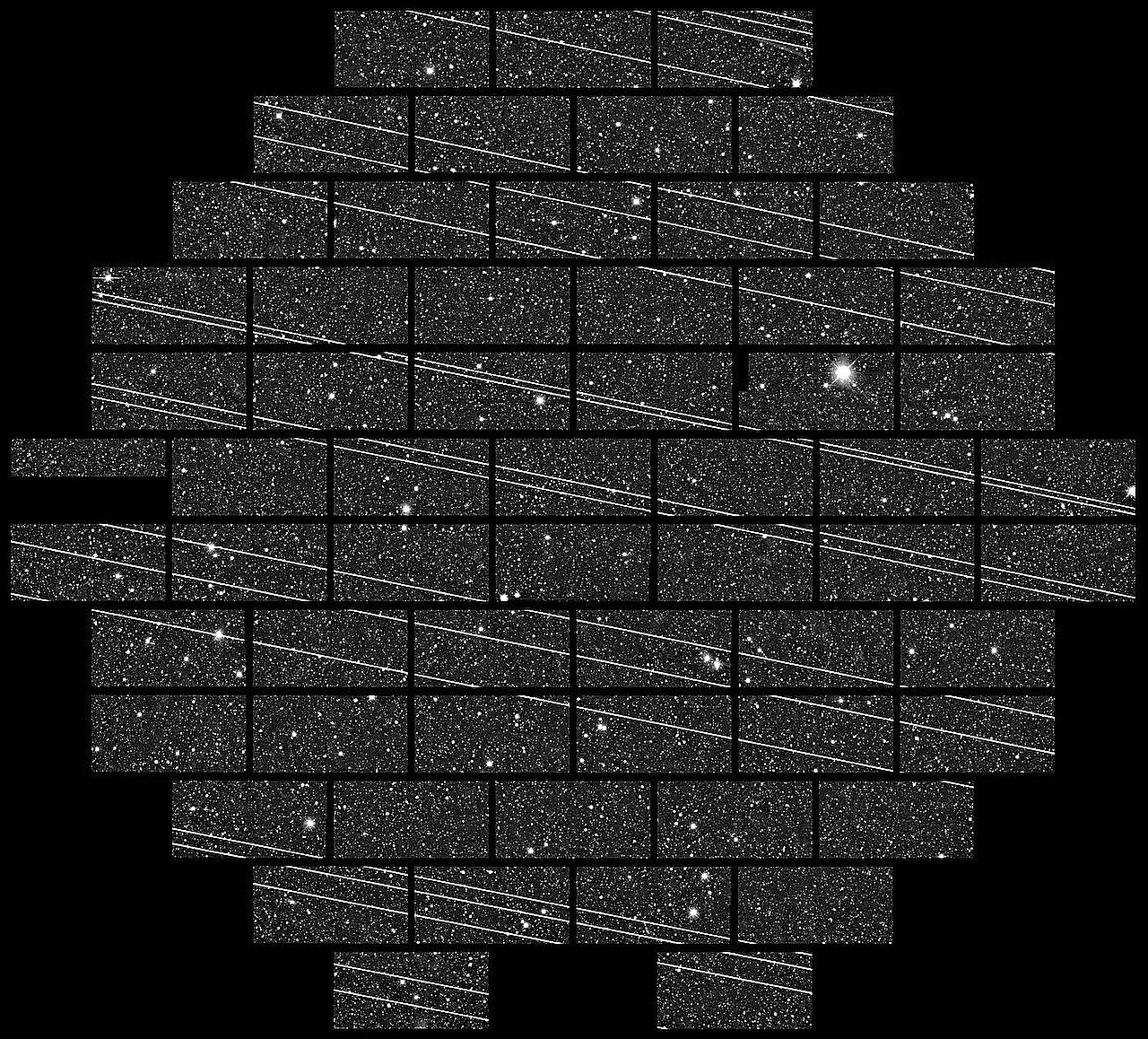
There are currently thousands of satellites and millions of pieces of space debris in Earth’s orbit. They make it extremely difficult to detect anything unusual in the sky, especially objects of extraterrestrial origin.
To solve the problem of this “pollution,” an international team of researchers turned to the Earth’s shadow. Our planet casts a cone-shaped shadow into space, where direct sunlight cannot be reflected off satellites or space debris. This creates a perfect “clean” search area. The base of the shadow extends approximately 8–9 degrees for objects in geosynchronous orbit, approximately 35,700 km above Earth.
Man-made satellites usually do not have optical light sources, with rare exceptions such as communication lasers or spacecraft engines. Therefore, any bright flashes or streaks detected in the Earth’s shadow could potentially indicate something more exotic.
Mysterious object
The researchers did not limit themselves to merely proposing a concept. They analyzed images from the Zwicky Transient Facility (ZTF), a telescope in California that systematically surveys the sky in search of changing objects. In total, they studied more than 200,000 images, paying particular attention to those that were obtained in the Earth’s shadow.
Their automated search engine, called NEOrion, detected thousands of candidates, including mysterious streaks and flashes from point sources. Most of them turned out to be meteors, aircraft, or known asteroids. However, there was one intriguing case: an unclassified object moving much faster than typical asteroids and not found in any of the existing databases of space objects. Unfortunately, the team was unable to confirm what it was, so its nature remains a mystery.
Scientists also considered other innovative approaches to searching for traces of extraterrestrial life, including studying astronomical photos taken before 1957 and analyzing the color spectra of suspicious objects to identify materials that have been weathered as a result of prolonged exposure in space. Researchers are also developing the ExoProbe project: a network of specialized telescopes that will use multiple simultaneous observations to determine the exact distance to suspicious objects.
Earlier, we discussed whether interstellar comets could actually be spaceships.
According to Phys.org

