

The European Space Agency (ESA), NASA, and the Canadian Space Agency (CSA) have released stunning new photos of Saturn. These aren’t just another set of beautiful photos—they’re the result of the coordinated efforts of the two most powerful space observatories: James Webb and Hubble.
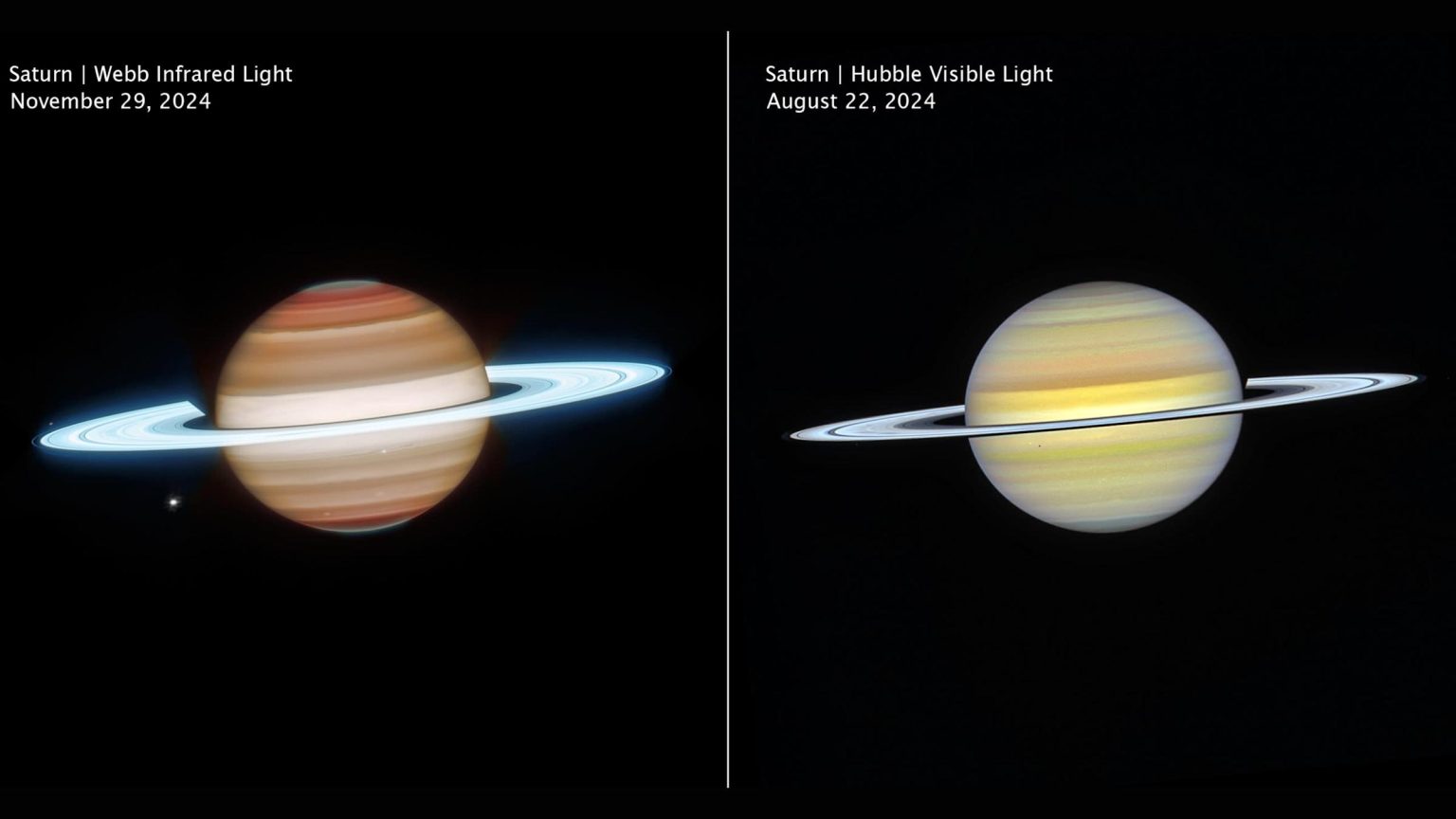
By comparing data from the visible and infrared spectrums, scientists have gained an unprecedented opportunity to study the composition and dynamics of the gas giant’s atmosphere at various depths.
The Hubble images were taken in August 2024 as part of the OPAL (Outer Planet Atmosphere Legacy) program. This telescope has traditionally specialized in tracking storms and color variations in the planet’s clouds.
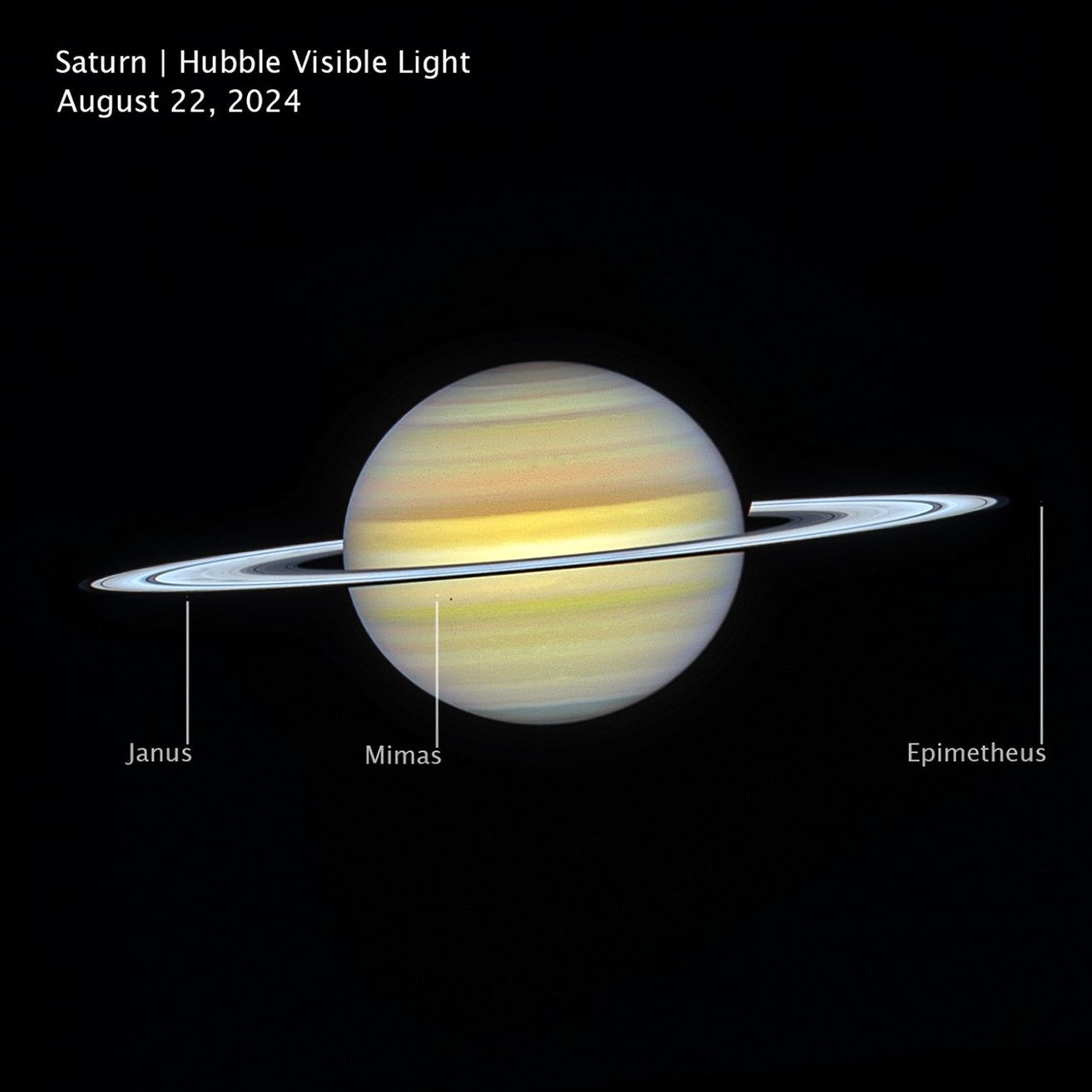
The new images clearly show Saturn’s famous atmospheric bands—zones of high and low pressure where winds race at breakneck speeds. Hubble captures the subtle nuances of reflected sunlight, allowing scientists to create detailed maps of Saturn’s “weather” in the visible spectrum.
Infrared X-rays for clouds
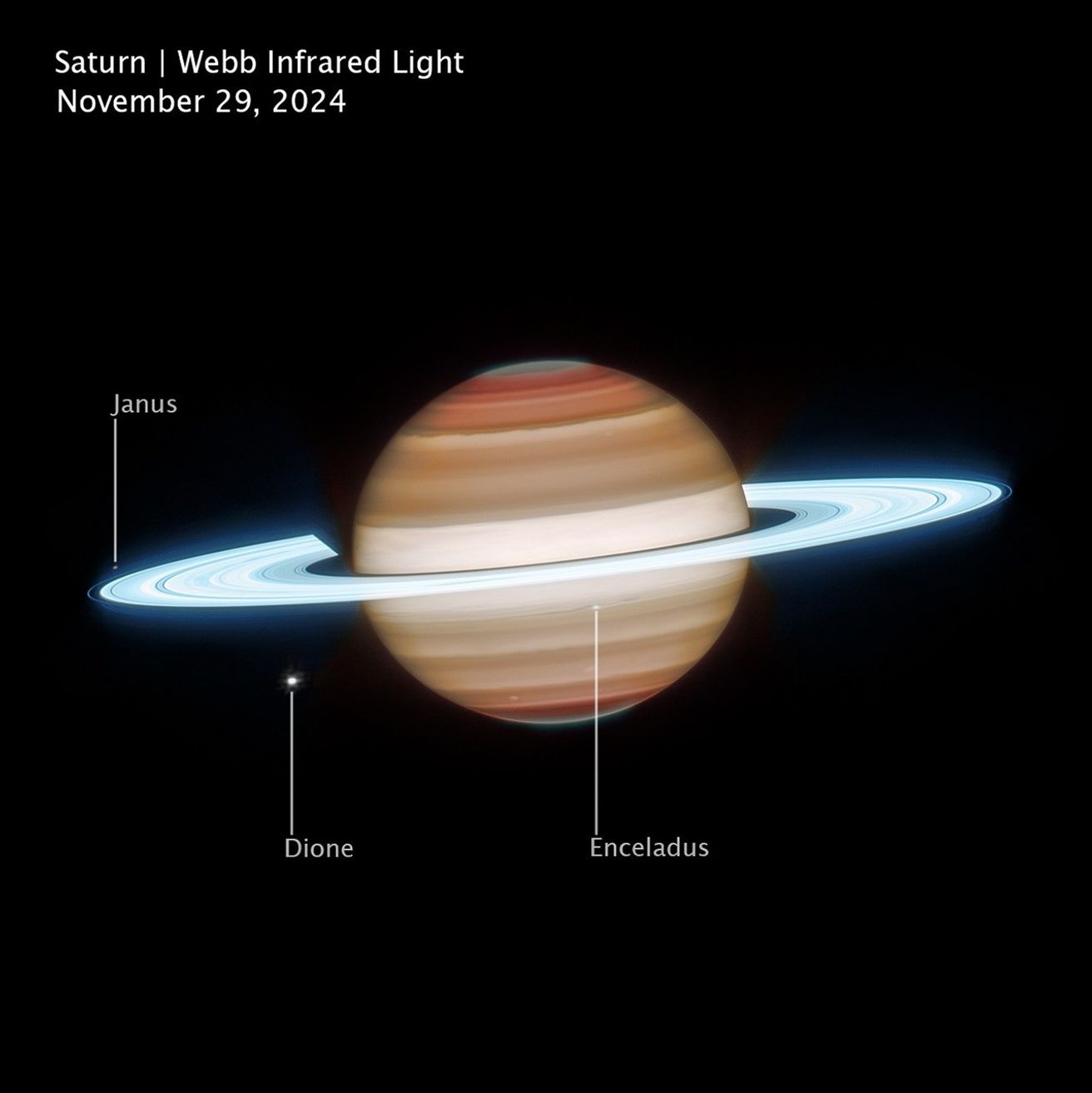
Fourteen weeks after Hubble, the James Webb Space Telescope took over. Its infrared sensors are capable of seeing what is hidden from the human eye. While Hubble can only see the tops of the clouds, the JWST looks much deeper, detecting the chemical composition of various layers—from the thin upper atmosphere to the dense lower layers.
In infrared images, Saturn’s ice-rich rings appear almost white due to their high reflectivity. The gray-green hues at the planet’s poles may indicate auroral activity—the interaction of charged particles with the planet’s magnetic field—or specific layers of high-altitude aerosols.
A new era dawns on the gas giant
These observations are crucial to understanding the planet’s climate. Saturn is currently in the transition phase from northern summer to the equinox. Since a year on Saturn lasts nearly 30 Earth years, the changing of the seasons there occurs slowly but on a grand scale. By the 2030s, the planet will have fully transitioned to southern summer, and the two telescopes will have the best vantage point for observing the Southern Hemisphere as it gradually emerges from the shadows.
We previously reported on how Saturn’s rings disappeared.
According to NASA

