

At first glance, the night sky appears immutable—merely a handful of motionless points of light within the darkness. However, beneath this illusion of serenity lie monumental narratives: from their inception within dense nebulae to explosive events potent enough to illuminate an entire galaxy. We shall direct our telescope toward various classes of stars to observe their progression from initial emergence to ultimate transformation. This represents the story of the universe itself and of each individual within it.
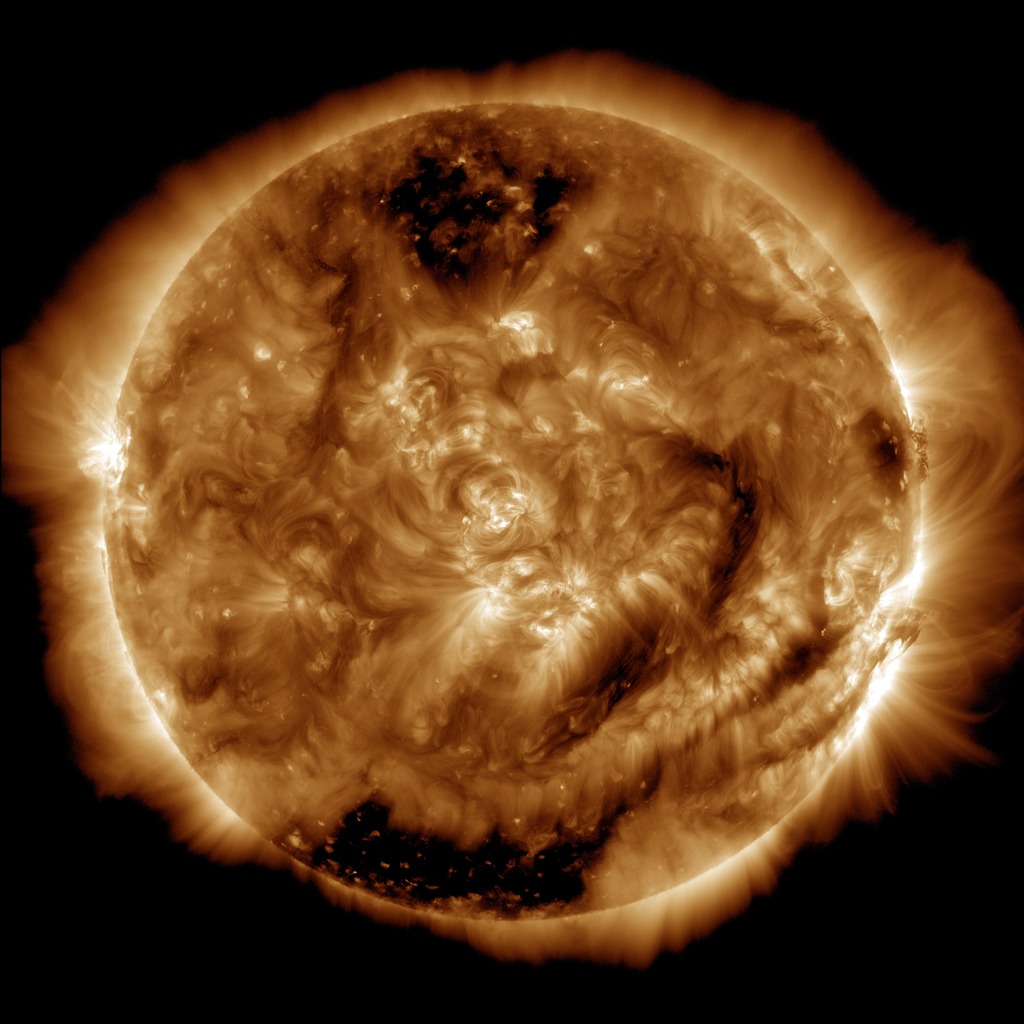
Source: svs.gsfc.nasa.gov
The commencement of the journey: from cosmic dust to nuclear fire
Within a vast cloud of gas and dust, gravitational forces initiate a gradual compression of the material. Over spans of millions of years, the cloud condenses and experiences an increase in temperature. Ultimately, at the core of each dense region, temperatures attain tens of millions of degrees. Hydrogen begins to undergo fusion, producing helium and releasing energy — a self-sustaining nuclear fusion process is consequently initiated. A star is thereby formed.
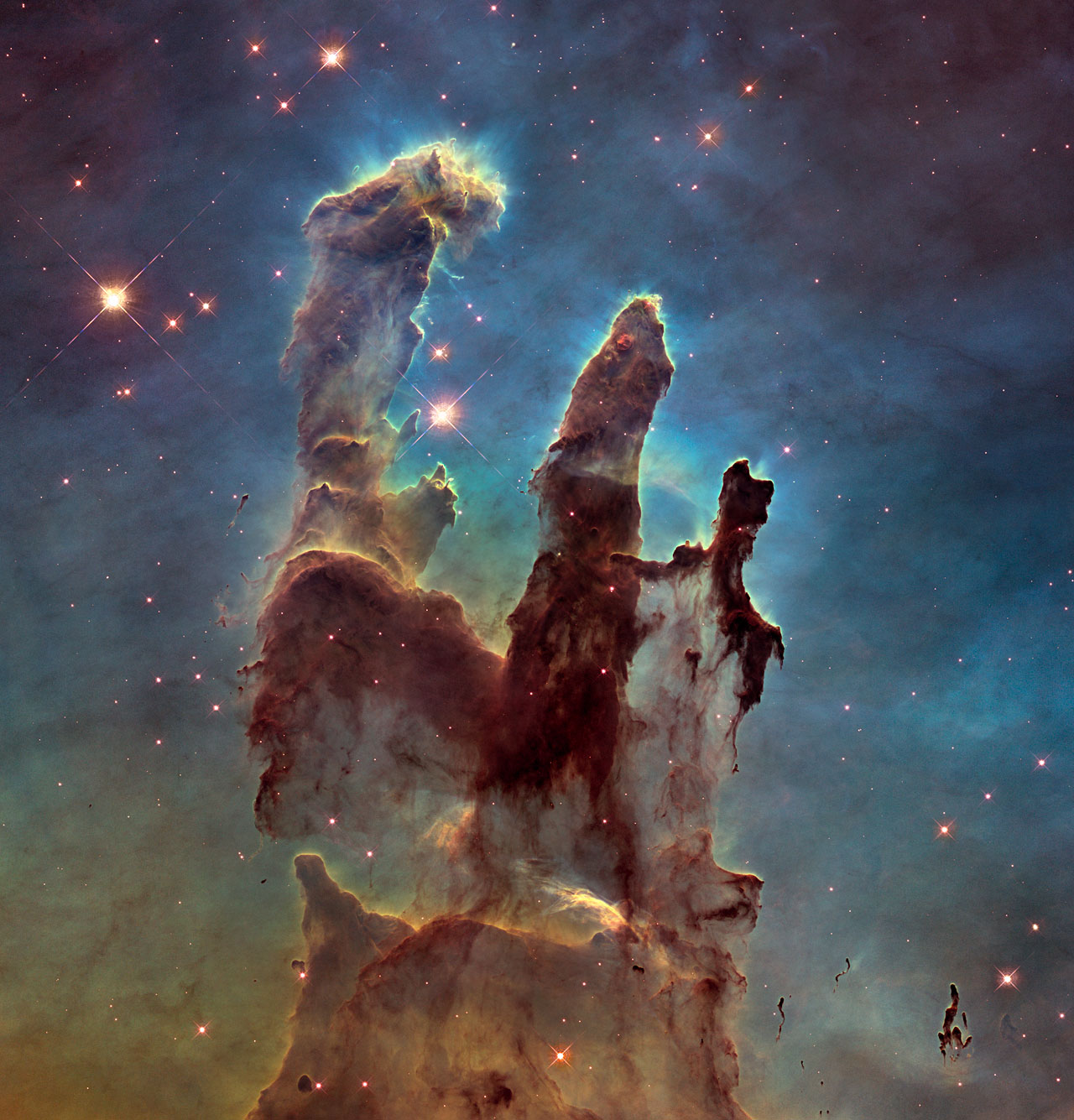
Credit: NASA, ESA/Hubble and the Hubble Heritage Team.
Every star in the universe functions as a colossal fusion reactor, predominantly utilizing hydrogen — the most basic and most plentiful element. As long as hydrogen remains available, the star continues to exist and emit light. Upon the depletion of hydrogen, the star advances to a new phase of its lifecycle.
However, not all stars are identical. Some persist for trillions of years, emitting minimal light in the darkness. Others undergo intense flares and exhaust their fuel in a few million years. Certain stars conclude their life cycle silently, leaving behind a compact remnant comparable to Earth’s size. Conversely, some terminate through a cataclysmic explosion that reverberates through space over light-years.
How can you observe this entire cycle? It is straightforward: the galaxy is exceedingly expansive, containing stars at every stage of their lifecycle simultaneously. Some are merely emerging from gas clouds. Others have been shining steadily for billions of years. Yet, some have already expanded and are approaching their final stages.
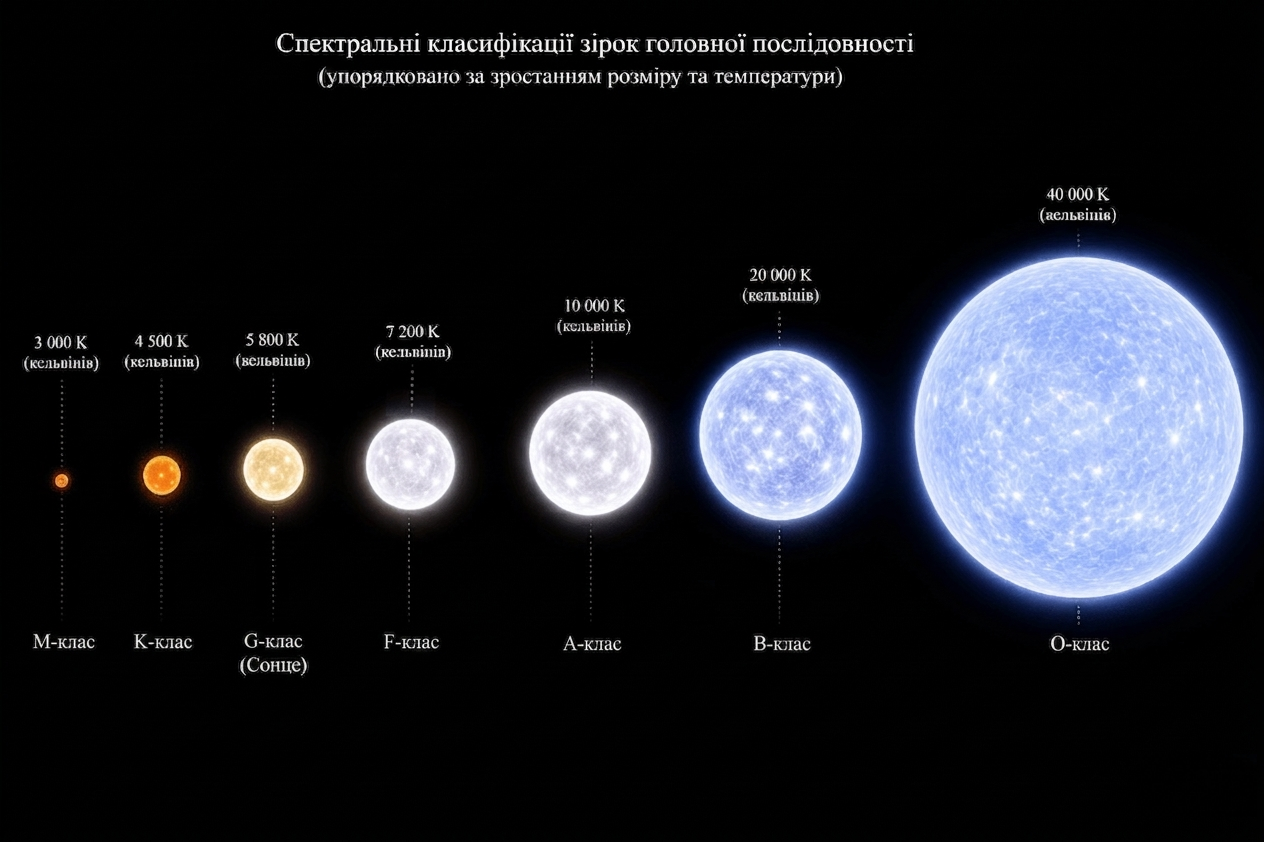
To facilitate understanding, consider an instrument capable of displaying all stages of stellar life cycles across various classes. We will direct it at different coordinates sequentially to observe the complete lifecycle of a star.
Our initial point of reference is the Sun. It is classified as a main-sequence star and is expected to have a lifespan of approximately 10 billion years. When compared to an average human lifespan of 80 years, the Sun’s age corresponds to roughly 37 years. This comparison serves to facilitate understanding of the temporal scales involved when discussing stars with varying lifespans.
Yellow dwarfs: stars of the solar class
Yellow dwarfs constitute one of the most extensively researched classes of stars within the Milky Way galaxy. It is estimated that there are between 10 and 20 billion such stars in our galaxy, representing approximately 7.6% of the total stellar population. These stars are classified by astronomers as G-type stars. Their mass ranges from 0.84 to 1.15 times that of the Sun, with a surface temperature of approximately 5,800 Kelvin, and their lifespan is approximately 10 billion years.
The term “yellow” is not entirely precise: these stars emit light across the entire visible spectrum and appear white in space. The yellowish hue observed here on Earth is attributable to Rayleigh scattering of light within the atmosphere.
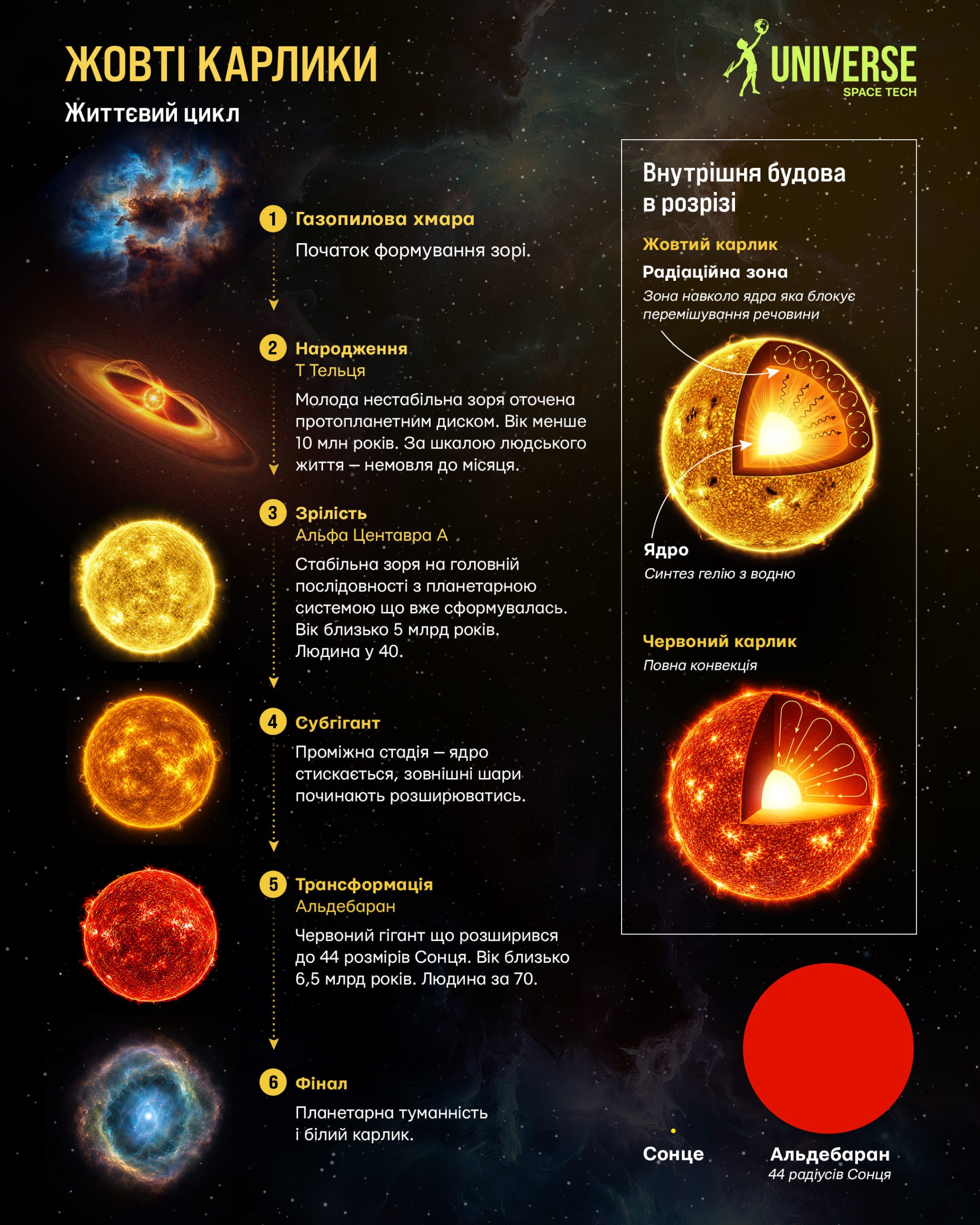
To comprehend the life cycle of our star, it is essential to examine its origins. Let us direct our telescope towards the constellation Taurus to observe the formation of a star of this nature.
The inception of the yellow dwarf
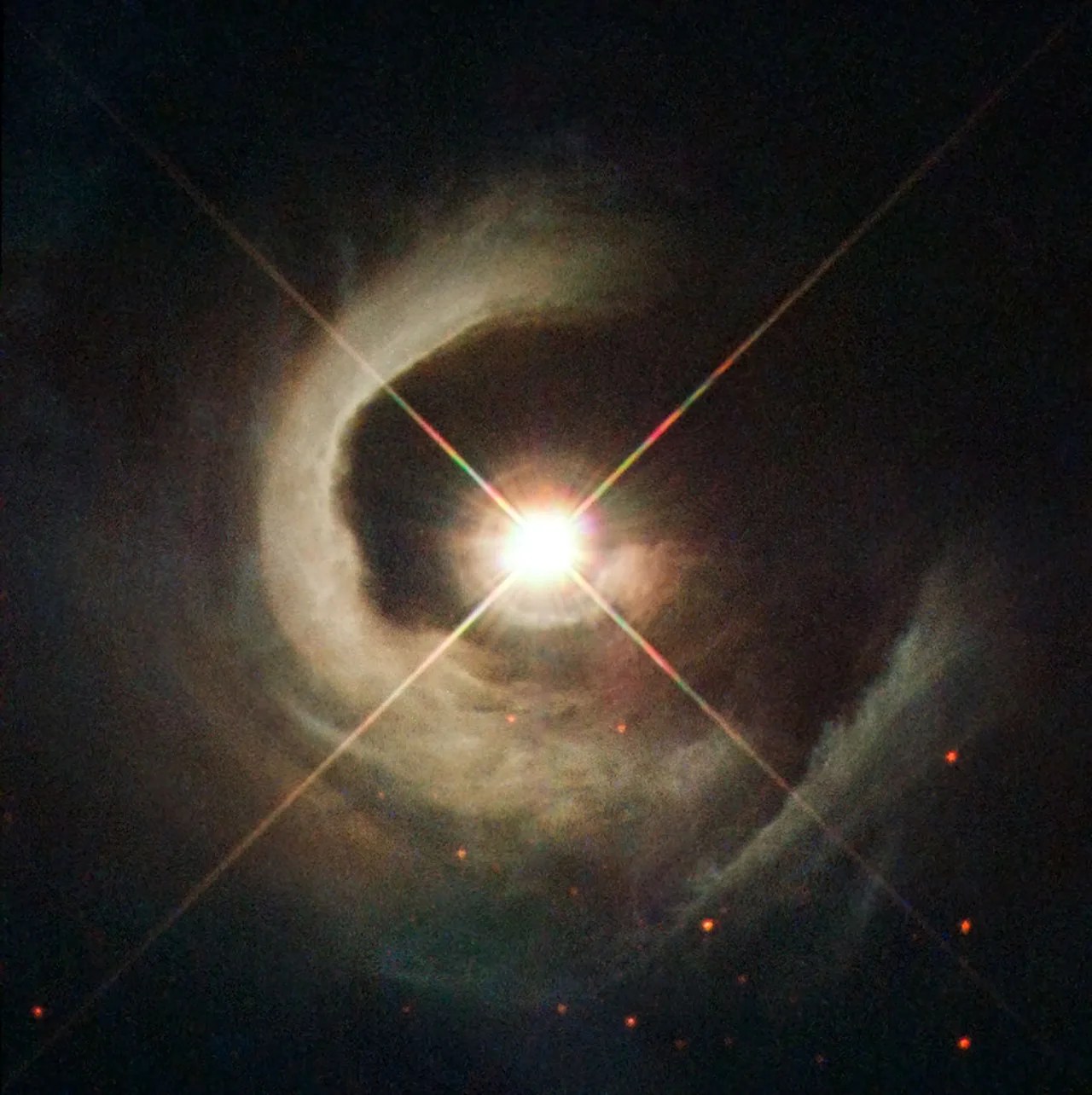
T Tauri, the star that lent its name to an entire class of young stars, is situated 450 light-years from Earth. Its age is less than ten million years. In our terms, it is akin to a newborn, not even a month old.
In the early 20th century, astronomers observed a notable pattern: when two parameters of a star — surface temperature and luminosity — are plotted on a graph, the resulting point does not appear at a random location. The majority of the points form a distinct band. The stars constituting this band are referred to as the main sequence — they consistently fuse hydrogen in their cores and spend the majority of their lifespan in this phase. This graph is known as the Hertzsprung–Russell diagram and has established itself as one of the fundamental tools in astrophysics.
Source: nasa.gov
T Taurus has already traversed the initial phase — the protostar stage — where the future star is enveloped in a dense cocoon of gas and dust and emits illumination solely from the heat generated by its own gravitational compression. Deuterium, a form of heavy hydrogen, is presently being synthesized within its core. The comprehensive process of proton fusion, converting hydrogen into helium and signaling the transition to the main sequence, has not yet commenced. The core has not attained the requisite temperature and pressure.
Equilibrium has not yet been achieved. The stellar wind emanating from the surface of T Tauri is extraordinarily strong, thereby clearing the surrounding space and dispersing the remnants of the parental cloud. The luminosity exhibits unpredictable fluctuations—flares and dimming episodes that persist for minutes, days, and years. The T Tauri phase constitutes merely the initial 100 million years of a star’s lifecycle, representing only a brief interval in the context of the entire stellar cycle.
Simultaneously, a protoplanetary disk develops around the star. The gas and dust cloud, from which the star originated, already possessed a certain angular momentum, and as it contracted, this rotation accelerated.
The material that did not end up in the central clump was unable to collapse directly toward the center owing to the conservation of angular momentum, resulting in its dispersal into a flat circumstellar disk around the protostar. Within this disk, dust and ice particles progressively coalesced into increasingly larger solid bodies — planetesimals, which serve as the precursors to future planets. The formation of the star and its planetary system occurs concurrently, as part of a single process. This scenario closely resembles the initial state of our Sun.
The development of the yellow dwarf — the main sequence
Our telescope is directed nearly towards the boundary of the Solar System. Located 4.37 light-years away, Alpha Centauri A, also known as Rigel Kentaurus, is among the closest star systems to our vantage point. Its spectral classification is G2V — identical to that of the Sun. The star’s mass is approximately 1.1 times that of the Sun, and its surface temperature measures 5,800 Kelvin. Its age is estimated at about 5.26 billion years — comparable to a person in their forties: stable, at their peak, with half of their lifespan still remaining.
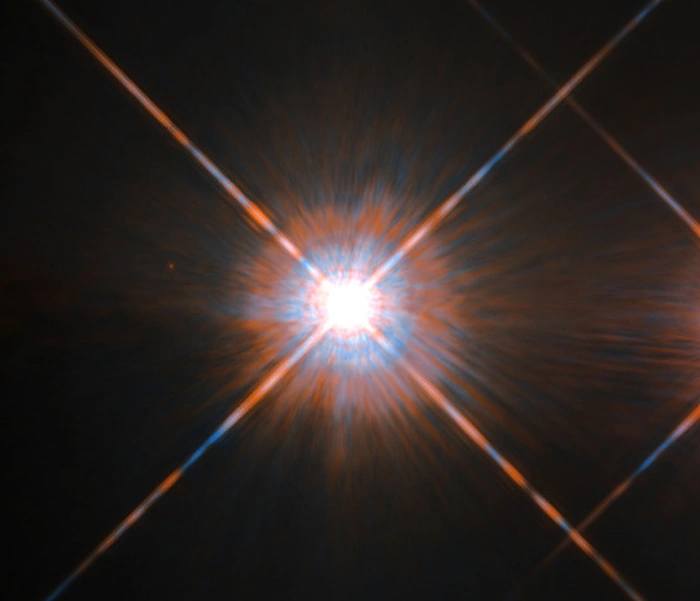
This star is on the main sequence, similar to our Sun, wherein hydrogen undergoes constant fusion into helium within its core. Approximately 600 million tons of hydrogen are transformed into helium every second, resulting in the release of energy.
However, there is a particular aspect to consider: this energy is produced in the most concentrated core of the star, and it requires approximately 100,000 years to traverse the dense layers to reach the surface. It is only at that point that it propagates into space in the form of light.
The internal pressure produced by this process precisely counteracts the gravitational force that endeavors to compress the star. This hydrostatic equilibrium is fundamental to the star’s stability. However, “stability” does not imply immutability: over billions of years, the star gradually becomes brighter and slightly larger — helium accumulates in the core, altering its structure. This is a gradual process.
The transformation of the yellow dwarf
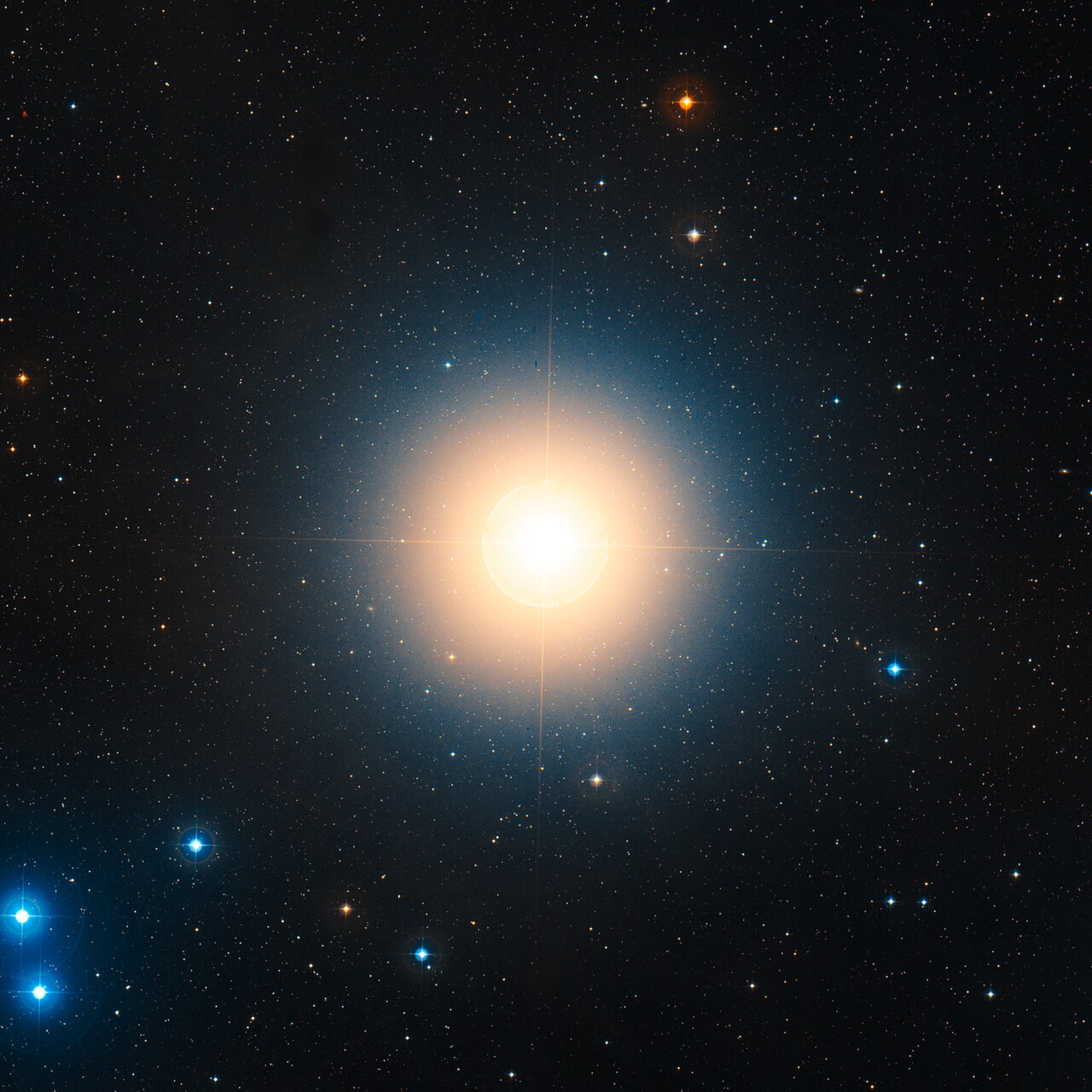
Our telescope remains focused on the constellation Taurus. Located 65 light-years away is Aldebaran, the most luminous star within this constellation. This orange-gold giant was historically referred to as the “eye of the bull” by ancient civilizations due to its position on the head of Taurus.
Credit: ESA/Hubble (Digitized Sky Survey 2)
Its mass is approximately 1.16 times that of the Sun. It is nearly a twin of our star, albeit with a notable history. For an extended period, evolutionary models indicated that it possessed twice the mass of the Sun. However, asteroseismology — a technique that examines a star’s internal vibrations in a manner similar to how seismographs analyze earthquakes — has clarified this misconception.
The response proved to be unforeseen: it is merely 1.16 times the mass of the Sun. A star of such mass possesses a prolonged lifespan — Aldebaran is estimated to be between 6.4 and 7 billion years old. It has concluded the main sequence phase and moved on to the next stage.
The hydrogen in the core has been depleted. Initially, the star underwent the subgiant phase — an intermediate stage between the main sequence and the red giant — during which the core contracts and heats up, while the outer layers commence a gradual expansion. Nuclear fusion transitioned to a thin layer encasing the inert helium core, which subsequently triggered the star’s expansion.
In a span of several million years, the internal temperature will approximate 100 million degrees, leading to the ignition of helium — initiating its fusion into more massive elements such as carbon and oxygen. At this juncture, the nuclear evolution of a star of this classification will conclude.
Meanwhile, Aldebaran has expanded to 44 solar radii, and its surface temperature has decreased to 3,900 Kelvin — approximately half the temperature of the Sun. If it were positioned where the Sun is, its surface would nearly encompass Mercury.
According to our standards, this individual is in their seventies: the primary phase of life lies behind them.
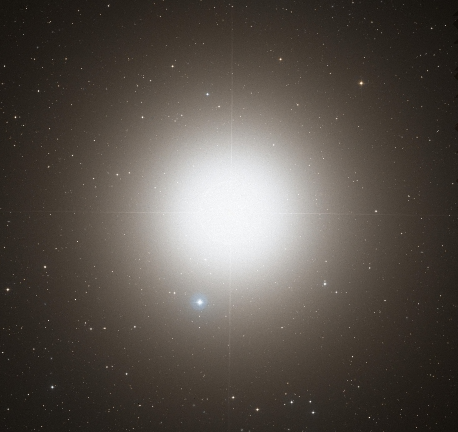
In the vicinity, within the constellation Boötes, our telescope observes Arcturus — another red giant with a comparable mass, yet expanded to merely 25 solar radii. It is in an earlier phase of expansion. Notably, this star is a visitor from a different epoch. Arcturus originated at a time when the universe was considerably deficient in heavy elements; the metallicity of this star is only one-third that of the Sun.
Source: mast.stsci.edu
Furthermore, it exhibits motion distinct from most stars within our galaxy region — travelling at approximately 100 km/s relative to its neighboring stars. It is a star from a different generation that has coincidentally situated itself in close proximity. We shall elucidate later the reasons why certain stars possess a higher abundance of heavy elements compared to others.
Both of these colossal stars are approaching a similar destiny: they will eject their outer layers, resulting in the formation of a planetary nebula — a diffuse gaseous shell that radiates with residual energy. Ultimately, only a white dwarf will remain of each. This same fate is anticipated for our Sun; however, this will not occur for at least five billion years.
Now, let us direct our telescopic focus to another region of the cosmos. There exists a category of stars that constitutes the majority of the galaxy — and not a single one among them has yet concluded its lifecycle.
Red dwarfs: the most numerous inhabitants of the galaxy
If we observe the Milky Way in any direction using our telescope, three out of every four stars visible will be red dwarfs. These stars constitute approximately 75% of the galaxy’s entire stellar population. Estimates suggest that the Milky Way contains between 150 billion and 300 billion of these stars. Notably, none of these stars are visible to the naked eye, as all are too faint to be seen without optical aid.
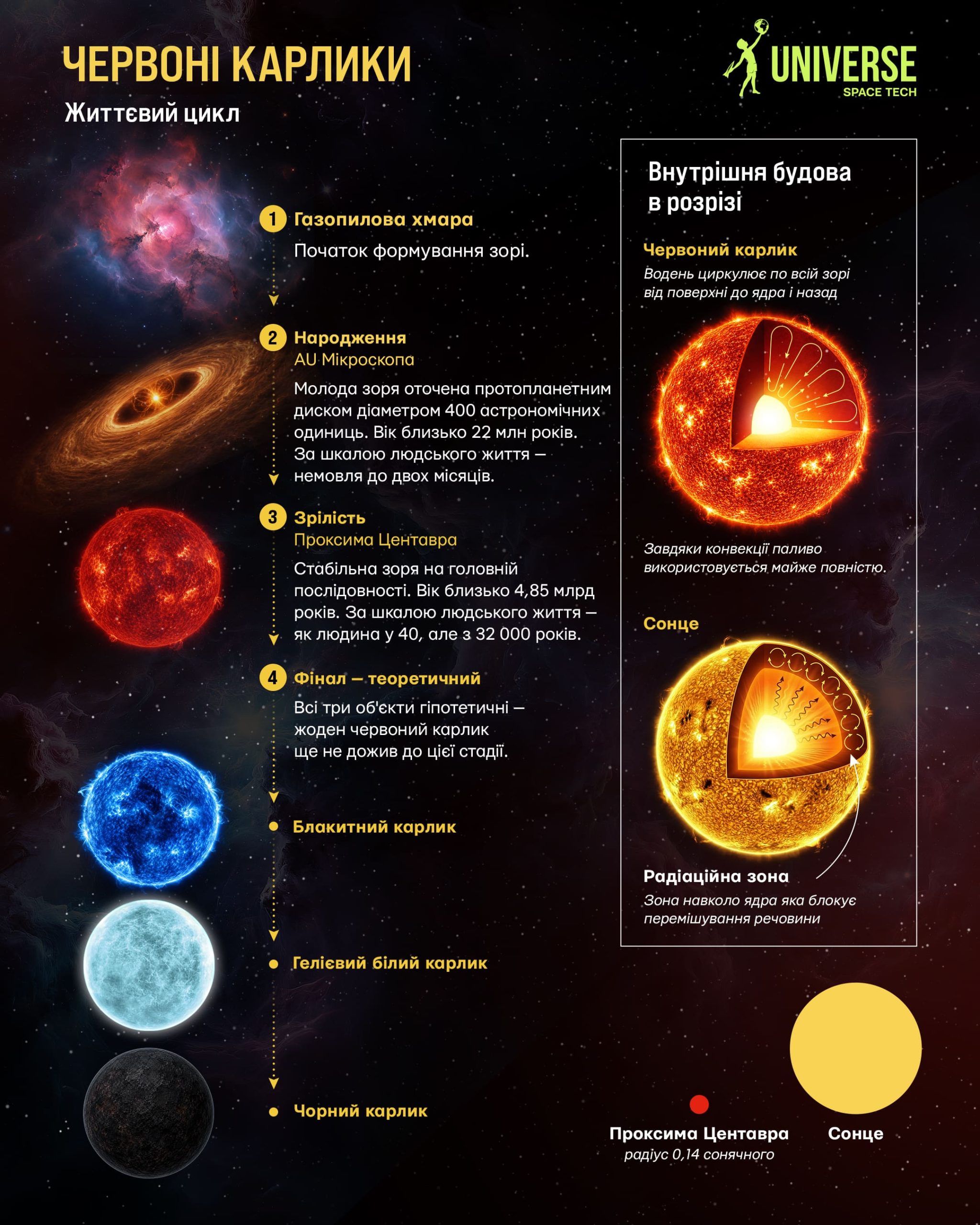
Astronomers categorize these stars as M-type stars. Their mass varies from 0.08 to 0.5 times that of the Sun. The surface temperature ranges from 2,000 to 3,500 Kelvin, which is approximately half the temperature of the Sun. Their color spectrum extends from dull orange to red. However, the primary characteristic that differentiates them from yellow dwarfs is their internal structure.
Stars with masses less than 0.35 times that of the Sun are entirely convective, with hydrogen continuously circulating throughout the star from the surface to the core and back. The Sun contains a radiation zone that retains helium at its center. When the hydrogen in the core is depleted, the star exits the main sequence, despite the fact that most of the fuel in the outer layers remains unutilized.
Calculations indicate that our Sun will only manage to burn through approximately 10% of its hydrogen supply. In contrast, a red dwarf star does not face such a limitation — convection circulates fresh fuel from all regions of the star, leading to the eventual consumption of nearly all of it.
We direct our telescope towards the constellation Microscopium and observe the formation of a star within this classification.
The birth of a red dwarf
32 light-years away from us lies AU Microscopii. It is about 22 million years old. By our standards, it’s a newborn less than two months old.
It has already moved beyond the protostellar stage and is in the pre-main-sequence phase — actively contracting, heating up, and preparing for stable hydrogen fusion. A protoplanetary disk with a diameter of at least 400 AU orbits around it — one of the largest known disks around a star of this class. Planetesimals — the building blocks of future planets — are already forming within it.
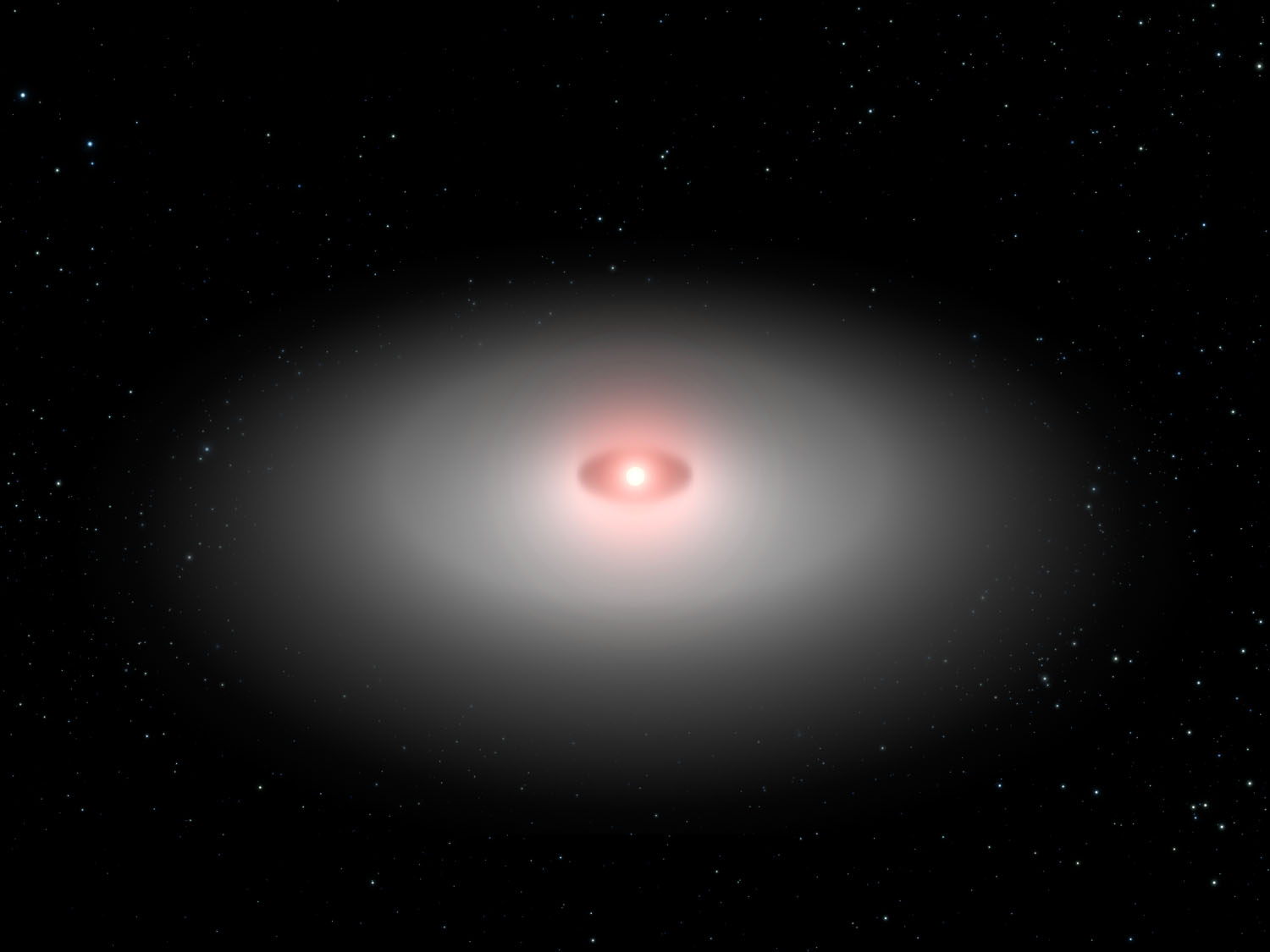
But AU Microscopii is no quiet baby. It is extremely active: its magnetic field is powerful, and its flares are frequent and intense. During 12 hours of observations in the far ultraviolet, telescopes recorded 14 flares. This is typical for young red dwarfs — activity weakens over time, but very slowly.
But what if the cloud’s mass was not even enough to form a red dwarf? The object will remain an unformed star — larger than a planet but smaller than a star. A brown dwarf. There is not enough mass to sustain stable hydrogen fusion — it merely smolders due to gravitational compression and deuterium fusion, gradually cooling and dimming.
The maturity of the red dwarf is the main sequence
The next object of observation is the star closest to us. Located 4.24 light-years away in the constellation Centaurus is Proxima Centauri. Spectral class M5.5Ve. Mass — only 0.12 times that of the Sun, radius — 0.14 times that of the Sun, surface temperature ~3,000 Kelvin — about half as hot as the Sun.
It is about 4.85 billion years old — the same age as our Sun. By our standards, both stars are now like a 40-year-old human. But while our Sun is already in the middle of its life cycle, Proxima, at the same age, has only just begun its journey — with an estimated 32,000 years still ahead of it.
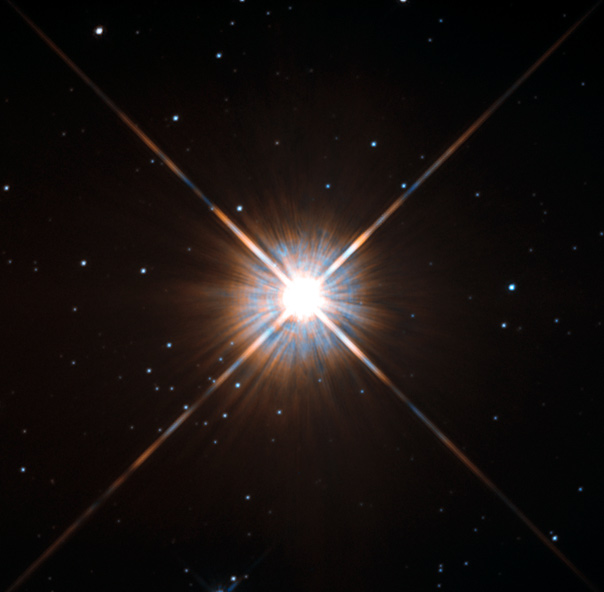
Credit: NASA and ESA. Source: science.nasa.gov
What is occurring internally? The process is analogous to that of other red dwarfs: full convection circulates hydrogen throughout the star, enabling fusion to occur at a slow yet consistent rate. It is this deliberate slowness that underpins the star’s prolonged lifespan.
But Proxima is not a calm, long-lived star. It is a flare star. Its magnetic field is significantly stronger than the Sun’s, and it regularly releases massive flares — so powerful that the star’s brightness increases tenfold for a brief moment. The two confirmed exoplanets in orbit — Proxima b and Proxima d — exist under conditions of constant radiation bombardment. Whether life could exist there remains an open question.
The end of the red dwarf — in trillions of years
No red dwarf in the universe has died yet. There hasn’t been enough time — the universe is too young. Therefore, the fate of these stars is merely a theoretical model.
When the hydrogen supply is finally exhausted—which will happen in trillions of years — the red dwarf will not expand into a red giant like the Sun. It does not have enough mass to trigger helium fusion and begin expanding.
Instead, the star will gradually heat up and contract, shifting toward the blue end of the spectrum — it will become what is known as a “blue dwarf.” Next comes the helium white dwarf. And finally, the black dwarf, a completely cooled-down, dark sphere. All these objects are still hypothetical — no red dwarf has yet survived to this stage. Red dwarfs are the true long-lived stars of the universe.
Let us redirect our focus with the telescope. There exists a category of stars that exhibit markedly different characteristics — luminous, transient, and explosive in nature.
Massive stars: the giants of the universe
The Orion constellation is our next observation target. Here, in a single section of the sky, you can see several stages in the life cycle of the galaxy’s most magnificent objects all at once. Massive stars are stars with a mass greater than 8 times that of the Sun.
There are few of them: O-type stars, the hottest and rarest, account for only 0.00003% of all stars in the galaxy. But it is their radiation that is so powerful that it shapes and destroys the surrounding gas clouds, triggering or suppressing the birth of new stars.
If we compare the Sun to an individual who lives to be 80 years old, then the most massive star has a lifespan ranging from a few weeks to a few months. Before a red dwarf has even had the opportunity to warm up, a massive star has already completed its entire life cycle, from formation to explosion.
The birth of a massive star
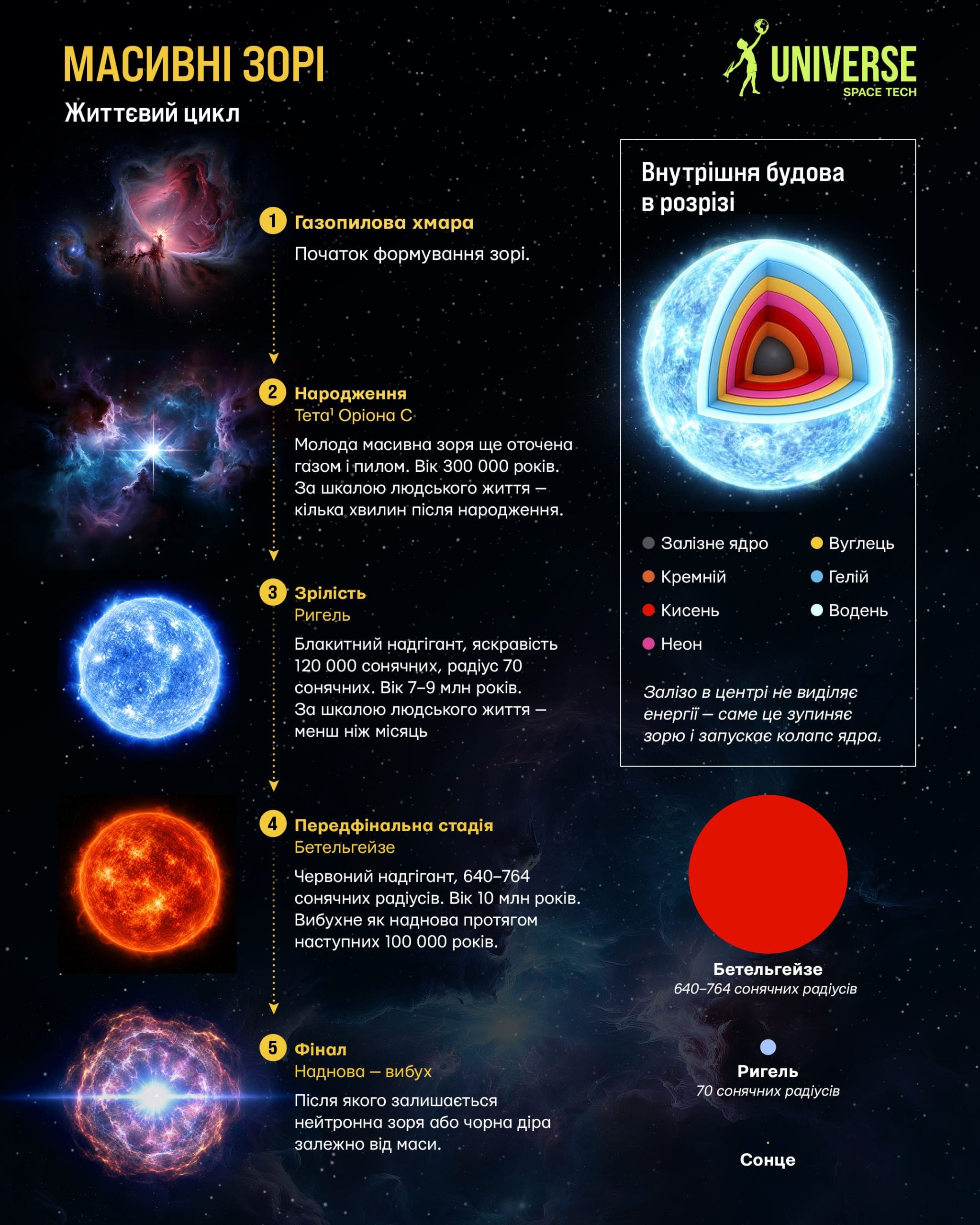
1,500 light-years away lies the core of the Orion Nebula. Our telescope has identified the Trapezium cluster there, comprising young, massive stars that formed less than a million years ago. One of these stars — Theta¹ Orionis C — has a mass of 40 solar masses and a surface temperature of 39,000 Kelvin — seven times the temperature of the Sun. Active hydrogen fusion is already occurring within its core. By our references, it is merely a few minutes in age.
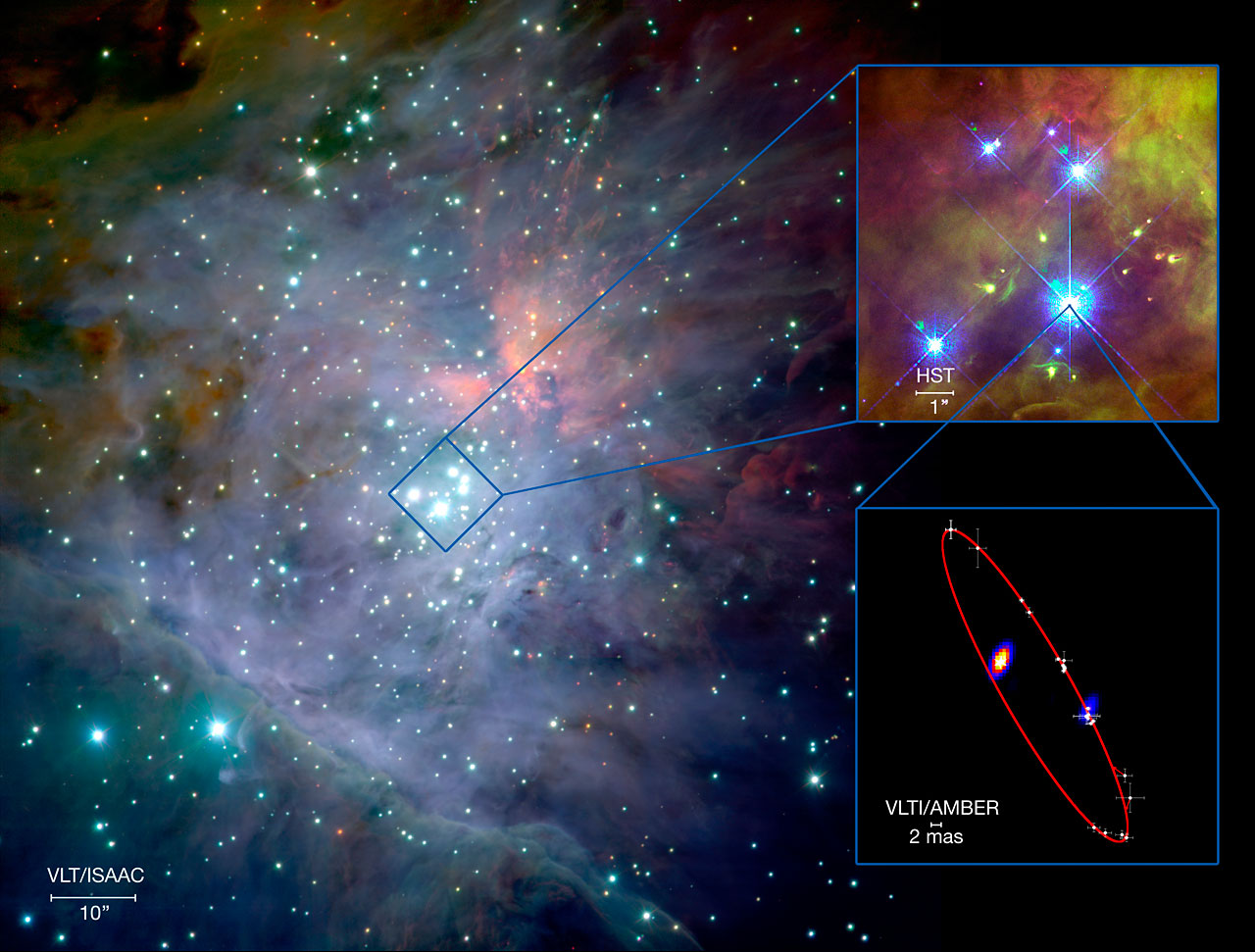
It remains enveloped by the gas and dust of the nebula; however, it is already actively dispersing these materials. The stellar wind emitted by such a massive star is exceedingly powerful, capable of effectively expelling the surrounding gas and creating a cavity within the nebula. Massive stars form rapidly, transitioning from a cloud to a stable star within approximately 100,000 to 1 million years. In comparison, the formation of the Sun took approximately 50 million years.
The maturity of a massive star
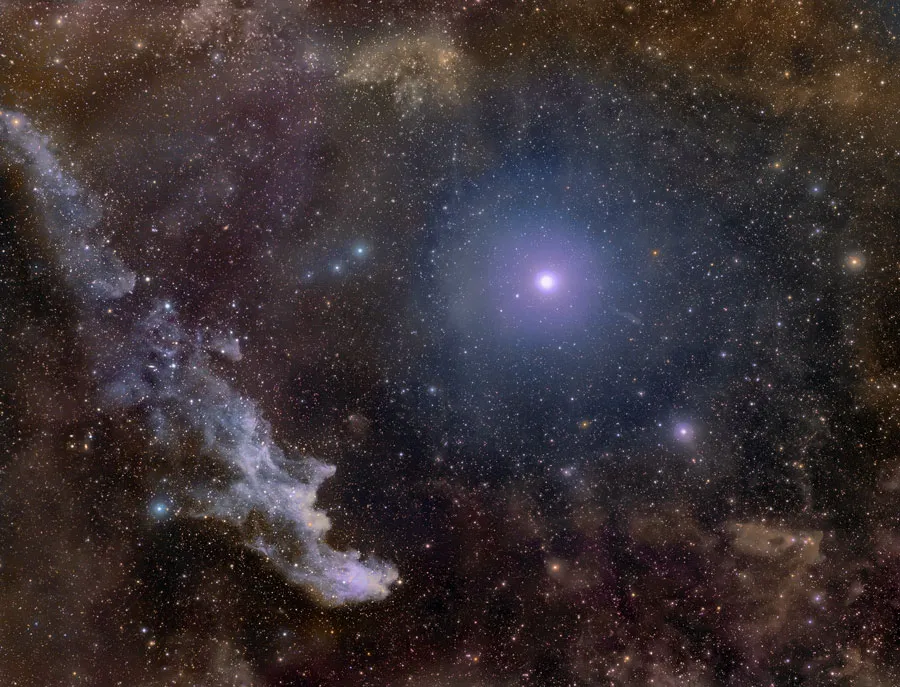
We observe the star Rigel through our telescope. It is located 860 light-years from Earth and is part of the “left leg” of the Orion constellation. Relative to the Sun: its mass is 21 times greater, its radius is 70 times greater, and its luminosity is 120,000 times greater. Its surface temperature is 12,100 Kelvin — less hot than young O-type stars, yet still twice the temperature of the Sun. It is approximately 7 to 9 million years old. In human terms, this is comparable to an individual who has not yet reached one month of age.
Within the core of a massive star, a process occurs that the Sun will never attain — nucleosynthesis according to the “onion” model. Helium produced during hydrogen fusion possesses greater mass, and under the influence of gravity, it accumulates nearer to the core, where temperature and pressure levels are elevated. Subsequently, helium fuses into carbon. The carbon then concentrates further inward, prompting a repeated sequence: neon, oxygen, silicon. All these layers are simultaneously active, each characterized by its unique temperature and pressure conditions.
Time presents a challenge for the giant; whilst hydrogen combusts over millions of years, silicon — the final element before the conclusion — depletes within a single day.
At the core, iron accumulates, which is no longer capable of releasing energy through fusion. Its fusion process does not emit energy but instead absorbs it. Consequently, once an iron core forms at the center, the thermonuclear “furnace” that has maintained the star’s mass for millions of years ceases operation.
Gravity no longer maintains equilibrium within the star, leading to gravitational collapse. The core contracts rapidly — shrinking from Earth’s size to a sphere with a diameter of several tens of kilometers in a fraction of a second. The subsequent events will be observable from the opposite end of the galaxy.
The preliminary phase preceding the final stage and the supernova
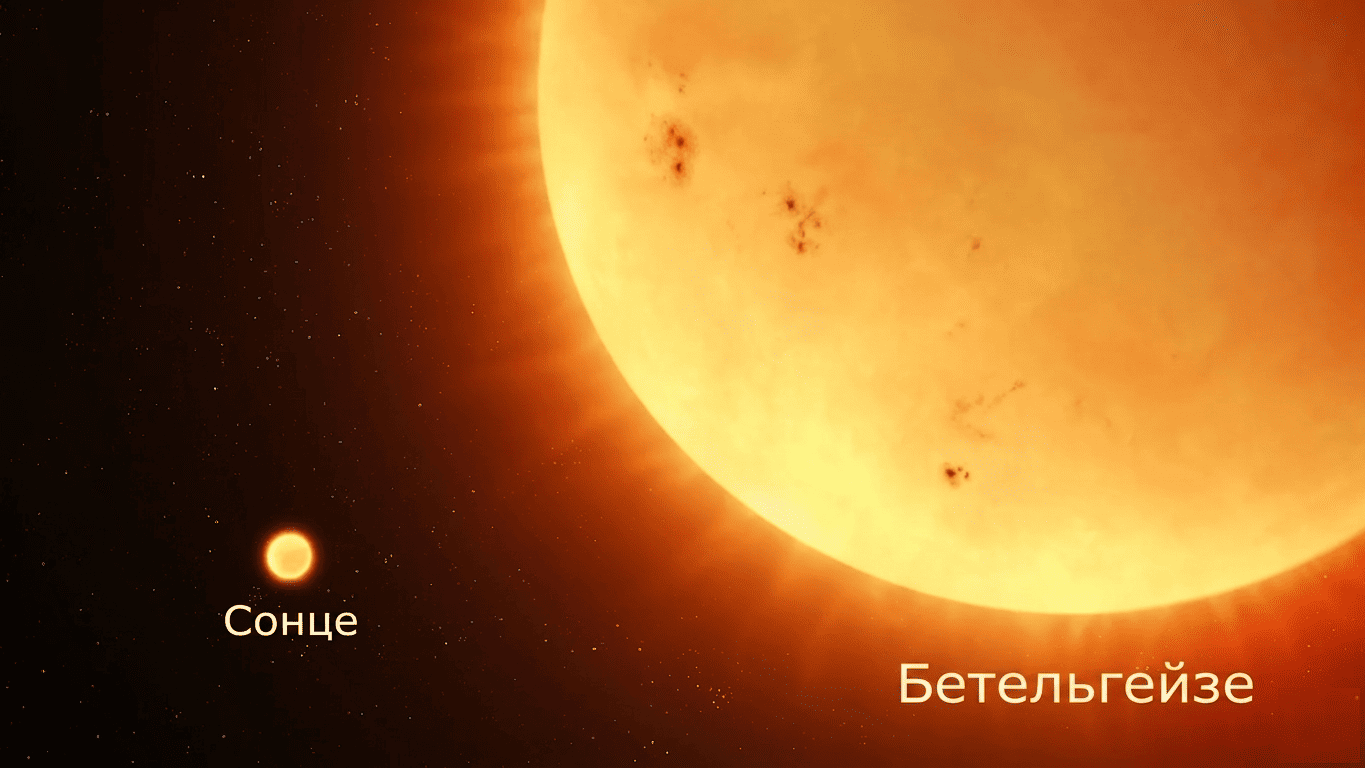
Let us examine the right shoulder of the Orion constellation, where the star Betelgeuse is located, approximately 700 light-years from Earth. Betelgeuse possesses a mass ranging from 17 to 19 solar masses and is estimated to be between 8 and 10 million years old. To our perspective, this age corresponds to an individual slightly older than one month, yet the star is already approaching its final evolutionary stage. It has evolved into a red supergiant and has expanded to roughly 800 times the radius of the Sun. If positioned where the Sun resides, Betelgeuse would envelop all the planets up to Jupiter.
Betelgeuse, unlike Rigel, has already passed through the stages of hydrogen and helium fusion. Heavier elements are now being synthesized in its core. By astronomical standards, it will explode very soon — within the next 100,000 years.
The collapse of the iron core occurs within a fraction of a second. The outer layers are ejected from the superdense core and disperse in an explosion of immense power — a supernova. This catastrophic event signifies the conclusion of a massive star’s lifecycle and releases into space heavy elements formed over millions of years. For a brief period, it can surpass the brightness of an entire galaxy. This process exemplifies how Betelgeuse will ultimately meet its end — upon which the supernova will be observable from Earth even during daylight hours, illuminating the night sky with greater brilliance than the Moon for several weeks.
What remains after
The residual aftermath of a supernova is contingent upon the star’s mass. There exists a critical threshold — the Chandrasekhar limit — quantified at 1.4 solar masses. Surpassing this limit, the quantum pressure exerted by electrons is insufficient to oppose gravitational collapse, resulting in further compaction of the remnant. If the stellar remnant’s mass lies between 1.4 and approximately 2.5 solar masses, it collapses into a neutron star. This celestial object has a diameter of merely 20 kilometers, comparable to the size of a small city, yet its mass exceeds that of the Sun, rendering it one of the most densely packed entities in the universe. Neutron stars manifest in various forms.
A pulsar is a neutron star that rotates at hundreds of revolutions per second and emits narrow beams of radiation across nearly the entire electromagnetic spectrum. It is precisely this regularity that enables their detection — the beam repeatedly passes through our telescope. More than 3,000 such objects are currently known.
This video discusses a pulsar, which is a neutron star that emits focused beams of gamma radiation during its rotation. Source: NASA Goddard YouTube channel.
A magnetar constitutes a more uncommon category. Its magnetic field surpasses that of a typical neutron star by a factor of one thousand. In a span of 0.1 seconds, SGR 1806-20 discharged more energy than our Sun produces over a hundred thousand years — this emission, originating 50,000 light-years distant, had a tangible impact on the upper atmospheric layers of Earth. The number of recognized magnetars is approximately thirty.
A NASA video of a magnetar flare in the galaxy NGC 253, located 11.4 million light-years from Earth. Source: NASA Goddard YouTube channel
If the remnant’s mass exceeds approximately 2.5 solar masses — the Tolman–Oppenheimer–Volkoff limit — nothing can prevent the ensuing collapse. Not even light can escape its confines. Consequently, a black hole is formed. The most massive stars — exceeding 40–50 times the mass of the Sun — may undergo collapse into a black hole without a luminous explosion, effectively vanishing from observation. This phenomenon is referred to by astronomers as a “failed supernova.”
The cosmic cycle
Our telescope has fulfilled its purpose. We have observed the birth, development, and evolution of stars from three distinct classes. Nonetheless, a pertinent question naturally emerges: what is the origin of the matter constituting these stars? Additionally, what is its subsequent destination?
The answer is the cycle. Stars don’t simply consume hydrogen and disappear. They synthesize new elements and return them to the interstellar medium. Each generation enriches the next.
Three generations of stars
The inception of the universe was rudimentary. Between 100 to 200 million years subsequent to the Big Bang, the cosmos was composed solely of hydrogen, helium, and minor traces of lithium. From this primordial gaseous matter, the initial stellar bodies, designated as Population III stars, emerged. According to theoretical models, these stars were of immense size — potentially hundreds of times the mass of the Sun — and possessed extremely high temperatures. Their existence was brief: they exhausted their fuel and underwent supernova explosions, thereby enriching the universe with heavy elements for the inaugural time.
We have not yet directly observed any such stars. However, the James Webb Space Telescope has already provided the most compelling evidence to date of their existence — in a galaxy formed merely 400 million years subsequent to the Big Bang. The findings have not yet been conclusively verified, but this represents the nearest approach science has achieved towards the discovery of the first stars.
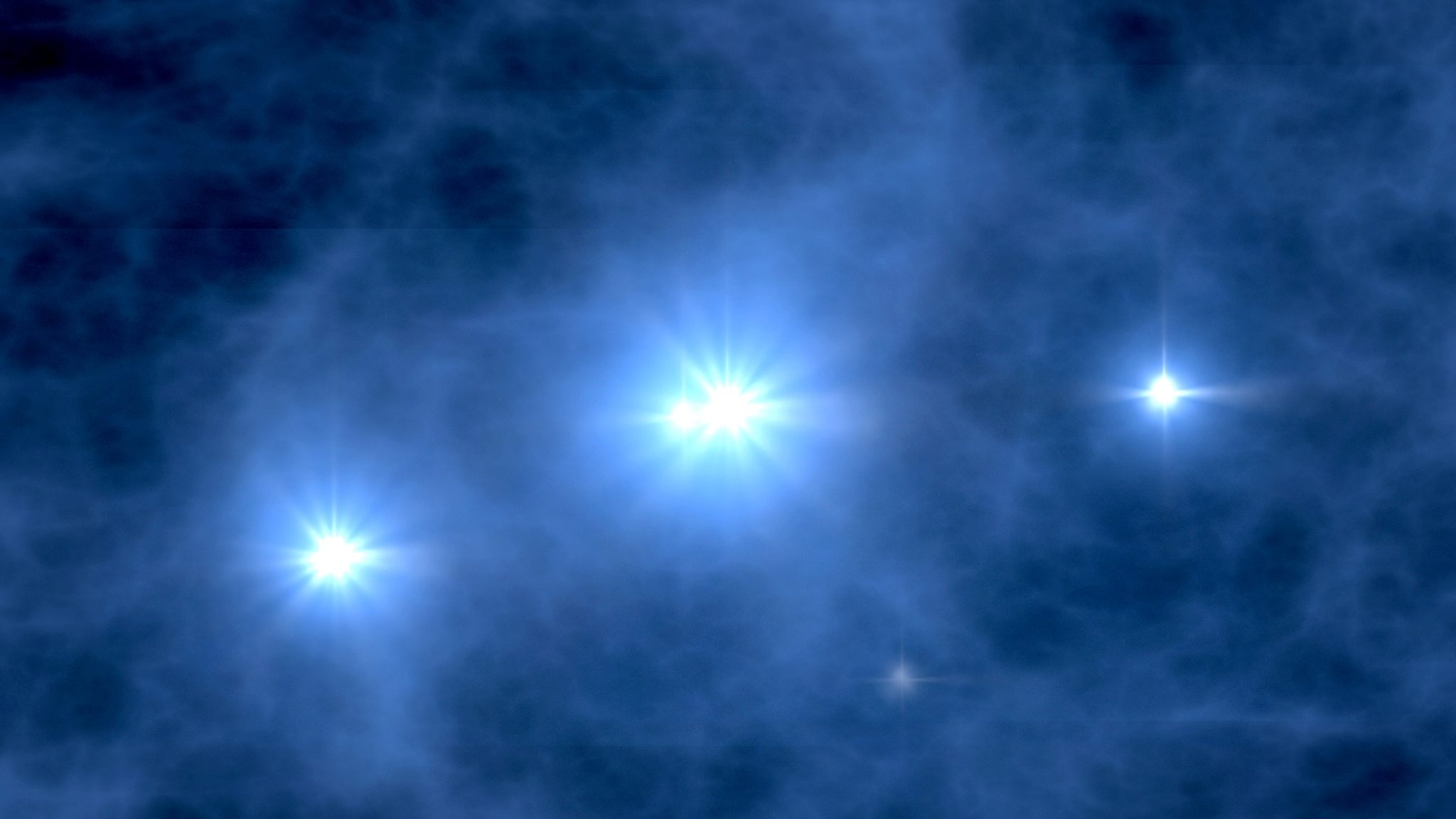
From the gas enriched by Population III explosions, a second generation was born — Population II. These are ancient stars characterized by low metallicity. They are typically located within globular clusters and at the nuclei of galaxies — relics from an early cosmic epoch. Arcturus, observed through our telescope adjacent to Aldebaran, exemplifies a star from this distinct generation.
Lastly — Population I, exemplified by our Sun — comprises stars formed from gas that has undergone previous stellar explosions and has been extensively enriched with heavy elements. This is the reason why rocky planets are able to exist in the vicinity of such stars, and consequently, why life has emerged on one of them.
Nucleosynthesis: The origins of elements.
Stars synthesize all elements from helium to iron — we have already observed this phenomenon through the “onion” model in the cores of millions of massive stars throughout the galaxy. However, what about elements heavier than iron — gold, platinum, uranium, lead? They cannot be produced through ordinary nuclear fusion; more extreme conditions are required for their formation.
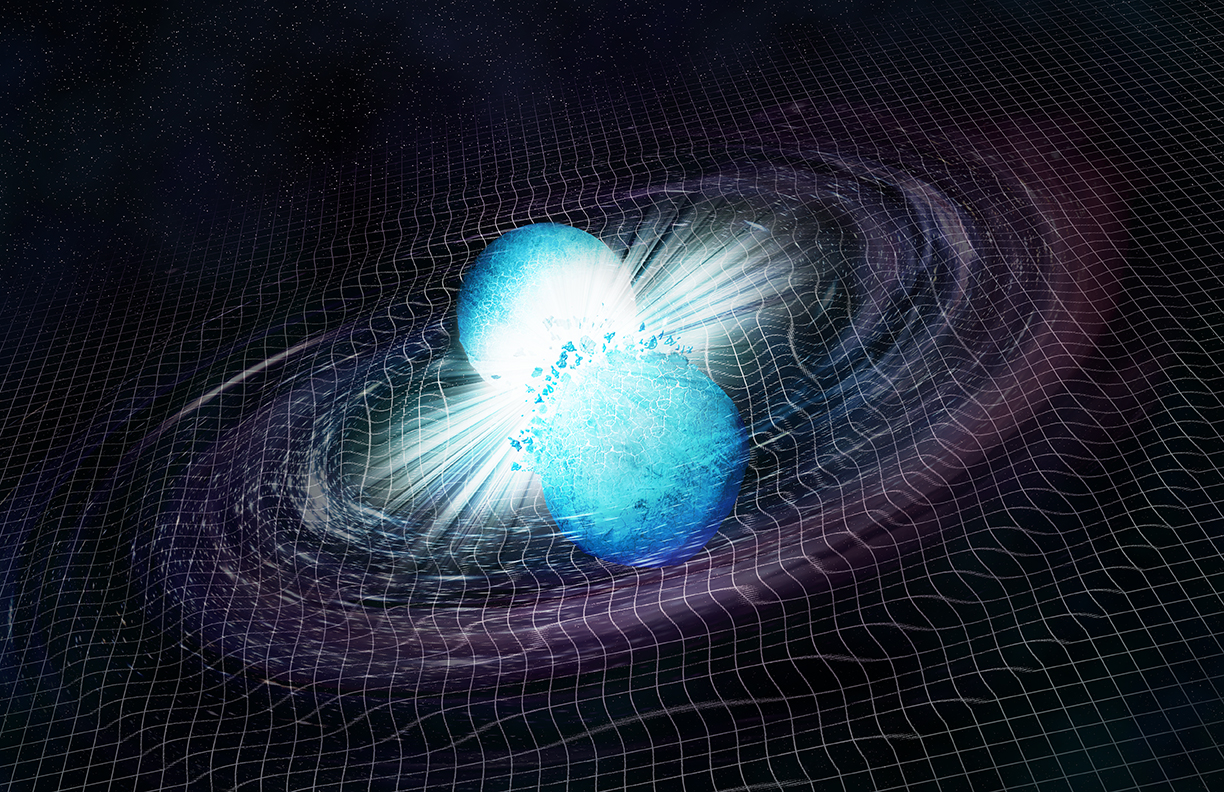
Certain elements are produced during a supernova explosion via rapid neutron capture, known as the r-process. Regarding the heaviest elements, the process is more intricate. Present understanding indicates that approximately half of all isotopes of elements heavier than iron are probably formed through the merger of two neutron stars, a phenomenon referred to as a kilonova. In 2017, astronomers observed gravitational waves from such a merger for the first time — the event designated GW170817 — and obtained direct confirmation of this theory.
Born of stars
When a star approaches the end of its evolutionary phase — be it through the formation of a planetary nebula, as anticipated in the case of our Sun, or via a supernova explosion — its constituent matter is disseminated into interstellar space. Subsequently, it interacts with other gases, undergoes cooling, and ultimately, driven by gravitational forces, recondenses into new stars and planetary bodies. Matter does not vanish; rather, it is transmitted to future generations, contributing to the formation of new celestial objects within the Universe.
The oxygen in our lungs, the nitrogen in every DNA molecule, the iron in our blood, the calcium and phosphorus in our bones — all of these are products of stellar synthesis and supernova explosions. We live an average of 80 years. However, the atoms composing our bodies number in the billions, and each is older than our planet. Some of the atoms in your right hand may have been synthesized in a supergiant star, and those in your left hand in another, thousands of light-years away. We are, quite literally, made of stardust.
Sources:
NASA Solar Dynamics Observatory. (2015). Solar imaging data. NASA. https://svs.gsfc.nasa.gov
NASA, ESA, & Hubble Heritage Team. (2024). Hubble Space Telescope observational data. NASA. https://science.nasa.gov
ESA Gaia Collaboration. (2023). Gaia Data Release 3. European Space Agency. https://www.cosmos.esa.int/gaia
Kraus, S. et al. (2009). The Interferometric Survey of Theta1 Orionis C. ESO. https://www.eso.org
NASA Fermi Gamma-ray Space Telescope Team. (2024). Pulsar observations. NASA. https://fermi.gsfc.nasa.gov
Abbott, B. P. et al. (2017). Multi-messenger observations of a binary neutron star merger. The Astrophysical Journal Letters, 848(2). https://doi.org/10.3847/2041-8213/aa91c9
Olausen, S. A., & Kaspi, V. M. (2014). The McGill Magnetar Catalog. The Astrophysical Journal Supplement Series, 212(1). https://doi.org/10.1088/0067-0049/212/1/6
Manchester, R. N. et al. (2005). The ATNF Pulsar Catalogue. The Astronomical Journal, 129(4). https://doi.org/10.1086/428488
NASA WMAP Science Team. (2013). Nine-year WMAP observations. NASA. https://map.gsfc.nasa.gov
NASA James Webb Space Telescope Team. (2024). Early universe observations. NASA. https://science.nasa.gov/mission/webb
Silva Aguirre, V. et al. (2015). Asteroseismic analysis of Aldebaran. The Astrophysical Journal, 799(2). https://doi.org/10.1088/0004-637X/799/2/163

