

The Moon is officially safe. New observations from the James Webb Space Telescope (JWST) have confirmed that asteroid 2024 YR4, capable of destroying an entire city, will not collide with it in 2032. Previously, the probability of impact was estimated at 4.3% – a fairly high figure. But thanks to the JWST’s ultra-sensitive instruments, NASA astronomers have adjusted the trajectory of the space rock and calculated the chance of collision, which has dropped to zero.
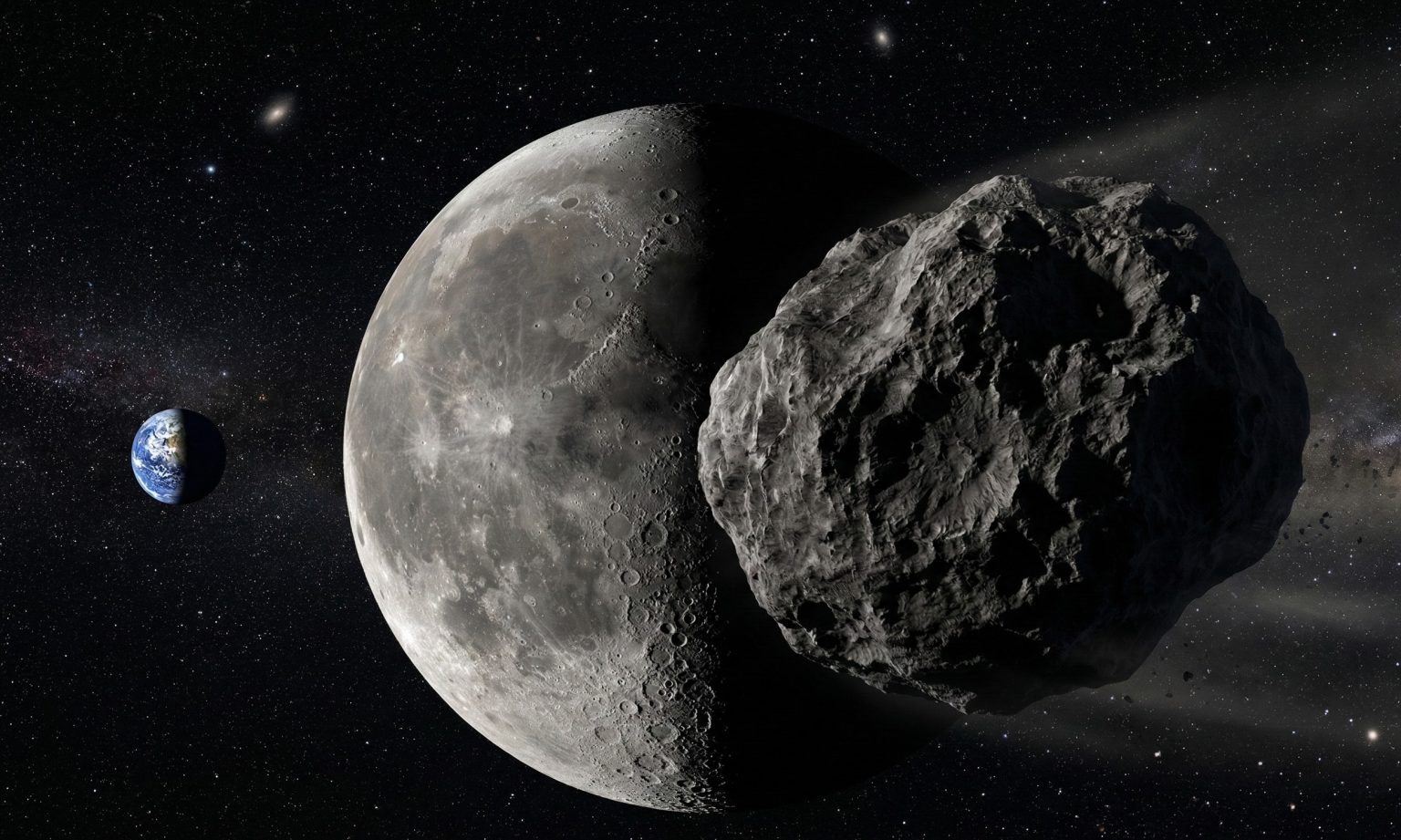
Generated by Gemini AI
The observations made on February 18 and 26 using JWST’s infrared instruments were a real challenge for the telescope. The asteroid was so dim that these images went down in history as some of the faintest observations of an asteroid ever. According to NASA, since spring 2025, 2024 YR4 has been invisible to ground-based and most space observatories – only JWST was able to spot it.
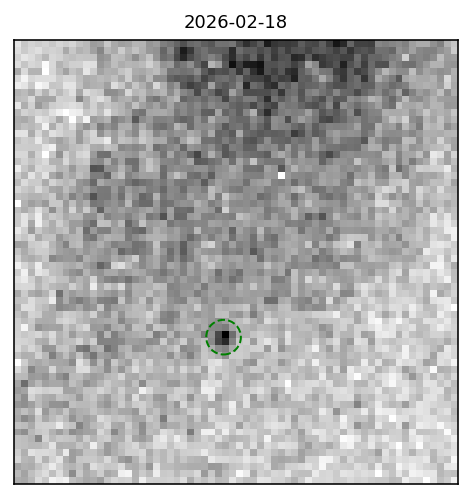
James Webb’s infrared instruments detected the thermal radiation of 2024 YR4, allowing its future trajectory to be determined with great accuracy. The result: in 2032, the asteroid will fly 21,200 km from the surface of the Moon – closer than some artificial Earth satellites, but completely safe.
History of the threat
Asteroid 2024 YR4 was discovered at the end of 2024 using the ATLAS system. Its dimensions are impressive: its diameter ranges from 53 to 67 meters, which is approximately equal to the height of the Leaning Tower of Pisa or slightly larger than a football field. If it fell to Earth, the explosion would have a force equivalent to 500 nuclear bombs dropped on the Japanese city of Hiroshima. This would instantly wipe out any large city, so it is no surprise that it has been dubbed the “city killer.”
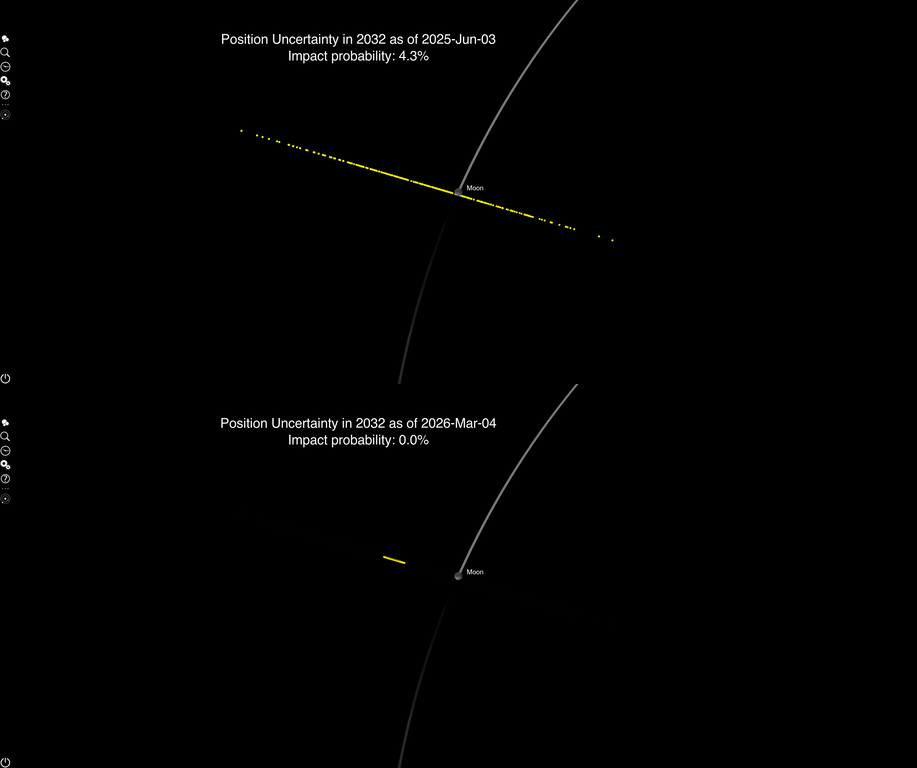
Initially, astronomers estimated the probability of collision with Earth at 3.1% – the highest figure for an asteroid in the history of observations, which sparked a wave of discussion in the scientific community. After refining the data using JWST and other telescopes, this risk disappeared completely. However, the threat to the Moon remained at 4.3% until the last moment. Now we know that the space rock will pass hundreds of thousands of miles away from our planet. So, in 2032, it will return to the inner solar system without posing any danger.
Devastating consequences
Although the Moon is regularly hit by space rocks, the fall of such a large object would be a unique event. Scientists have modeled various scenarios: the flash from the explosion would probably be visible from Earth even with the naked eye, and the ejected rock fragments could cause a meteor shower over our planet. It would be the first time in history that humans would have predicted the fall of a large asteroid on the Moon and observed it in real time. Fortunately, this scenario remains only a theory.
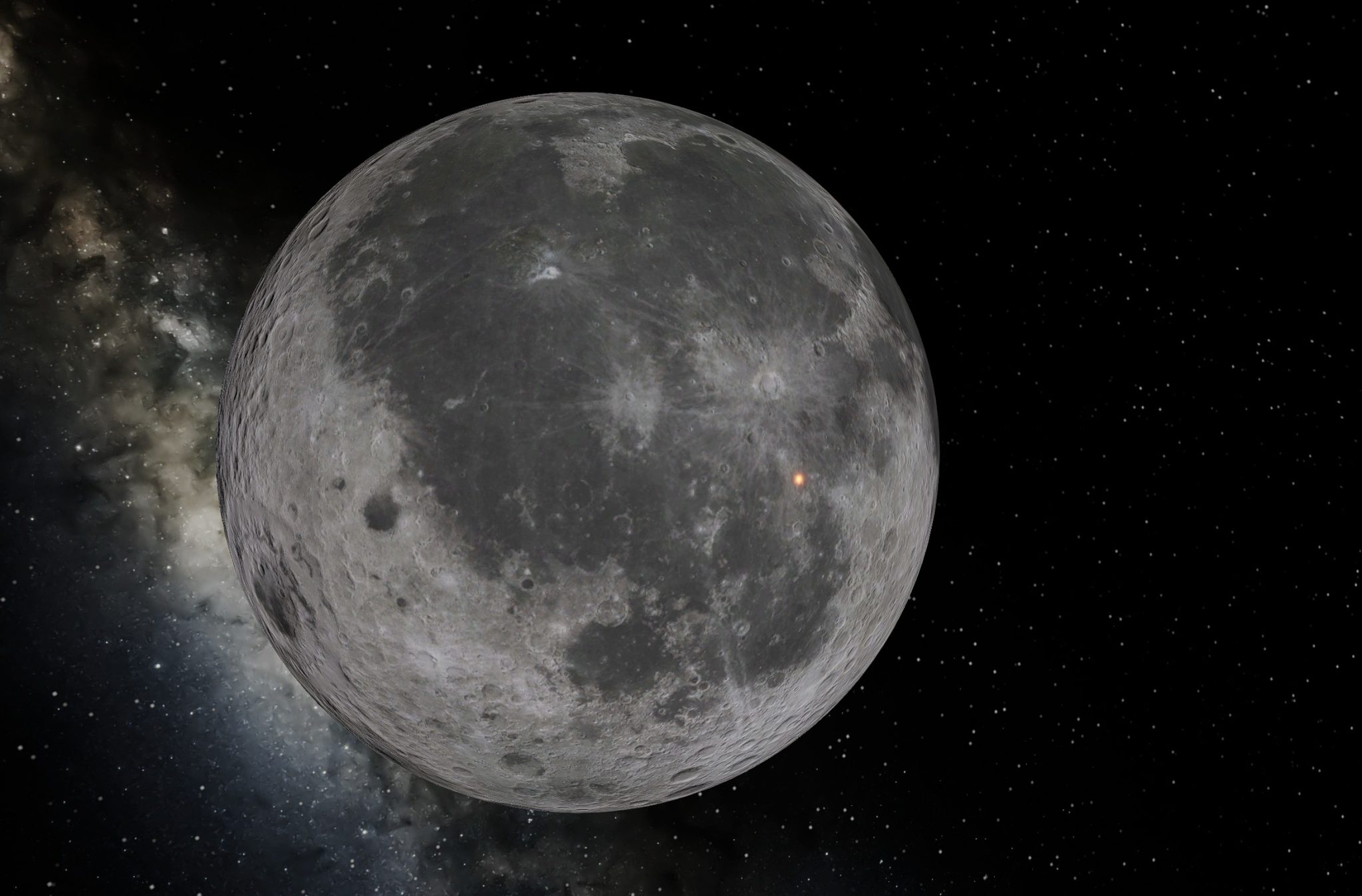
Source: Universe Sandbox
Now that both Earth and the Moon are out of danger, asteroid 2024 YR4 will be an ideal target for testing planetary defense systems. NASA plans to observe it again with the JWST in 2028, when it will once again come close to us. These observations will help refine methods for tracking potentially dangerous objects and prepare for other close encounters with space travelers.
Previous reports indicated that a collision between an asteroid and the Moon could damage satellites.
Provided by ESA

