

This week, on May 15, NASA’s Psyche spacecraft will perform a thrilling gravitational maneuver. The probe will fly by at an extremely close distance—just 4,500 km from the surface of Mars—after accelerating to an impressive 19,848 km/h. The main goal of this extreme close approach is not to study the planet itself, but to use its gravity as a cosmic “slingshot.”
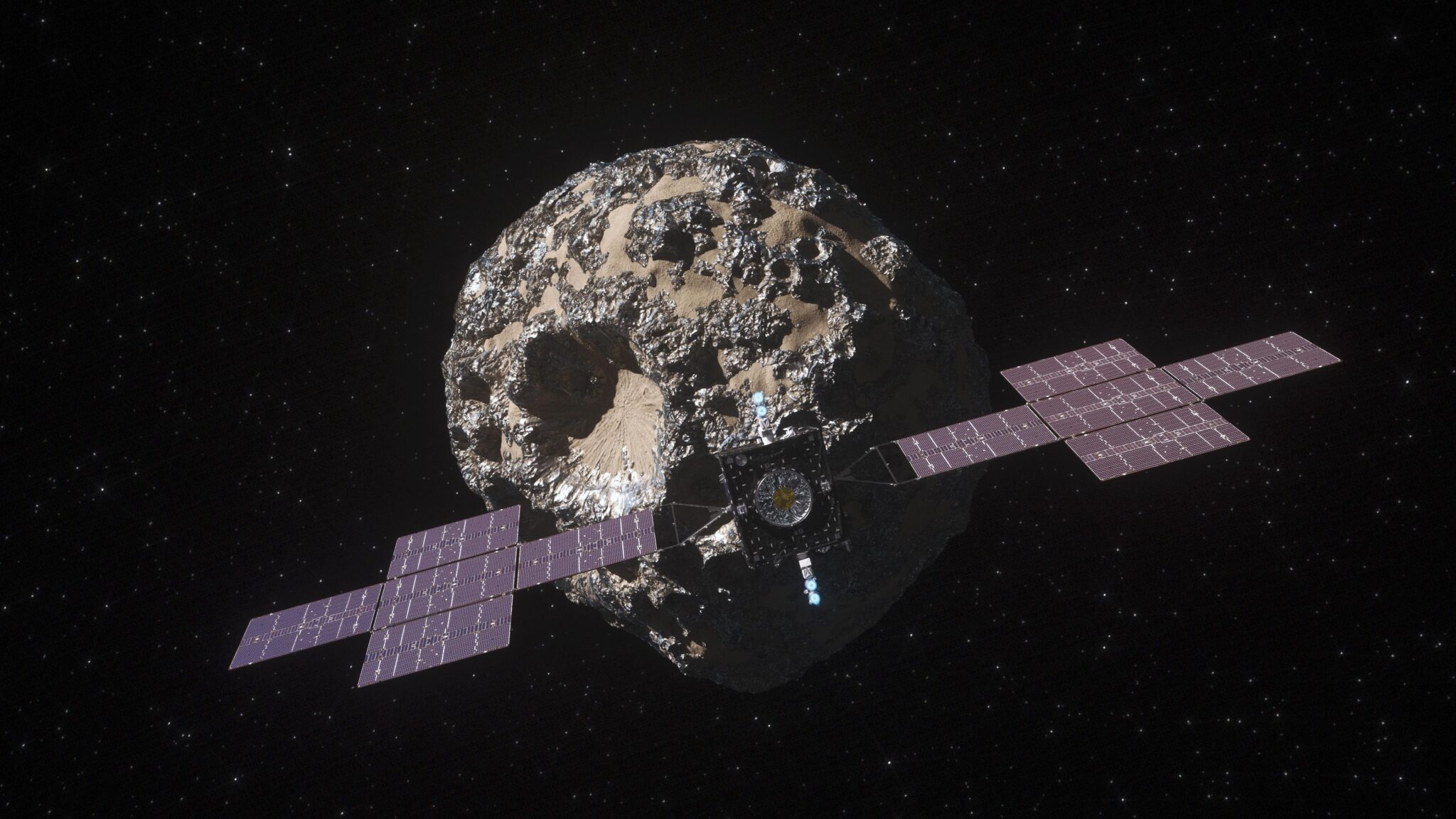
Launched in October 2023, the spacecraft is heading toward one of the most mysterious objects in our Solar System—the metal-rich asteroid Psyche. Since it’s a long journey, the Psyche spacecraft uses an innovative solar-electric propulsion system powered by the inert gas xenon. It accelerates the probe very smoothly. However, the mission engineers have found a way to conserve precious fuel: they will let Mars’s gravity do some of the heavy lifting by adjusting the spacecraft’s orbit and giving it the necessary acceleration.
Final rehearsal before the main event

However, a gravity assist maneuver is not just about changing speed. For the mission team, it’s the perfect opportunity to test all systems. The team plans to use Psyche’s multispectral camera to take thousands of images of Mars. This dataset will enable the calibration of the optics and the refinement of algorithms that will be critical in late 2029, when the probe enters the target asteroid’s orbit.
Preparations for this event began well in advance. As early as February 23, the probe’s engines performed a 12-hour maneuver to perfectly align its trajectory. And starting on May 7, the first “raw” images of the starry sky—featuring a tiny speck of Mars—began reaching Earth. According to Sarah Bairstow, mission planning lead at NASA’s Jet Propulsion Laboratory, the onboard computer has been fully programmed for all May operations, and this is the first real opportunity to calibrate the instruments on a large celestial body.
Unusual perspective: what Mars will look like
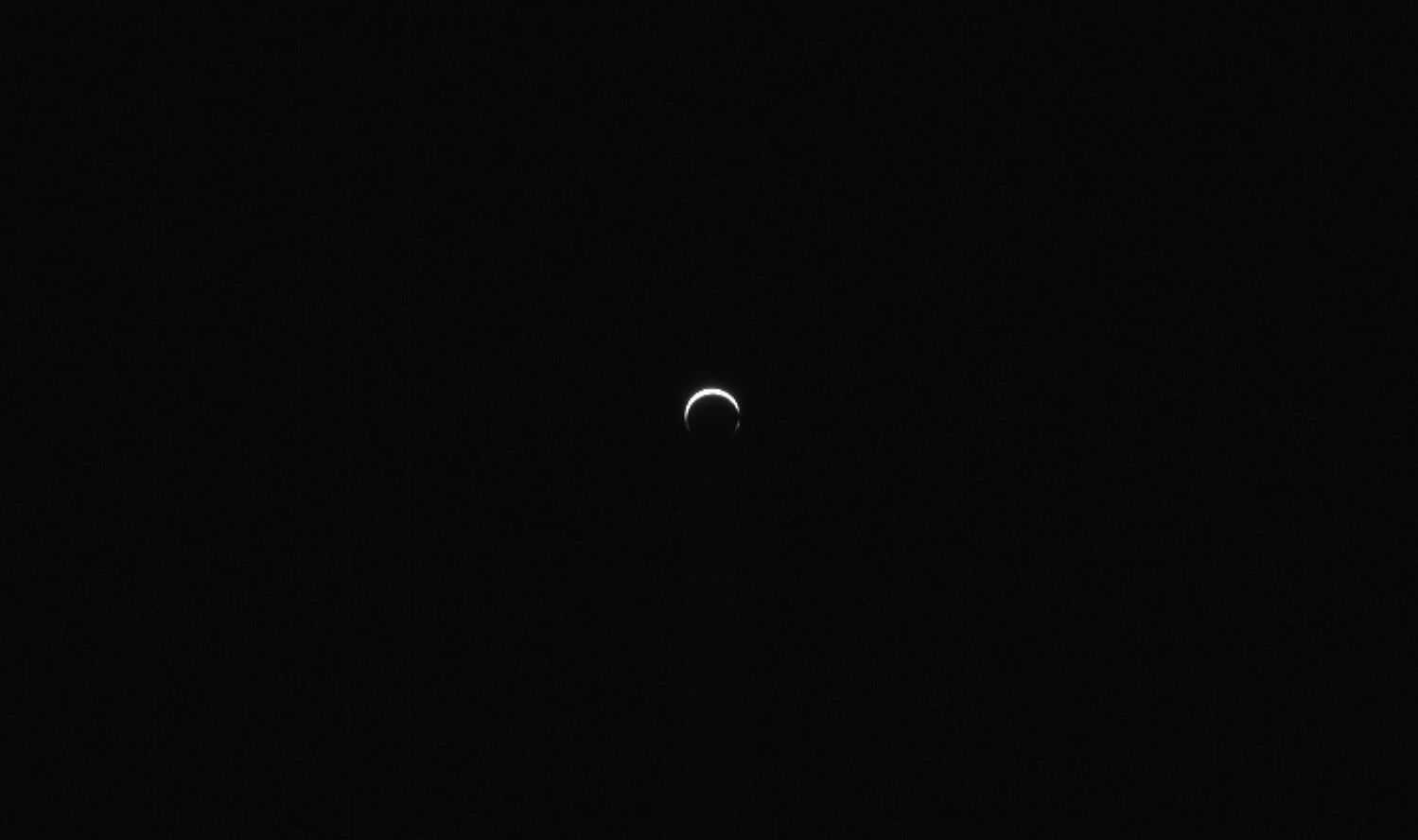
Interestingly, Psyche won’t see the fully illuminated red disk we’re used to. According to Jim Bell of Arizona State University, the probe is catching up to the planet from its night side at a large phase angle. Therefore, Mars will initially appear as an extremely thin, faintly lit crescent, and only after the spacecraft’s flyby, cameras will capture it in its “full” phase. This contrast in illumination is a real boon for scientists.
In addition, scientists are hoping for some minor surprises. There is a hypothesis that Mars has a faint dust ring formed by micrometeorite impacts on its moons, Phobos and Deimos. Special lighting during the flyby could make this ring visible to the probe’s cameras. At the same time, the instruments will search for new, undiscovered Martian moons, which will serve as excellent practice before the search for moons around an asteroid.
The magnetometer, as well as the gamma-ray and neutron spectrometers, will also be put to good use—they will measure the planet’s magnetic field and the level of cosmic radiation. As Lindy Elkins-Tanton, the mission’s principal investigator, sums it up: “The fundamental goal is to get a boost from Mars. But if all the instruments work and we gather valuable scientific data, that will be a real bonus.”
We previously reported on how the Psyche spacecraft photographed Earth and the Moon.
According to NASA

