

March 20 marks the spring equinox. And it is not quite what people usually think it is. Because in reality, it is not just a time when day and night are of equal length, but an astronomical event that can be pinpointed to the second. So when exactly will it occur?
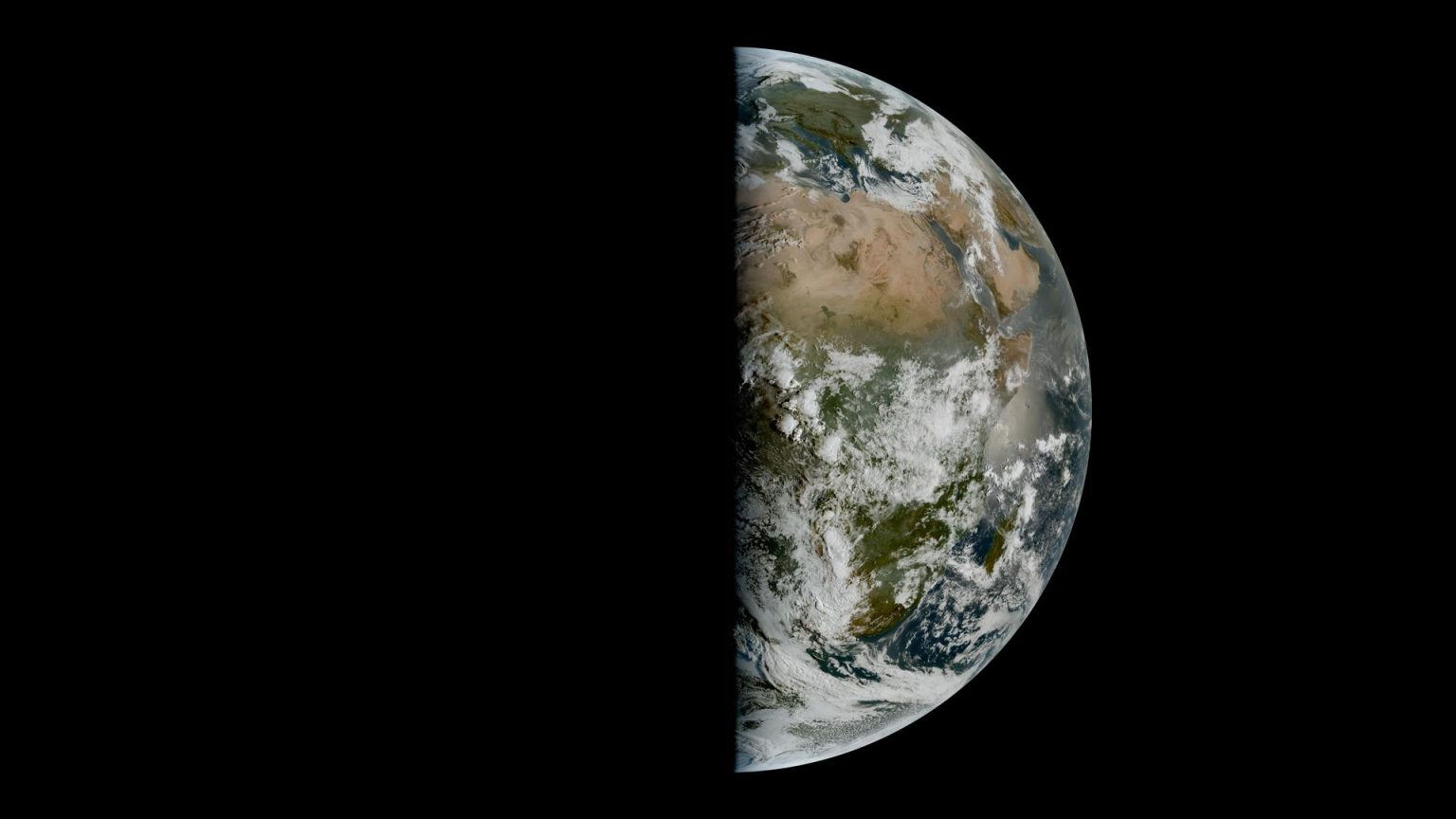
March equinox
On March 20 at 4:46 p.m., the Sun will cross the celestial equator. In doing so, it will move from the Southern Hemisphere to the Northern Hemisphere, not the other way around. This means that the Northern Hemisphere will experience the spring equinox, while the Southern Hemisphere will experience the autumn equinox.
It might seem like, why make things so complicated? Everyone knows that the equinox is when the length of daylight equals that of night. Starting from the winter solstice, when the night was longest, the day grew longer until it reached this point; from here on, it will be longer than the night, and this will continue until the summer solstice.
Yes, in the Southern Hemisphere, it is the opposite: there, the day is actually getting shorter, and soon it will be shorter than the night. It’s all the same, just the other way around. So why invent this whole story about the celestial equator, and where did its apparent time come from, if, to determine whether it has arrived or not, one must measure the entire duration of the light part of the day?
How long are the daylight hours?
To begin with, on March 20, the length of daylight, for example, in Kyiv, will be 12 hours and 9 minutes. And there is nothing unusual about that. It is extremely rare for the length of daylight to be exactly 12 hours to the minute anywhere during the equinox.
After all, in our latitudes, daylight hours decrease by about 4 minutes per day, so even theoretically, an exact match could only be a coincidence. However, in reality, it is even more complicated. The length of daylight during the equinox varies for different points on the surface of our planet, and even for the same location in different years. For example, in Kyiv last year, the day during the equinox lasted 12 hours and 10 minutes.
Actually, the variation in the length of the day is quite easy to explain. One revolution of the Earth around the Sun takes 365 days, 5 hours, 48 minutes, and 34.5 seconds. At the same time, we conventionally consider a year to be 365 days long and add an extra day in leap years. This is precisely what accounts for the slight difference mentioned above.
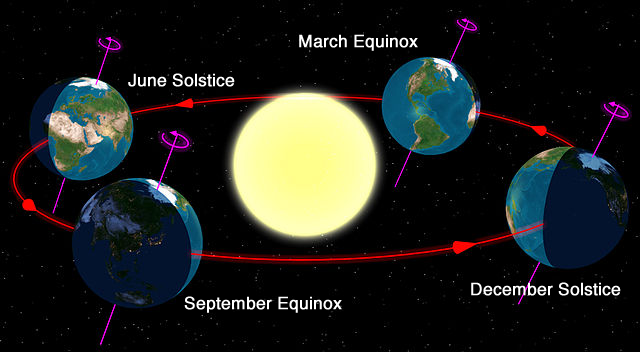
As for the fact that the length of the day during the same equinox can vary from place to place, there are at least three factors that influence this. The first is that the Earth is not a perfect sphere: it is flattened at the poles and, in addition, has surface irregularities.
Therefore, as you approach the pole, the length of daylight during the equinox decreases slightly. However, this is nothing compared to how much daylight will be reduced if you are in a narrow valley. On the other hand, if you climb a mountain, it will actually increase, because the horizon will be slightly farther away.
However, this phenomenon would not be nearly as noticeable if it were not for another factor: the refraction of light by Earth’s atmosphere. Our planet’s gaseous envelope acts as a lens. Thanks to this, we can see the Sun’s rays even when the straight line connecting our eyes to the Sun would, in theory, pass through the Earth’s surface.
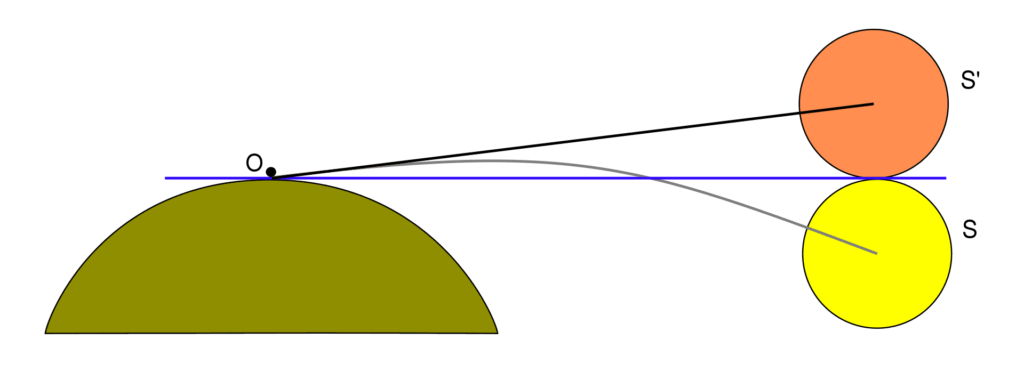
The third factor influencing the change in the length of the day during the equinox is how we define the concept of a “daylight hour” in the first place. Typically, this is the period of time between the moment the edge of the Sun rises above the horizon and the moment it completely sets below it.
However, it takes several minutes for our Sun to fully rise and set below the horizon, especially at high latitudes. And these minutes also add to the daylight hours, extending them slightly.
The vernal equinox
In astronomy, the moment of the vernal equinox is of great significance. It marks the beginning of astronomical spring. That is why scientists who study the night sky have taken all of the above factors into account and defined this event as the Sun’s crossing of the celestial equator.
Unlike sunrise and sunset, this moment does not depend on the observer’s location, so it can be calculated in advance once, and the resulting value will apply to the entire Earth. However, there are places where the Sun will not be visible in the sky at that moment, since it will be nighttime there.
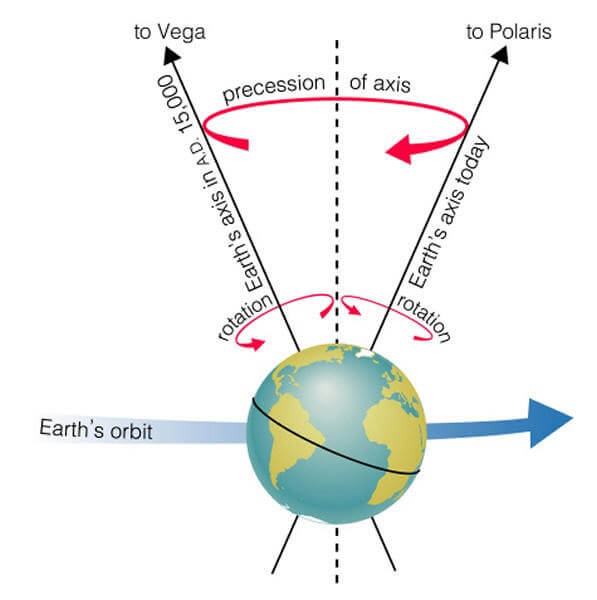
It is also worth noting how the equinoxes are related to the zodiacal constellations. Since these constellations, by definition, are those through which the ecliptic passes, the points of the equinoxes and solstices are always located within one of them.
Specifically, the vernal equinox (for the Northern Hemisphere) is currently located in the constellation Pisces. However, the symbol for Aries is often used to represent it. The reason for this is a historical tradition that dates back two thousand years, when this point was indeed located in that constellation. Since then, it has shifted significantly due to the precession of the Earth’s axis.
In general, it is important to remember that the spring equinox is constantly shifting in relation to the zodiac signs. By around the year 2448, it will occur when the Sun is in Aquarius. And in about 25,700 years, it will have completed a full cycle and will once again be in Pisces.
It is important to remember, however, that it does not change with the seasons on Earth. It will always be the first month of spring in the Northern Hemisphere. The only thing that changes is the constellations that will be overhead at that time.

