

Although solar flares occur quite frequently, they rarely produce truly catastrophic consequences. Nevertheless, they should not be underestimated. The historic Carrington Event of 1859 A geomagnetic storm knocked out telegraph networks, sparking and igniting individual stations in Europe and America. Even in the 21st century, such phenomena remain dangerous. Even recent incidents, however, demonstrate the vulnerability of modern technology. During the 2003 “Halloween Storms,” navigation systems operated by the U.S. Federal Aviation Administration (FAA) failed for 26 hours, prompting officials, for the first time in history, to warn airline passengers that radiation exposure at an altitude of 10 kilometers could rise to dangerous levels.
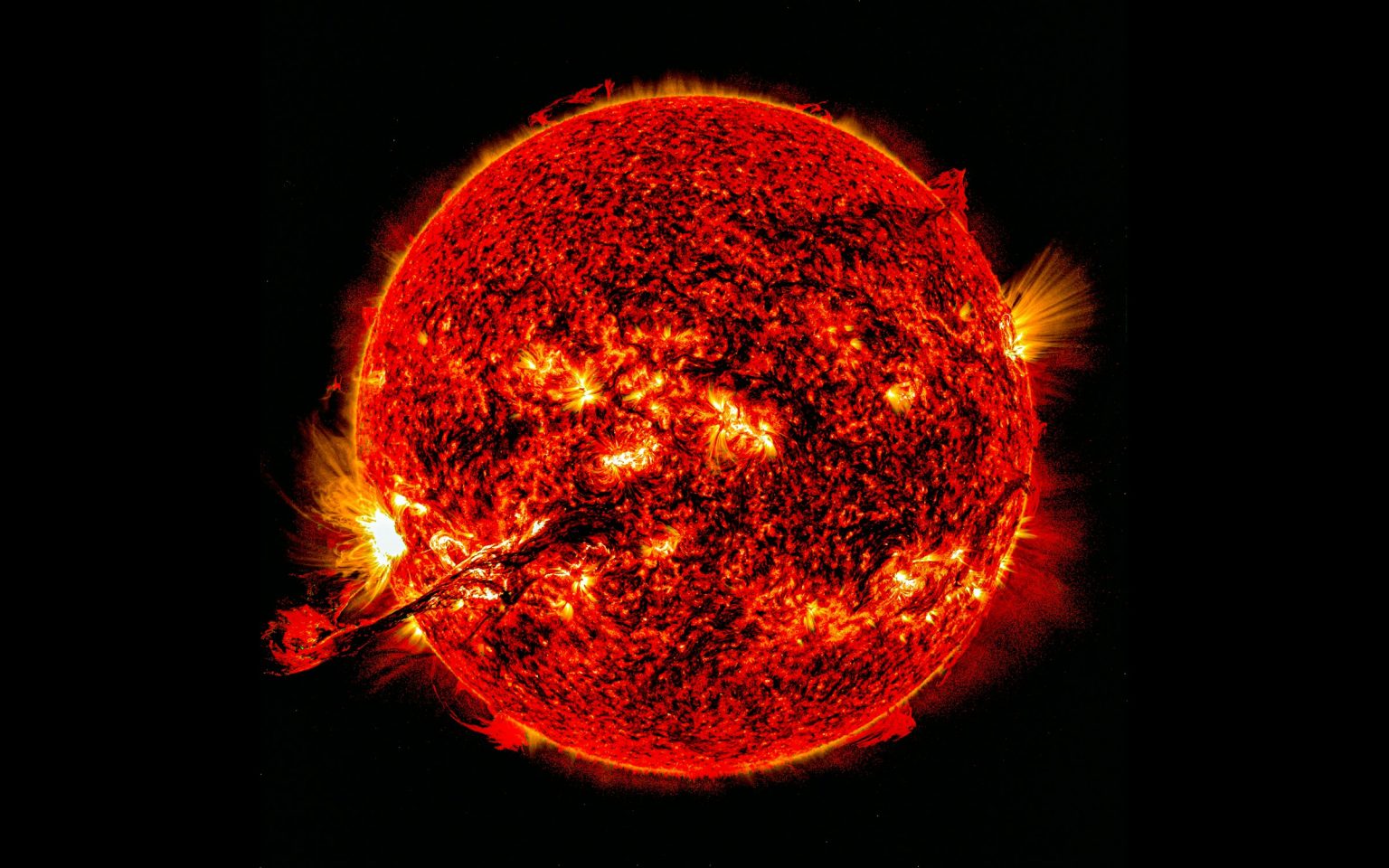
A new study by an international team of physicists led by NASA’s Goddard Space Flight Center and published in Nature has alarmed the scientific community. The researchers concluded that humanity and governments around the world have for years critically underestimated the worst-case scenarios of space weather because of a fundamental error in their calculations. It was previously believed that there was a natural upper limit to the amount of energy a magnetosphere could transfer into Earth’s polar ionosphere. To the researchers’ surprise, such a limit may not exist at all.
An Illusion of Safety
Study co-author Maria Walach, a lecturer in space physics at Lancaster University, notes that because superstorms are so rare, scientists have too little statistical data. Until now, physicists have relied on basic assumptions and interpretations that turned out to be incorrect.
For the operational forecasting of solar storms, spacecraft operating near the L1 Lagrange point of the Sun-Earth system, about 1.5 million km from our planet, are used. Here, they measure the parameters of the solar wind and the interplanetary magnetic field even before the plasma flow reaches Earth, which gives about 30–60 minutes for warning. However, the new study shows that such measurements do not always accurately reflect conditions near Earth. The authors compare this to trying to estimate the strength of an ocean wave on the shore only from its appearance in the open sea: between the L1 point and the magnetosphere, the plasma flow can vary significantly, which may have underestimated the impact of the most powerful solar storms.
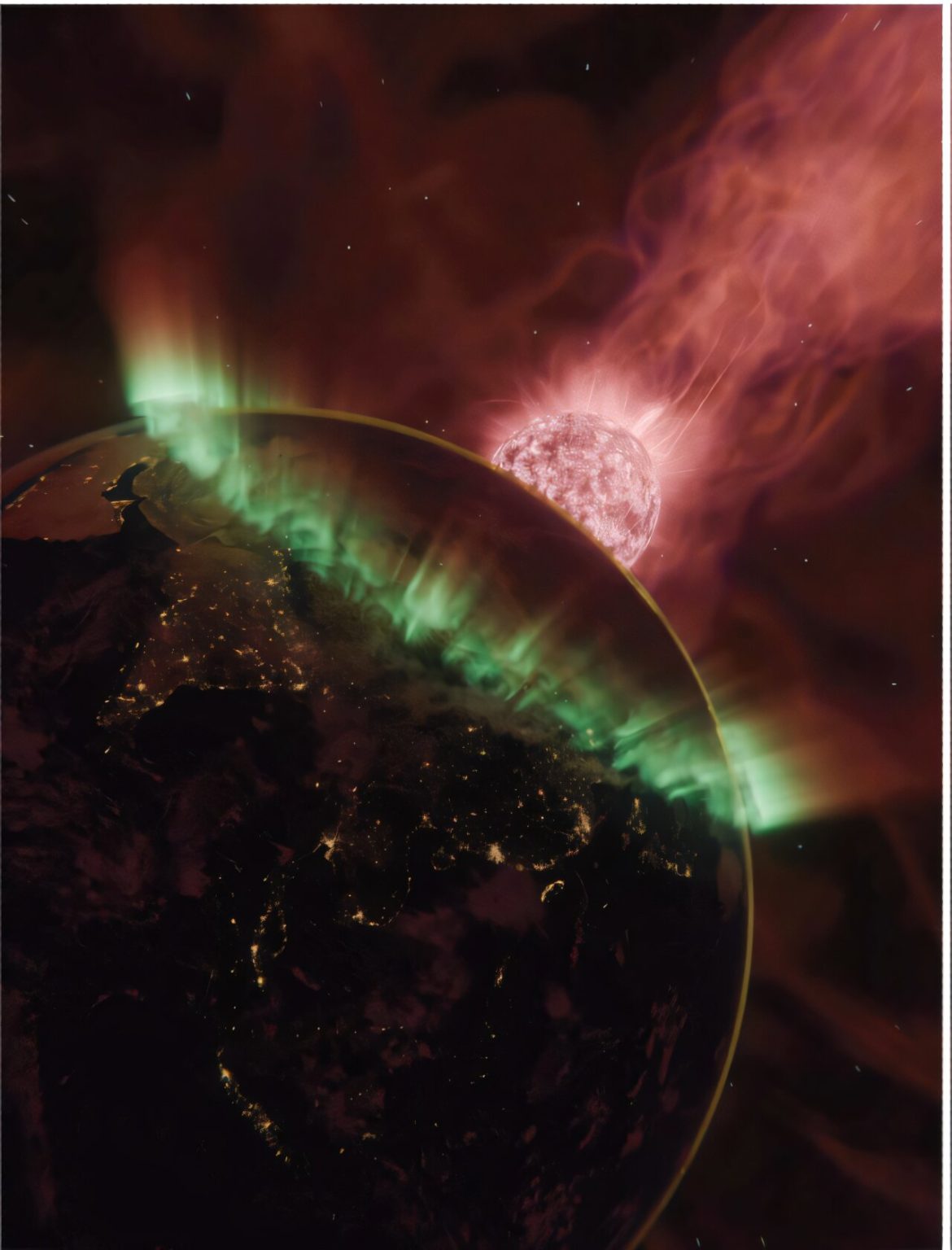
According to the study’s lead author, Nitin Sivadas of NASA, probability theory indicates that the real risks posed by severe space weather have been significantly underestimated because of the mistaken belief that the truth must lie somewhere between the measurements.
What the Satellites Show
To investigate the anomaly, the research team analyzed a dataset containing more than one million measurements collected by satellites operating directly within Earth’s magnetosphere, including the THEMIS, MMS, and Double Star missions.
The analysis found no statistical upper limit whatsoever on the amount of energy that can be transferred from the Sun to the upper layers of Earth’s atmosphere. Earth’s magnetic shield is highly effective at neutralizing ordinary solar activity. During an extreme storm occurring once every thousand years, however, these protective mechanisms may simply be overwhelmed.
Physicists warn that models of future space-weather threats must be urgently revised to account for the possibility that a solar storm could, in theory, have virtually unlimited destructive power, capable of disabling satellites, GPS networks, and the planet’s entire global energy system.
Earlier, we reported on how a powerful solar flare punched an enormous hole in the upper atmosphere.
According to Phys

