

For several months now, the main celestial body mentioned by journalists has been the interstellar comet 3I/ATLAS. At the same time, the majority of reports are alarming, along the lines of “no one understands what is happening, but it is frightening.” In fact, this is the same reaction that people have been showing towards “hairy stars” for many centuries.
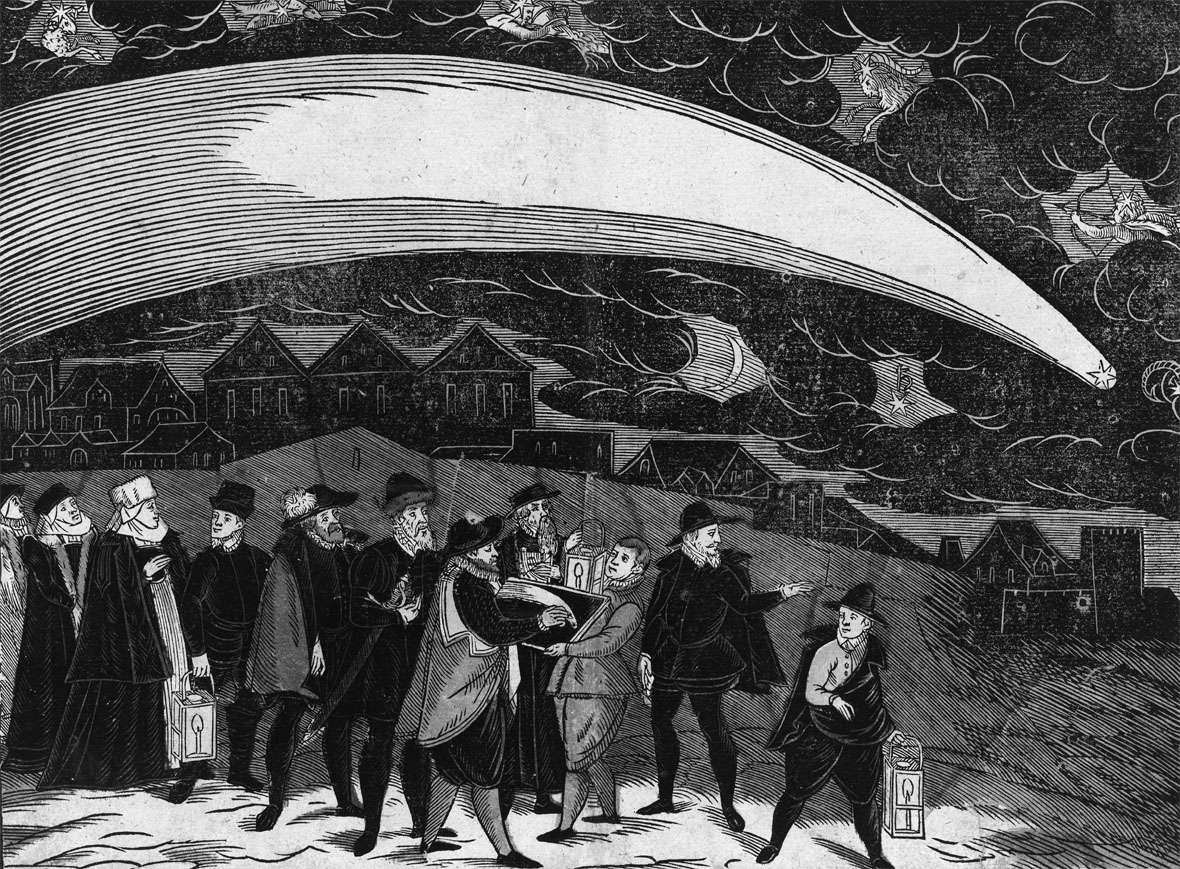
Fear of comets
“Interstellar comet 3I/ATLAS has turned toward Mars. Could it be that aliens are planning to establish a base there?” This is how the title of an article about this celestial body has sounded on average over the past few weeks. And such publications are invariably popular, even though they usually contain complete nonsense.
3I/ATLAS makes people imagine various horrors that it could supposedly cause. Of course, all this can be attributed to the fact that it is only the third interstellar object discovered by astronomers, as well as to the fact that it will pass its perihelion on the other side of the Sun relative to us.
But in fact, nothing is surprising about the irrational fear of 3I/ATLAS. It has always been the same with all comets. The question of which record about them should be considered the oldest remains debatable, but even if we take March 239 BC (the first date that is recognized as reliable and sufficiently accurate), even then, in the Chinese chronicle, this record is accompanied by a report of the death of the military leader Meng Ao.
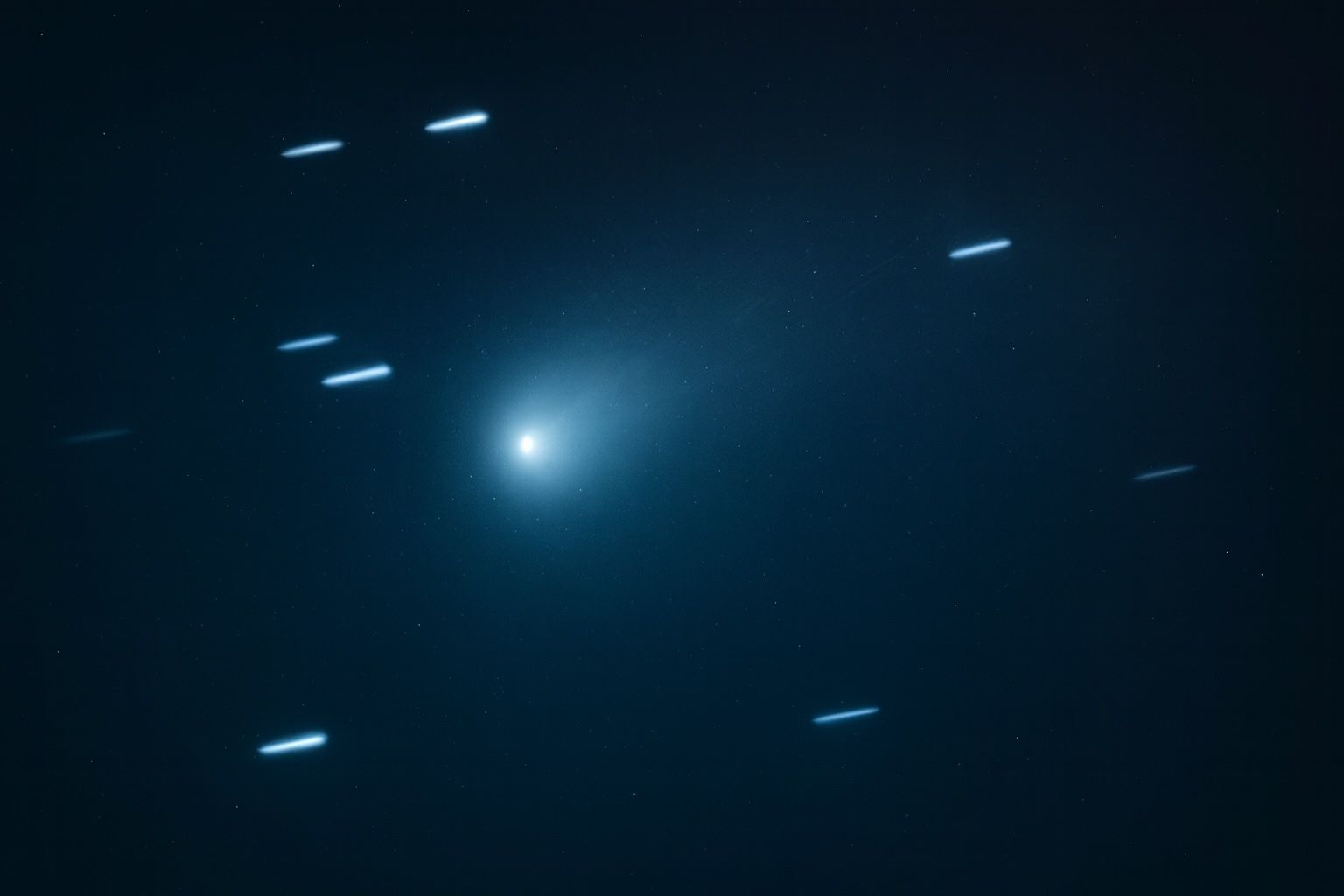
Most likely, people saw the famous Halley’s Comet in the sky at that time. At least, calculations show that it was precisely at that time that it was supposed to visit the inner parts of the Solar System. And, of course, this celestial body could not have caused anyone’s death. However, our ancestors sought a connection with events on Earth and, of course, found it.
People observed Halley’s Comet almost every time it passed through its perihelion. And regardless of which researchers look at the records – Chinese, Middle Eastern, or Western European – everywhere, alongside comets, there are the deaths of kings, famine, and plague. There is one exception, such as the appearance of this celestial body in 12 BC, which is believed to be the Star of Bethlehem that announced the birth of Jesus Christ.
What is it?
Why have comets always evoked such a reaction in people? First of all, because no one understood what they were. Unlike everything else people saw in the sky, comets appeared once every few decades, remained in the sky for several weeks, and then disappeared again. No other celestial body behaved in this way.
The heavens were considered the embodiment of order, cyclicality, and immutability. The very concept of measuring time is the result of astronomical observations. The prevailing opinion was that earthly laws could not be applied to celestial bodies.

Against this backdrop, the comet (translated from ancient Greek as “hairy star”), which resembled a celestial body that had grown long hair and a beard, could not help but be seen as a disturbance of harmony.
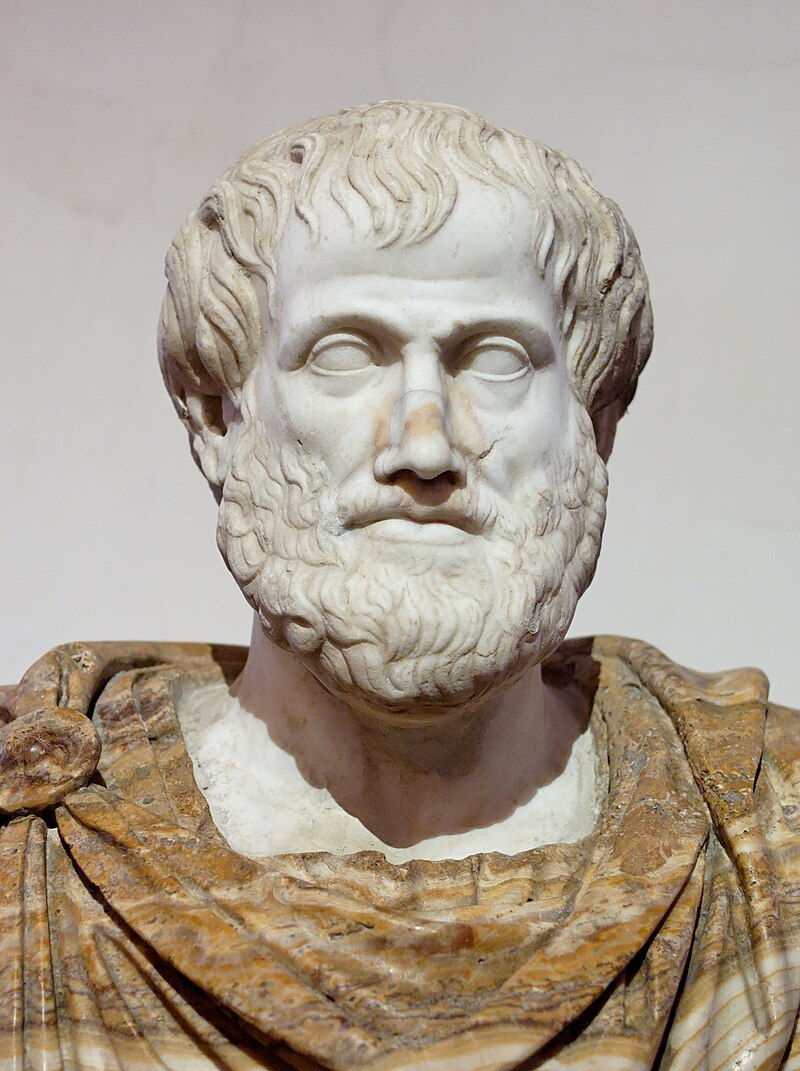
It was precisely these reflections that led Aristotle to the idea of comets, which prevailed for almost 2,000 years. Before him, Greek philosophers had suggested that they were cosmic bodies, somewhat similar to planets. However, the father of the scientific method decided that they could only be a phenomenon in the upper layers of the atmosphere.
And that was still a relatively scientific explanation. The ancient Scandinavians, for example, believed that the world was created from the body of the ancient giant Ymir, with different parts of his body becoming different things. The sky, for example, was created from his skull, and comets were fragments of it. Can we expect anything good from the fall of a fragment of a giant skull?
All these explanations led people to see the appearance of comets primarily as a sign that portended unpleasant things, and then everyone saw something of their own in it. For example, the rulers of Korea used comets as an indicator of who to attack. Whoever the tail of the “bearded guest” pointed to would have to pay for all the insults.
Sometimes funny things happened. For example, when another “hairy star” appeared in 70 AD and everyone began to wonder whose death it foreshadowed, the Roman emperor Vespasian said that he was bald and not afraid of comets. It was the king of Parthia, who had no hair on his head, who should be wary.
The truth that does not help
It cannot be said that absolutely all scientists agreed with Aristotle’s opinion about what comets are. Alternative opinions were expressed in ancient times and among Islamic scientists, but his authority remained high, so every appearance of a comet was accompanied by talk about what incredible events could now be expected, who would die, whether there would be plague, famine, etc.
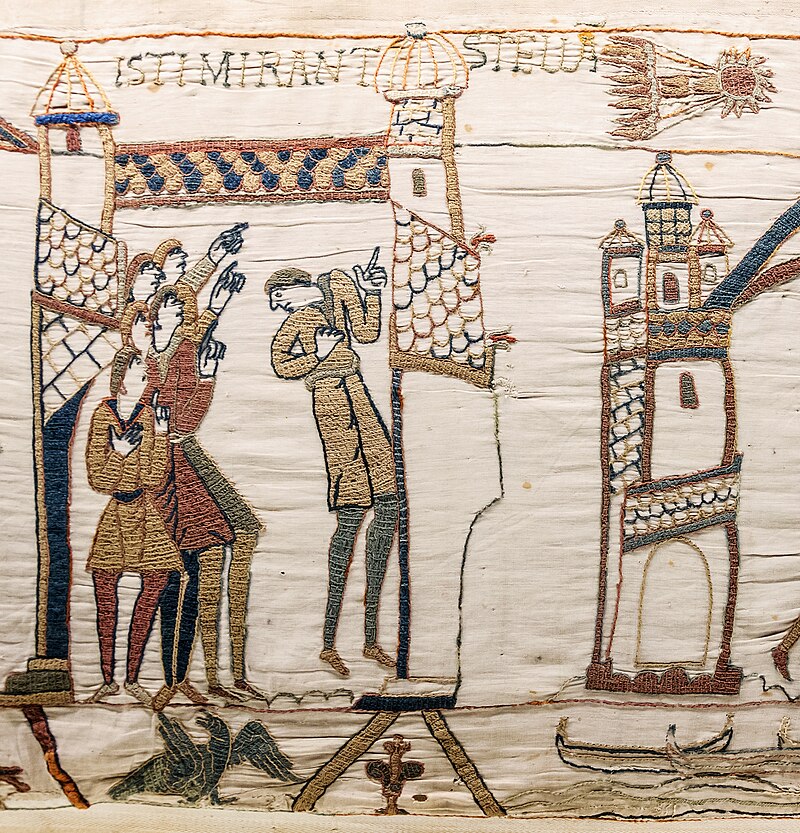
One of the most famous cases occurred in 1066, during the conquest of England by the Norman Duchy, and it was in this year that Halley’s Comet appeared. Its appearance was so strongly associated with political events that it, along with knights, was depicted on the Bayeux Tapestry, which depicts the Battle of Hastings, a fateful battle for the British Isles.
However, in the second half of the 16th century, the situation began to change rapidly. The next arrival of Halley’s Comet was closely monitored by the Danish astronomer Tycho Brahe. He managed to establish that during his observations, it was at least four times farther away from us than the Moon, so it could not possibly be an atmospheric phenomenon.
In the future, these and other observations enabled Kepler and Newton to formulate general laws governing the rotation of all bodies in the Solar System, including comets. We also owe Newton the first more or less modern view of the nature of comets – a small solid nucleus followed by a long tail of diffuse matter.
Did these works help dispel the flood of terrible rumors about the disasters they could cause? Only partially. For example, in 1619, a certain Gotthard Arthus from Gdańsk published a book in which he claimed that the Great Comet, which had been observed a year earlier, was a harbinger of the approaching Last Judgment.
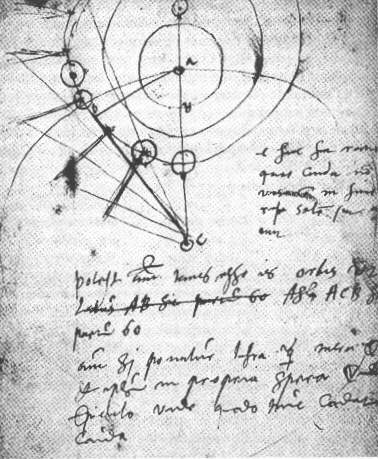
In 1711, theologian William Whitson used Edmund Halley’s calculations regarding the Great Comet of 1680 to substantiate the theory that its previous arrival had caused the Great Flood described in the Bible.
At the same time, Whitson was believed not least because he was not a stubborn fanatic. On the contrary, he actively disseminated scientific knowledge. But the attempt to combine it with biblical myths led to undesirable results.
Contemporary horrors
The story with Whitson showed a characteristic feature of comet fears. Although scientific data about comets reduces fear of them, it does not completely protect against the emergence of myths about them. It is too easy to use scientific data to construct such myths.
A characteristic case occurred in 1910, when Halley’s Comet approached Earth. At that time, scientists conducted a spectral analysis and found that it contained cyanide and carbon monoxide. These are toxic, and Earth was about to pass through the comet’s tail. Scientists had previously stated that this would not affect living beings on our planet. However, it did influence the emergence of people selling pills for “comet poison.”
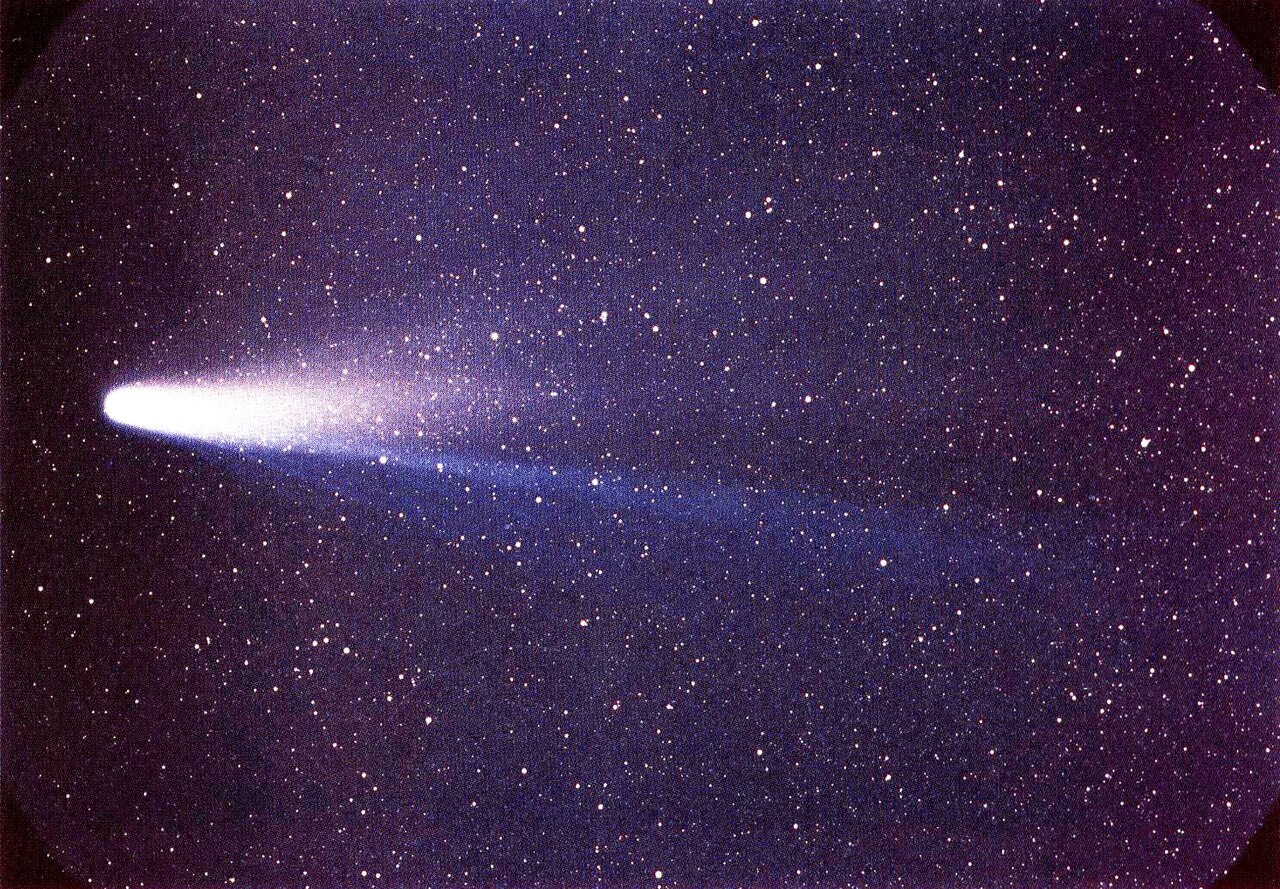
Little has changed over the last century. If the Earth were to pass through the tail of 3I/ATLAS now, there would surely be those who would spread panic, whether due to imagined contamination by alien microorganisms or fear of poisonous gases.
So the hysteria surrounding the possible arrival of aliens should come as no surprise. In fact, it would be strange if it did not happen. Inventing all sorts of horrors about things you do not really understand is a natural feature of the human psyche.
In the future, many more interstellar objects await us, and some of them may well come much closer to Earth than 3I/ATLAS. It is difficult to predict what secrets we will learn about them during our research. But we can say with certainty that then, too, there will be a lot of scary stories about plagues, invasions, and the deaths of famous people.

