

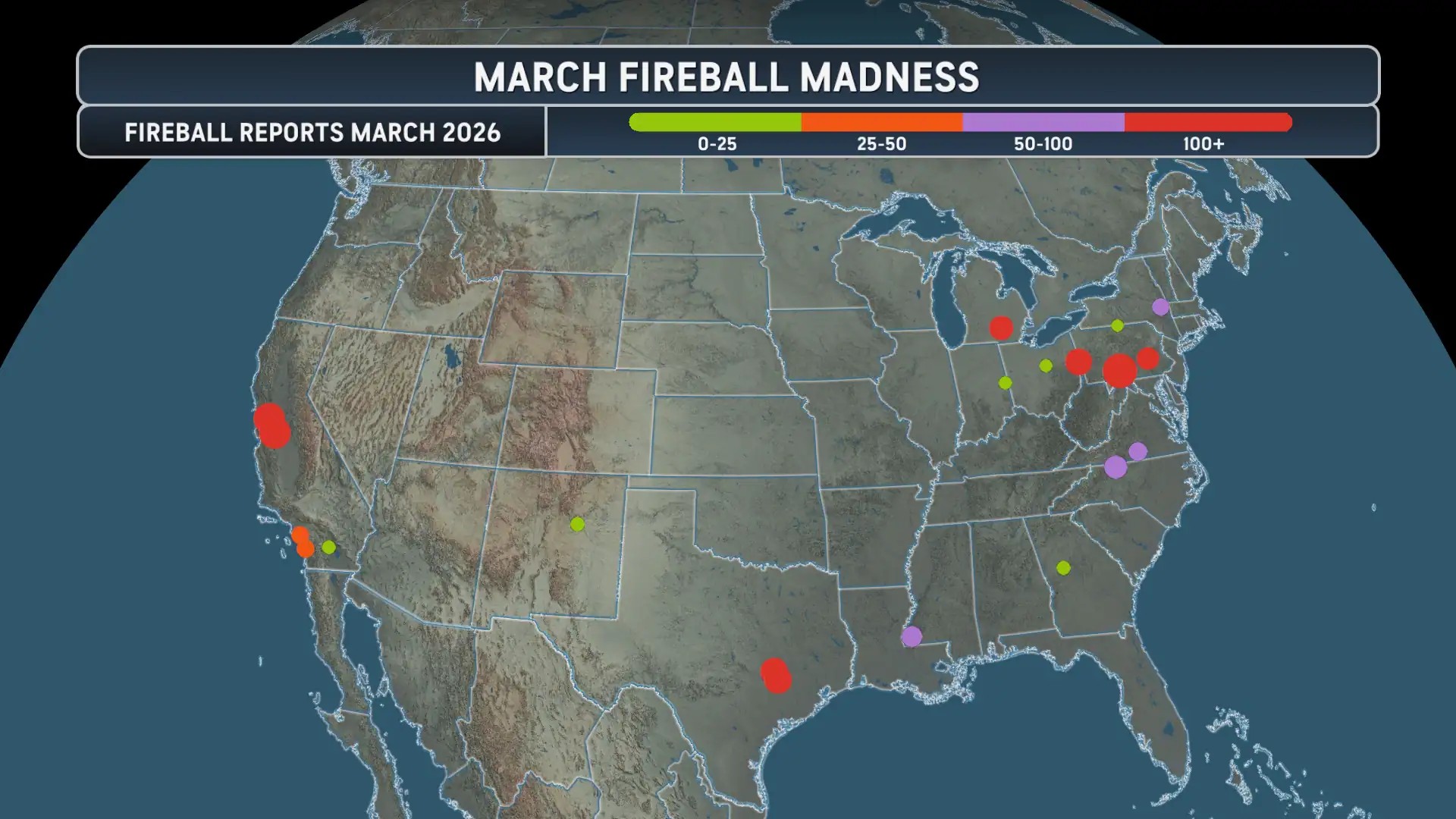
In March 2026, meteorite hunters gathered in the US state of Ohio. It was all caused by a meteorite that broke up at an altitude of 48 km and exploded with a force equivalent to 26 tons of TNT. After it broke apart, the debris scattered across several regions. What was once considered the event of the decade, this month has become just one episode in an unusual meteor season.
In the first quarter of 2026 alone, it was as if the Earth had passed through a “shooting gallery.” The American Meteor Society (AMS) has recorded an unprecedented surge in fireballs—extremely bright meteors that penetrate deep into the atmosphere.
Increase in the number of eyewitnesses
If you look only at the number of incidents, the figures seem typical: 2,046 cases for the quarter—almost the same as in 2022. However, the physical size of space travelers has changed radically.
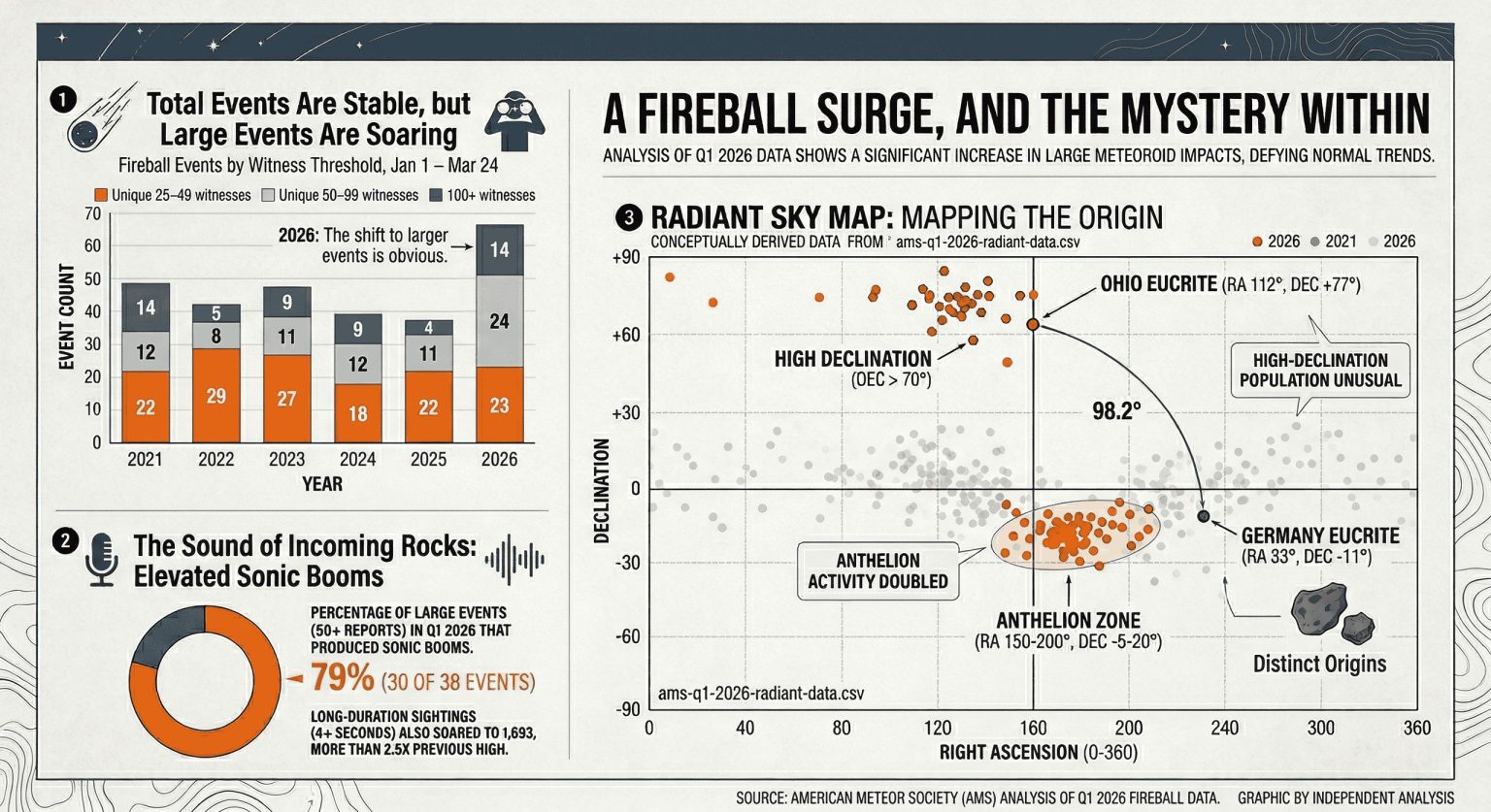
AMS researcher Mike Hankey notes: “The distribution hasn’t just broadened—it has shifted upward. Now we’re seeing much larger rocks that are attracting widespread attention—more than 200 reports per event.”
Where are the “shells” coming from?
Astronomers calculated the trajectories of these objects and identified two main sources of the anomaly:
- Anthelion source. This is the region directly opposite the Sun. Objects from this region “catch up” to Earth from behind. Activity in this zone has doubled since the beginning of 2026.
- Meteoroids moving in vertical orbits relative to the plane of the Solar System.
This is not a typical meteor shower, like the Perseids, which has a distinct “tail.” Scientists believe that we are observing an increase in the overall “background noise” of the Solar System—possibly due to the recent breakup of a large asteroid.
Or could it be aliens?
Despite the explosions and sonic booms, scientists are certain that this is not an attack by “aliens.” All the objects are moving along natural heliocentric orbits. Direct evidence comes from fragments discovered in Germany and Ohio: these are rare types of meteorites known as achondrites. They formed more than 4.5 billion years ago in the crusts of massive asteroids such as Vesta.
It is important to note that the high volume of messages is partly due to the development of AI. Users ask chatbots where to report a meteor shower, and the chatbots instantly redirect them to the American Meteor Society’s databases.
What has the year 2026 taught us?
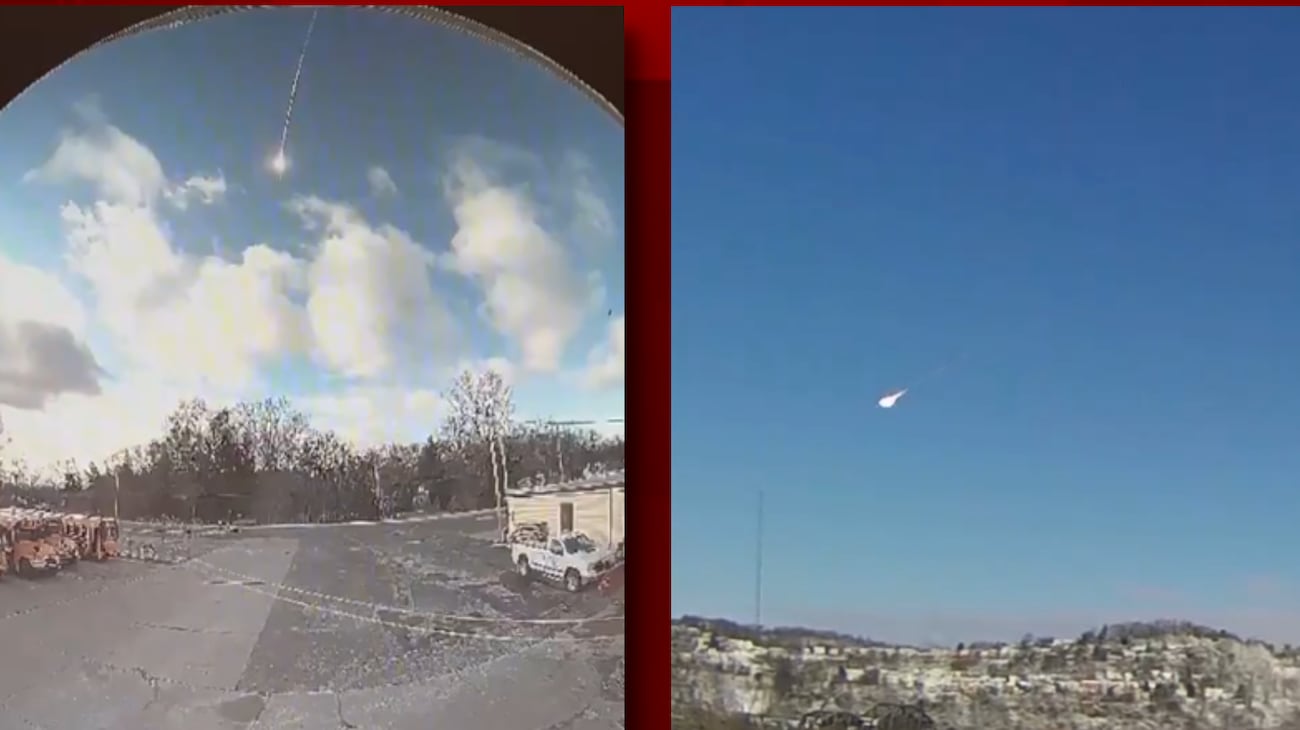
This meteor shower has revealed “blind spots” in our planetary defense system. Scientists are calling for the rapid establishment of a global network of unmanned cameras that could provide early warning even of such small asteroids.
The Earth continues its journey through a “changed neighborhood.” Meteors from space have become larger, louder, and more frequent, which means it’s time for us to tune our “space eyes” to a higher resolution.
Earlier, we explained the difference between a meteor, a meteoroid, and a meteorite.
According to zmescience.com

