

During the total lunar eclipse on September 7, 2025, astrophotographers Gerald Rhemann and Michael Jäger took unique photographs of the interstellar comet 3I/ATLAS. Their observations revealed a surprising fact: the comet that visited our Solar System glowed green. This discovery put scientists in front of a new exciting puzzle, because previous data on the chemical composition of this comet doesn’t explain this phenomenon.
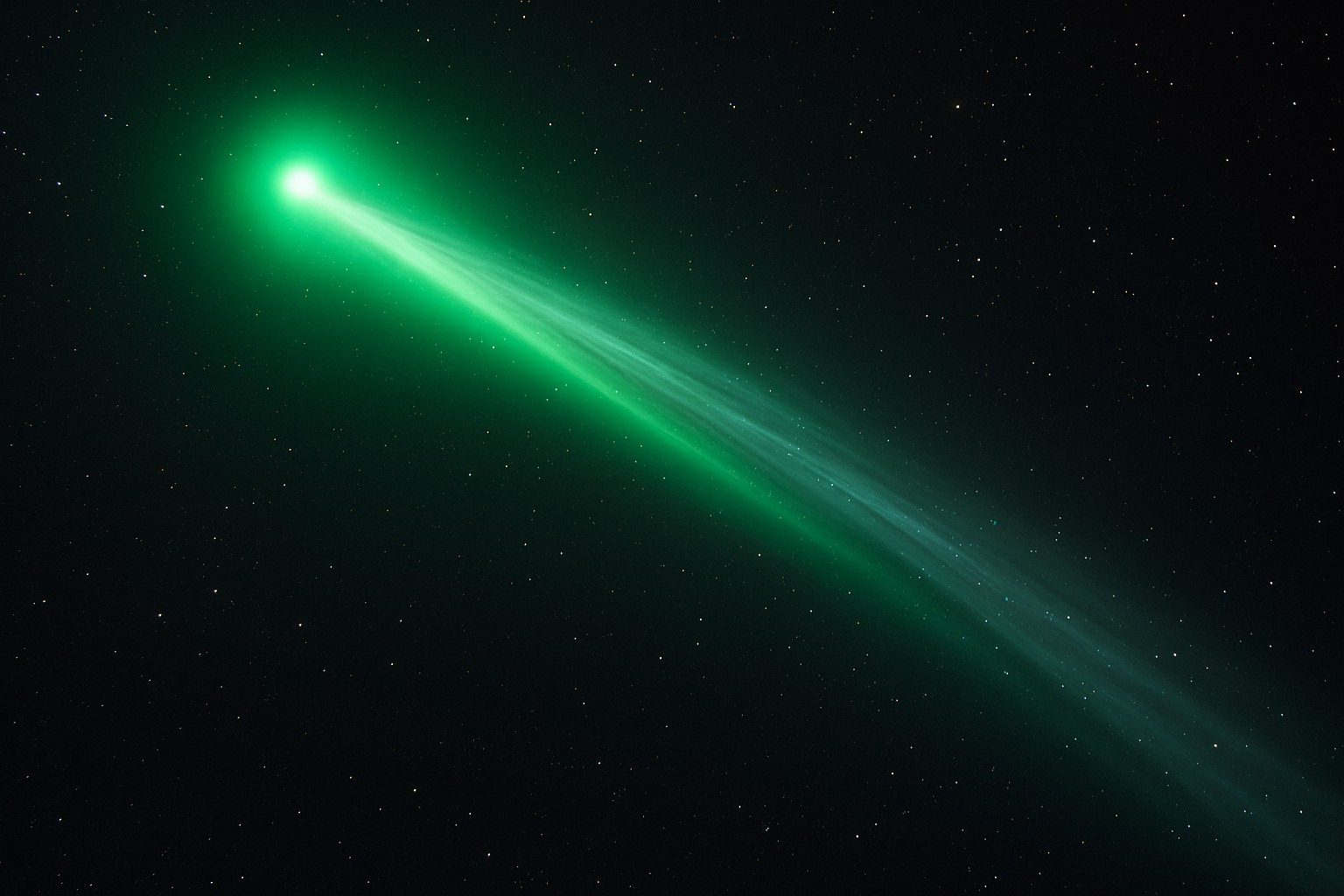
For comets in our Solar System, green glow is a common phenomenon. It occurs when solar heat warms the comet, causing the ice to sublimate into gas and form an atmosphere (comet). Molecules in this gas, particularly dicarbon (C2), begin to glow under the influence of solar radiation, creating a characteristic green glow. However, this is not the case for the interstellar comet 3I/ATLAS.
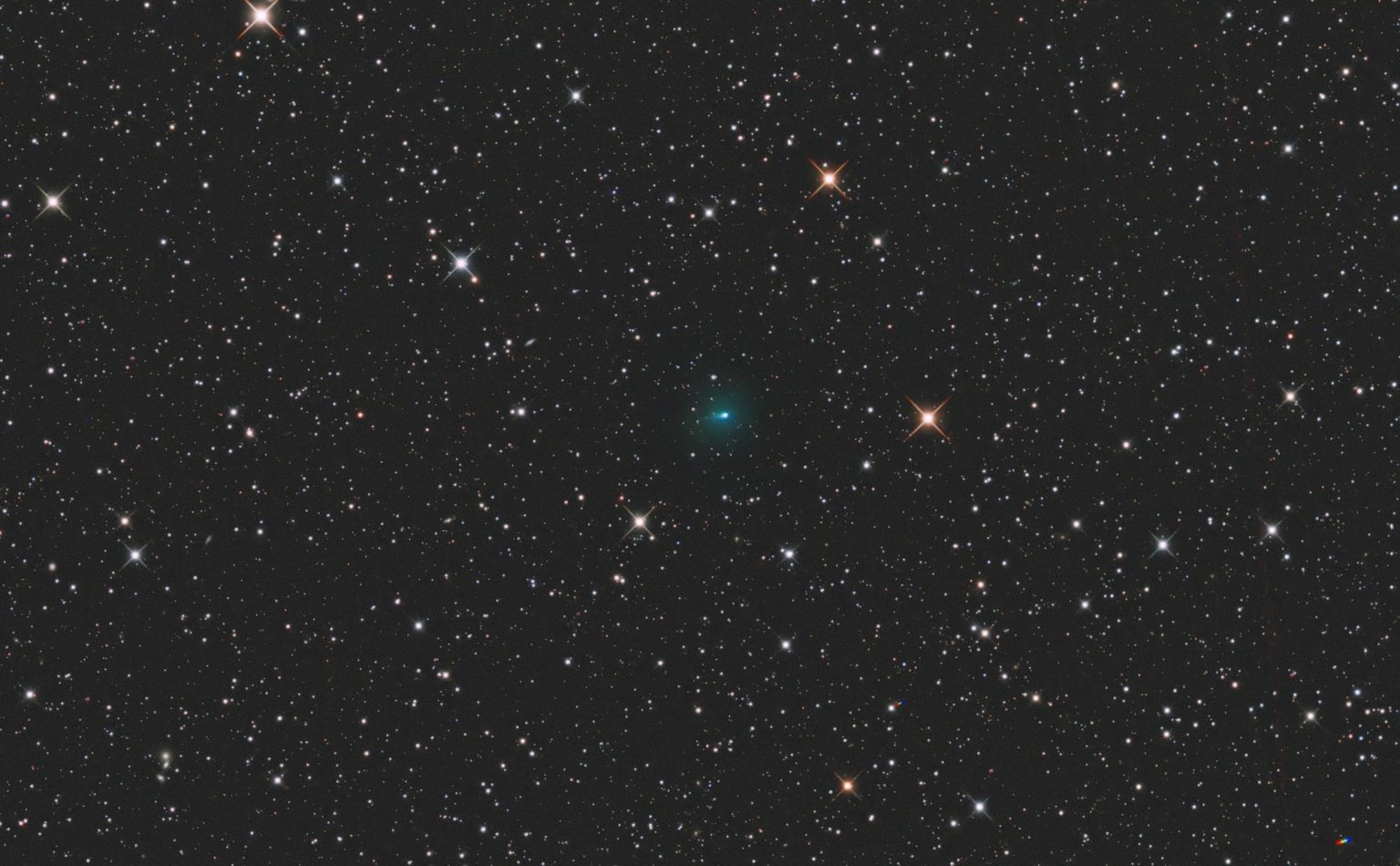
Previous studies, including those conducted with JWST, have shown that this comet has a very unusual chemical composition. It was found to contain elevated levels of carbon dioxide, as well as traces of nickel and cyanogen (CN). However, no dicarbon (C2) molecules, which are traditionally responsible for the green color, were found. This has left scientists at a dead end.
The mystery becomes even more complicated when you consider the conclusions of astronomer Luis Salazar Manzano from the University of Michigan. His team finds that Comet 3I/ATLAS shows a lot of “carbon chain depletion” — meaning it has significantly fewer C2 and C3 molecules than any other comet we know of. The early detection of cyanogen only reinforces this strange chemical anomaly.
This means that either dicarbon is present but has not yet been detected due to unique conditions, or some other, as yet unknown molecule is responsible for the green glow. Both options make this interstellar traveler an extremely valuable object for study.
Scientists hope to find answers to these questions in the near future. According to forecasts, comet 3I/ATLAS will come closest to Earth in December 2025. This will provide astronomers with a unique opportunity to conduct a series of detailed observations and finally unravel the mystery of its green glow. Each such discovery expands our understanding of what celestial bodies far beyond our Solar System are made of and how they are formed.
We previously reported on how 3I/ATLAS could crash into Mars.
According to Science Alert

