

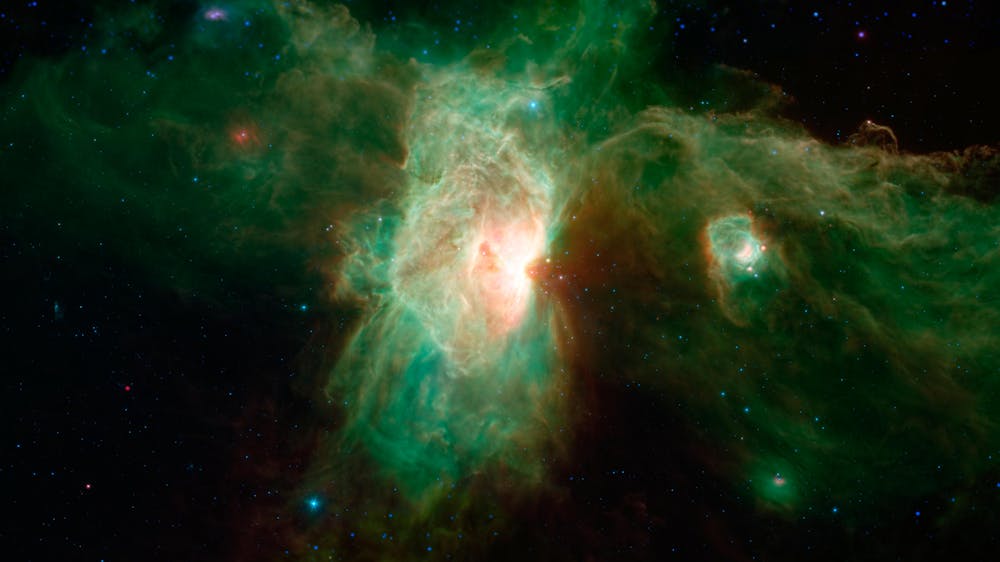
Our cosmic neighborhood has never been a peaceful place. Nearby stars end their life cycles with supernova explosions, creating gigantic clouds of gas and dust. Our Solar System, including Earth, continues its journey through the Milky Way galaxy, and right now we are passing through one of these structures—the Local Interstellar Cloud. As the latest data from the planet’s coldest continent shows, this cosmic encounter is leaving very tangible traces on Earth.
Antarctica is not just an icy desert, but a unique geological archive. Unlike the rest of the Earth, its surface remains virtually untouched. Layers of snow and ice have been accumulating here for tens of thousands of years, forming a perfect record for studying our planet’s past.
In 2019, a team of scientists led by Dominik Koll of the Australian National University conducted a large-scale study, collecting approximately 500 kilograms of fresh Antarctic snow. A detailed analysis of these samples yielded sensational results: iron-60 was detected in the snow. This is an extremely rare radioactive isotope that is produced exclusively during powerful stellar explosions. After several years of additional testing, the researchers concluded that a local interstellar cloud has been continuously releasing this isotope, which has been preserved in Antarctic snow over the past 80,000 years. The results of this groundbreaking study were published in Physical Review Letters.
Looking for a needle in a haystack
Obtaining such evidence was no easy task. Dominik Koll described the process as “painstakingly reasoned speculation.” The work required the careful melting and complex chemical processing of hundreds of kilograms of ice to extract minute amounts of iron.
To isolate the isotope, the scientists had to use a powerful particle accelerator. The scale of this painstaking work is impressive: the researchers managed to identify and count just a few atoms of iron-60 among 10 trillion other particles.
However, these findings also raised new questions. Analysis showed that in older ice samples, dating back 40,000 to 80,000 years, the level of iron-60 was significantly lower than expected when compared to more recent Antarctic snow, which is less than 20 years old. This partially refuted the widely held theory that the deposits found are merely the fading remnants of ancient supernovae that exploded millions of years ago.
The source of stardust is closer than it seems
Differences in isotope concentrations led scientists to conclude that the source of iron-60 in Antarctic ice is much “smaller and more localized.” All the pieces of the puzzle came together to form a coherent picture thanks to parallel astronomical observations. Recent studies have shown that the Solar System entered the Local Interstellar Cloud between 40,000 and 124,000 years ago. This time frame coincides remarkably well with the age of the ice in which cosmic particles were preserved.
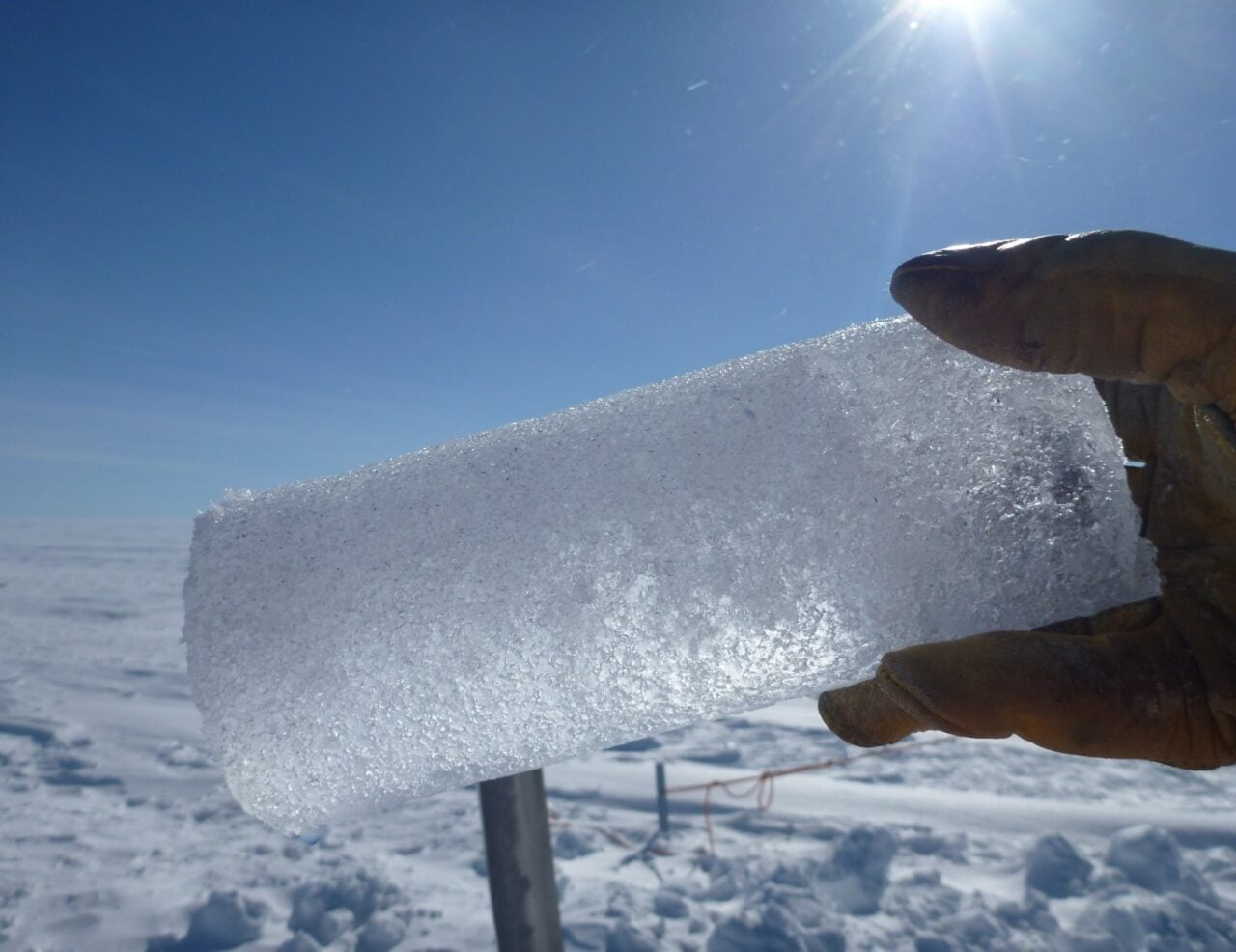
Today, the picture looks like this: as our planet travels through the Local Interstellar Cloud, Antarctica acts like a giant sponge, collecting the dust trails left behind by this interstellar journey.
Although iron-60 levels remain low overall, and astronomers have yet to determine the exact origin of the Local Interstellar Cloud itself, these new discoveries offer hope. According to Dominik Koll, if scientists are able to delve deeper and analyze even older ice, humanity will have a chance not only to unravel the mystery of these cosmic clouds, but also to better understand the influence of the interstellar medium on our Solar System.
We previously discussed how Earth flew through the debris of an asteroid that had been torn apart by the Sun.
According to The Conversation

