

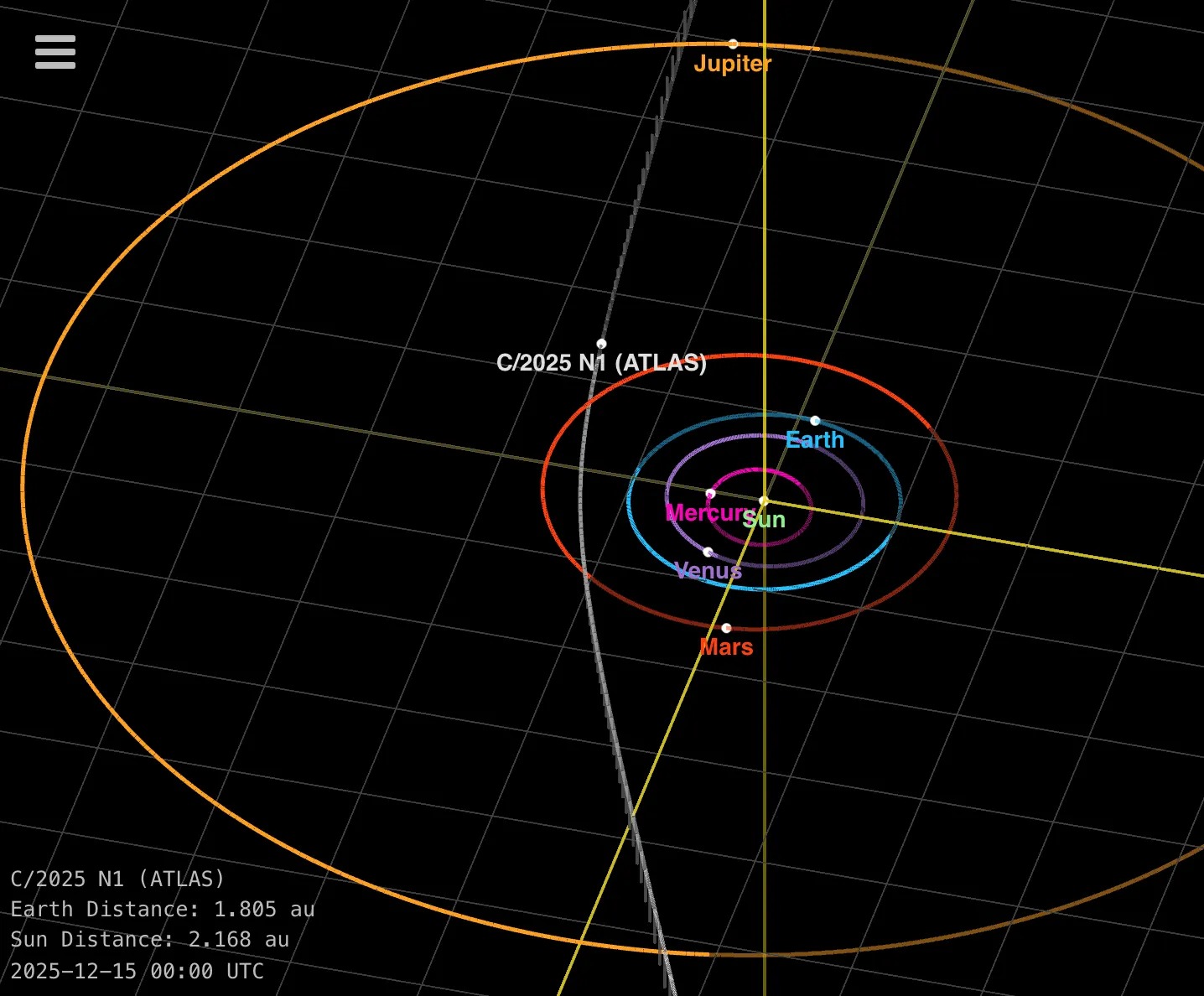
After reaching perihelion, interstellar object 3I/ATLAS continues its journey through the Solar System. Before its “farewell,” the comet will approach Earth at a minimum distance of 268.9 million km on December 19. The minimum distance will allow for a better view of 3I/ATLAS and help determine its nature. The data collected during these days may shed light on the nature of this mysterious guest. But even now, this object is surprising astronomers with its unusual properties for a comet.
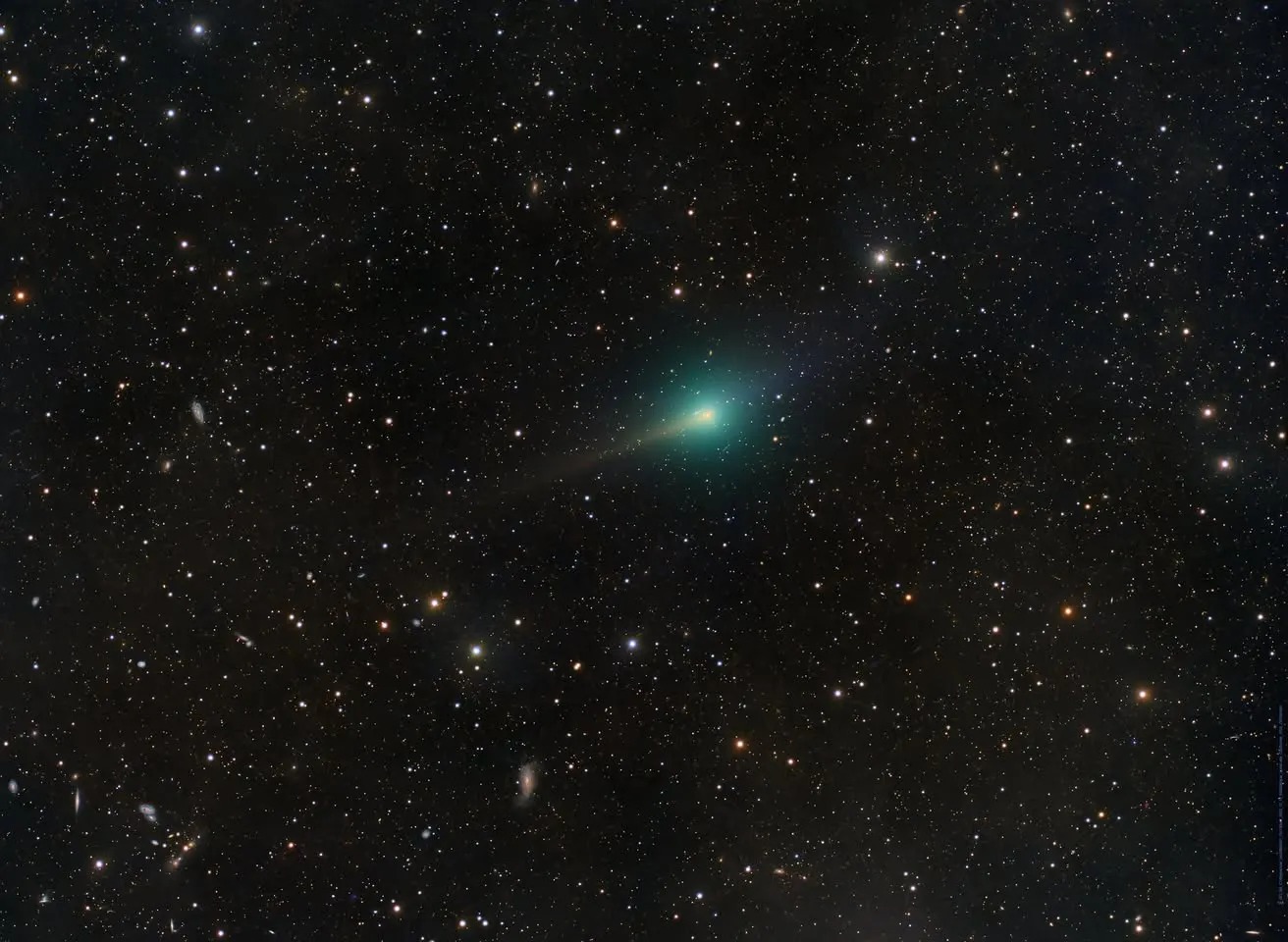
Controversial anti-tail
Recent observations have revealed an impressive phenomenon: a so-called anti-tail stretching from the object’s nucleus towards the Sun. Scientists have calculated its length, which turned out to be about half a million kilometers. That’s more than the distance from Earth to the Moon! Scientists have never before seen such a giant anti-tail on a comet.
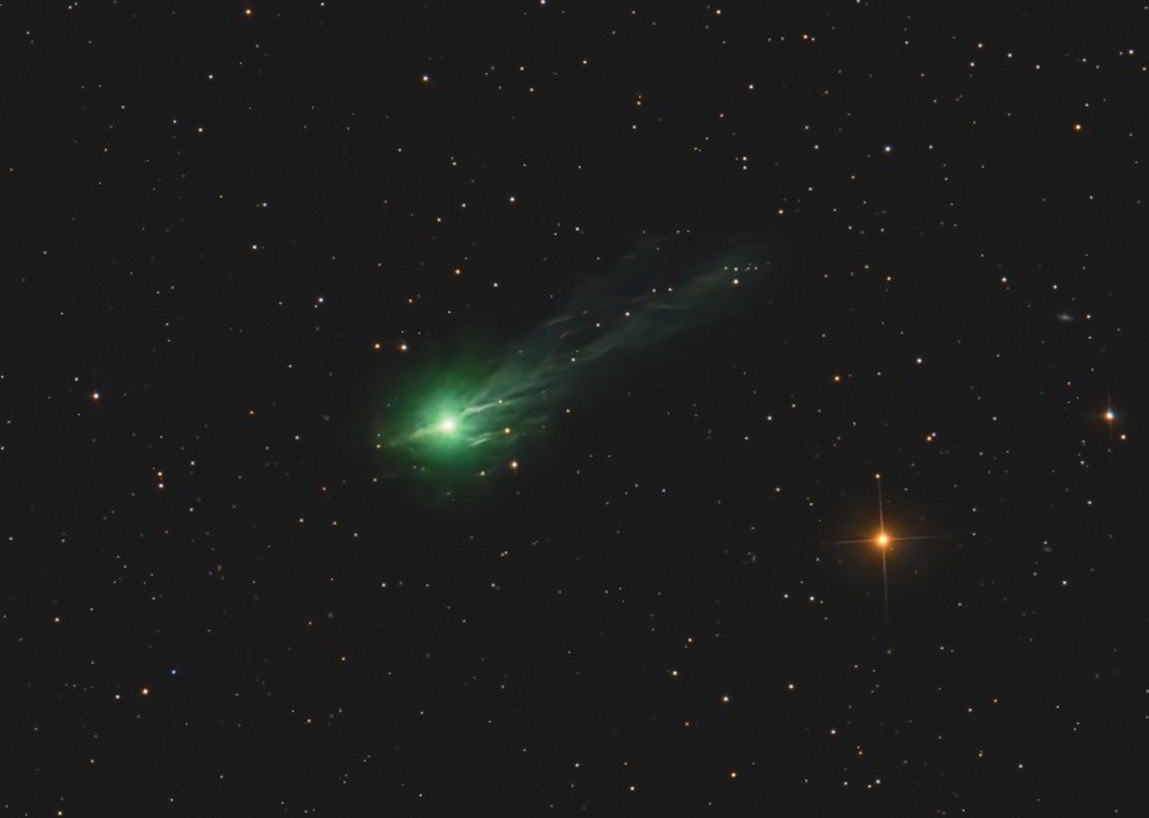
To form such a structure in just 45 days, the material would have had to be ejected from the core at a speed of more than 130 m/s. Can this be explained by normal cosmic processes, such as solar wind and radiation pressure? Scientists are skeptical. This leads us to consider other, more exotic hypotheses, in particular the possibility of the phenomenon being man-made.
How to assess the uniqueness of the discovery?
Searching for such objects is a difficult task. Even the most advanced telescopes can only detect objects the size of a football field at a distance similar to that of the Sun. Smaller or faster objects remain undetected. Therefore, every discovery, such as 3I/ATLAS, is extremely valuable.
Astronomers use special scales, such as the Loeb scale, to assess how unusual the object is. However, to make an accurate assessment, it is necessary to know many similar bodies—just as it is difficult to find the ideal partner without meeting many people. Each new interstellar visitor broadens our horizons and perhaps brings us closer to answering Fermi’s question: are we alone in the Universe?
Earlier, we reported on how an image revealed the complex structure of the tails of comet 3I/ATLAS.
According to avi-loeb.medium.com

