

For several months now, comet 3I/ATLAS has remained one of the hottest topics in space. And this is not surprising. After all, it is only the third known object of interstellar origin found in our Solar System. Here is what we currently know about this visitor from another star system.
Where did comet 3I/ATLAS come from?
Comet 3I/ATLAS was discovered on July 1, 2025, by telescopes belonging to the automated ATLAS system. Initial data showed that it had arrived in the Solar System from interstellar space. The comet is moving along a hyperbolic trajectory with a heliocentric speed of 58 km/s. This means that solar gravity will not be able to hold it. It will pass through the Solar System and then return to interstellar space.
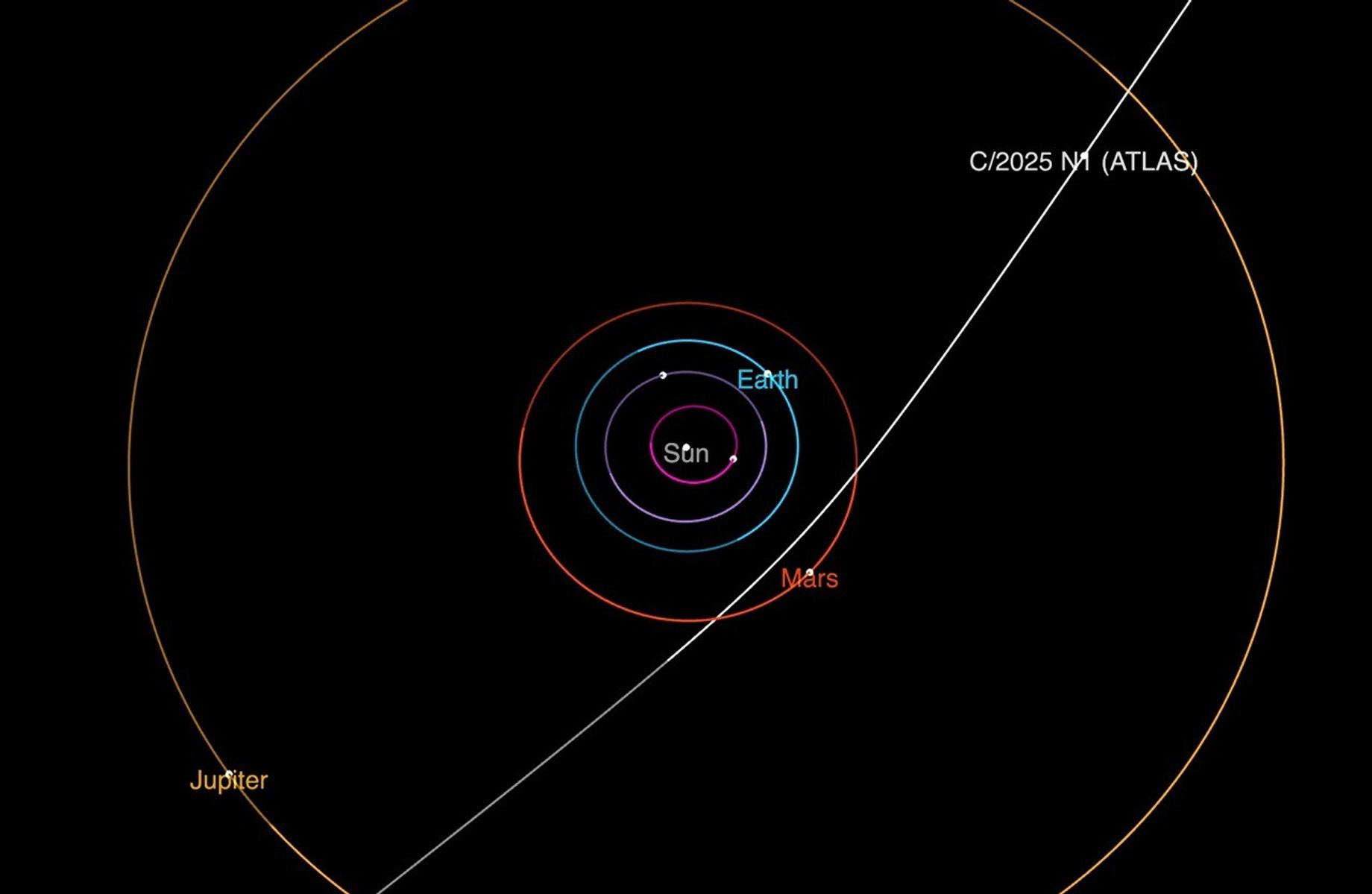
3I/ATLAS arrived in the Solar System from the constellation Sagittarius, where the galactic center is located. We will probably never know its home system. But most likely, it was born in the “thick disk” of the Milky Way. This is the name given to the cluster of ancient stars that revolve above and below the thin plane where the Sun and most stars are located. Statistical analysis has shown that the comet is very likely to be more than 7 billion years old. This makes it much older than the Solar System, which makes it a unique artifact from the early Universe.
What are the dimensions of comet 3I/ATLAS?
The exact dimensions of 3I/ATLAS are unknown. The fact is that its core is surrounded by a coma – a luminous shell of dust and gas that makes it extremely difficult to estimate its diameter. Additionally, 3I/ATLAS is located at a considerable distance from Earth, which further complicates the task.
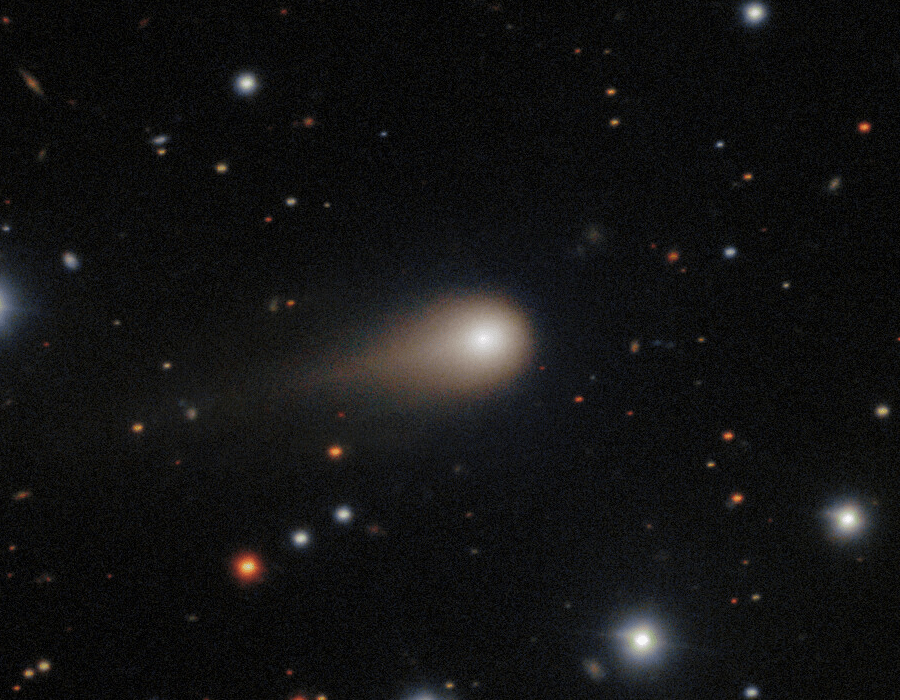
Source: International Gemini Observatory/NOIRLab/NSF/AURA/Shadow the Scientist
Initial estimates of the size of 3I/ATLAS ranged from 10 to 20 km, which is quite large by cometary standards. However, as new observations were made, these estimates began to decrease rapidly. Hubble observations reduced the diameter of the 3I/ATLAS nucleus to values ranging from 0.32 to 5.6 km. Most scientists lean toward the lower end of the range and suggest that the interstellar visitor is no larger than a kilometer across. Therefore, it is incorrect to say that 3I/ATLAS is abnormally large.
For comparison, the dimensions of the previous interstellar comet (Comet Borisov) were initially estimated at 1.4-16 km. It later turned out that the diameter of its nucleus does not exceed half a kilometer.
What is comet 3I/ATLAS made of?
Like all comets, the surface of 3I/ATLAS is covered with volatile substances. Under the influence of solar radiation, they sublimate, giving them a coma and tail.
Observations have shown that 3I/ATLAS is extremely rich in carbon dioxide. Astronomers have also detected substances such as water ice, carbon monoxide, carbonyl sulfide, and cyanide. Another interesting feature of the comet is the unusually high rate of nickel atom formation and the extremely high nickel-to-iron ratio. In itself, the emission of atomic nickel is not an extraordinary phenomenon. It has been observed in various comets, including the interstellar Comet Borisov. However, almost no iron vapors have been detected in 3I/ATLAS, which is unusual because nickel and iron usually occur in approximately equal amounts during the release of gases from comets. Perhaps this anomaly is related to the comet’s very great age.
Analysis of available data suggests that the core of 3I/ATLAS may have a thick, organic-rich crust formed as a result of prolonged exposure of the surface ice to galactic rays. This crust is capable of effectively protecting the deeper layers of the comet from external influences.
Does comet 3I/ATLAS pose a threat to Earth?
No, it does not. On December 19, 2025, the comet will approach our planet at a minimum distance of 167 million km. This is more than the distance between the Earth and the Sun.
Source: NASA/JPL-Caltech/ASU/Simeon Schmauß
There is often speculation on the internet that 3I/ATLAS flew suspiciously close to a number of planets in the Solar System, which clearly cannot be a mere coincidence. However, this is a distortion of the facts. The distances of the closest approaches of 3I/ATLAS are as follows:
- Mars – 30 million km
- Venus – 60 million km
- Jupiter – 53 million km
In astronomy, the term “distance” is often a relative value, depending on the context. To better understand the nature of the “approach” of comet 3I/ATLAS on the scale of the Solar System, consider the following figures: the minimum distance between Earth and Venus is 42 million km, and between Earth and Mars is 56 million km.
An example of a comet that made a truly close flyby is C/2013 A1 (Siding Spring). In 2014, it passed 140,000 km from Mars. This is 214 times closer than 3I/ATLAS.
Did 3I/ATLAS really change color?
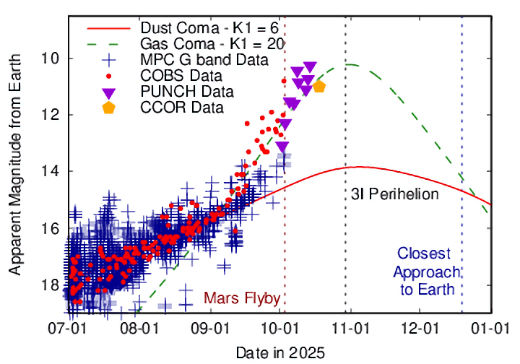
Yes, during its perihelion, the comet did indeed turn blue. In addition, its brightness increased more than expected. Most likely, this was caused by a massive gas emission that managed to block the reflection of reddish comet dust. The blue color is characteristic of molecules such as C2 and NH2, which glow intensely when heated by the Sun.
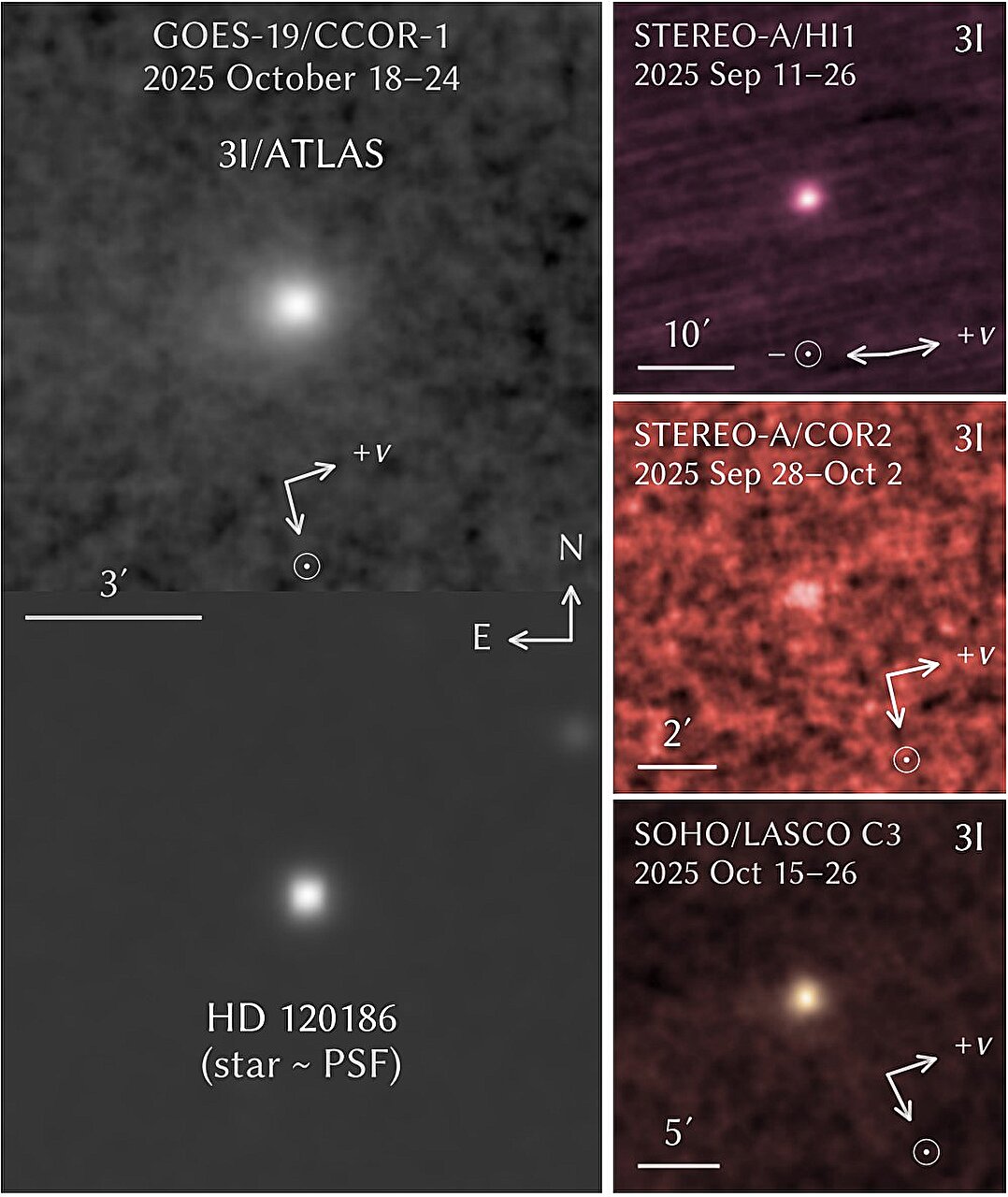
Source: arXiv (2025). DOI: 10.48550/arxiv.2510.25035
Is comet 3I/ATLAS an alien spacecraft?
No, it is not. Nothing we know about the comet suggests that it is man-made. 3I/ATLAS behaves like a typical comet and does not exhibit any behavior that goes beyond what is known about comets. Yes, its chemical composition has several unusual features – but in fact, it would be more suspicious if 3I/ATLAS had the same composition as comets in the Solar System.
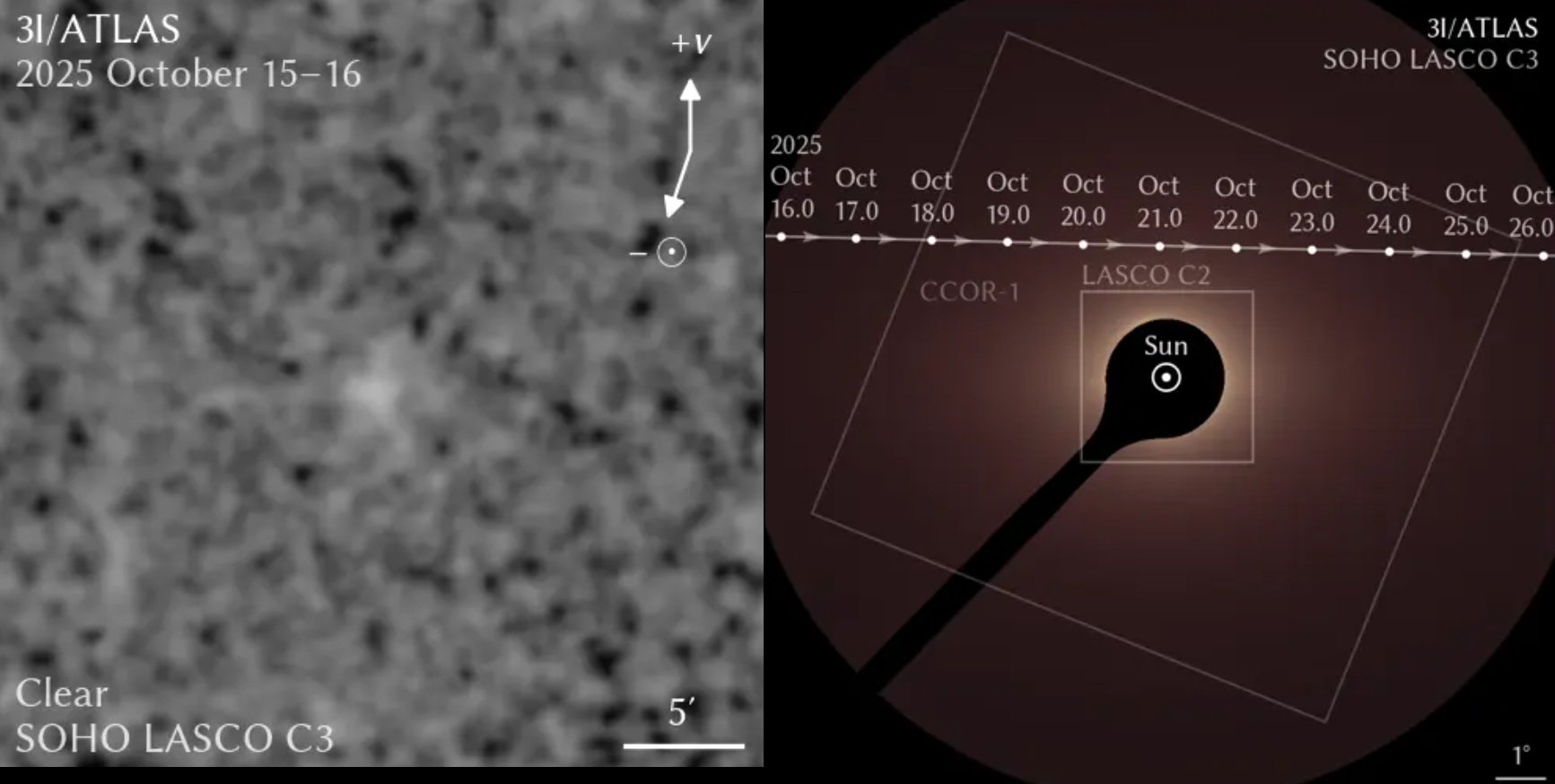
Source: NASA/ESA/SOHO/Qicheng Zhang
Unfortunately, this does not stop many Internet resources and social media accounts from generating traffic with sensational headlines claiming that 3I/ATLAS is a spaceship. They often accompany these headlines with fake images generated using neural networks.
The notorious astrophysicist Avi Loeb from Harvard University has also made a significant contribution. He actively promotes the hypothesis of the artificial origin of comets, sometimes resorting to outright manipulation of facts. In the past, Loeb wrote a book claiming that the interstellar asteroid Oumuamua was an alien spacecraft. Perhaps he plans to write a similar book about comet 3I/ATLAS, which would explain his activity.
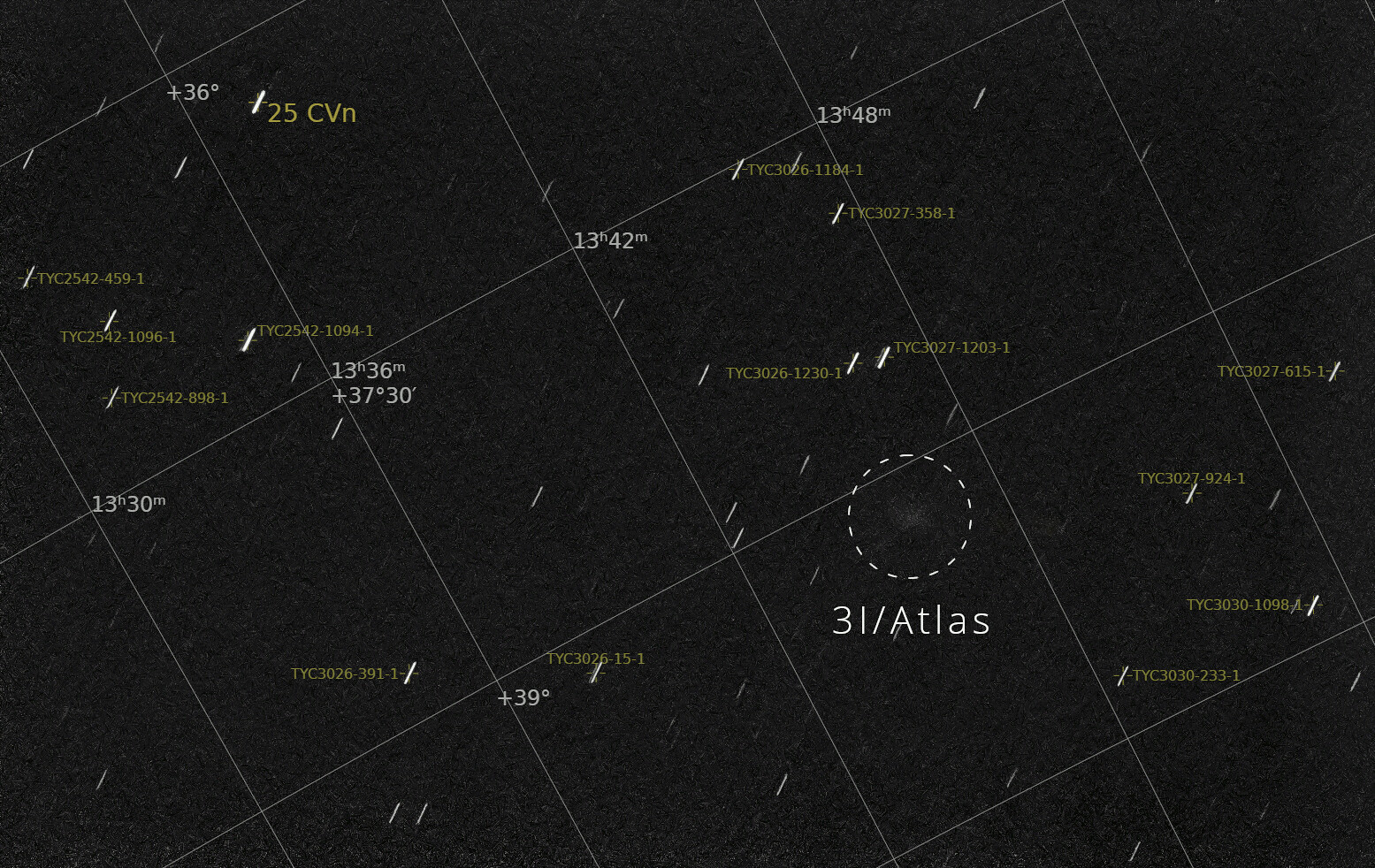
Why does NASA not publish images of comet 3I/ATLAS?
Because NASA is a government agency, and since October 1, the US federal government has been in a state of shutdown. At this time, the NASA website and all accounts have been suspended, and the organization is not publishing any news at all. Before the shutdown, NASA had repeatedly published images of the comet.
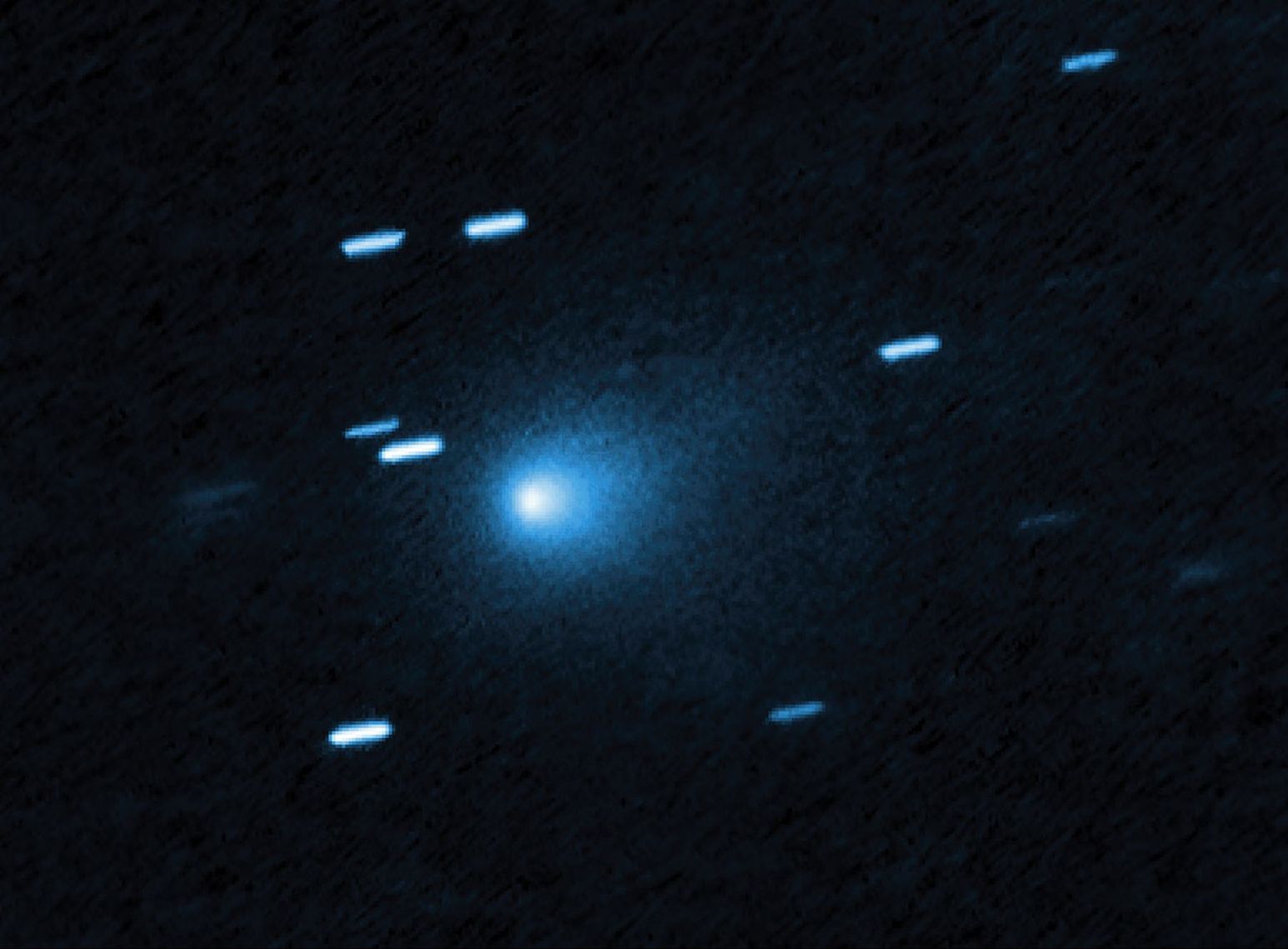
Source: NASA, ESA, David Jewitt (UCLA); Image Processing: Joseph DePasquale (STScI)
However, this does not mean that no one is watching the comet. It has been observed by a number of spacecraft, and now it has reappeared in the Earth’s sky, allowing ground-based telescopes to begin studying it.
What does the future hold for comet 3I/ATLAS?
Since the comet passed perihelion and did not fragment, it will continue its journey through the Solar System. Eventually, it will leave its boundaries and continue its endless journey through the Milky Way.

Source: M. Hopkins/Ōtautahi-Oxford team
When can we expect the next interstellar comet?
It is impossible to give an exact date, but it will likely be found quite soon. According to some estimates, there are about 10,000 bodies within Neptune’s orbit that arrived in the Solar System from interstellar space. However, until recently, astronomers had virtually no way of finding them.
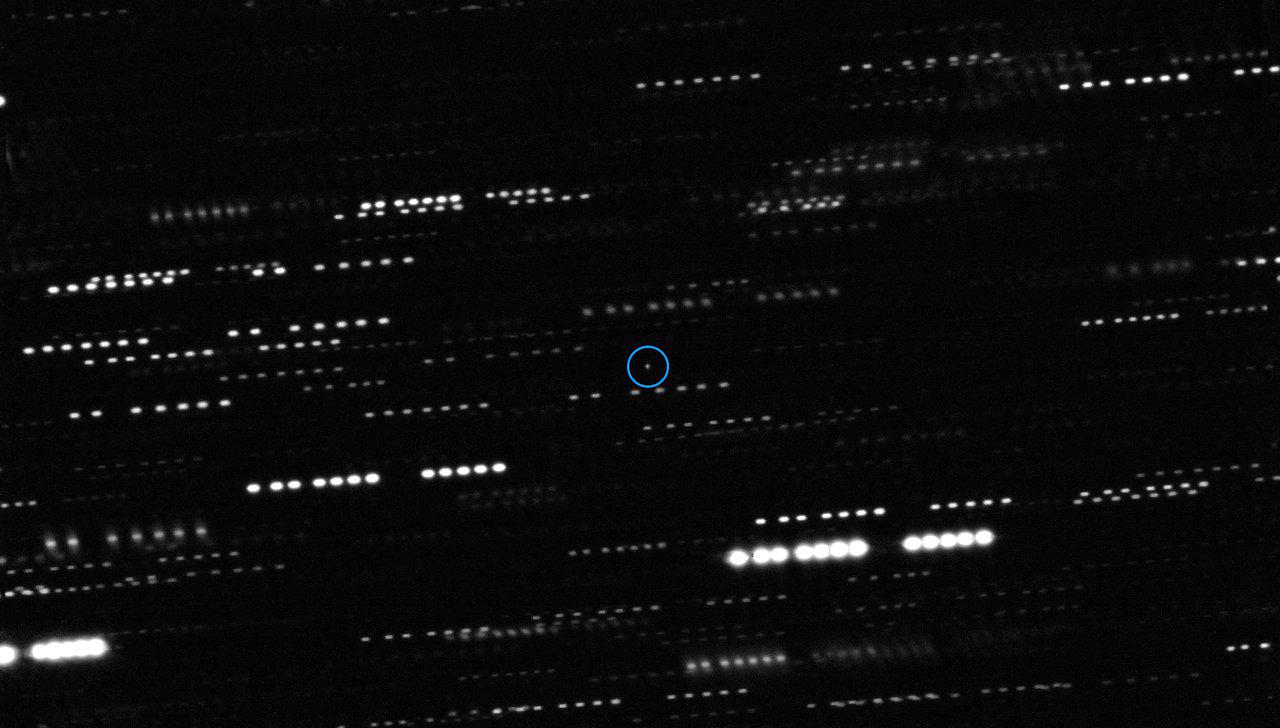
Source: ESO/K. Meech et al.
Rapid technological advances have changed this situation. Over the past eight years, three interstellar objects have been found, and the rate of discovery is likely to increase. Particularly high hopes are pinned on the Vera Rubin Observatory, which recently began operations. Thanks to its wide field of view and state-of-the-art instruments, it will be able to detect a huge number of previously unknown small bodies in the Solar System, including those that have arrived from interstellar space.

