

The interstellar object 3I/ATLAS is currently approaching a key moment in its mission — perihelion. The closer the comet gets to the Sun, the more scientists learn about its structure and are amazed by the unusual behavior of this tailed visitor. New discoveries are sparking scientific debate and exciting the imagination.
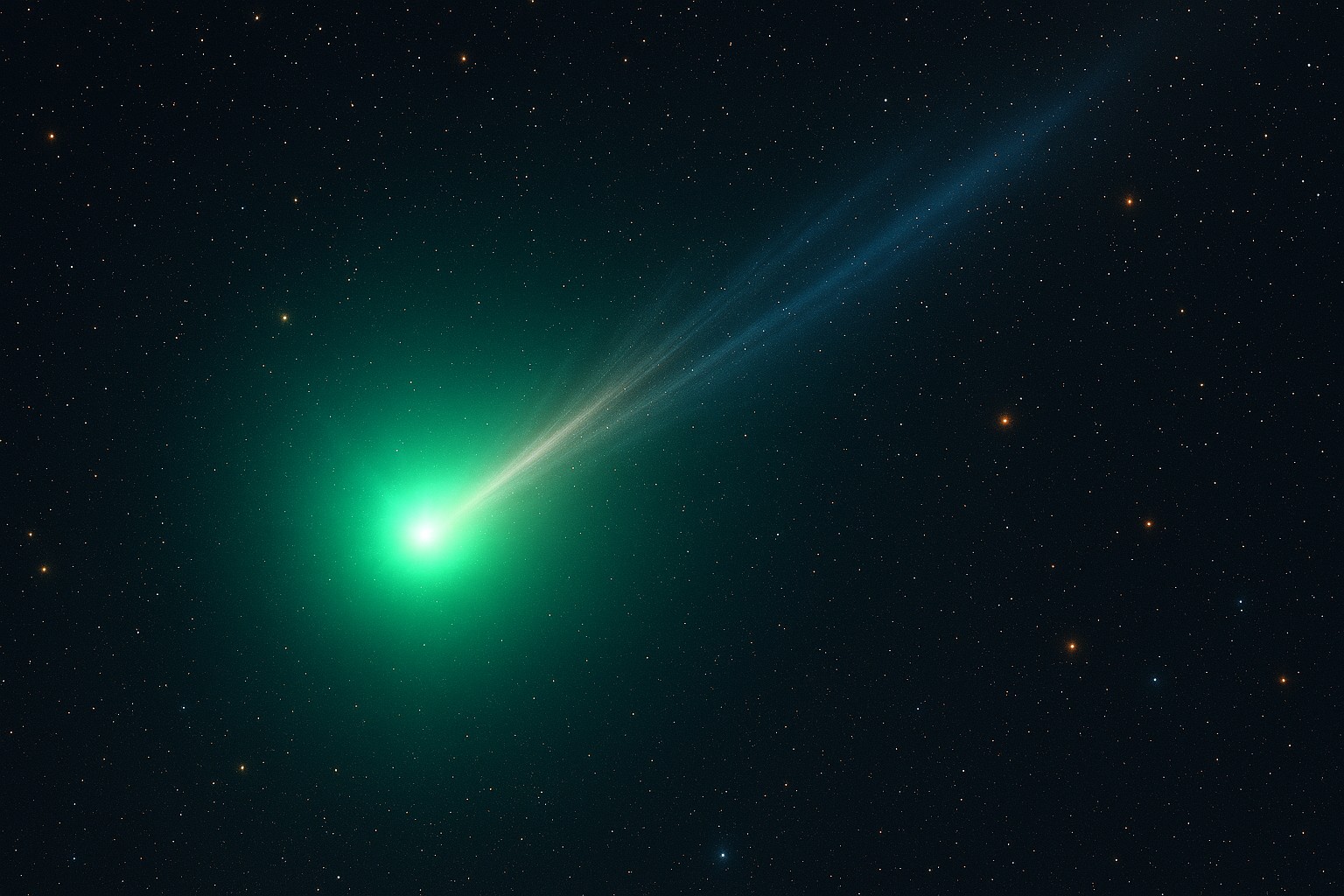
On October 29, 2025, object 3I/ATLAS, a visitor from interstellar space, will reach its closest point to the Sun at 203 million km. This moment is crucial. If this interstellar object is artificial, then at this moment the gravity of our star can be used for maneuvers. For a spacecraft, this is the ideal time to deploy probes or correct its course.
However, it is not possible to observe this key stage from Earth, as 3I/ATLAS has disappeared from view on the far side of the Sun. This circumstance raises a provocative question: is its trajectory the result of precise calculation rather than chance?
A Trojan horse from space?
Some scientists, including astrophysicist Avi Loeb, draw an analogy with the legend of the Trojan horse, which carries a hidden threat inside. Could 3I/ATLAS be disguised as an ordinary comet, hiding a technological threat inside? The event coincides with Halloween, so analogies with it deliberately dressing up in a “costume” of a comet only reinforce the atmosphere of mystery surrounding the object.
These rhetorical questions are backed up by observations. The anomalous composition of the object, in particular its high nickel content, its stable trajectory, and its unusual behavior, such as the growth of a mysterious second tail that points in the opposite direction of its movement, point to its artificial origin. If it is a technological product, it can use the heat near the Sun to maneuver or separate mini-probes.
Strength test
Perigee will be a real test for 3I/ATLAS. If this object is a natural comet formed by weak gravitational bonds, intense solar radiation—about 770 W/m²—could cause it to heat up and break into smaller fragments. Due to their larger surface area per unit mass, these fragments will evaporate more quickly, creating a bright trail of gas and dust.
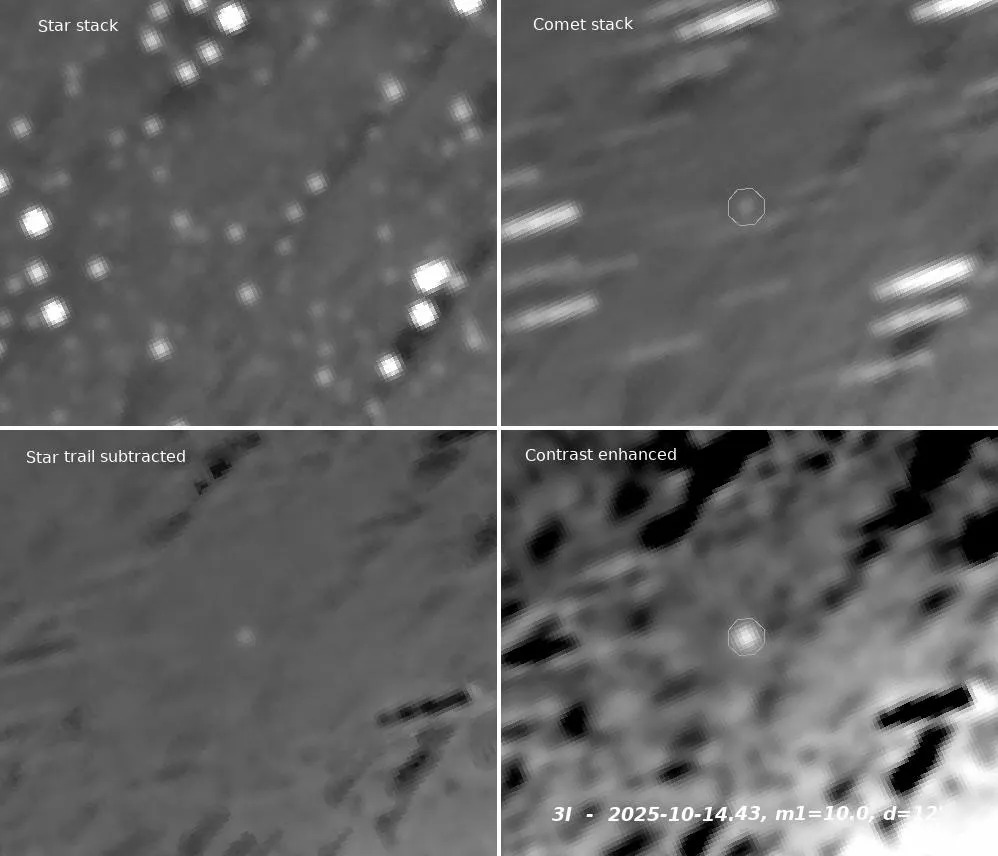
However, if 3I/ATLAS is of artificial origin, then in theory the object is capable of maneuvering or launching miniature probes. Other possible technological features include artificial lighting or excessive heat radiation, which may be the result of engine operation.
In the coming months, we will be able to better understand the true nature of this mysterious object.
Calendar of space encounters
After perihelion, 3I/ATLAS will make a series of close flybys:
- November 3, 2025: closest approach to Venus at a minimum distance of 97 million km.
- December 19, 2025: closest point to Earth – 267 million km. This has already given rise to humorous speculation about “Christmas gifts” for humanity.
- March 16, 2026: approach to Jupiter at a distance of 54 million km, which will give the Juno spacecraft a unique opportunity to photograph it in detail and “listen” to it.
On the borderline between science and fiction
The Galileo project is already planning to monitor the Earth’s atmosphere for anomalous phenomena that could be linked to an interstellar visitor. Scientists emphasize “cosmic humility” — the idea that we should be open to the existence of other civilizations and carefully study such anomalies, rather than being guided by Hollywood stereotypes.
The next few months will be decisive. Under intense solar heating, a natural comet may disintegrate, forming a bright tail. An artificial object, on the other hand, will most likely remain intact and may even exhibit technological activity.
The true nature of 3I/ATLAS remains a mystery. But the visit of this object is already a landmark event in the history of science, one that makes us think about our place in the Universe.
We also recommend reading about the astronomical events of November 2025.
According to medium.com

