

The Hubble Space Telescope is rightly considered one of the wonders of modern engineering. Thanks to it, astronomers have made many discoveries that have significantly expanded the boundaries of what we know about the Universe.
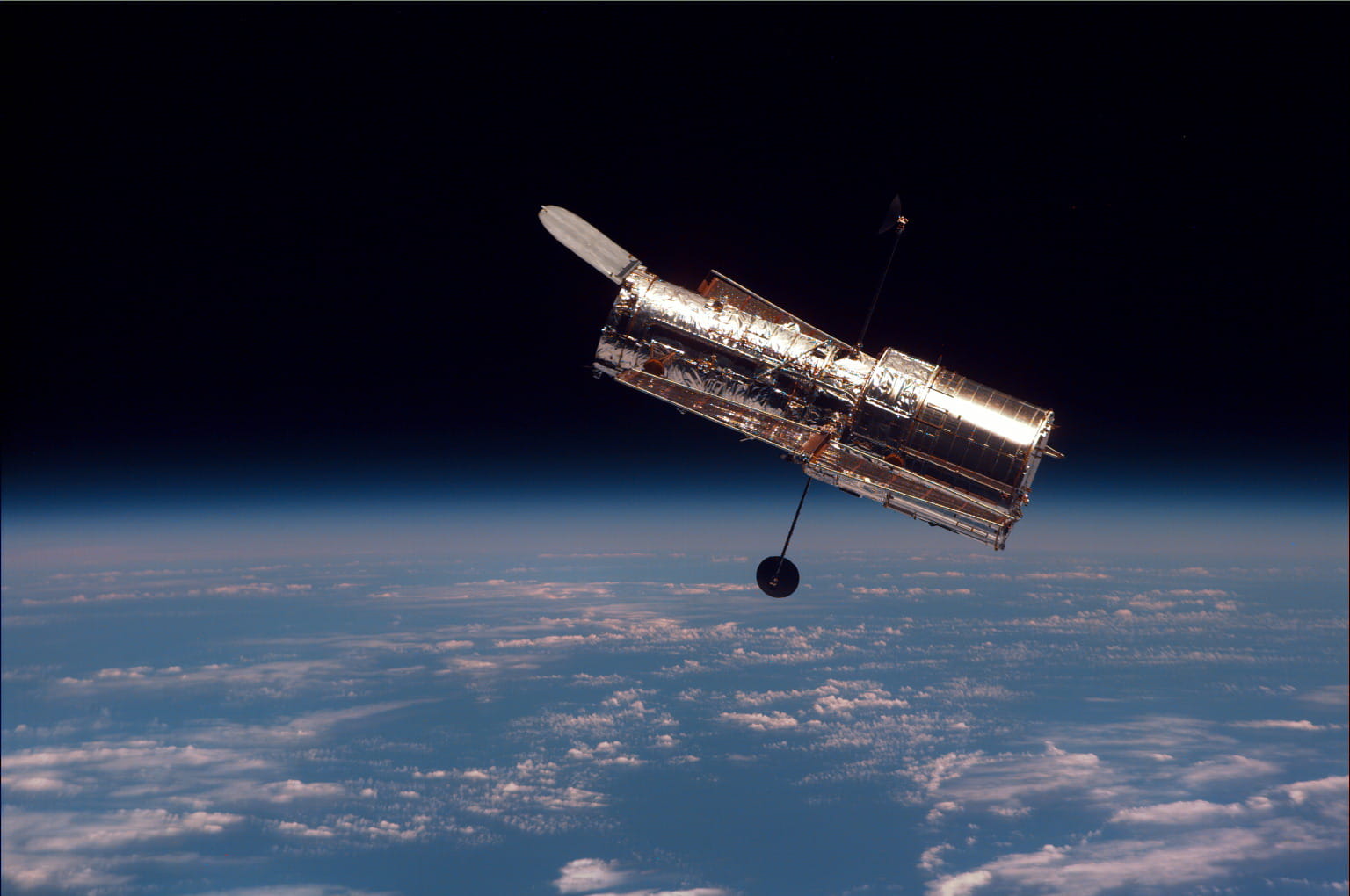
NASA hopes that Hubble will continue to operate until at least the mid-2030s. Unfortunately, there is one factor that could cause the telescope to fall to Earth before then. We are talking about the Earth’s atmosphere. Despite being extremely thin at such altitudes, it creates a braking effect that causes the telescope’s orbit to gradually decrease. As it decreases, the braking effect intensifies, which in turn leads to an increase in the rate of altitude loss.
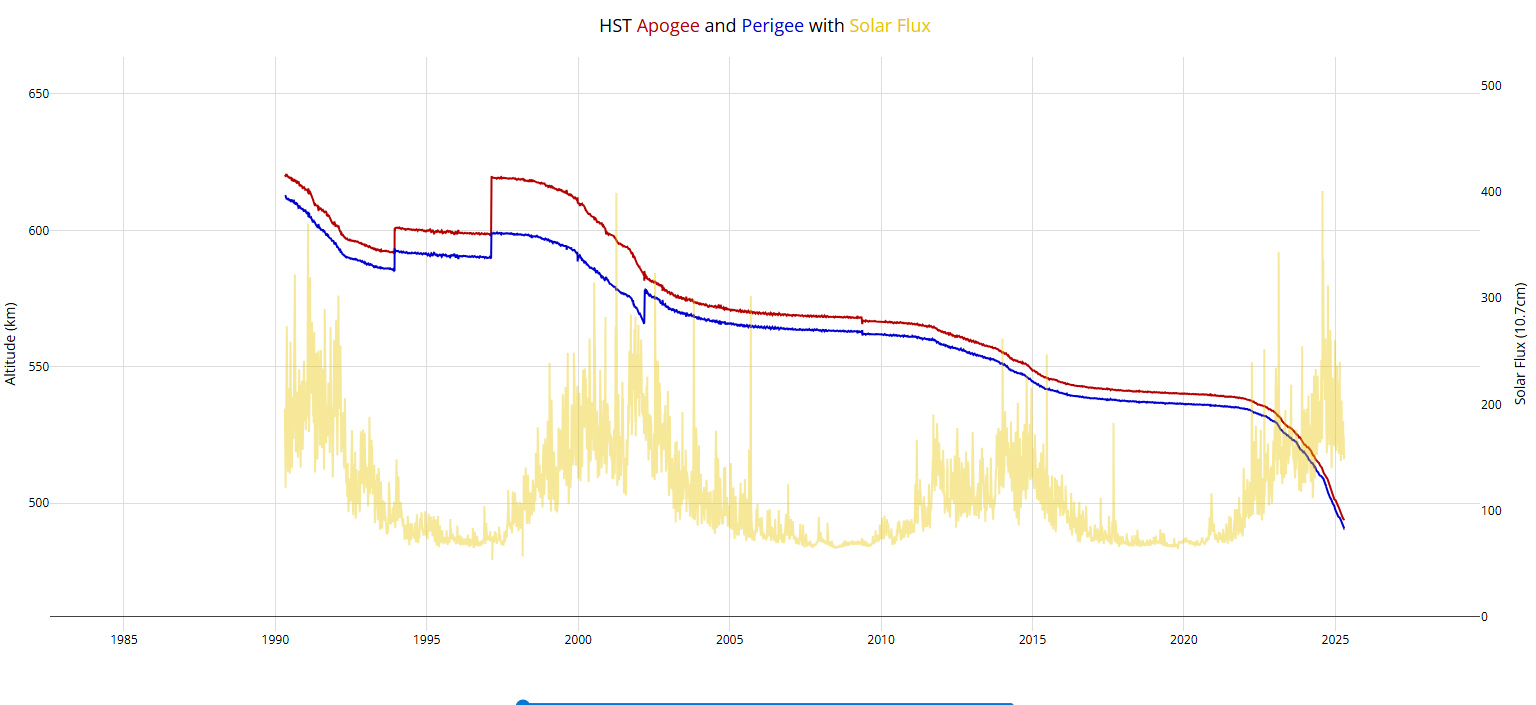
When it was launched in 1990, Hubble was placed in a 580-kilometer orbit. Since then, repair missions have raised the telescope’s orbit several times using shuttle engines. The last time this happened was in 2009. Since then, Hubble’s orbit has been steadily decreasing. At the same time, the rate of altitude loss has increased sharply in recent years, which is associated with the current cycle of solar activity, which has turned out to be stronger than expected.
As of early 2026, Hubble’s orbit had dropped to 485 km. At this point, it is impossible to give an accurate prediction of how much longer the telescope will last — everything will depend on the Sun’s activity. But if it remains high, Hubble could leave orbit by the end of this decade.
Can the Hubble telescope be saved?
In the past, NASA conducted several studies on the possibility of launching a mission to the telescope to raise its altitude. And in 2022, Jared Isaacman, who is now the head of the aerospace administration, proposed sending a private mission on the Crew Dragon spacecraft at his own expense. But then NASA rejected the idea, considering it too risky.
Perhaps Hubble’s future will be decided by another NASA telescope called Swift. Due to solar activity, its orbital altitude has dropped to critical levels. It is expected to fall to Earth by the end of this year.
Since Swift is doomed anyway, NASA decided to use it as a kind of demonstrator. Last year, Katalyst Space was awarded a $30 million contract to send a robotic mission to raise the telescope’s orbit. Its launch is currently scheduled for June 1.
If Katalyst Space manages to meet the stated deadlines and the mission succeeds in docking with Swift and raising its orbit, this will set an important precedent that could facilitate the launch of a similar mission to Hubble. Failure, on the other hand, could lead NASA to abandon the idea of rescuing its most famous telescope.

