

In their new article, a team of American researchers described the processes that occurred with interstellar comet 3/ATLAS after it passed the perihelion. It sharply increased in brightness, and organic molecules were discovered in its composition.
Increased activity of interstellar comet 3I/ATLAS
The interstellar comet 3I/ATLAS was discovered in July 2025, after which many telescopes were aimed at it. Among them was the SPHEREx space observatory. It was launched in early 2025 with the aim of conducting a panoramic survey of the sky in the near-infrared range.
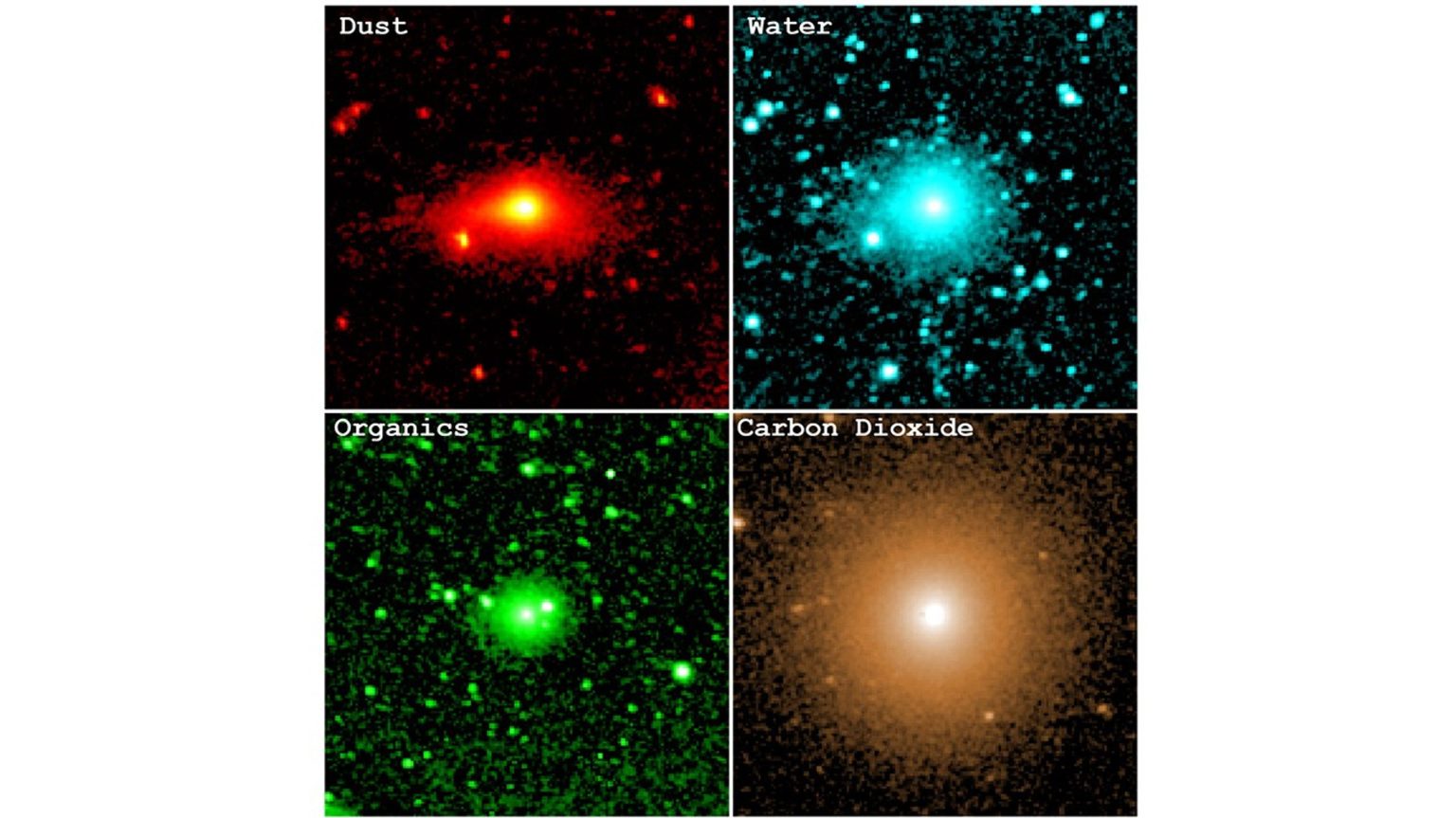
Previously, scientists had already reported on the results of SPHEREx observations of the interstellar comet. In their new article, they described in more detail the changes that occurred after it passed perihelion — the point in its orbit closest to the Sun.
When a comet approaches the Sun after traveling from deep space, its frozen surface heats up and sublimates, meaning that the ice transitions from a solid state to a gaseous state, bypassing the liquid phase. These gases can escape into space, forming an atmosphere surrounding the comet’s nucleus, known as the coma.
“Comet 3I/ATLAS was full-on erupting into space in December 2025, after its close flyby of the Sun, causing it to significantly brighten. Even water ice was quickly sublimating into gas in interplanetary space,” said study leader Carey Lisse of the Johns Hopkins University Applied Physics Laboratory. “And since comets consist of about one-third bulk water ice, it was releasing an abundance of new, carbon-rich material that had remained locked in ice deep below the surface. We are now seeing the usual range of early solar system materials, including organic molecules, soot, and rock dust, that are typically emitted by a comet.”
During their analysis, scientists discovered organic molecules such as methanol, cyanide, and methane in the comet’s composition. On Earth, organic molecules are the basis of biological processes, but they can also be created during non-biological processes.
Delay in cometary activity
Researchers also noted a sharp increase in the comet’s brightness two months after it passed the perihelion of its orbit. This delay can be explained as follows. When a comet passes its perihelion, it experiences peak heating, but this does not necessarily mean that peak activity occurs at this moment. Since the Sun’s heat takes time to pass through the outer layers of a comet, ice deep beneath the surface can only begin to sublimate long after the comet has passed perihelion. This is exactly what happened with 3I/ATLAS.
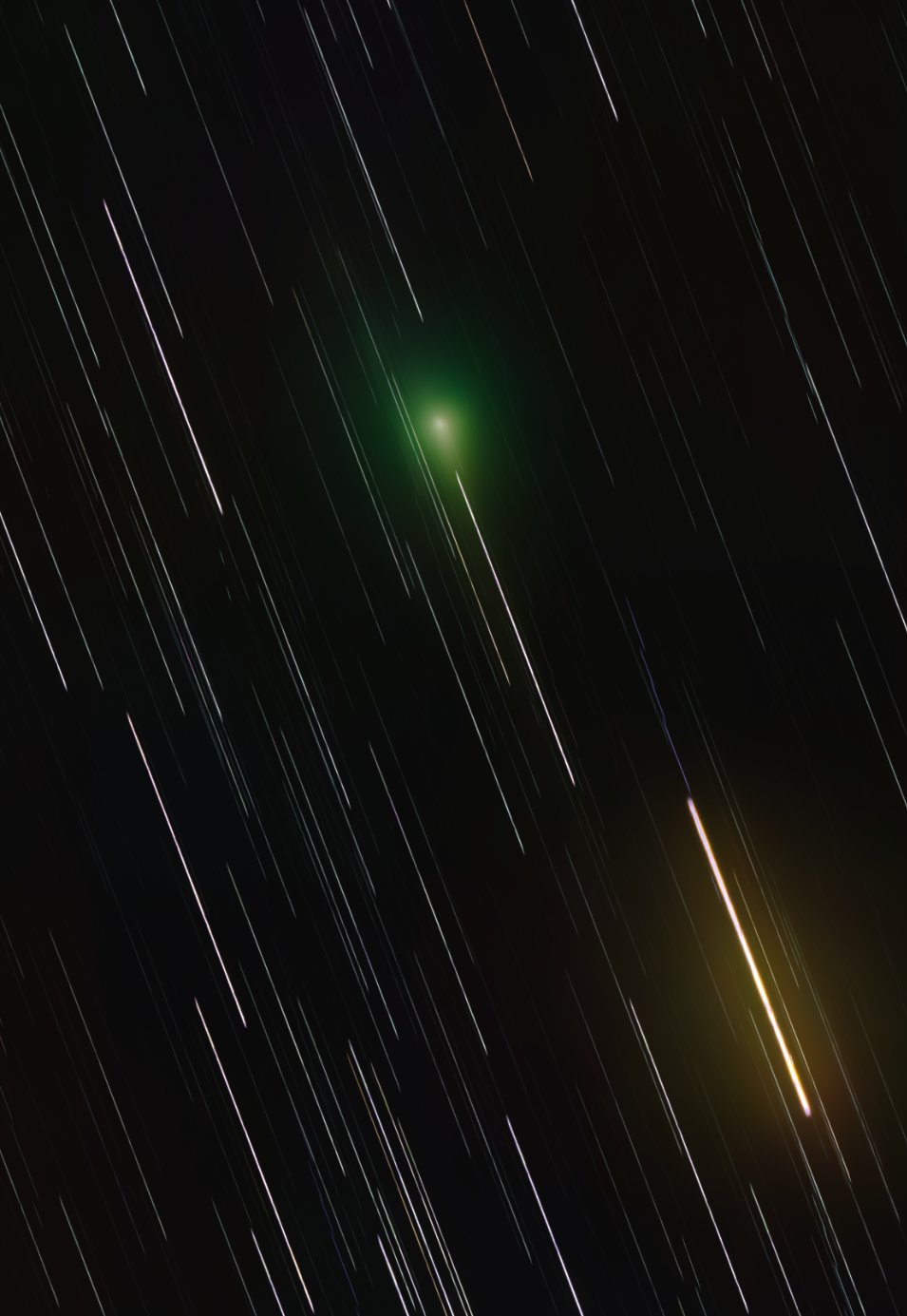
During observations made by SPHEREx in August, it saw a comet containing a huge amount of carbon dioxide, a little carbon monoxide, and some water. Observations in December showed a much more active and diverse comet, feeding on erupting subsurface water ice mixed with other ices, organic matter, and rocky material.
“The comet has spent ages traversing interstellar space, being bombarded by highly energetic cosmic rays, and has likely formed a crust that’s been processed by that radiation,” said Phil Korngut, an instrument scientist for the mission at the California Institute of Technology. “But now that the Sun’s energy has had time to penetrate deep into the comet, the pristine ices below the surface are warming up and erupting, releasing a cocktail of chemicals that haven’t been exposed to space for billions of years.”
SPHEREx data also suggest that as 3I/ATLAS becomes more active, it ejects mountainous material. The comet appears to have only a small, pear-shaped dust tail, which forms when dust from the active comet is blown backward by the pressure of solar radiation. This means that the comet ejects large grains and pieces of material the size of BB-size chunks (usually the material is in the form of dust grains, smaller than a human hair), which are too massive to be thrown far from the comet’s nucleus under the pressure of solar radiation.
According to NASA

