

The James Webb Space Telescope has enabled a unique discovery in our galactic neighbor, the dwarf and primitive galaxy Sextans A (UGCA 205). Astronomers have discovered rare types of dust there, prompting a rethink of how the “building blocks” of planets formed in the early Universe.
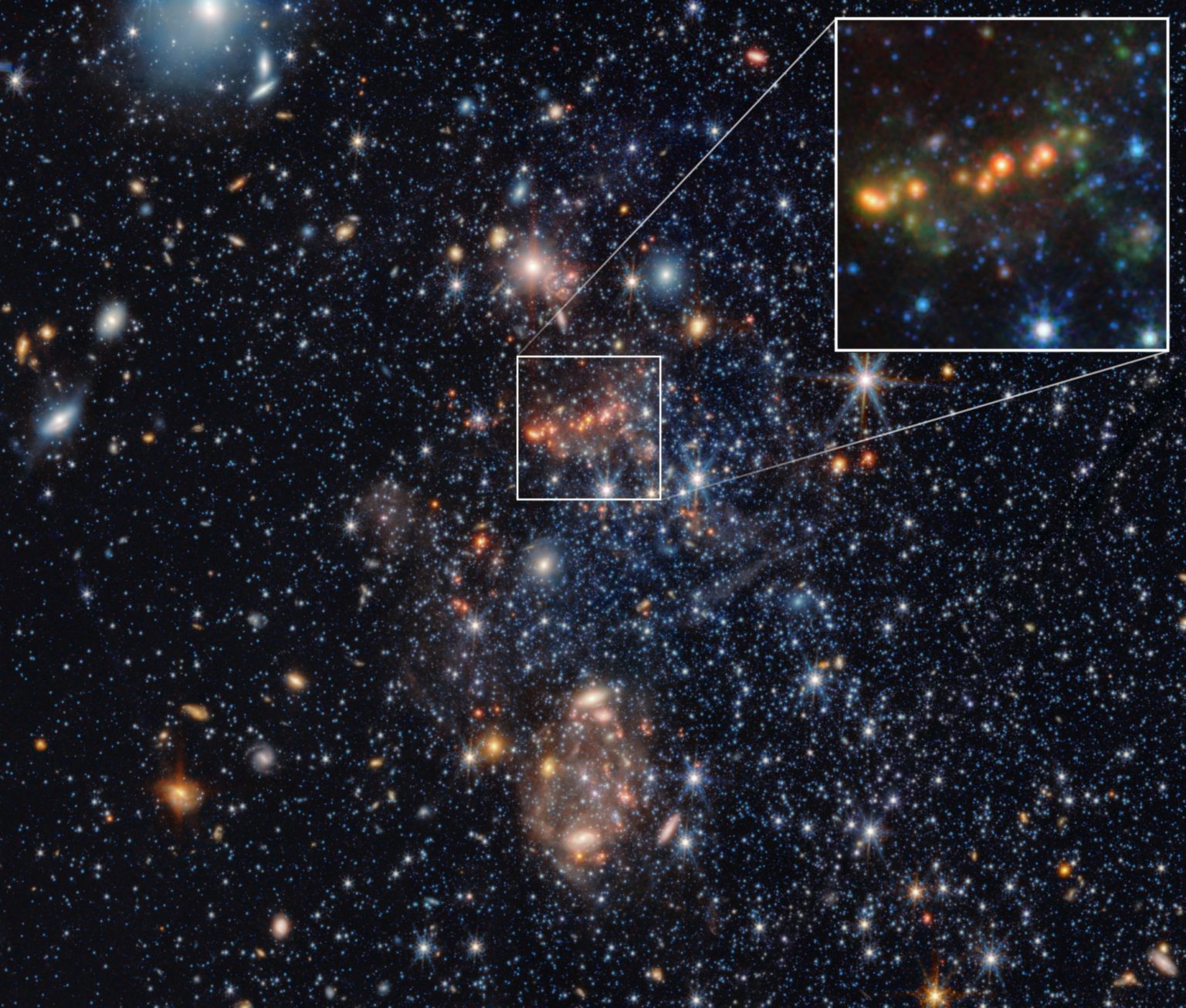
Sextant A is located 4 million light-years away and is chemically “poor”: the content of elements heavier than hydrogen and helium in it is 15-30 times lower than in the Sun. Such galaxies are living witnesses to the early epochs of the cosmos, when heavy elements were almost non-existent. Observing them is like being transported back in time.
Incredible discovery: pure iron dust
The spectrometer aboard James Webb studied old stars in the final stage of their lives (AGB phase). Silicate dust, which requires oxygen, silicon, and magnesium, was expected to be found in such stars. But in the “poor” Sextans A, these elements are insufficient.
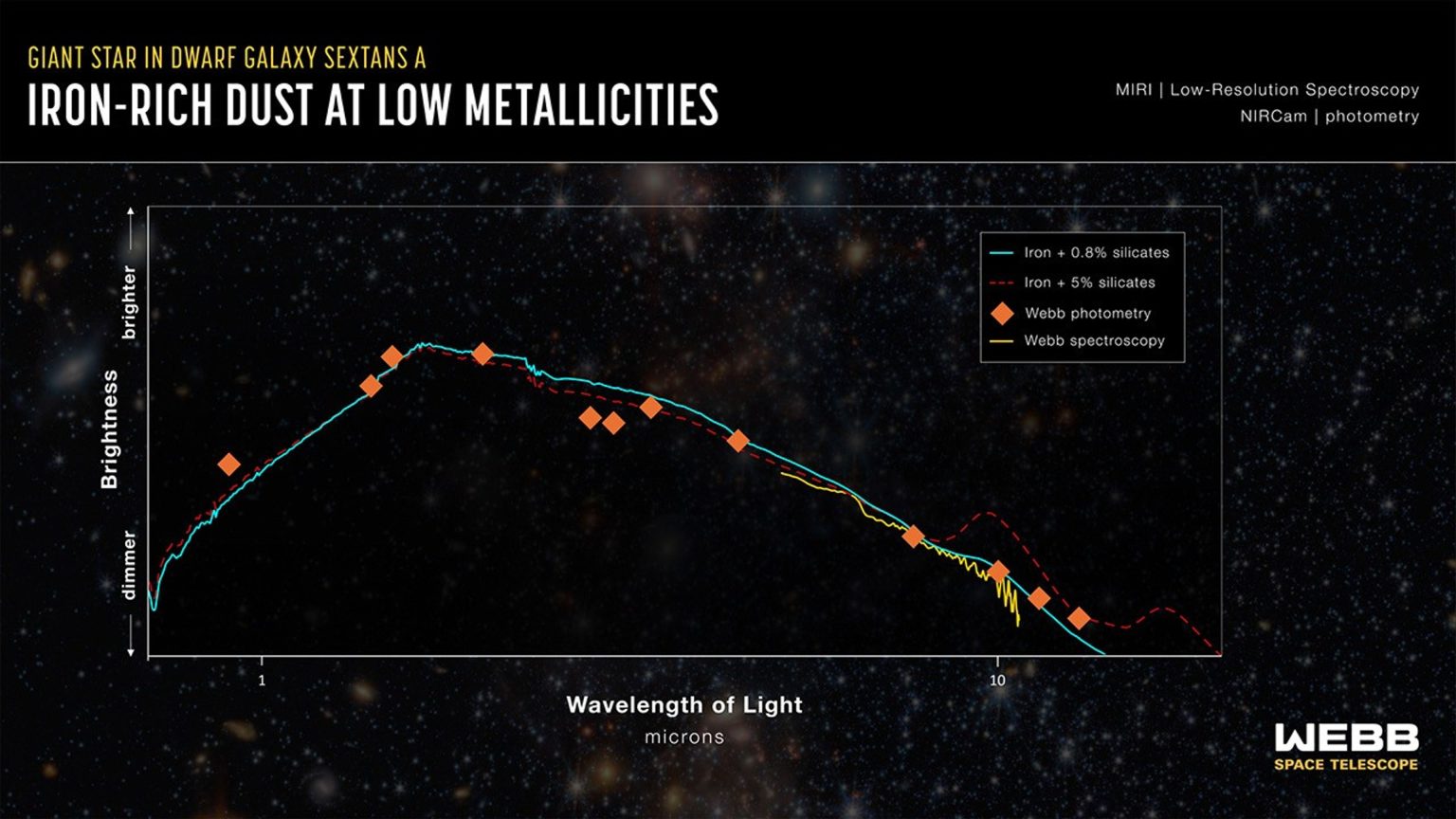
Unexpectedly, signs of dust consisting almost entirely of iron were discovered around one massive star. “This has never been observed before for similar stars in the early Universe,” notes astronomer Martha Boyer. The analogy is simple: how to bake cookies without flour and sugar, using only iron.
Organics in a primitive world
In another study, James Webb’s images discovered complex organic molecules—polycyclic aromatic hydrocarbons, tiny dust particles—in the interstellar medium of the galaxy. Sextant A is the galaxy with the lowest metallicity where such substances have been found. However, they are not scattered everywhere, but are hidden in small dense “pockets” of gas several light-years in diameter.
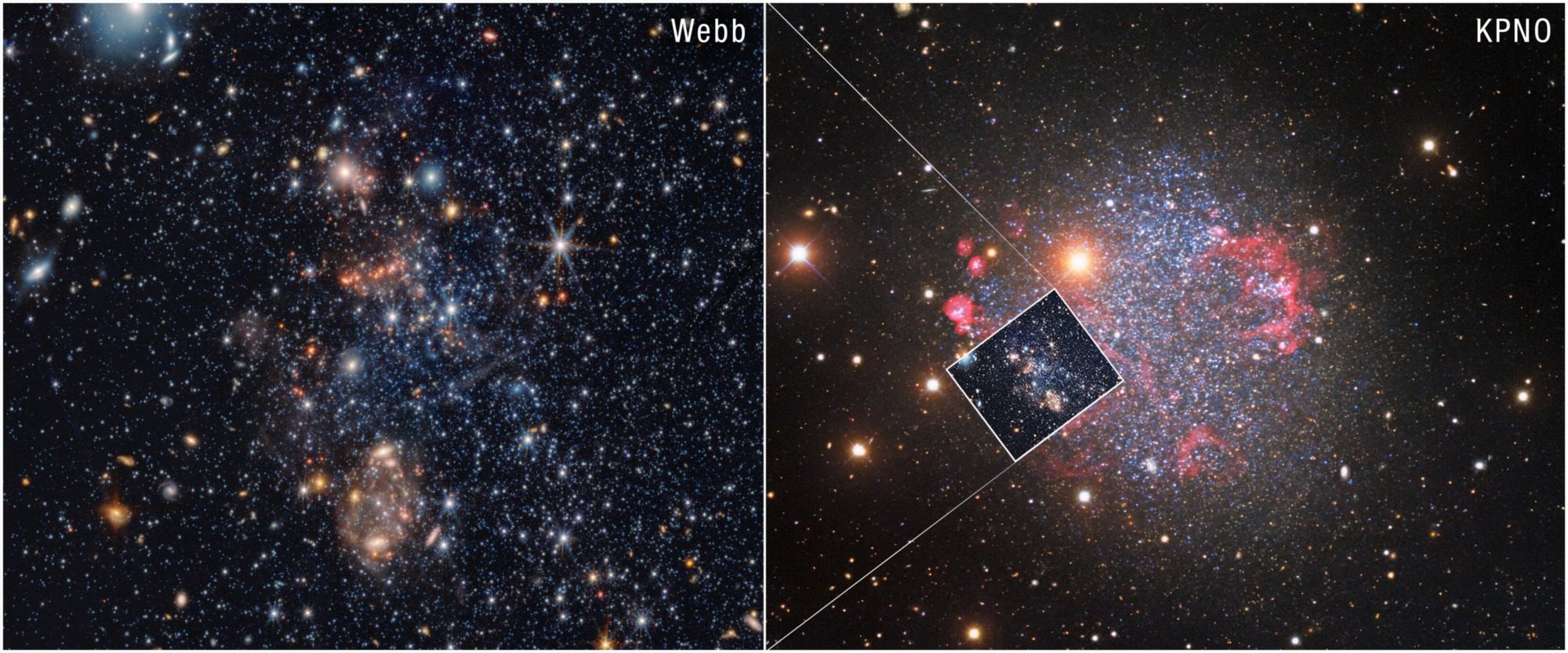
“Webb demonstrates that polycyclic aromatic hydrocarbons can survive in galaxies with the lowest metallicity, but only in protected areas,” explains study leader Elizabeth Tarantino. It is there that the gas is dense enough to protect molecules from destructive radiation.
Consequences of the discovery
This discovery is key to understanding the early Universe:
- Dust formed differently. Even with a lack of “normal” ingredients, stars could create solid grains from available materials such as iron.
- There was more dust. Its abundance in the early Universe was probably higher than models had predicted.
- The ways it formed were diverse. Dust could be created not only by supernova explosions, but also by ordinary old stars, even in very “poor” environments.
“Every discovery in Sextant A encourages us to imagine a primitive world that is more inventive than we thought. Stars were capable of synthesizing the building blocks of planets long before the emergence of galaxies like ours,” concludes Martha Boyer.
Earlier, we reported on how cosmic dust revealed the history of Earth’s atmosphere.
According to NASA

