

The first interstellar object, Oumuamua, ever found in the Solar System is not a comet, but a fragment of a body resembling Pluto. This conclusion was reached by a team of researchers from the University of Arizona.
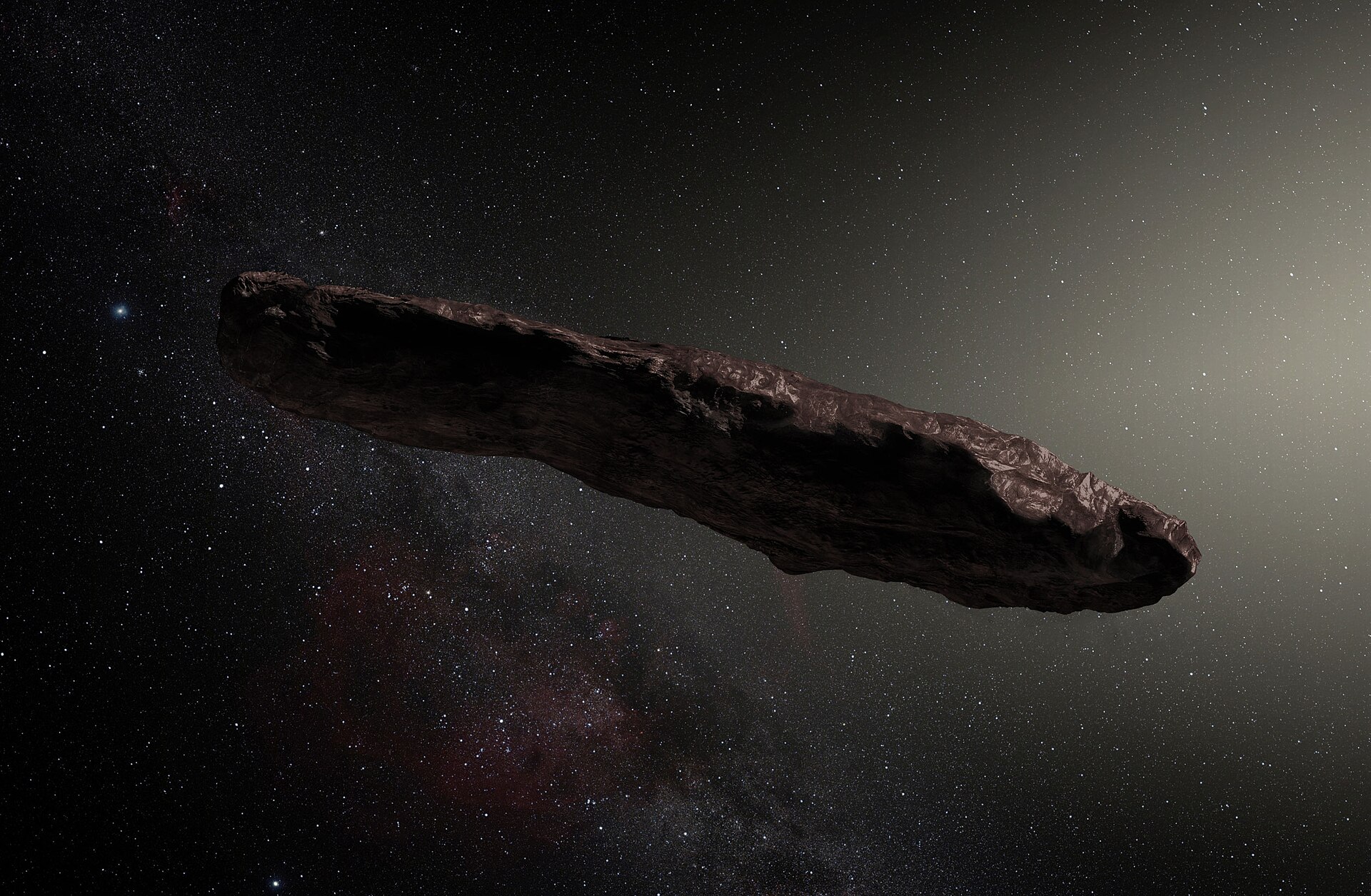
Oumuamua was discovered in 2017 after it had already passed its perihelion. The object was initially classified as an asteroid. However, astronomers later recorded Oumuamua’s non-gravitational acceleration. Most scientists interpreted it as the result of the sublimation of volatile substances, which means that in reality this object is a comet (however, according to a much more exotic theory, Oumuamua was actually an alien probe).
However, astronomers have now put forward a new hypothesis to explain Oumuamua’s strange behavior. In their opinion, it may actually be a fragment of an “exo-Pluto”: a fragment consisting almost entirely of nitrogen ice.
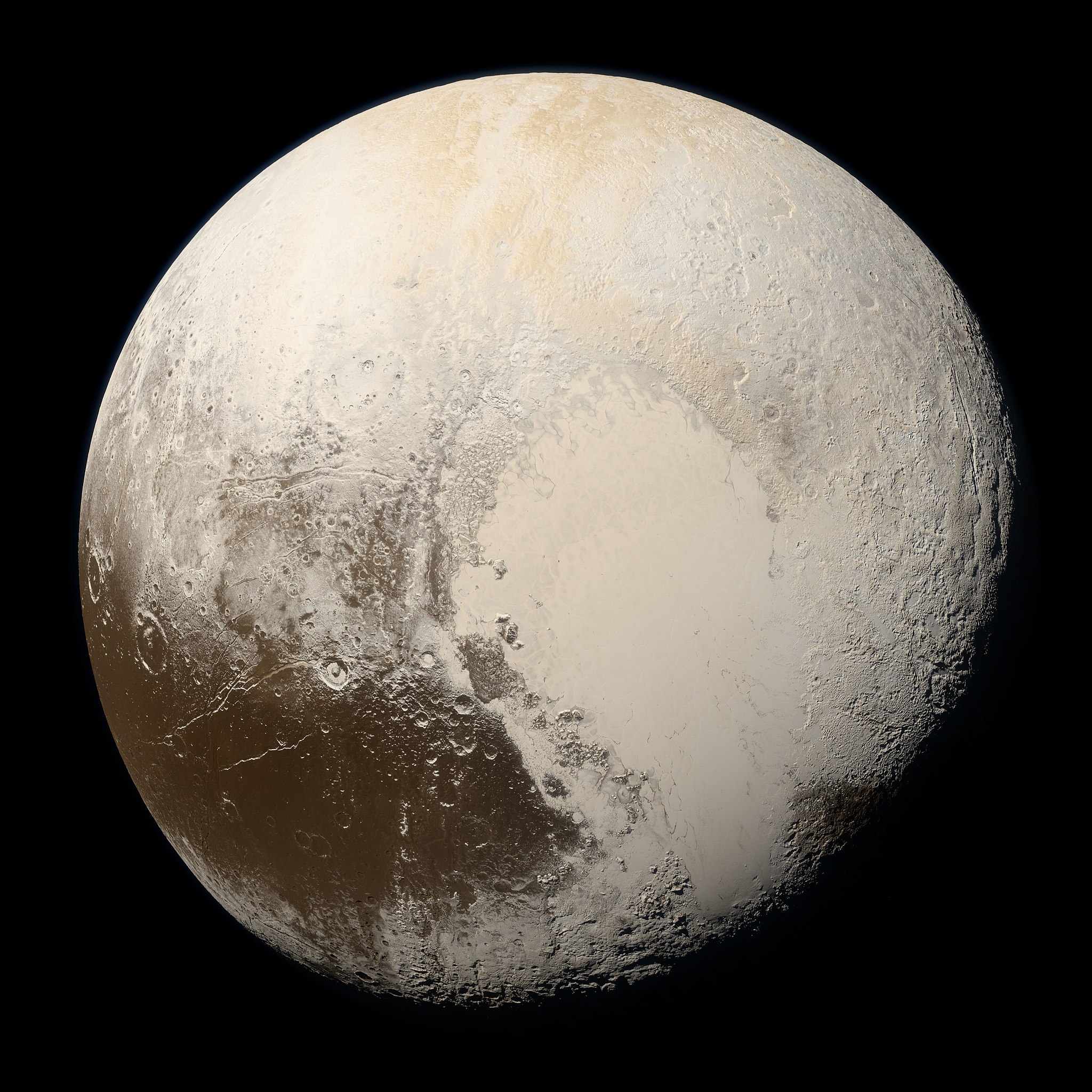
Observations made by the New Horizons spacecraft during its flyby of Pluto in 2015 showed that most of Pluto’s surface consisted of nitrogen ice, while water ice played the role of rock. The results of the simulation showed that in the past, Pluto was completely covered with nitrogen ice. However, over billions of years, part of it has been “scraped off” during collisions with other celestial bodies.
Moreover, initially there were many more such bodies in the Solar System. According to scientists’ estimates, it contained enough material to form up to 2,000 objects similar to Pluto, as well as 6,000 other, larger dwarf planets. However, as the orbits of the giant planets changed, some of them moved closer to the Sun and evaporated, while others were ejected beyond the Solar System.
Such planetary dances are supposed to be commonplace for other stars as well. This means that interstellar space should contain a large number of objects like Pluto and an even greater number of their nitrogen fragments.
According to the authors of the study, all of Oumuamua’s characteristics can be explained if it is a layer of nitrogen ice. We are talking about its speed, which is slower than that of typical interstellar comets, its unusual elongated shape, and its spectrum, which indicates that its surface is rich in nitrogen. Most likely, Oumuamua was ejected from a young star system and is no more than 2 billion years old, and possibly even as young as 500 million years. Scientists suggest that it arrived from the Perseus Arm, the spiral arm of the Milky Way closest to the Sun.
It was precisely because of the large amount of nitrogen that Oumuamua was so easy to detect. Although water ice residues may be more common, nitrogen ice glows brighter. But it also evaporates easily. According to researchers’ estimates, by the time it was observed, Oumuamua had lost more than 90% of the mass it brought into the Solar System.
According to Space.com

