

Less than halfway through its six-year journey through the Solar System, NASA’s spacecraft has performed a crucial maneuver on its way to destination. Last week, the Psyche probe used a flyby of Mars to gain additional acceleration, which will allow the spacecraft to reach its primary target—the largest metallic asteroid in our Solar System—in 2029.
The massive journey, spanning approximately 3.6 billion kilometers, began more than 2.5 years ago. In October 2023, SpaceX’s Falcon Heavy super-heavy-lift rocket launched the robotic probe from the Kennedy Space Center in Florida.
The mission’s target is the asteroid Psyche, which lies hidden in the main asteroid belt between the orbits of Mars and Jupiter. To traverse this vast expanse of space, the Psyche spacecraft uses advanced plasma engines that allow it to gradually and steadily build up momentum.
Martian Slingshot
Last Friday, the flyby of Mars provided the spacecraft with its most powerful boost since launch. Operators at NASA’s Jet Propulsion Laboratory (JPL) skillfully charted a course: the probe flew past at a distance of 4,609 km from the surface, remaining at a safe altitude above the thin Martian atmosphere.
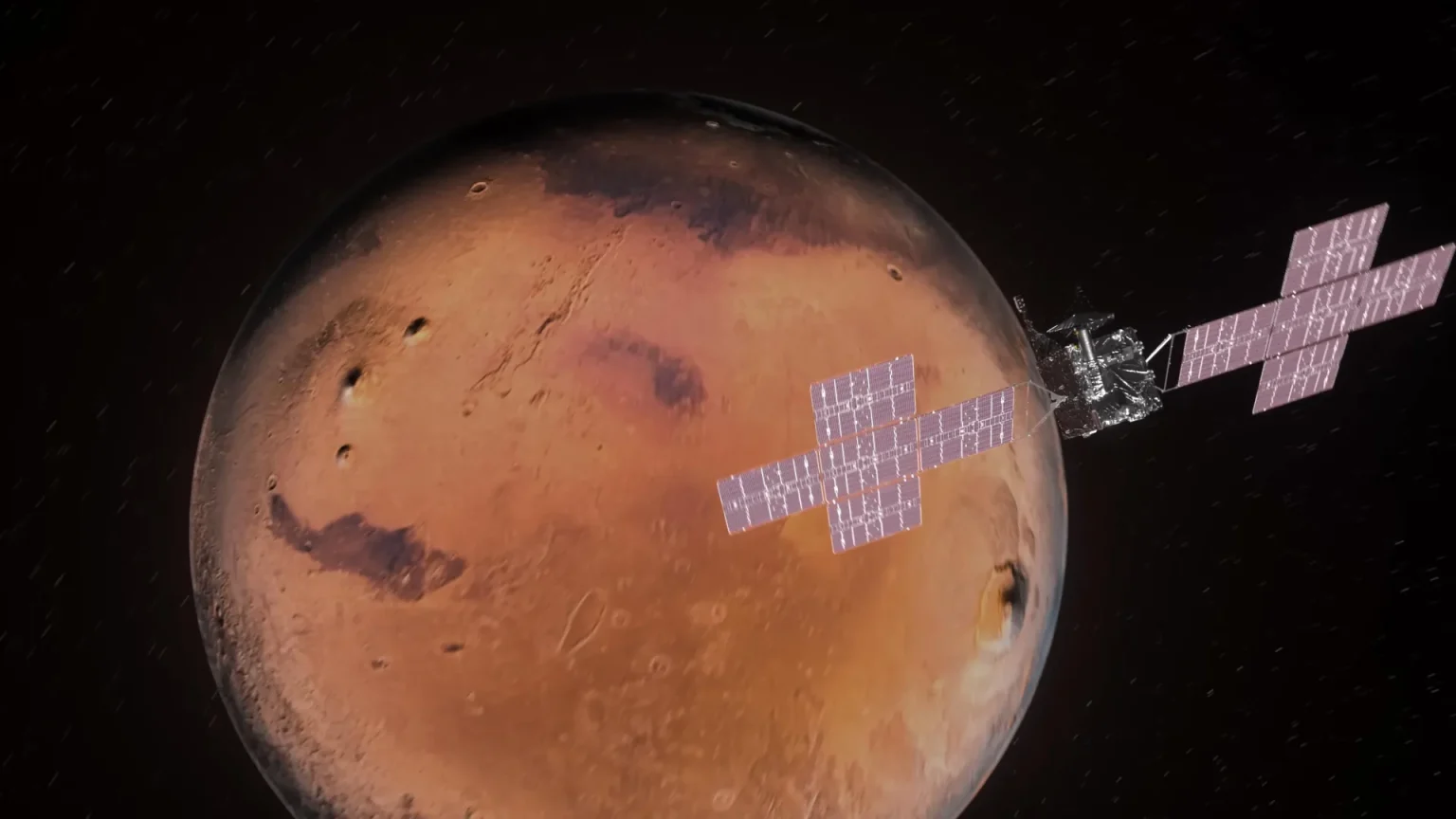
The planet’s gravitational pull acted like a classic gravitational slingshot. “Although we were absolutely confident in our calculations and flight plan, watching the Deep Space Network (DSN) Doppler signal in real time was incredibly exciting,” said Don Han, head of navigation for the Psyche mission at JPL.
This maneuver increased the spacecraft’s speed by nearly 1,600 km/h and shifted its orbital plane by 1° relative to the Sun. The probe is now perfectly aligned for its encounter with the asteroid in the summer of 2029.
Testing the scientific arsenal
During the maneuver, ground crews took the opportunity to test scientific instruments. The flight provided an ideal testing ground for three key instruments:
- Multispectral imager, consisting of two high-performance cameras.
- Gamma-ray and neutron spectrometer, designed to analyze chemical composition.
- Magnetometer, used to study magnetic fields.
Scientists deliberately used Mars as a calibration target. By comparing the data obtained with archives from other Mars rovers, experts will be able to fine-tune the instruments before exploring a completely uncharted asteroid. During the flyby, the magnetometer recorded the interaction between the solar wind and the Martian atmosphere, while the spectrometers measured the chemical composition of the surface.
Mars in the shape of a crescent
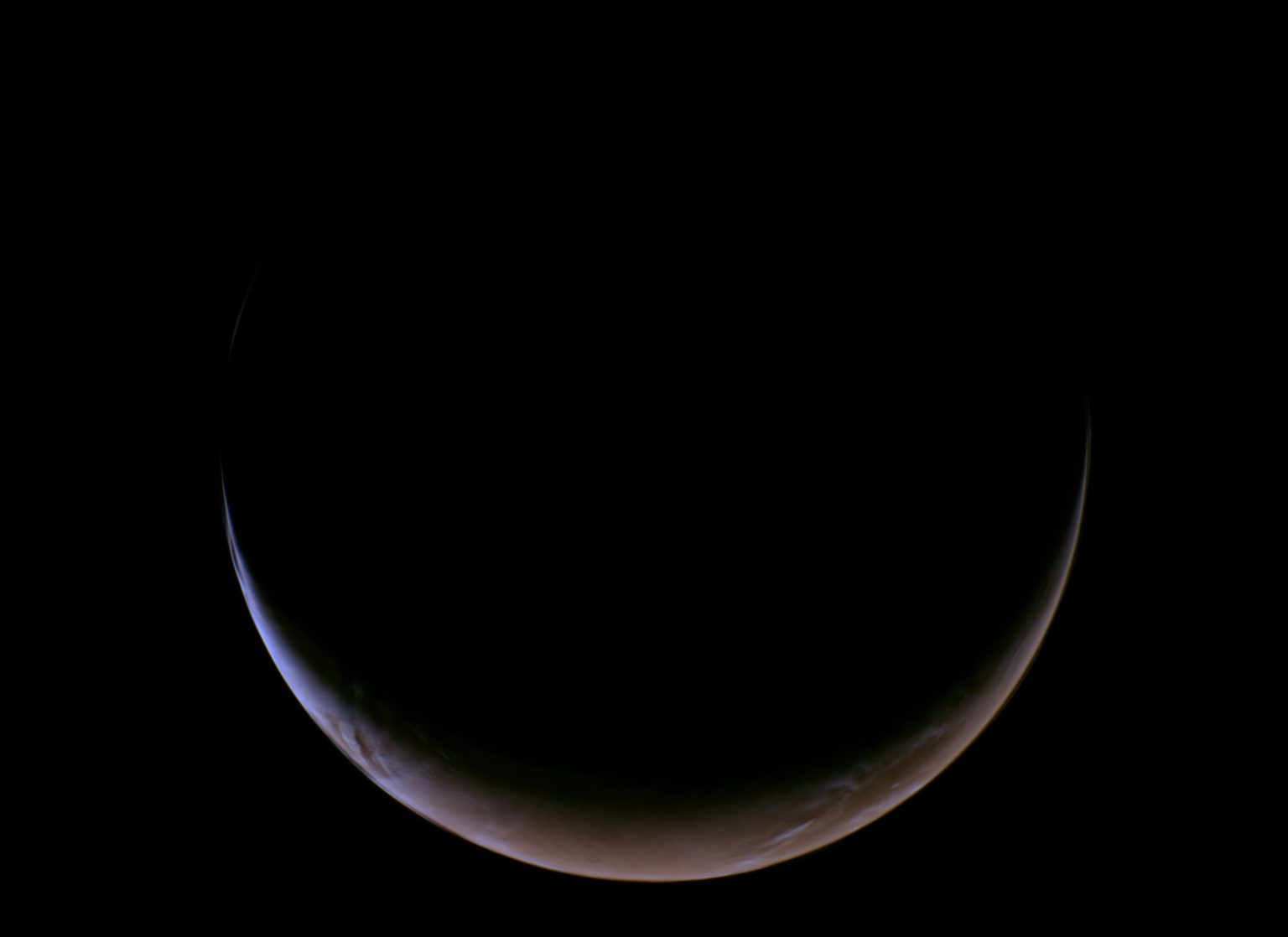
Thanks to its unique trajectory, the spacecraft was able to capture images of Mars from a very rare perspective. The Psyche probe approached the planet from the unlit side at a large phase angle. Therefore, instead of its usual disc, the Red Planet appeared as a thin crescent—a view that is physically impossible to see from Earth.
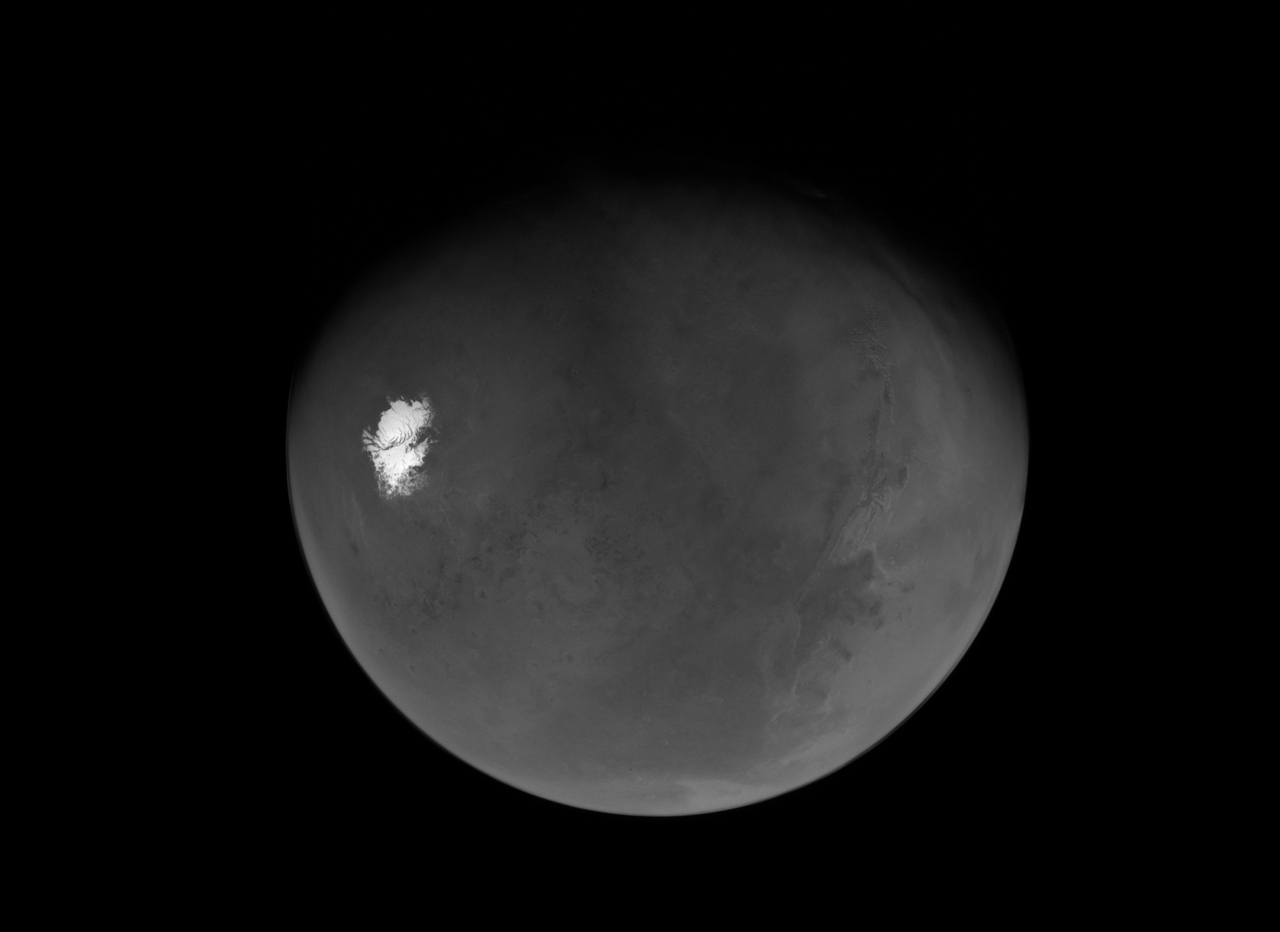
The images clearly show the fragility of the Martian atmosphere: sunlight shone spectacularly through the dust clouds hanging high above the edge of the rust-brown surface. In addition, the wide-angle cameras managed to capture a top-down view of the South Pole ice cap. Jim Bell, head of the image processing team at Arizona State University, confirmed that the probe took thousands of images that would be invaluable for characterizing the performance of the optics.
A look into the future
It’s always fascinating to gain new insights into a familiar planet, but the real scientific payoff is still to come. In three years, Psyche will approach a metal object the size of Massachusetts that is rich in iron and nickel. Today, it appears to us as nothing more than a faint speck through the lenses of our telescopes. But unlike a quick, fleeting glimpse of Mars, the Psyche spacecraft will remain in the asteroid’s orbit for more than two years, transforming a blurry speck into a new, thoroughly explored world.
Earlier, we reported on how Psyche observed Earth and the Moon from deep space.
According to arstechnica.com

