

The Curiosity rover, which has been tirelessly exploring the Red Planet for over a decade, has recently sent a series of photos back to Earth that have sparked lively debate among scientists. While exploring the crater, estimated to be 50 million years old, the spacecraft came across an unusual landscape. The surface of the rocks in this region is covered with a complex geometric pattern resembling the scales of a giant reptile or the cracked scales of a dragon. This discovery provides further compelling evidence of Mars’s “wet” past.
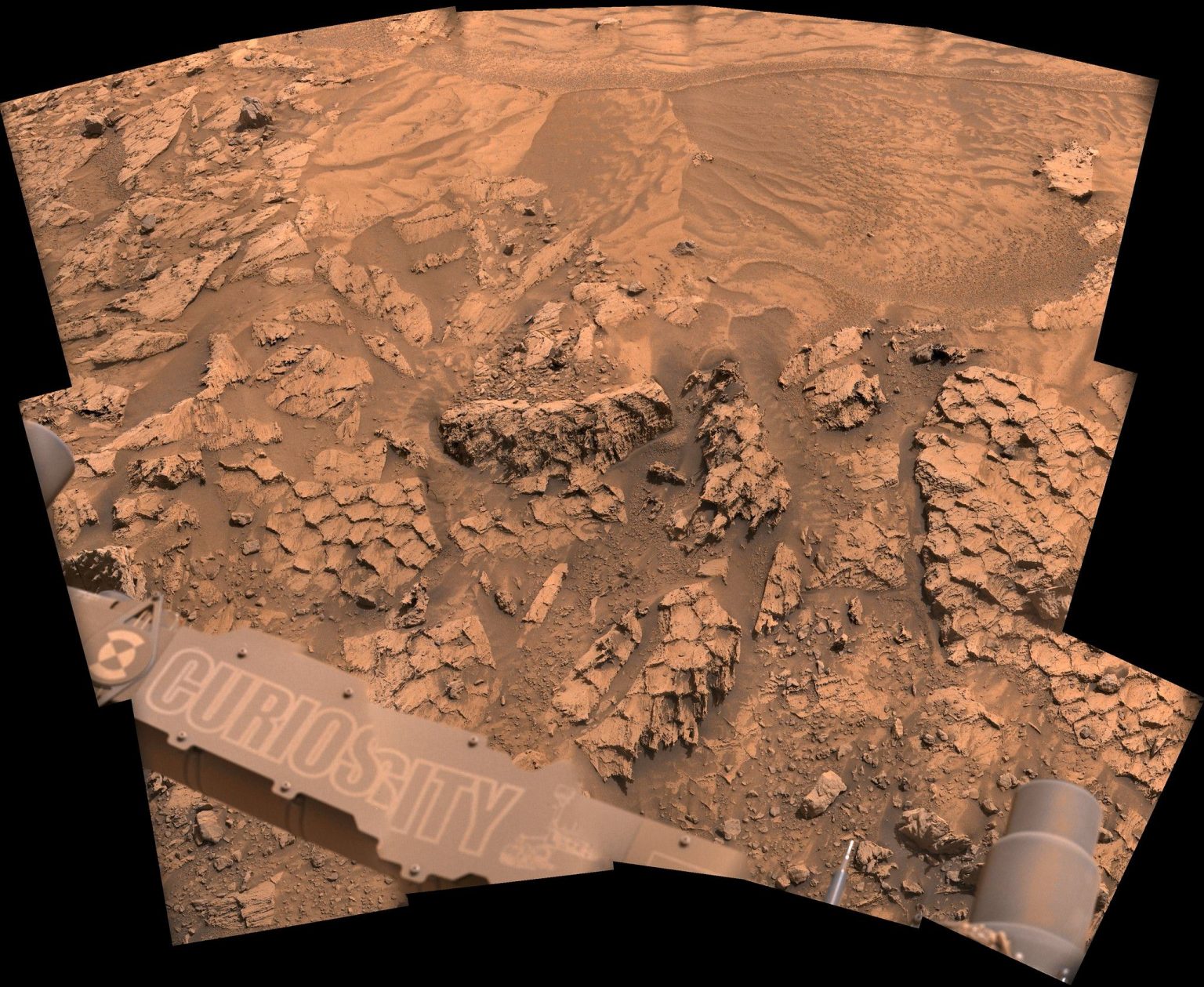
The mysterious structures were discovered on April 7, 2026, as NASA’s six-wheeled rover approached a small impact crater named Antofagasta. Using its powerful Mastcam camera, Curiosity captured detailed panoramic images showing thousands of hexagonal honeycomb-shaped structures.
Abigail Freiman, deputy principal investigator for the project at NASA’s Jet Propulsion Laboratory, noted in her report that scientists have observed similar features before, but their number and scale in this region are impressive. The polygonal structures stretch for dozens of meters, covering the ancient rocks like a continuous carpet, creating the illusion of a natural origin.
Traces of water and climate cycles
Although Mars is now a cold, dry desert, its geology bears witness to a very different past. On Earth, such polygonal patterns form as a result of regular cycles of soil expansion and contraction. This is most often caused by the freezing and thawing of water in subpolar regions or by the drying out of wet silt in arid areas.
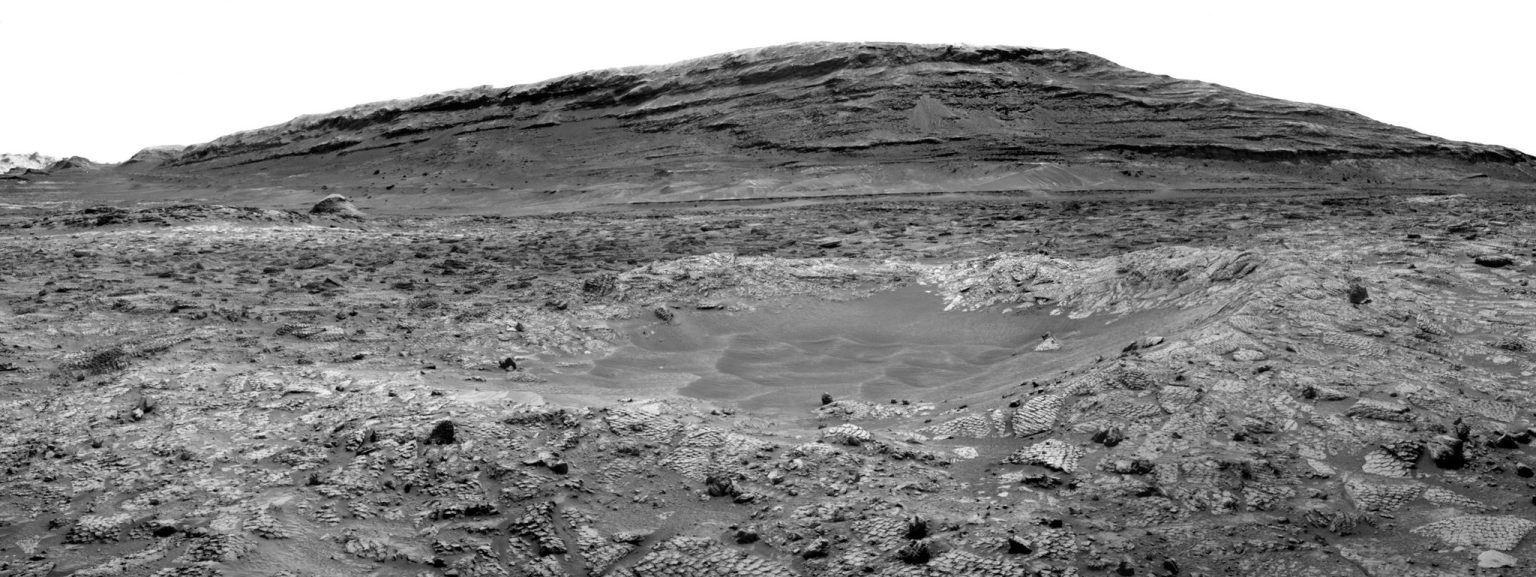
This suggests that Mars once had a dense atmosphere and liquid water. It is likely that billions of years ago, this region was the bottom of a lake or a river delta, where periodic changes in humidity and temperature “etched” these complex geometric shapes onto the surface. The mission team is currently analyzing the chemical data received from Curiosity to determine exactly which hypothesis—thermal cycles or the drying up of precipitation—is correct.
Mineral lace
Curiosity’s route to Antofagasta took it through a challenging section of Mount Sharp. There, the rover discovered another interesting feature—what is known as “boxwork.” These are thin mineral veins that form web-like patterns on the surface. Scientists believe that these formations emerged when mineral-rich groundwater filled cracks in the rocks. Over time, the softer surrounding rock eroded away, leaving behind only the hard “stone lace.”
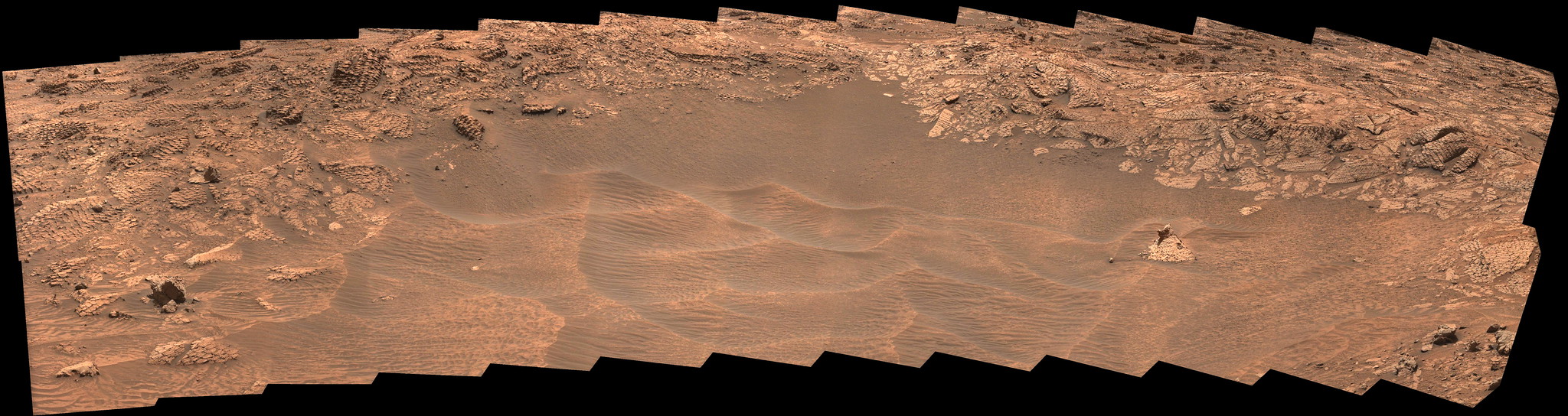
The crater, named after a Chilean town in the Atacama Desert, is a unique subject for research. By cosmic standards, it is quite young—less than 50 million years old. This means that the rocks inside it were exposed to intense radiation over a relatively short period of time. This offers hope that samples will be found with their original chemical composition virtually intact.
Organic matter in rock: Was Mars once a living planet?
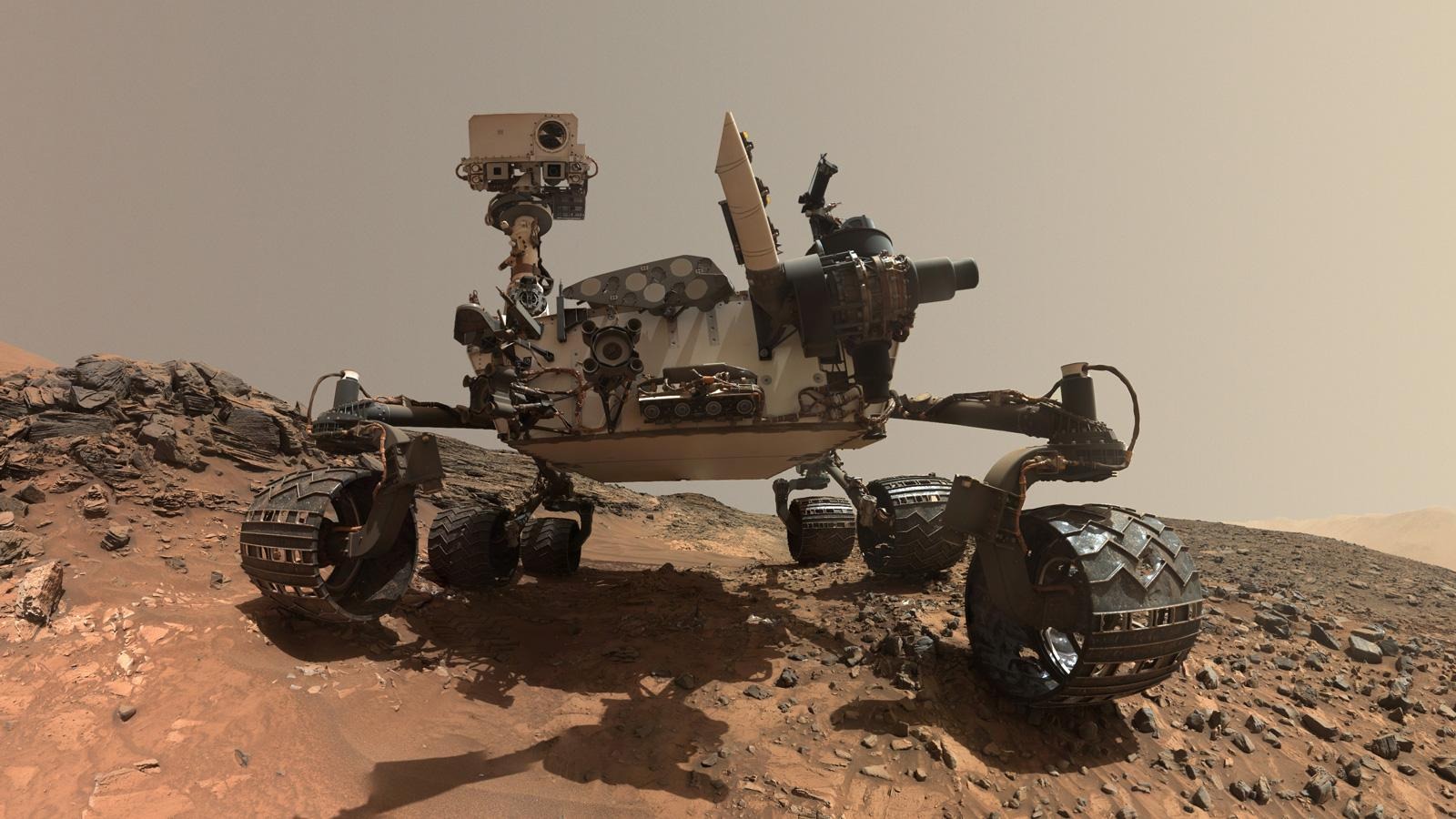
Alongside its geological observations, Curiosity continues its primary mission: the search for molecular signs of life. The rover recently made a groundbreaking discovery, identifying more than 20 types of complex organic molecules in clay-rich sandstones.
Although the presence of organic matter alone is not direct evidence of the existence of living organisms in the past, their diversity and concentration in the sediments at the bottom of dried-up lakes is an encouraging sign. Most of these compounds on Earth are the “building blocks” from which living cells are constructed. This discovery, combined with the study of the “reptile-like” rocks in the Antofagasta crater, is gradually piecing together the puzzle of ancient Mars as a planet that once possessed all the conditions necessary for the emergence of life.
We previously reported on the discovery of new organic compounds on Mars.
According to petapixel.com

