

Last week, remote Antarctic stations became the only place on the planet where a rare astronomical phenomenon — an annular solar eclipse — could be seen with the naked eye. On February 17, the shadow of the Moon passed in a narrow strip over the icy continent, presenting polar explorers with an incredible landscape. Fortunately, modern space technology has allowed millions of people around the world to enjoy this spectacle thanks to satellite images.
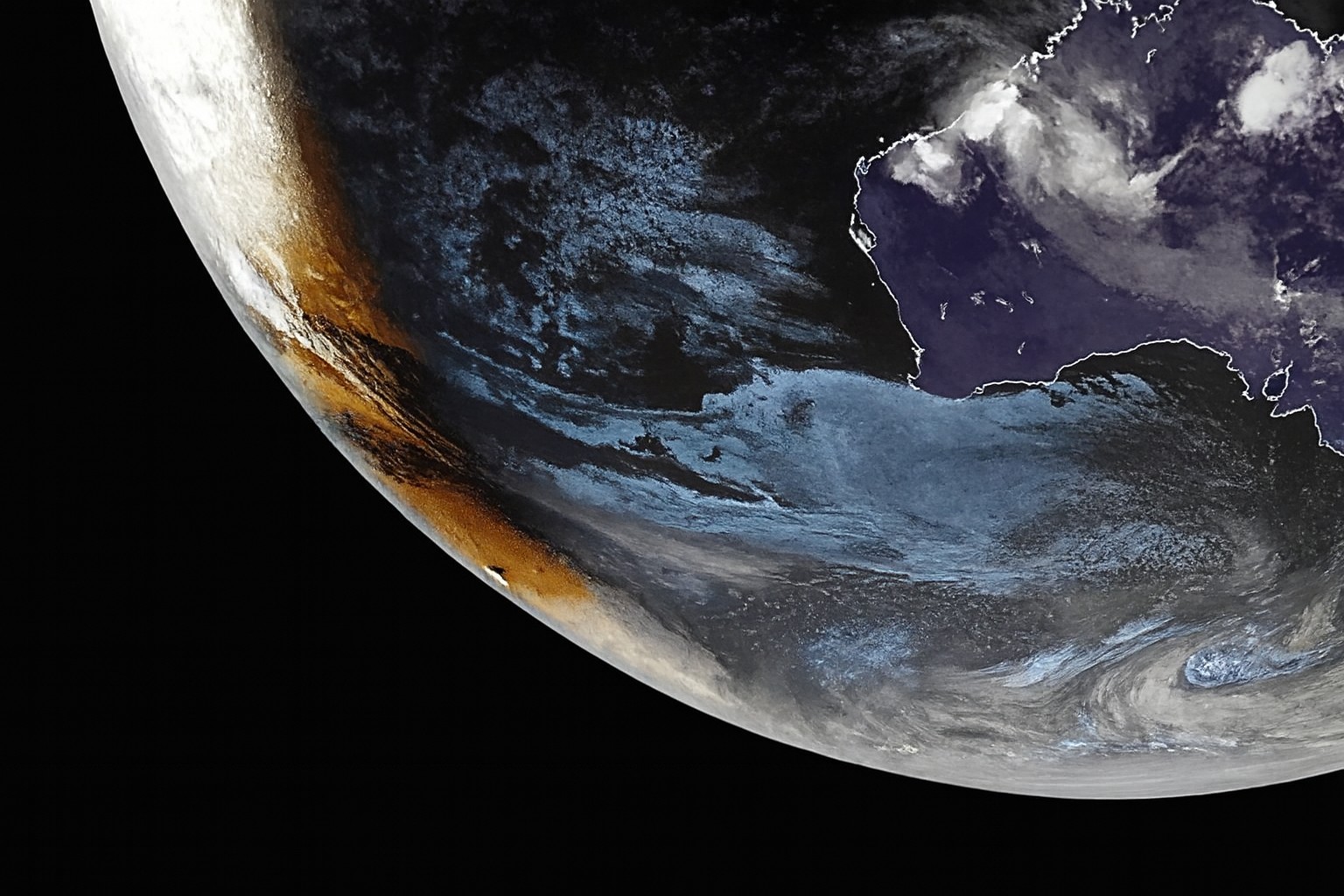
An annular eclipse differs from a total eclipse in that the Moon is at its furthest point from Earth in its orbit at that moment. Because of this, it cannot completely cover the sun’s disk, leaving a bright rim around its dark silhouette — the very “ring of fire” that glows in the sky. The strip where the phenomenon could be observed as a ring was only 616 km wide.
How satellites tracked the eclipse
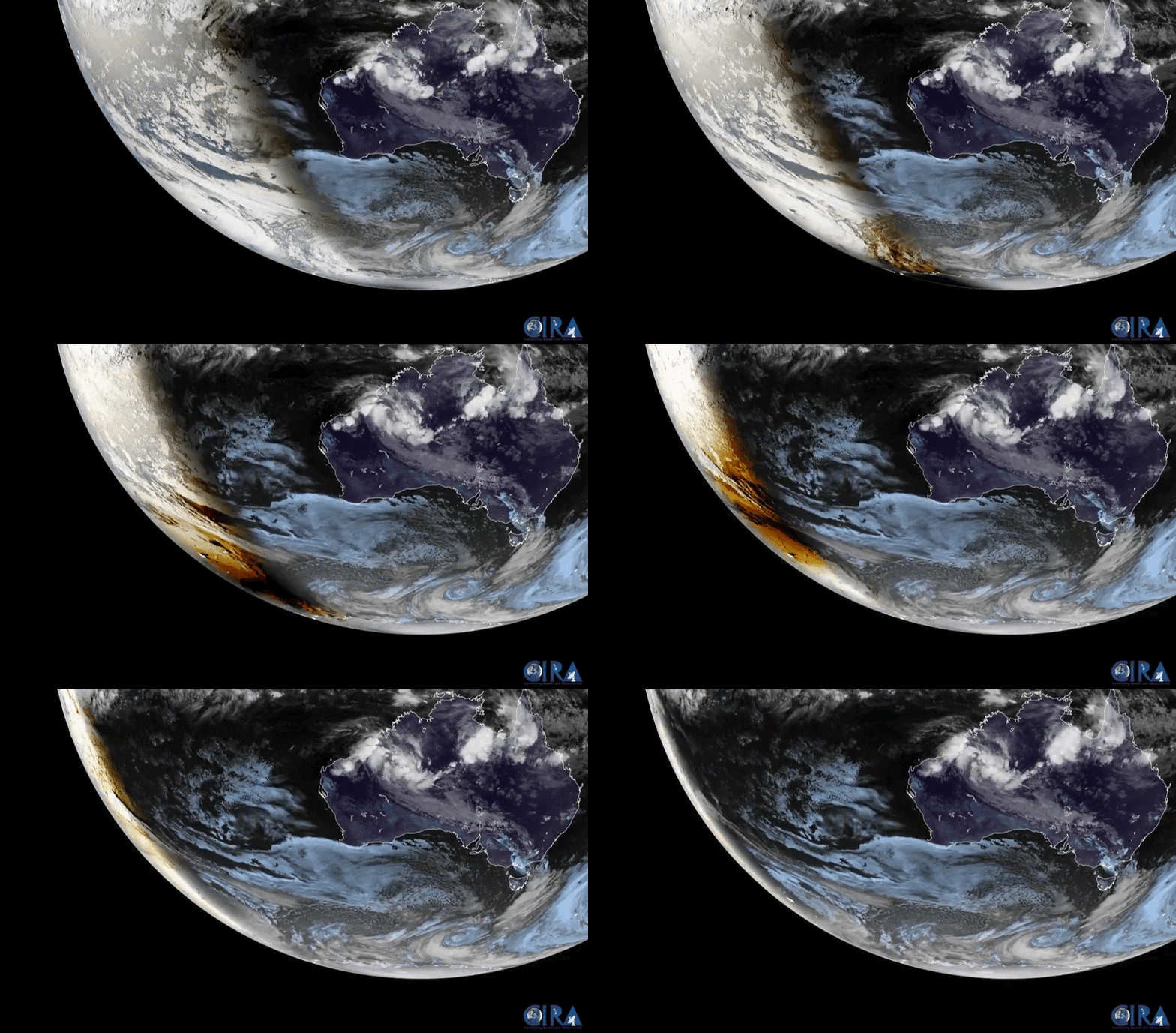
- The European satellite Meteosat, owned by Eumetsat, captured an impressive image of the moon’s enormous shadow rapidly moving across the surface of Antarctica.
- The South Korean meteorological satellite GEO-KOMPSAT-2A, located in geostationary orbit (36,000 km), recorded this event almost at the boundary between day and night, showing the contrast between the illuminated and darkened parts of the Earth.
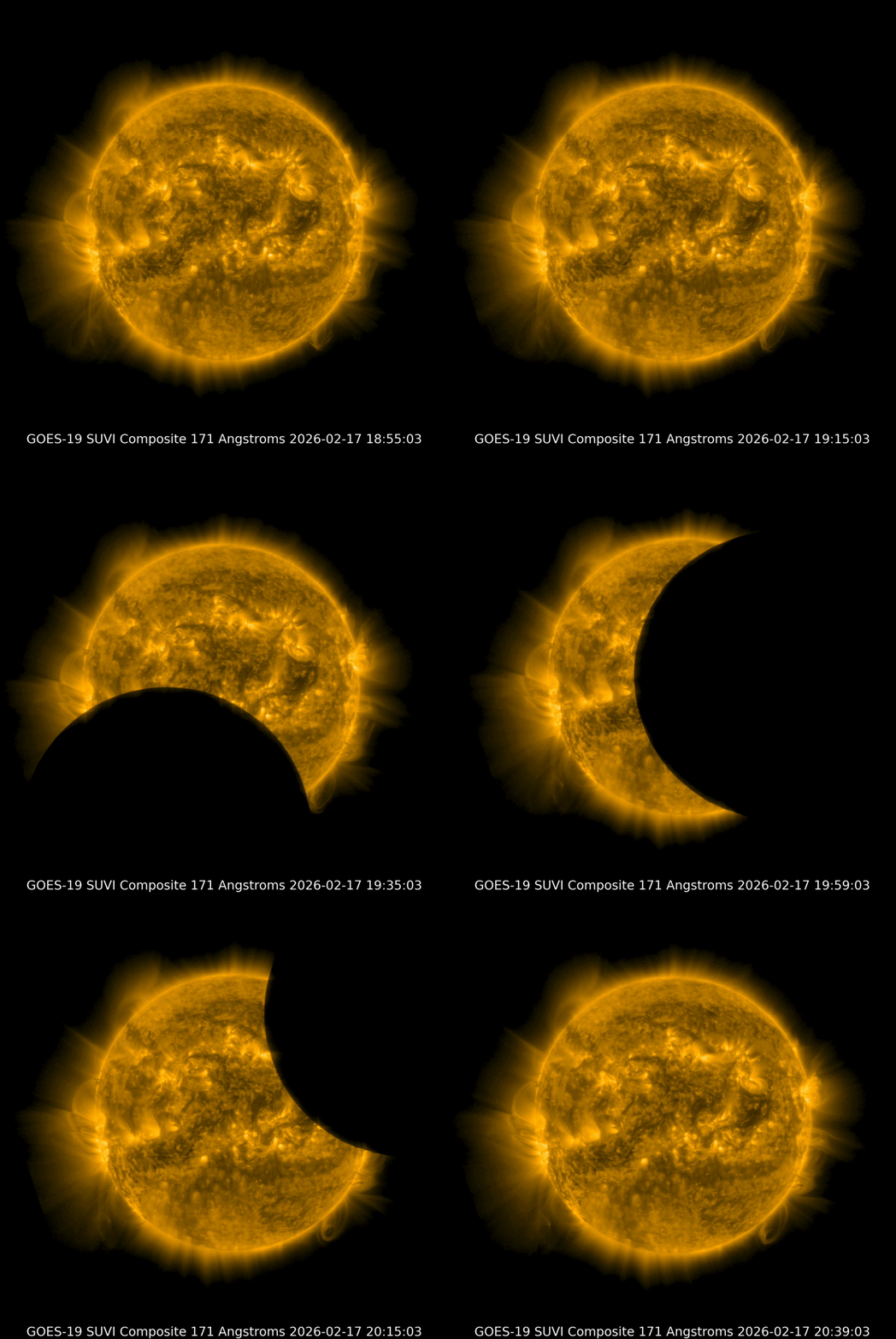
- The American satellite NOAA GOES-19 showed a completely different perspective. Using the SUVI ultraviolet instrument, it observed the Sun. In the video obtained from space, you can see the clear silhouette of the moon floating across the solar disk from left to right. Against the backdrop of this eclipse, active regions on the Sun are particularly noticeable — giant loops of plasma formed under the influence of our star’s magnetic field.
Season of eclipses
The cosmic ballet does not end with a single phenomenon. Eclipses always occur in pairs, forming so-called “eclipse seasons.” The second part of this celestial duet will take place on March 3. This time, Earth will come between the Sun and the Moon. Although our planet will block the satellite from direct sunlight, the Moon will not disappear from the sky completely. It will take on a blood-red hue due to the sun’s rays passing through the Earth’s atmosphere, scattering and refracting. This phenomenon is called a “blood moon.” Approximately 2.5 billion people in Australia, East Asia, Oceania, and North America will be able to observe it.
Earlier, we reported on how unique photos of the eclipse were taken from the ISS.
According to Space

