

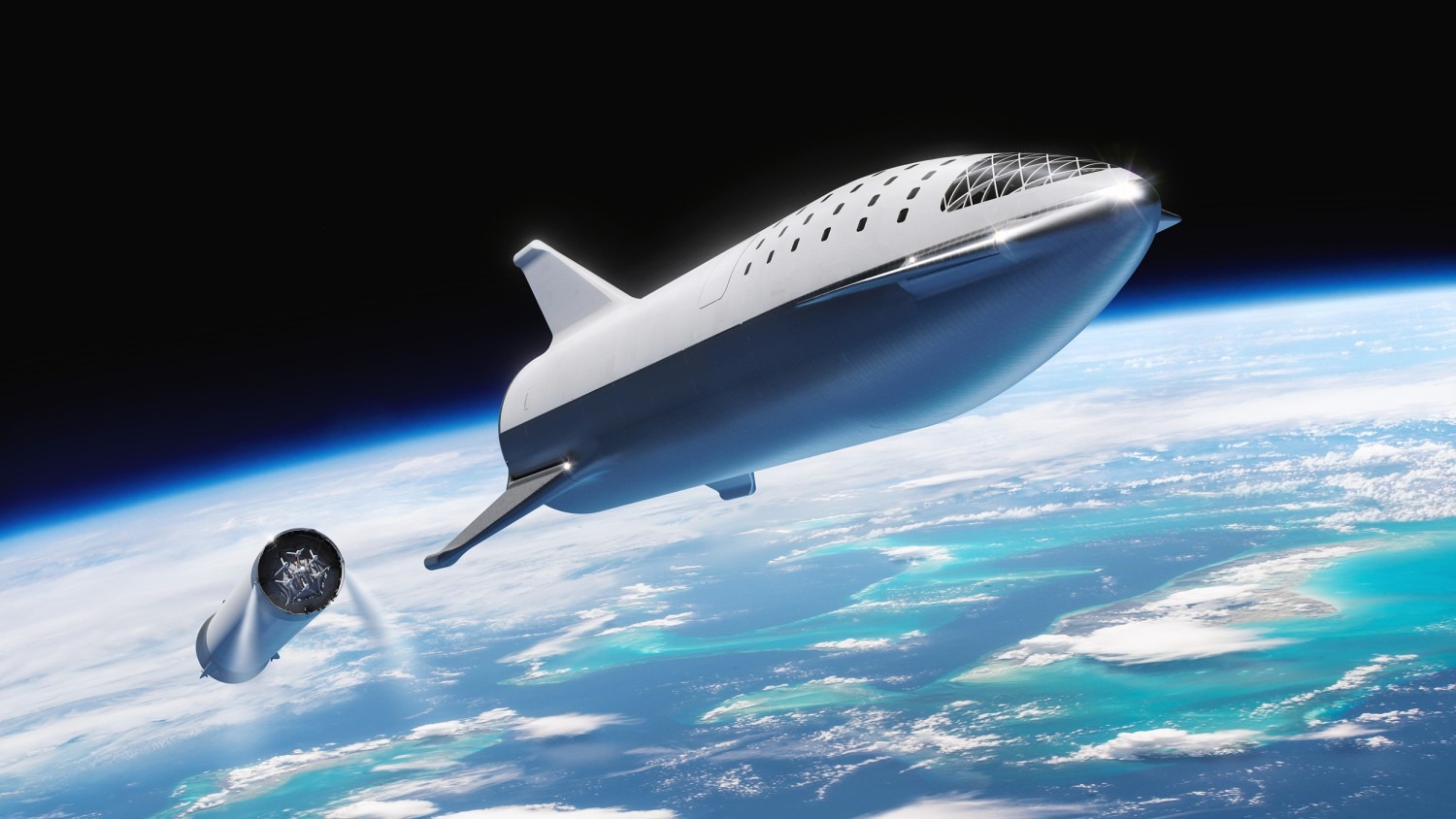
SpaceX’s spaceport in Texas is preparing for a historic moment. In the near future, potentially as early as next year, Elon Musk’s company will attempt the most challenging feat in the history of spaceflight: launching the massive Starship rocket into orbit and then returning it from space directly to the launch pad. The success of this mission will be a decisive step toward creating a fully reusable transportation system for the Moon and Mars.
Geographical challenge
The main obstacle to Starship’s return to Starbase, SpaceX’s Texas base, is geography. Unlike Florida, where rockets are launched over the vast expanse of the Atlantic Ocean, the flight path from Texas imposes strict limitations. To avoid densely populated areas, the rocket will have to follow a narrow corridor. All previous Starship flights ended with a splashdown in the ocean. But for true reusability, SpaceX has to master bringing the rocket’s upper stage back to Earth.
Regulatory approval
The Federal Aviation Administration (FAA) recently published a preliminary assessment of the new launch and return trajectories proposed by SpaceX. The regulator concluded that the flights would not have a “significant impact” on the environment. This is an important criterion, but not the only one. The FAA also assesses risks to public safety. The rules require that the probability of harm to people outside the mission does not exceed 1 in 10,000.
Route through Mexico
New maps from the FAA reveal the possible return route for Starship. The spacecraft will begin its descent over the Pacific Ocean, then fly over the Baja California peninsula and inland Mexico, bypassing major cities such as Monterrey. The final phase of the flight will take place over the Rio Grande Valley before Starship descends vertically to the launch site in Texas, where it will be caught by special mechanisms.
Risk minimization
The proposed routes are specially designed to avoid flying over large cities. This reduces the potential danger in the event of an accident, when debris could reach the surface. The latest successful Starship flight, which ended with a splashdown with an accuracy of just 3 meters, gives engineers confidence in their precise trajectory control. SpaceX is considering two options for launching into the desired orbit: the southern route between Yucatan and Cuba, or the northern route via Florida. Both minimize flight time over land.
Impact on aviation and future plans
Each Starship launch will temporarily close part of the airspace, which could affect hundreds of commercial flights. However, the FAA plans to reduce these restrictions as the rocket’s reliability improves. In the long term, SpaceX plans to transfer some of its flights to a spaceport in Florida, where there is more freedom to maneuver. But Starship’s regular returns to Texas will pave the way for orbital refueling, lunar missions for NASA, and ultimately, flights to Mars. The first attempts will be a test not only of technology, but also of new rules of space logistics.
Earlier, we reported on how Elon Musk’s space truck would lift 100 tons of equipment into orbit.
According to arstechnica.com

