

Following their historic flight to lunar orbit, the Artemis II crew is preparing for the final and most dangerous stage of their journey. The four astronauts didn’t just visit the vicinity of our natural satellite—they set an all-time record by traveling an astonishing 406,771 km from Earth. But for this record to be included in history textbooks, they need to overcome one final obstacle: Earth’s atmosphere.
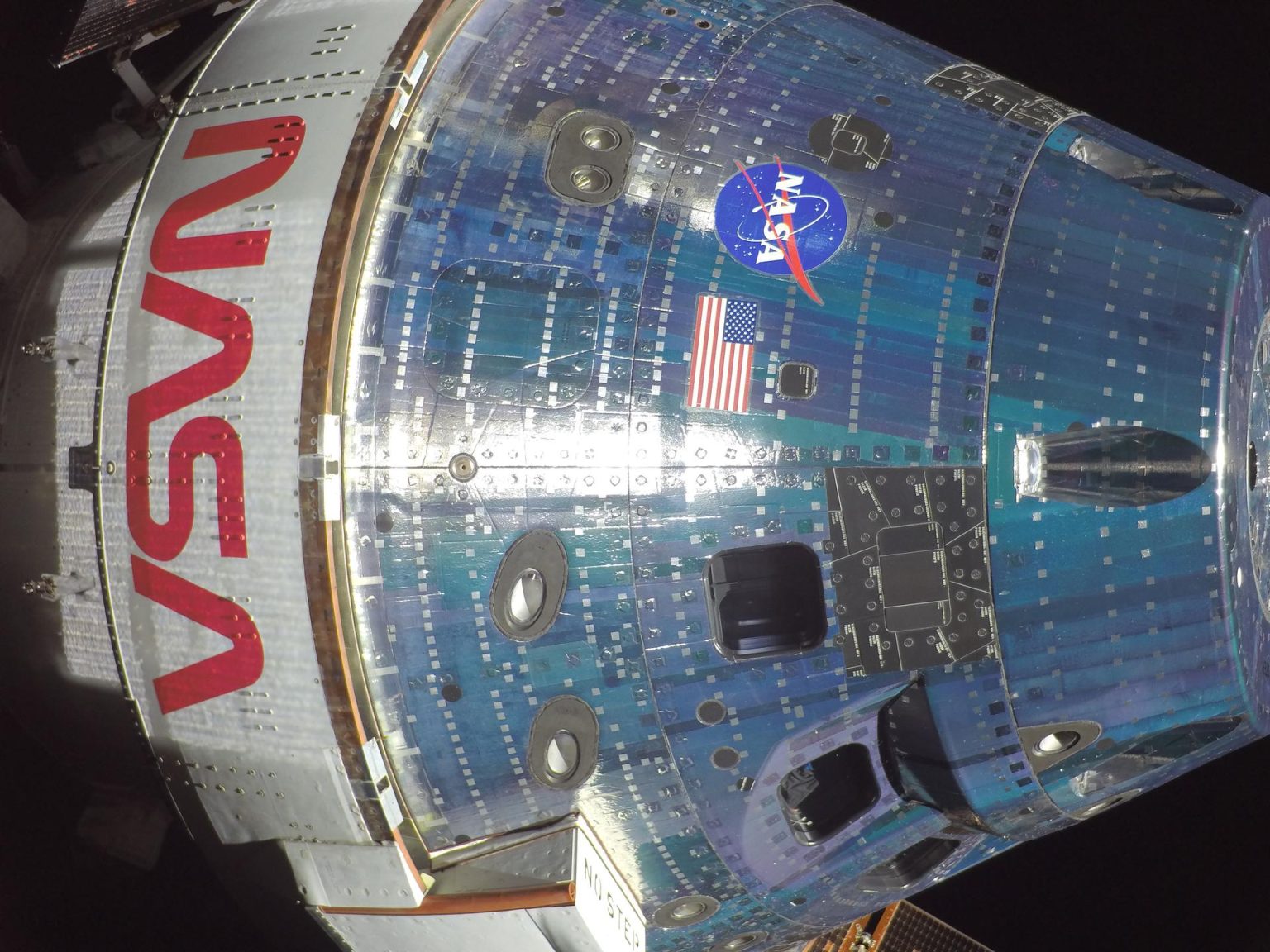
The Orion spacecraft is expected to splash down off the coast of California at approximately 8:00 p.m. on April 10 local time (6:00 a.m. on April 11 Kyiv time). The ten-day mission is coming to a close with a true test of endurance—for both the crew and the technology.
Hypersonic math: faster than a bullet
When we talk about speed in space, the numbers are more than just statistics. The Orion capsule is approaching the upper layers of the atmosphere at a speed of over 11 km/s. That’s over 40,000 km/h—a speed 40 times faster than that of a typical passenger airliner.
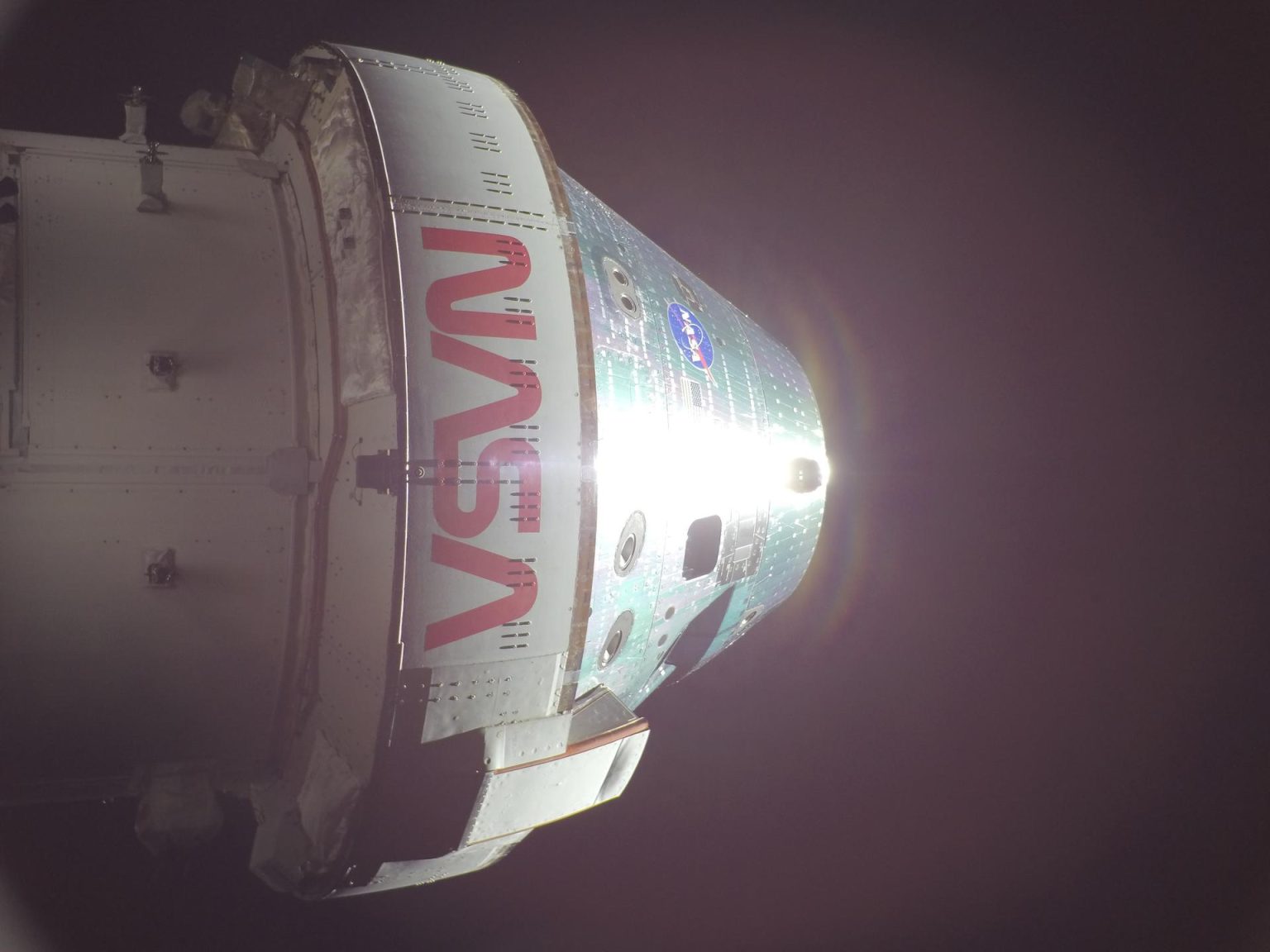
However, the main challenge lies not in the speed itself, but in the kinetic energy. Every kilogram of the spacecraft’s mass carries 2,000 times more energy than an airplane in flight. This enormous energy must be reduced to virtually zero in a matter of minutes so that the parachutes can deploy safely.
Unlike airplanes, which must be streamlined to conserve fuel, Orion acts as a “space brake” when it enters the atmosphere. Its shape is specifically designed to create maximum air resistance. This allows the atmosphere to act as a natural braking system, converting kinetic energy into heat.
Physics of Survival
For unmanned spacecraft, such as OSIRIS-REx, which recently returned soil samples from an asteroid, deceleration is sudden and instantaneous. Robots can withstand g-forces of 100 g, but for the human body, that is fatal. Formula 1 drivers experience about 5 g during sharp turns—that is the limit beyond which an untrained person loses consciousness.
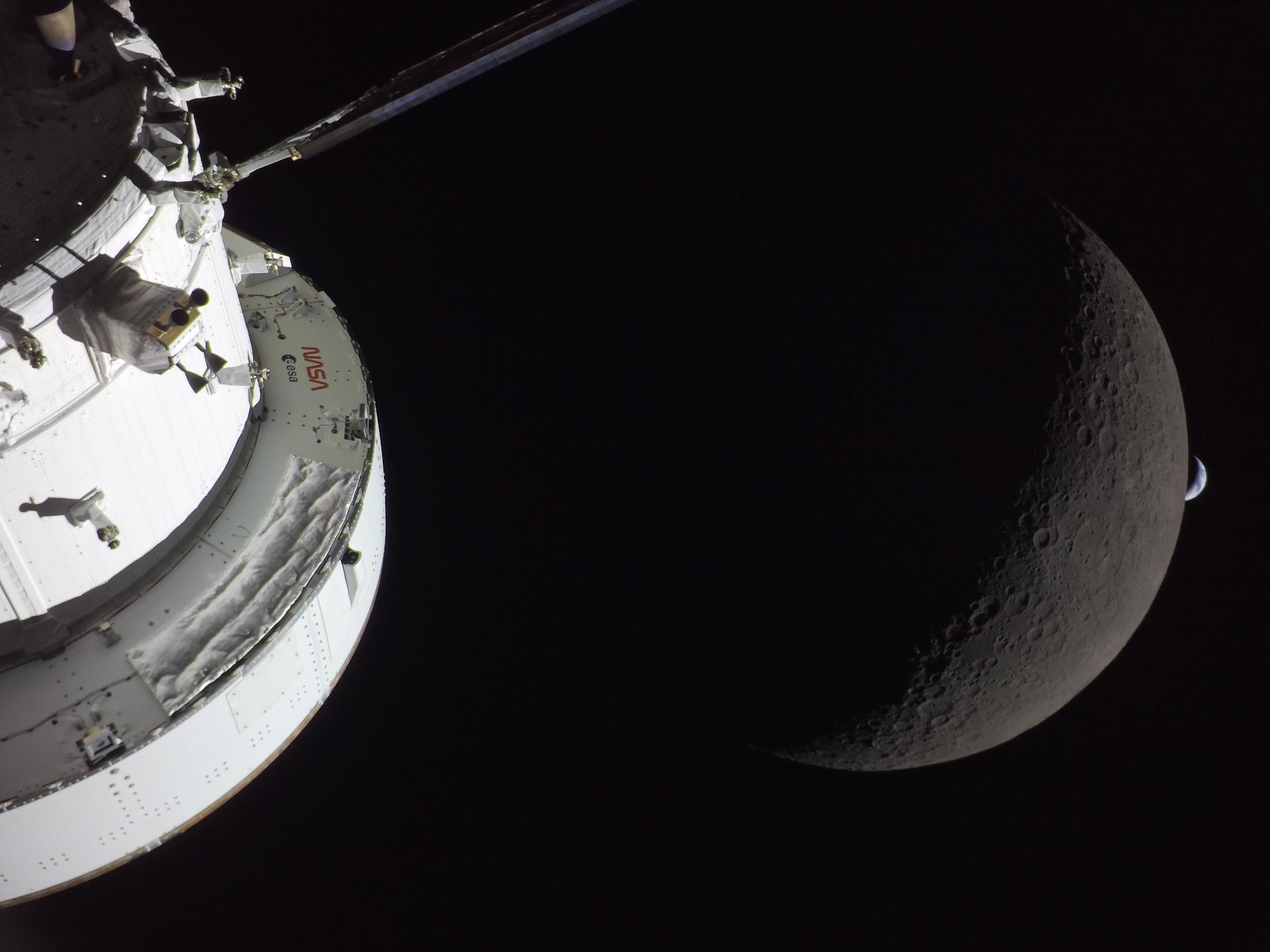
To ensure the safety of the Artemis II crew, NASA engineers are using a controlled descent. Using lift, Orion literally “glides” through the upper layers of the atmosphere, prolonging the deceleration process. This allows the G-force to be kept at a level that a trained astronaut can withstand.
However, this comfort comes at the cost of extreme heat. A powerful shock wave forms in front of the capsule, where the air is compressed so intensely that it heats up to 10,000 °C. That’s twice as hot as the surface of the Sun. Under these conditions, the gas surrounding the spacecraft turns into a superheated plasma that blocks radio waves. For several minutes, the astronauts will be completely cut off from communication until the plasma cocoon dissipates.
AVCOAT
The star of this comeback is the heat shield. It is made of a special material called AVCOAT—an advanced version of the ablative coating used as far back as the 1960s during the Apollo missions.
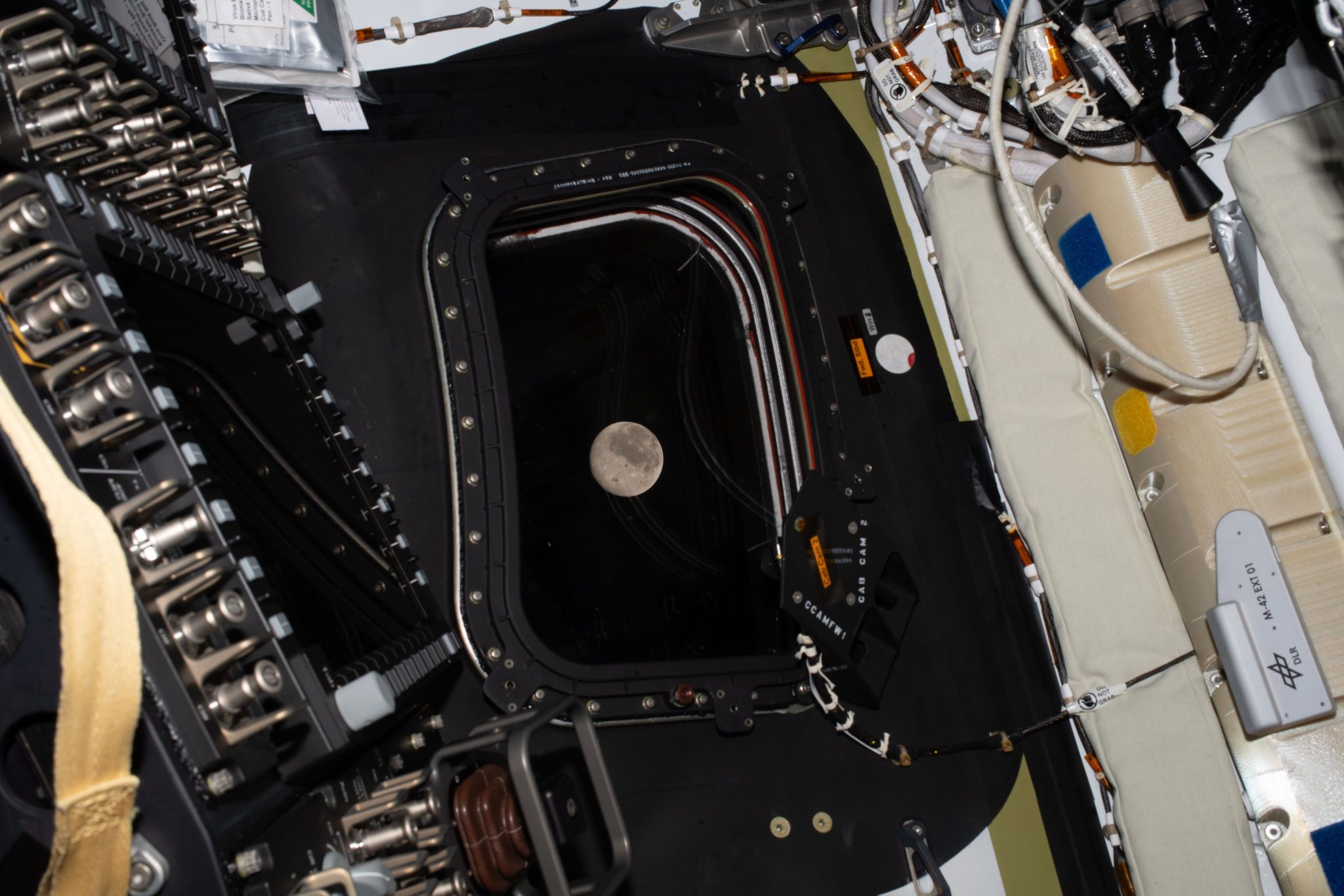
Ablation protection works on the principle of “self-sacrifice”: the outer layers are heated to red-hot temperatures, charred, and gradually vaporized. This process absorbs heat and draws it away from the spacecraft’s body. Thanks to this technology, when the outside temperature reaches 10,000 °C, the surface of the screen itself heats up to “only” 3,000 °C, while the temperature inside the cabin remains quite comfortable.
Lessons from Artemis I
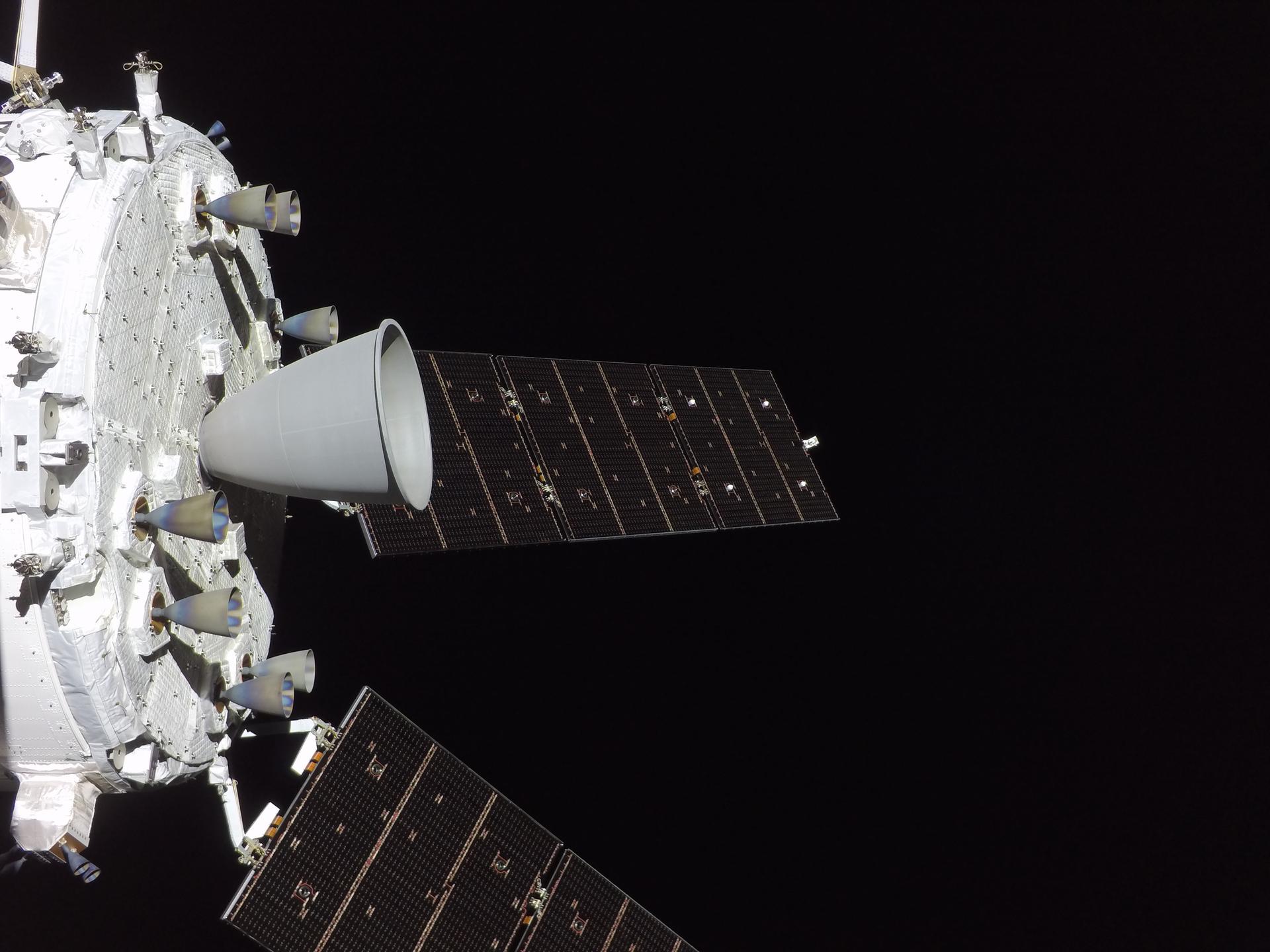
Despite the success of the previous Artemis I unmanned mission, engineers had serious concerns about the heat shield. At that time, unexpectedly large pieces of material broke off from the shield. The analysis showed that the cause may have been excessive pressure inside the AVCOAT’s pores, which built up during a so-called “skip re-entry”—a maneuver in which the spacecraft briefly exits the atmosphere and returns to space to cool down, and then re-enters a second time.
The flight path has been slightly modified for the Artemis II crew. Engineers kept the lift maneuver but made the “jump” less aggressive. This will reduce the thermal load on the material structure and ensure the integrity of the screen until the parachutes deploy.
Just a step away from success
Now that Orion is approaching Earth, the Mission Control Center in Houston is on high alert. Every second of the descent has been calculated down to the millimeter. The return of Artemis II is not just the conclusion of another mission; it is a final test for the technologies that, in just a few years, are set to carry the first humans to the surface of the Moon—and eventually to Mars.
When we see three enormous parachutes over the Pacific Ocean, it will symbolize humanity’s definitive return to the great space race. But for now, all we can do is wait for that moment when the radio signal breaks through the plasma and we hear the voices of the four heroes who have returned from the abyss.
We previously reported on how the Artemis II crew couldn’t hold back their tears at their first glimpse of the far side of the Moon.
According to phys.org

