

When the mysterious object 3I/ATLAS sped through our Solar System, it immediately came under the scrutiny of humanity’s most powerful instrument—the James Webb Space Telescope. The results of the spectroscopic analysis were so unexpected that they caused a real rift within the scientific community.
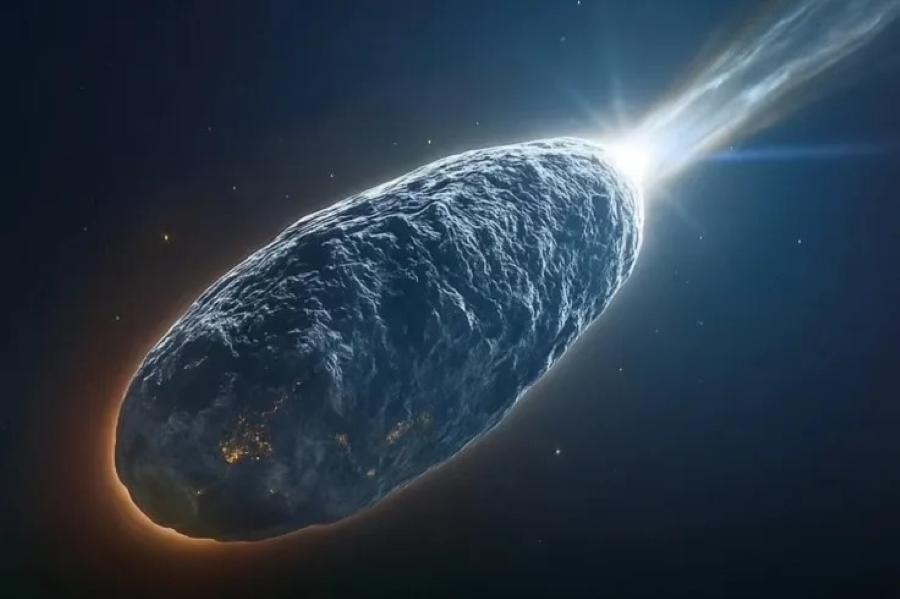
As it turns out, this interstellar traveler is literally “packed” with deuterium—a stable isotope of hydrogen that has one extra neutron in its nucleus.
Abnormal chemistry
Two research teams, in collaboration with NASA experts, have presented analysis results indicating an “unexpectedly high” deuterium-to-hydrogen ratio in the methane and water molecules emitted by the object.
- In water: the deuterium content in 3I/ATLAS is an order of magnitude higher than in any known comet in our Solar System.
- In methane: this is one of the rarest detections of deuterated organic molecules in an interstellar object in the history of observations.

According to most scientists, this chemical signature indicates that 3I/ATLAS formed in an extremely cold environment at temperatures of around 30 K (-243.15°C). This took place in the metal-poor protoplanetary disk of another star at the very dawn of our galaxy’s history.
A 12-billion-year-old artifact
If the calculations are correct, 3I/ATLAS is a “time capsule.” The isotopic composition of the carbon suggests that the object formed approximately 12 billion years ago. This means that it is much older than our Sun and is a surviving remnant of an ancient planetary system from the early Milky Way.
This “cosmic retiree” provides us with direct evidence of how ice chemistry worked and how planets formed billions of years ago, even before our Earth was even on the Universe’s radar.
Technosignature or natural phenomenon?
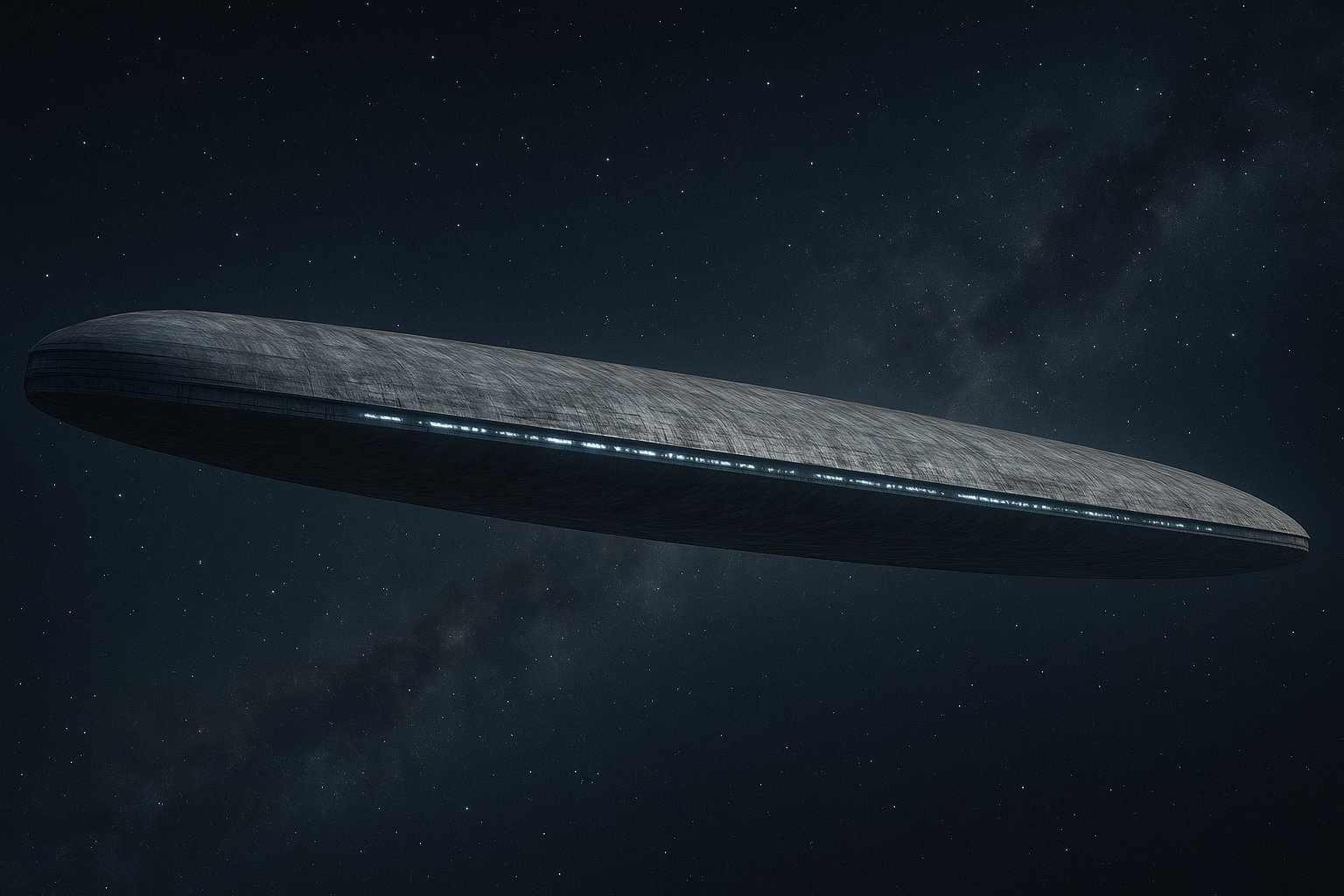
However, where most people see an ancient rock, Harvard professor Avi Loeb sees something far more interesting. Loeb, known for his bold theories about the artificial origin of interstellar objects, has put forward another provocative hypothesis.
He questions whether such an excess of deuterium could have formed naturally at a temperature of 30 K, since the cosmic microwave background radiation was too warm at that time. That is why Loeb asks a provocative question.
“Since deuterium is the ideal fuel for nuclear fusion, could its excess in 3I/ATLAS be a technological trace—remnants of an alien engine’s fuel?”
Most of Loeb’s colleagues are skeptical, believing that the nature of the object can be fully explained by the evolution of chemistry in cold gas clouds. However, even as 3I/ATLAS moves away from us, the controversy surrounding its “nuclear tank” is only gaining momentum.
We previously reported on how the jets from the mysterious object 3I/ATLAS were explained.
According to avi-loeb.medium.com

