

An exciting event is taking place in the depths of space: the mysterious interstellar object 3I/ATLAS, which recently “hid” behind the Sun, has reappeared. Astronomers, armed with powerful telescopes, have a unique opportunity to continue observing this rare visitor. Its path lies through our cosmic neighborhood, and soon, just a few days before Christmas, it will approach Earth before leaving the Solar System forever.
Hellish encounter with the Sun
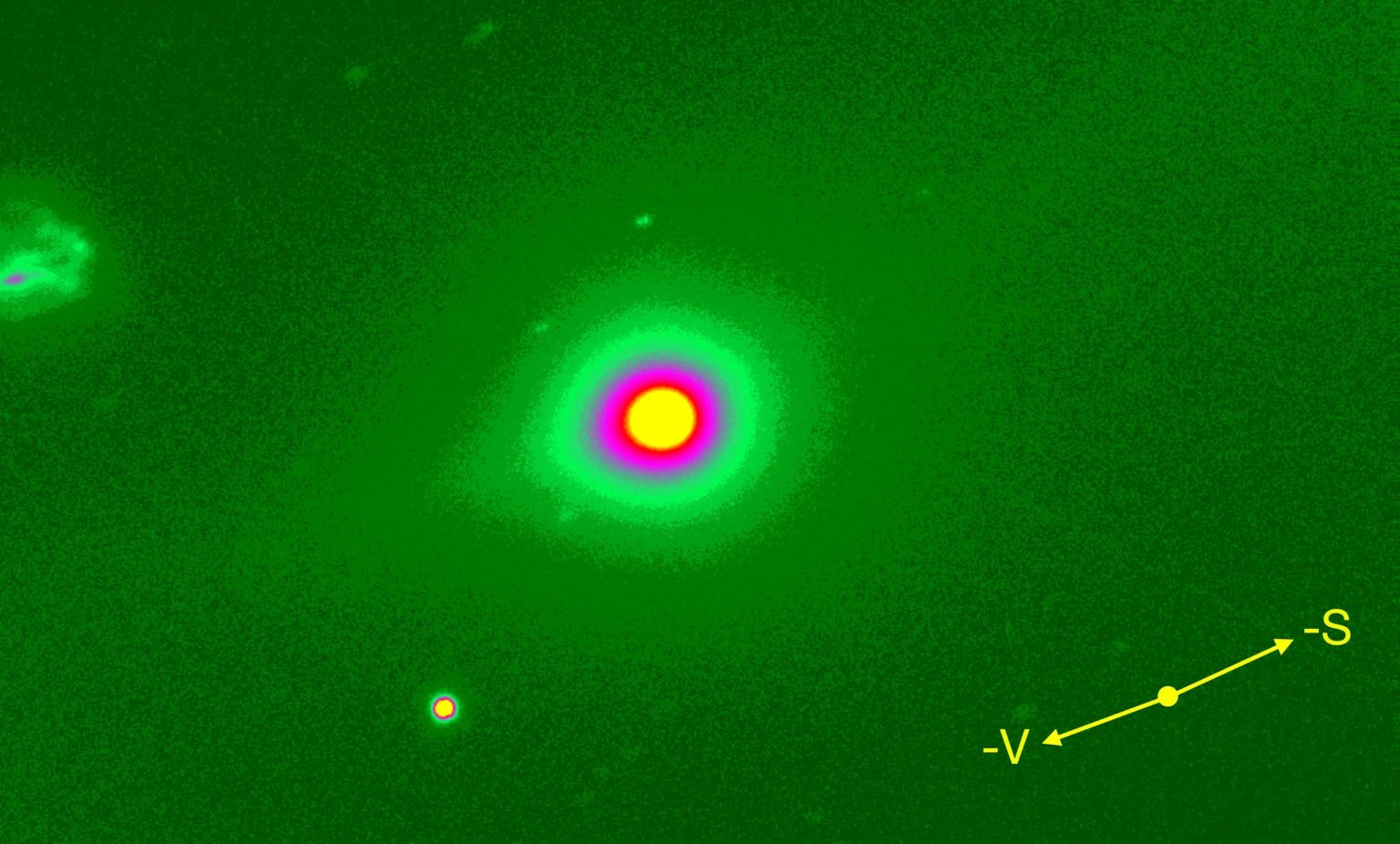
The biggest surprise was that 3I/ATLAS successfully survived its closest approach to the Sun (perihelion) without breaking up. This contradicted some predictions. New images from the Northern Optical Telescope in the Canary Islands clearly show an intact core with no signs of destruction. However, it was what happened next that sparked scientific debate.
Mysterious “anti-tail” and the alien theory
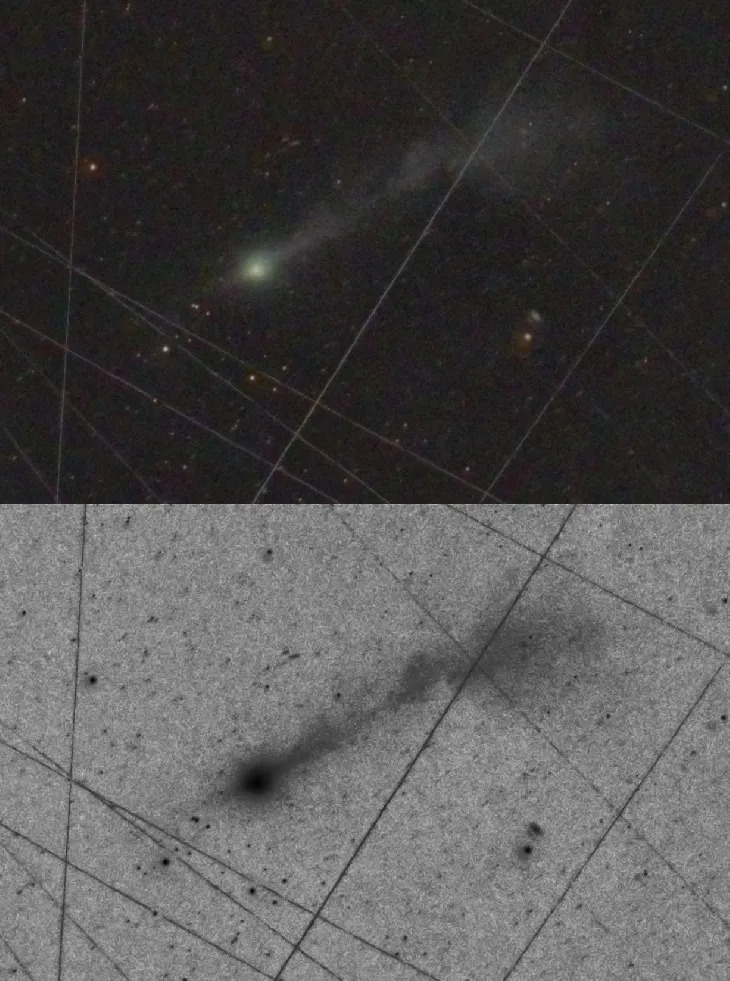
The photographs clearly show an unusual formation known as an “antitail.” This is a cluster of dust jets directed not away from the Sun, as is usually the case, but directly toward it. Most scientists believe that these are simply larger dust particles that are less affected by solar radiation.
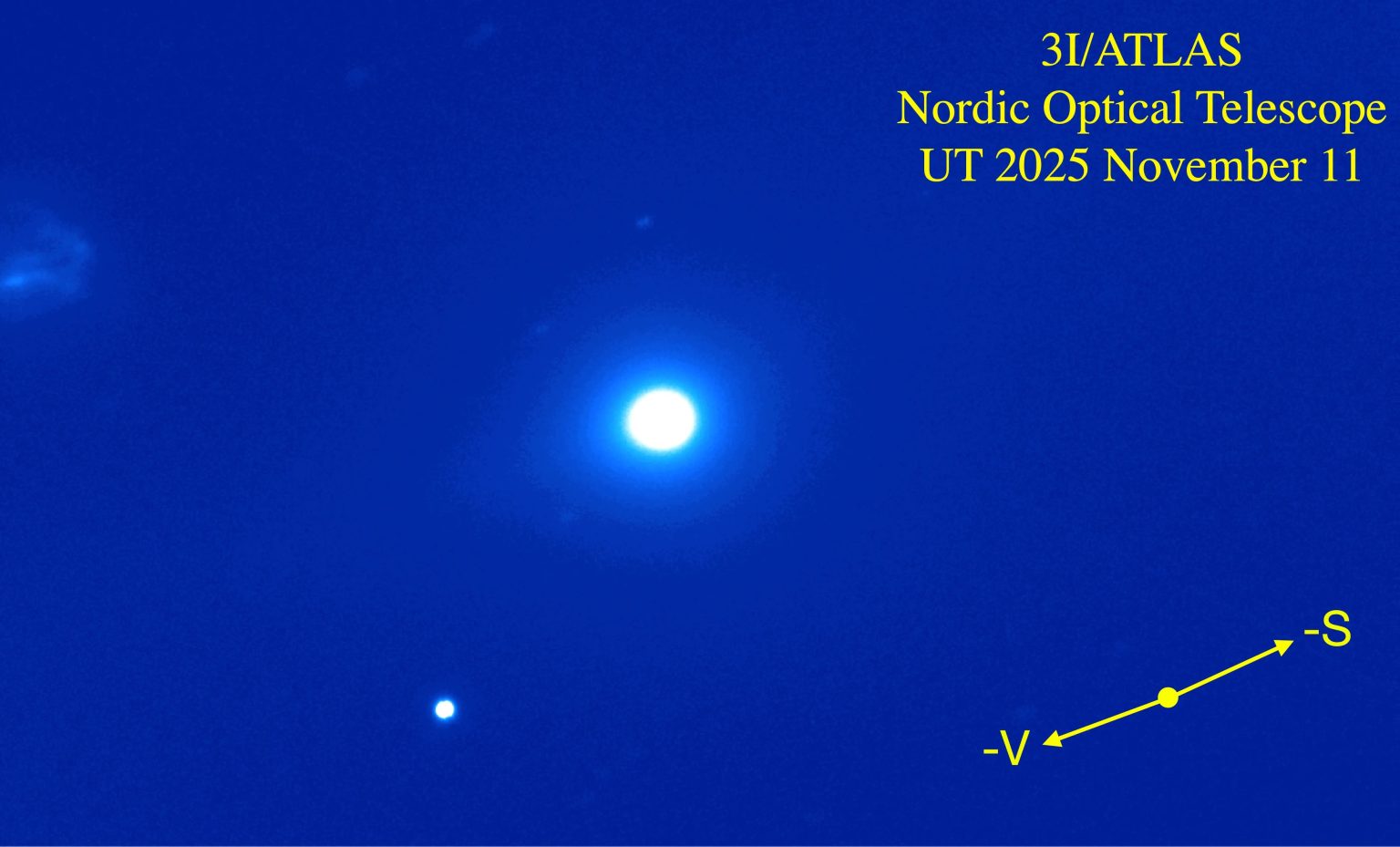
However, a well-known astrophysicist from Harvard, Avi Loeb, has proposed another, sensational version. In an interview with NBC News, he suggested that what we can observe is not a comet, but a technological spacecraft. According to him, these jets could be exhaust from alien engines that are accelerating the craft for a quick departure from our system.
“This maneuver could be used by a spacecraft seeking to gain speed,” explains the scientist.
Scientific skepticism or openness to the impossible?
Most of the scientific community is highly skeptical of Loeb’s theory. Astronomer Jason Wright of the University of Pennsylvania points out that similar “anti-tails” have been observed in comets before, such as the famous Kohoutek comet in 1973.
Professor Loeb, however, is not giving up. He notes that the estimated mass of the object is significantly greater than previously thought, which may indicate that it is artificial in nature.
“Alien engines could use higher exhaust velocities, reducing the amount of fuel needed,” he argues.
Despite jokes about Christmas “gifts” from aliens, the scientist calls for curiosity and humility. He insists that science should explore all possible hypotheses.
The answer to the main question—who this space traveler really is—will be revealed soon. There are only weeks left until its closest approach to Earth, and new observations may shed light on the final mystery of 3I/ATLAS.
Earlier, we shared some interesting facts about the interstellar comet 3I/ATLAS.
According to avi-loeb.medium.com

