

Mars is the most studied planet in the Solar System after Earth. Right now, there are six spacecraft belonging to four different space agencies operating in its orbit. They are accompanied by two rovers and a drone that has been repurposed as an autonomous weather station. We will tell you about these spacecraft, their main tasks, and discoveries.
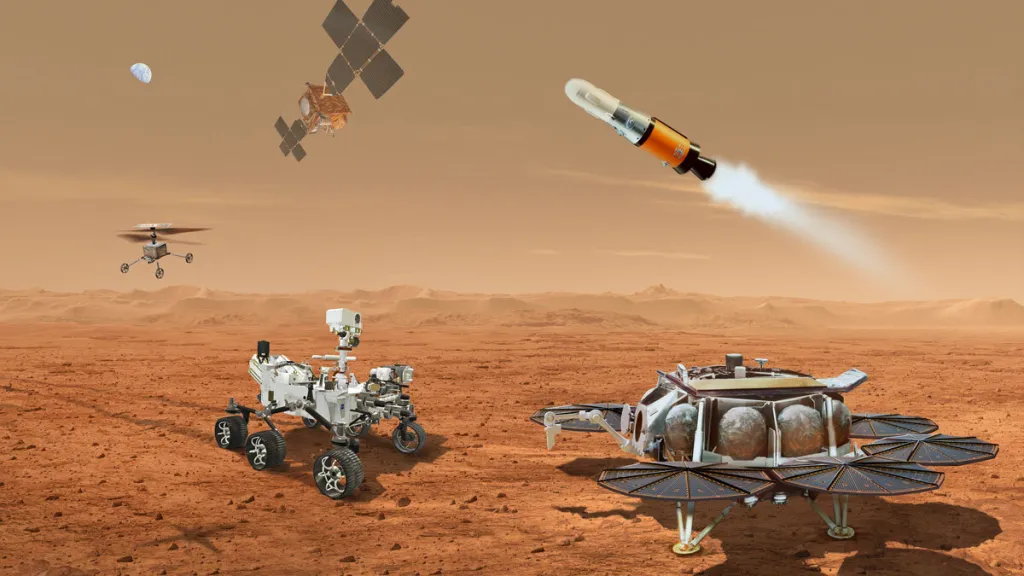
NASA’s Martian armada
Of all the space agencies, NASA has the largest Martian armada. It consists of three orbital and three ground-based vehicles.
The oldest of these is Mars Odyssey, launched back in 2001 (hence its name, which was given in honor of “2001: A Space Odyssey”). It is the longest-running Martian spacecraft in history, and of all interplanetary missions, it is second only to the legendary Voyager probes in this respect.
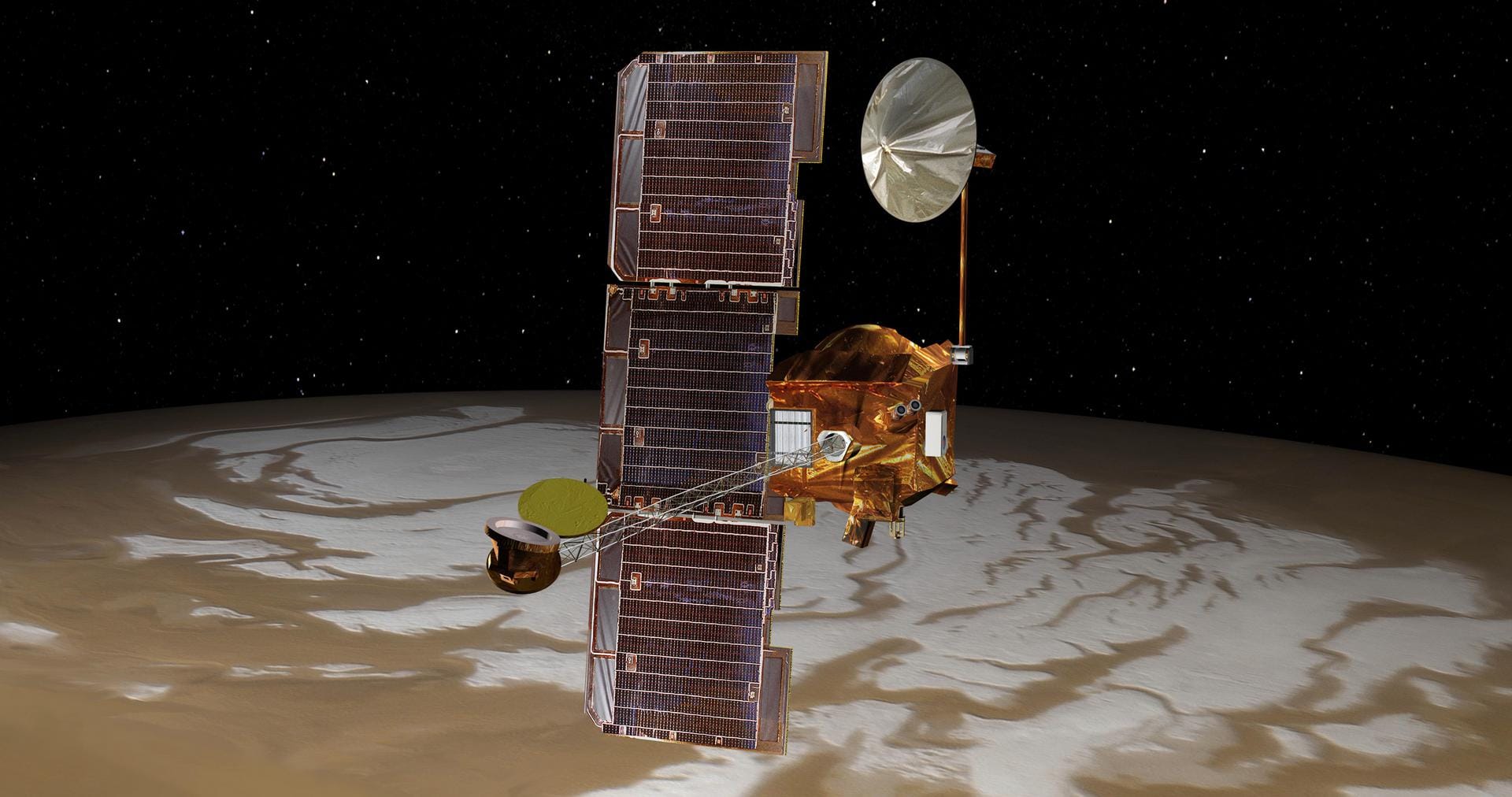
The main objective of the Mars Odyssey was to map the surface of Mars. Over the years, the spacecraft took nearly 1.5 million images of the Red Planet in the visible and infrared ranges, compiling a global map. This map was later used to select landing sites for subsequent Mars missions. Mars Odyssey also discovered large reserves of water ice beneath the surface of the Red Planet, collected data on the radiation environment in its vicinity, studied seasonal changes in the polar caps, and photographed Phobos.
Of course, such a long stay in space could not fail to affect the technical condition of the Mars Odyssey. One of its main scientific instruments has failed, and its fuel reserves are almost exhausted. According to engineers’ estimates, they will last until the end of this year or the beginning of next year. However, Mars Odyssey may cease operations earlier if NASA’s 2026 budget proposal, which calls for the early termination of the mission, is approved.
The Mars Reconnaissance Orbiter (MRO) is probably one of the most famous Mars explorers in history. It has been orbiting Mars since 2006. During this time, it has transmitted over 400 terabytes of data to Earth, including millions of images of the planet’s surface.
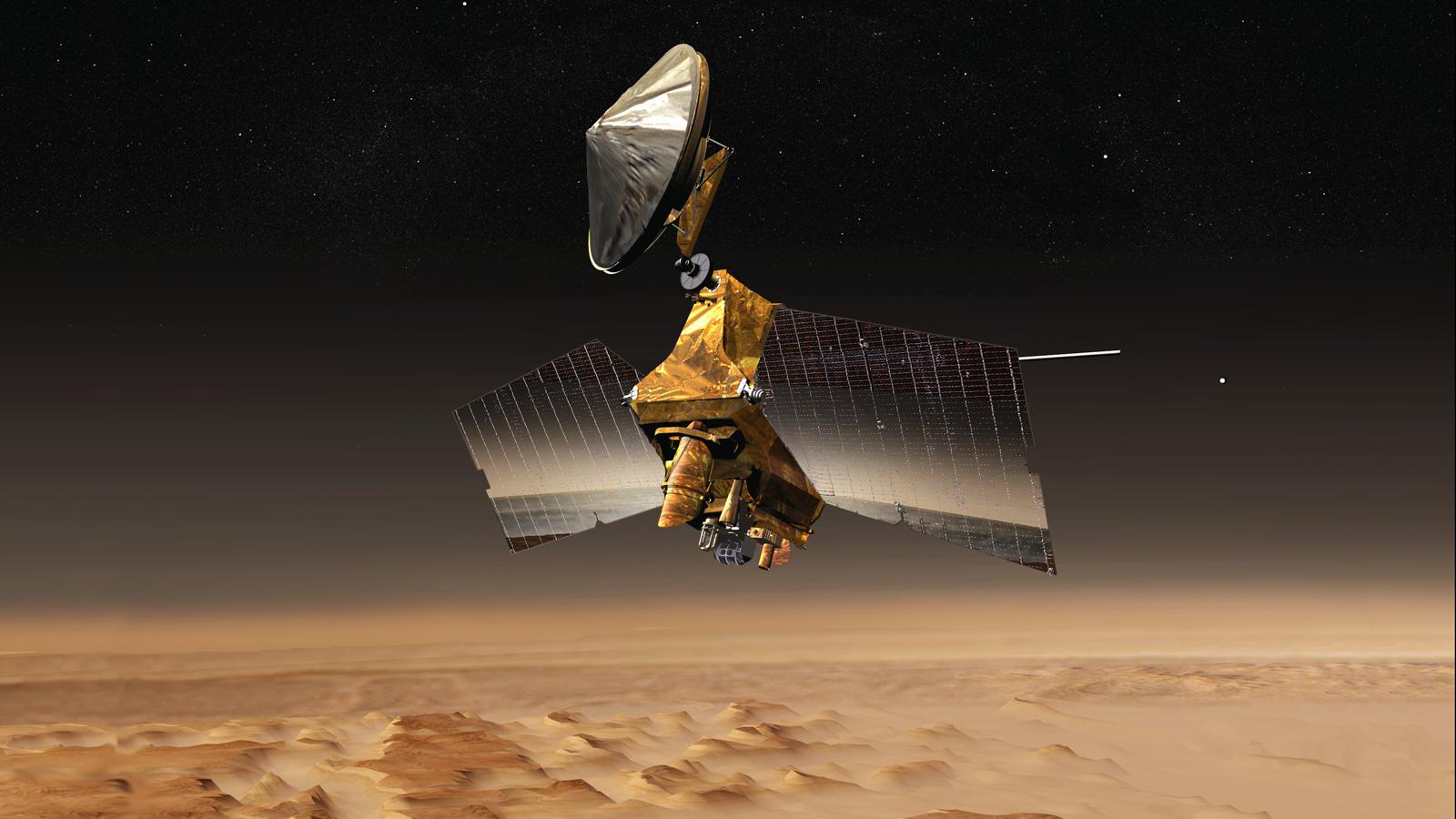
The MRO data has significantly expanded our knowledge of Mars. It has compiled the most detailed map of the Red Planet’s surface and discovered many geological formations that have provided insight into its past. Its data has been and continues to be used to search for landing sites for Mars expeditions. It is also actively used as a space “detective.” MRO images have revealed the mystery of the disappearance of the Beagle 2 probe and the fate of the Schiaparelli landing platform. In addition, it regularly photographs new craters formed on Mars as a result of asteroid impacts.
Finally, MRO plays a key role in maintaining communication with NASA’s Mars rovers, relaying their data back to Earth. It will likely continue to do so for a long time to come. According to the latest estimates, MRO has enough fuel reserves to continue operating until the middle of the next decade.
The MAVEN spacecraft is NASA’s newest Mars explorer. It was launched in 2013. MAVEN is used to study the Martian atmosphere. Over the years, it has measured the rate at which the atmosphere is leaking into space. MAVEN has also studied its interaction with the solar wind, the tail of comet C/2013 A1, and measured radiation levels in the vicinity of Mars. Like MRO, MAVEN also plays a very important role in communicating with Mars rovers, relaying their data back to Earth.
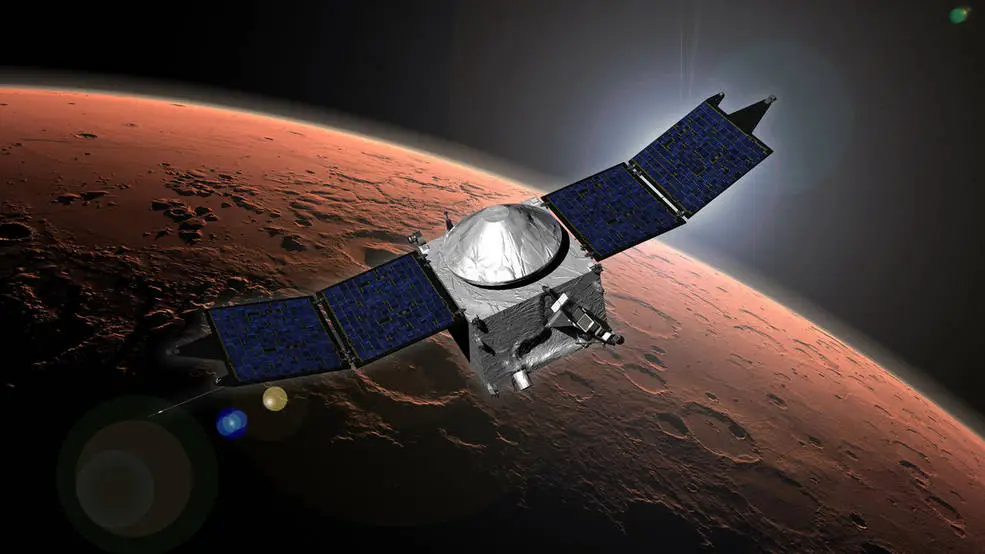
Like Mars Odyssey, MAVEN is now under threat of cancellation due to the White House’s proposed new NASA budget. But space enthusiasts hope that the mission can be saved. Its premature closure would deal a significant blow to American plans for Mars exploration.
Mars rovers and a drone that became a weather station
In addition to three orbital spacecraft, NASA also has two rovers operating on the surface of the Red Planet. The first is Curiosity, which landed at the end of 2012. The rover is conducting research in Gale Crater, at the bottom of which there was once a lake.
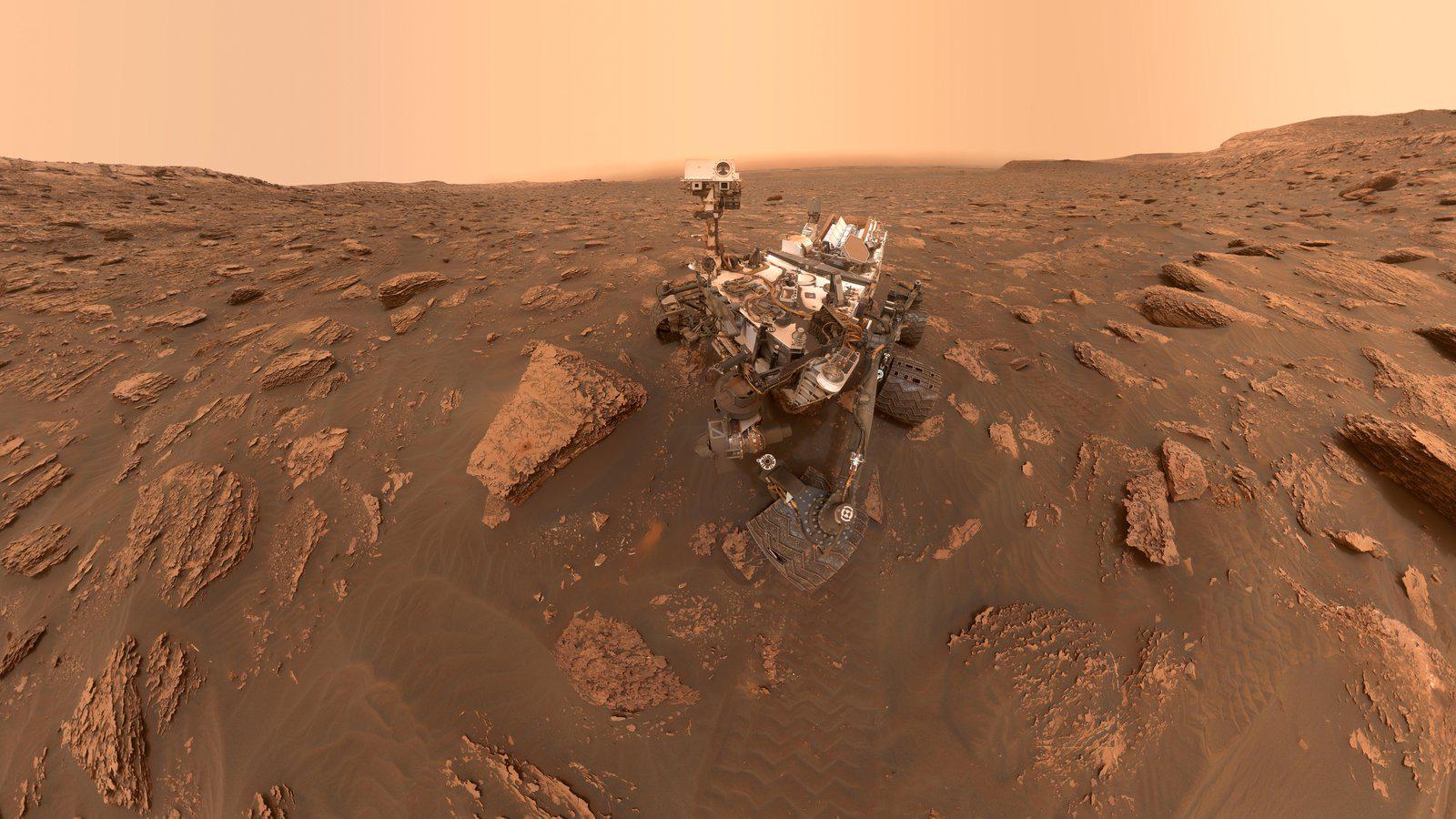
During its mission, Curiosity has traveled over 35 km. This has affected its condition. Some of the rover’s wheels have developed holes, and its radioisotope thermoelectric generator now produces much less energy than it did during landing. Nevertheless, the rover is still successfully performing its tasks, and NASA hopes that it will continue to operate for many years to come.
The Perseverance rover, which landed in February 2021, was based on Curiosity but has a set of more advanced scientific instruments. These have enabled it to make a number of high-profile discoveries, including the recent discovery of biosignatures. The rover is also collecting soil samples, which may be delivered to Earth in the future by a special mission.
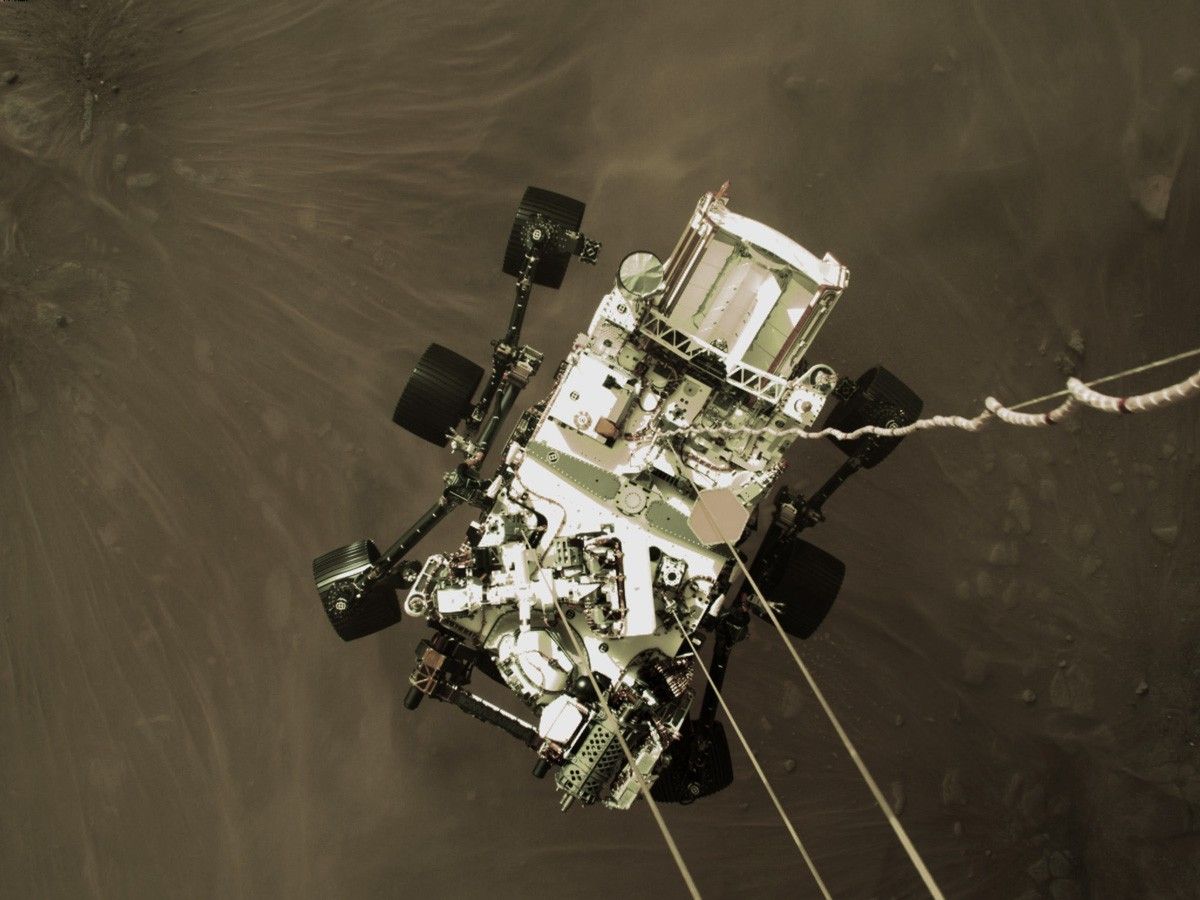
Perseverance landed on Mars together with the Ingenuity helicopter drone. In 2024, it crashed and lost its ability to fly. After that, engineers switched it to autonomous weather station mode. It is assumed that it wakes up every day, takes pictures of the surface, and collects temperature data. Whether this is true or not is impossible to verify at this time: Perseverance has moved too far away from the drone to maintain communication with it. However, NASA engineers believe that Ingenuity will be able to operate in this mode for about 20 years.
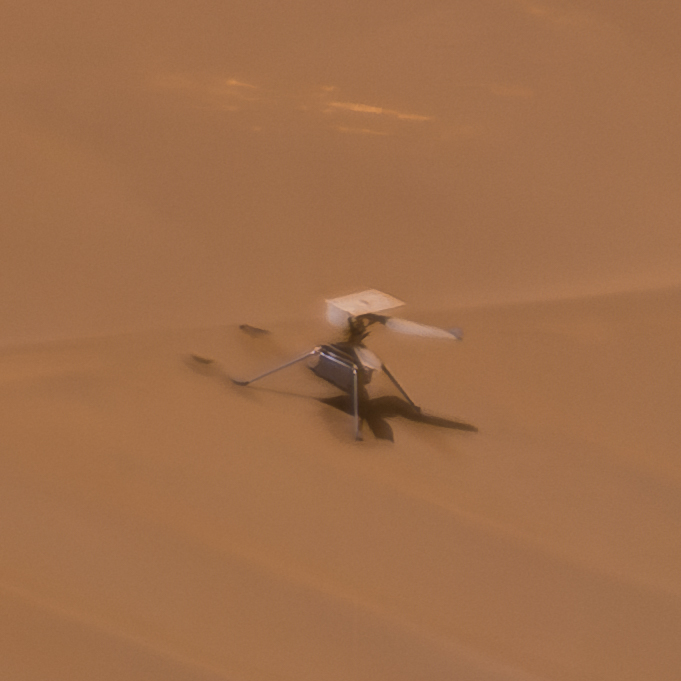
Source: NASA/JPL-Caltech/LANL/CNES/IRAP/Simeon Schmauß
In the future, the drone may be selected for a specific mission. The data stored inside it will not only benefit developers of Martian technology but will also allow scientists to gain a long-term understanding of Martian weather conditions and dust movement.
European Mars researchers
The European Space Agency boasts two spacecraft operating in Martian orbit. The first is Mars Express, which was launched back in 2003 and is second only to Mars Odysseus in terms of service life.
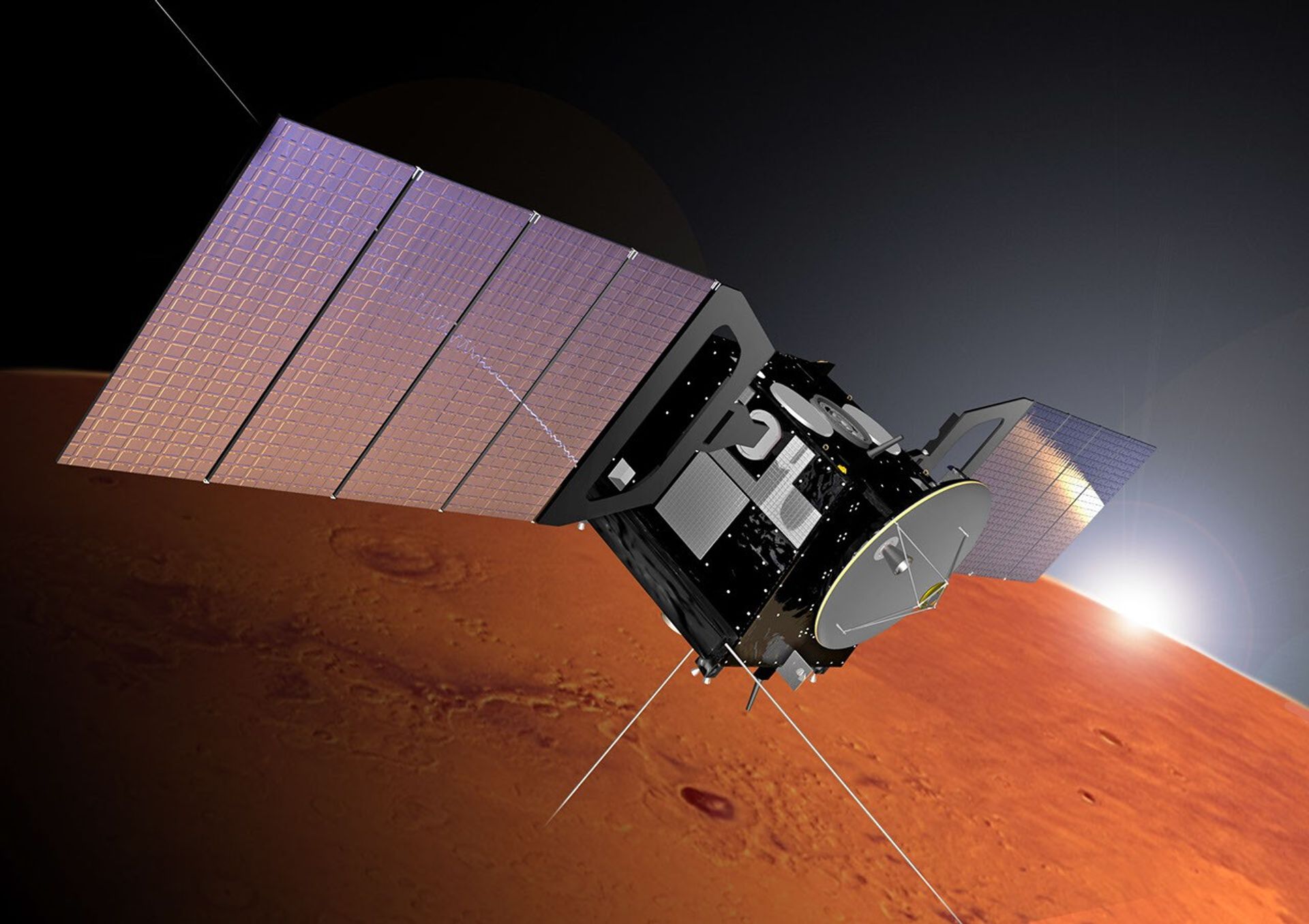
Despite its considerable age, Mars Express continues to delight us regularly with various discoveries. Many of these have been made possible by the radar on board. Analysis of its data, in particular, has revealed signs of liquid water in the planet’s interior. Mars Express also photographed the famous “Face on Mars” in high resolution. To the disappointment of all ufologists, it turned out to be not an alien artifact, but merely a rock formation.
The TGO spacecraft has been orbiting Mars since 2016. Its main task is to study the planet’s atmosphere and search for rare compounds that indicate the possibility of life. The spacecraft has also compiled a global map that allows scientists to estimate the percentage of water ice in the subsurface layers of Mars.
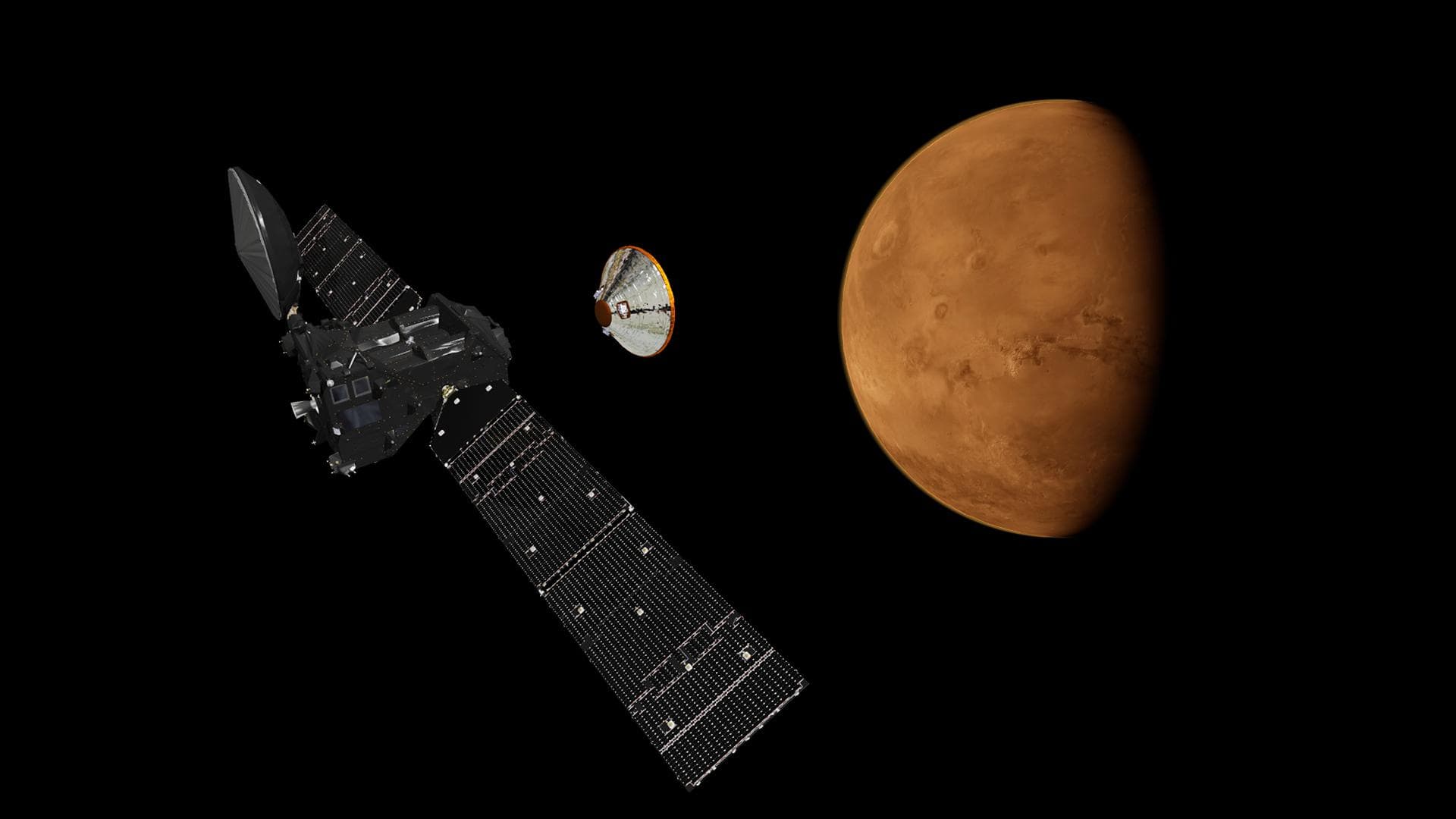
Initially, it was assumed that TGO would work in tandem with the Rosalind Franklin rover. However, due to Russia’s full-scale invasion of Ukraine and the breakdown of cooperation between ESA and Roscosmos, the latter remained on Earth. The rover may be launched in 2028, but this date is still subject to change.
New Mars explorers
NASA and ESA are the “old hands” in the study of Mars. However, in recent years, they have faced competition from new space powers that have launched their own Mars missions. One of them is the UAE. In 2020, it sent the first Arab interplanetary mission in history to Mars, called Emirates Mars Mission.
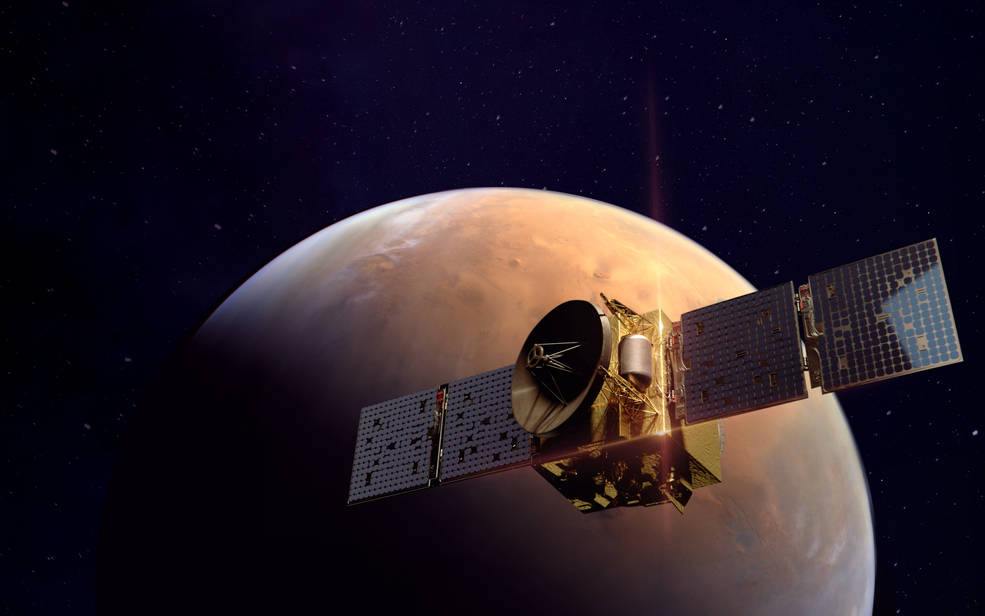
The key scientific goal of this mission is to create a complete picture of the Martian atmosphere. The spacecraft will study how the weather changes throughout the local day and year, investigate meteorological events in the lower atmosphere, such as dust storms, and observe the climate in different geographical regions of Mars. Based on images from the Emirates Mars Mission, scientists have also created a three-dimensional map of the planet’s surface.
The Chinese Tianwen-1 mission was also launched in 2020. It was the first step in China’s ambitious program to conquer the Red Planet. The main task of the spacecraft is to conduct a global survey of Mars, including mapping the morphology and geological structure of the planet, studying the characteristics of the surface layer and the distribution of water ice in it, analyzing the composition of surface materials, measuring the parameters of the planet’s ionosphere, electromagnetic and gravitational fields, and obtaining information about the climate of Mars.
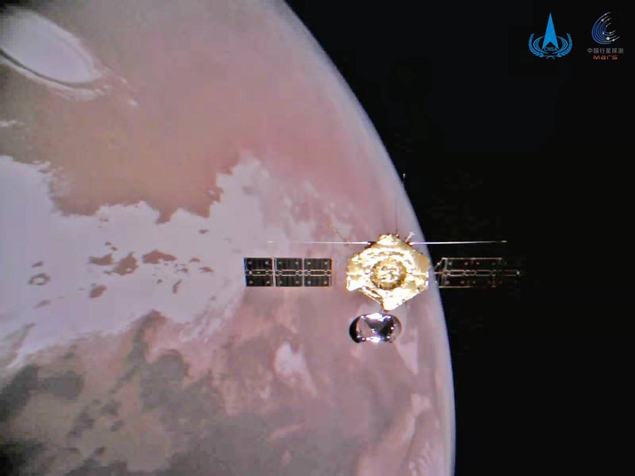
The tasks assigned to Tianwen-1 appear to be quite ambitious. However, this is only a prelude to the much more complex and costly Tianwen-3 mission. As part of this mission, China plans to bring samples of Martian soil to Earth for the first time in history. At present, the launch of Tianwen-3 is scheduled for 2028.

