

At first glance, this eerie photo resembles the weathered ruins of an ancient cathedral that sank beneath the water after a major disaster, or perhaps a flying saucer at the bottom of the ocean. However, the reality is much more interesting. The photo published by NASA shows the charred heat shield of the Orion capsule from the Artemis II mission. This image was taken by U.S. Navy divers in the Pacific Ocean immediately after the vehicle successfully landed on the water on April 11.
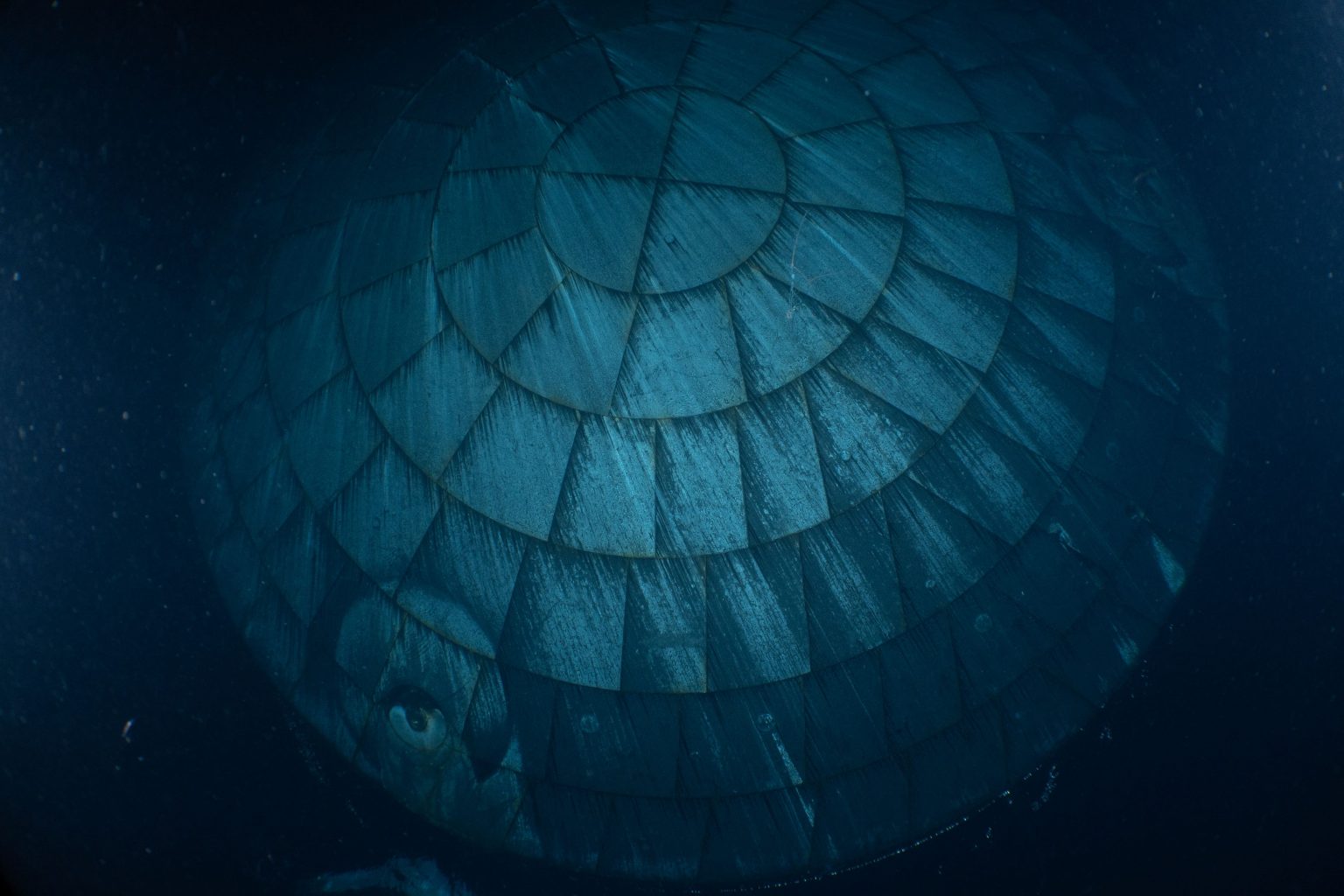
This object is not just a piece of charred metal and ceramic. It is a critical safety component on which the lives of four astronauts depended during their return from a lunar flyby. Upon its return, the used shield became the focus of the scientists’ attention, as it was supposed to provide the answer to the question: Is humanity ready for a safe return to the Moon’s surface?
Plasma testing
A spacecraft’s reentry into Earth’s atmosphere is one of the most dangerous stages of any mission. When Orion plunges into the dense layers of the atmosphere to slow down, it is traveling at a speed of over 37,000 km/h. At that speed, friction with the atmosphere converts kinetic energy into immense heat. The temperature around the capsule reaches thousands of degrees Celsius, turning the air into superheated plasma.
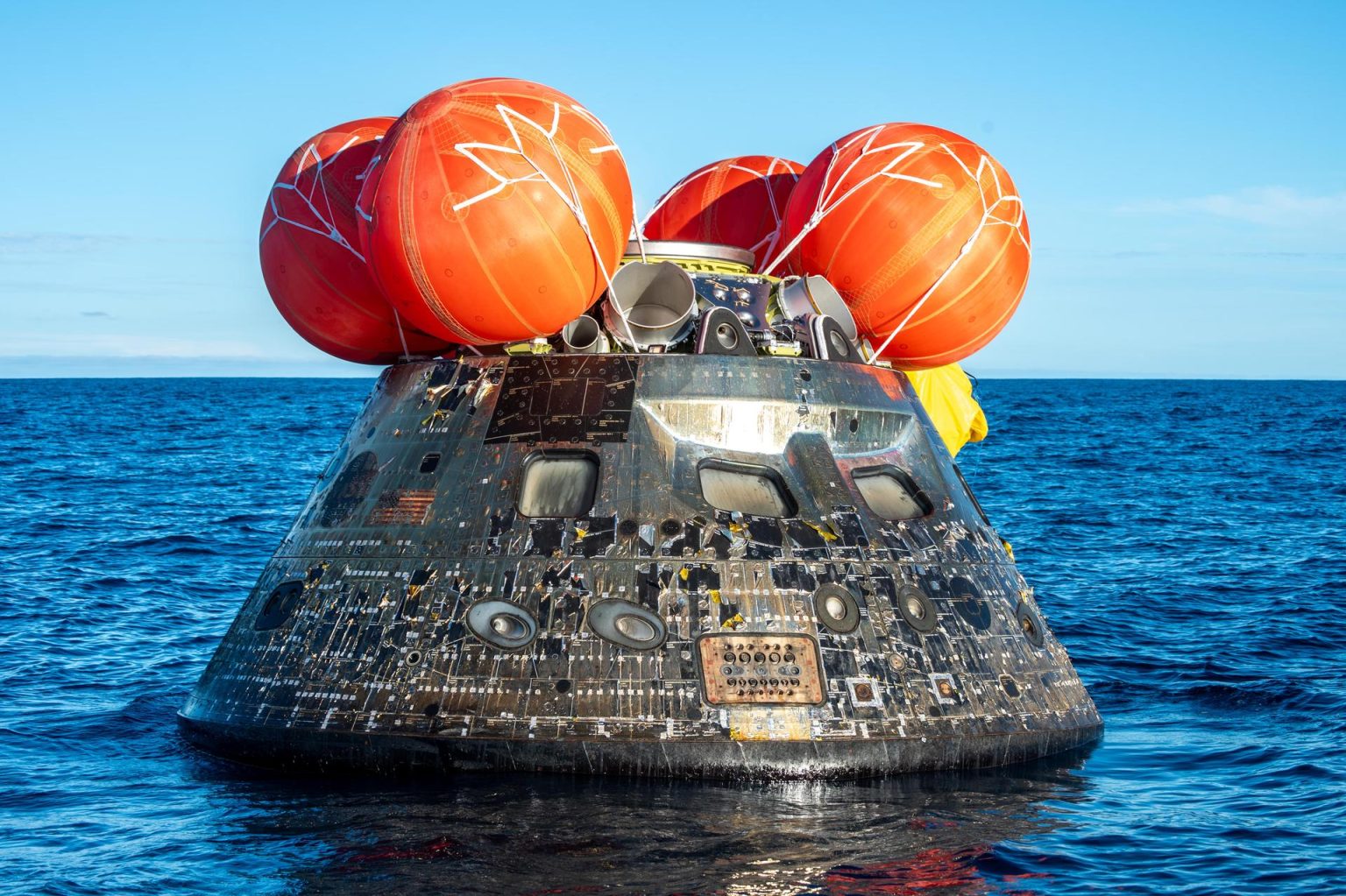
The Orion heat shield, covered with special AVCOAT tiles, is specifically designed to absorb this impact. Its purpose is to gradually char and shed its outer layers, absorbing excess heat and preventing it from penetrating the interior of the living module. Any critical crack or abnormal damage to the shield could have catastrophic consequences for the crew.
Lessons from Artemis I
The issue of the shield’s reliability became particularly pressing following the completion of the Artemis I uncrewed mission in 2022. The engineers then discovered unexpected damage: large chunks of the charred coating were breaking off, and deep cracks had formed on the surface. This sparked a heated debate in scientific circles, since the heat shield for the Artemis II mission was manufactured using the same technology.
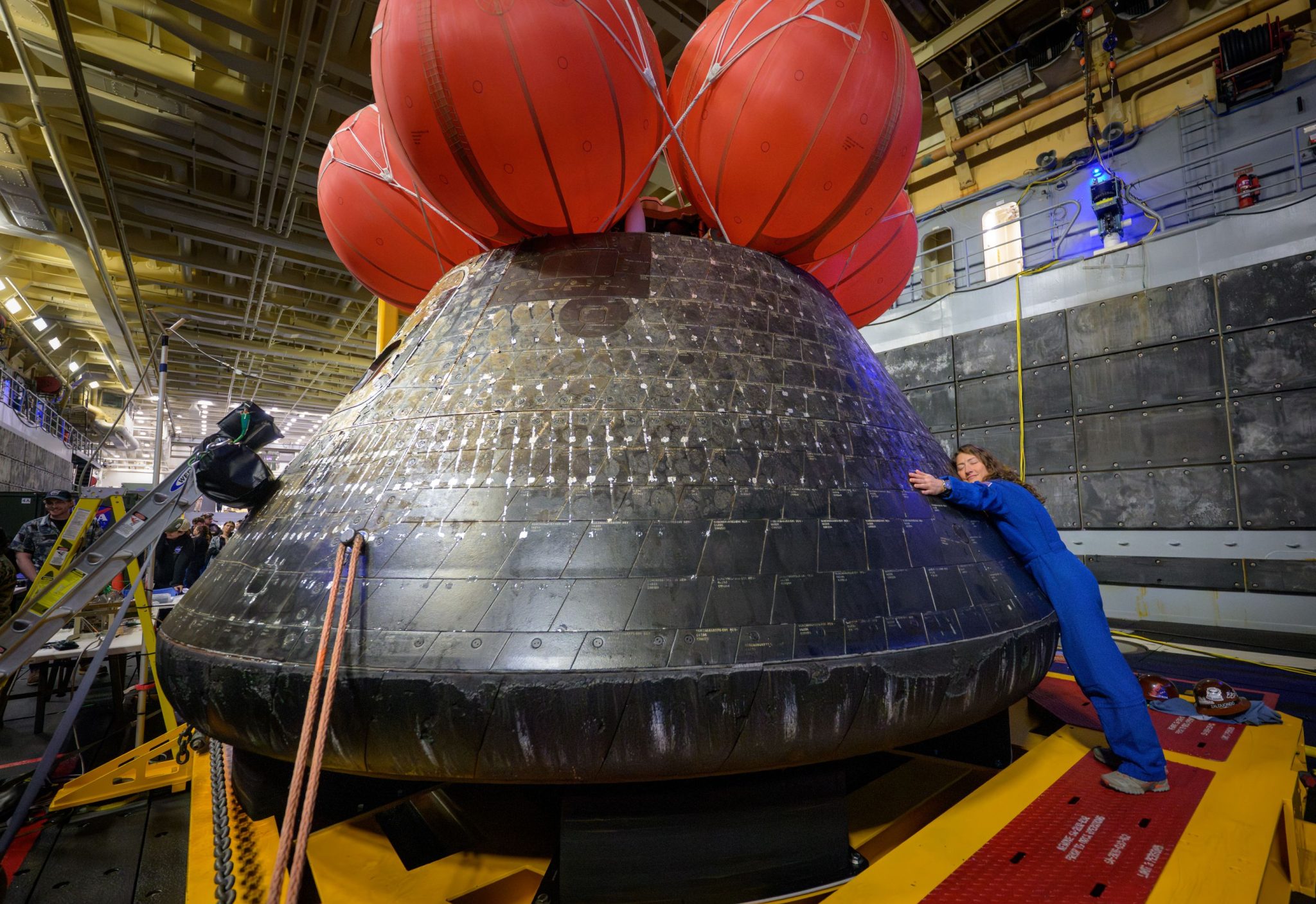
Experts had warned of the risks. However, NASA found a solution: adjusting the re-entry trajectory. A “skip entry” maneuver was employed, which allows the capsule to first “bounce” off the upper layers of the atmosphere, reducing its speed and thermal load, before finally entering the atmosphere for descent. A preliminary visual analysis showed that this strategy proved to be extremely successful.
Verdict of NASA engineers
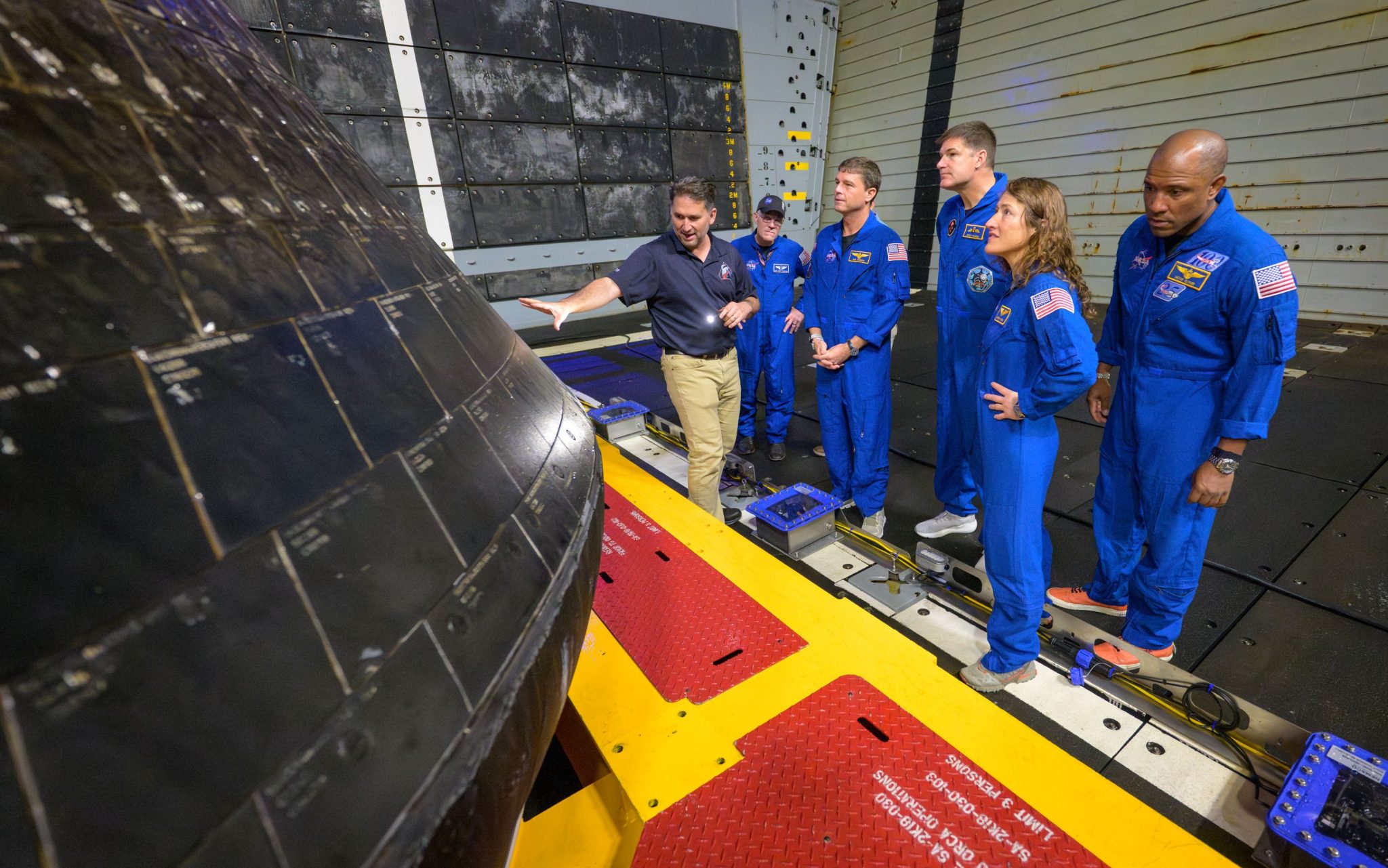
According to an official statement from the space agency, the crew and the spacecraft were safely protected throughout the maneuver. Initial inspections conducted directly on the rescue vessel indicate that the system functioned as intended.
“We did not detect any unusual conditions or critical anomalies,” NASA noted. “Images taken by divers and a subsequent inspection confirmed that the charring damage we observed during Artemis I was significantly less this time—both in terms of the number of flakes and their size.”
Interestingly, even the special reflective tape used to regulate the spacecraft’s temperature in open space withstood the extreme temperatures in many areas, which came as a pleasant surprise to the developers.
Unexpected challenges
Despite the success of the heat shield, the ten-day journey around the Moon was not without unfortunate incidents. NASA has confirmed that the life support system—specifically the space toilet—will undergo a thorough inspection. During the flight, the astronauts encountered a problem when, due to low temperatures, liquid waste froze and clogged the drain pipe, effectively rendering the toilet inoperable. Engineers promise to make design adjustments for the next mission—Artemis III—which is set to mark humanity’s historic return to the Moon’s surface.
The success of Artemis II gives the green light for preparations for the Artemis IV mission, scheduled for 2028, whose primary objective will be to land astronauts at the moon’s south pole.
We previously reported on how the Artemis II commander came to the defense of a broken toilet.
According to NASA

