

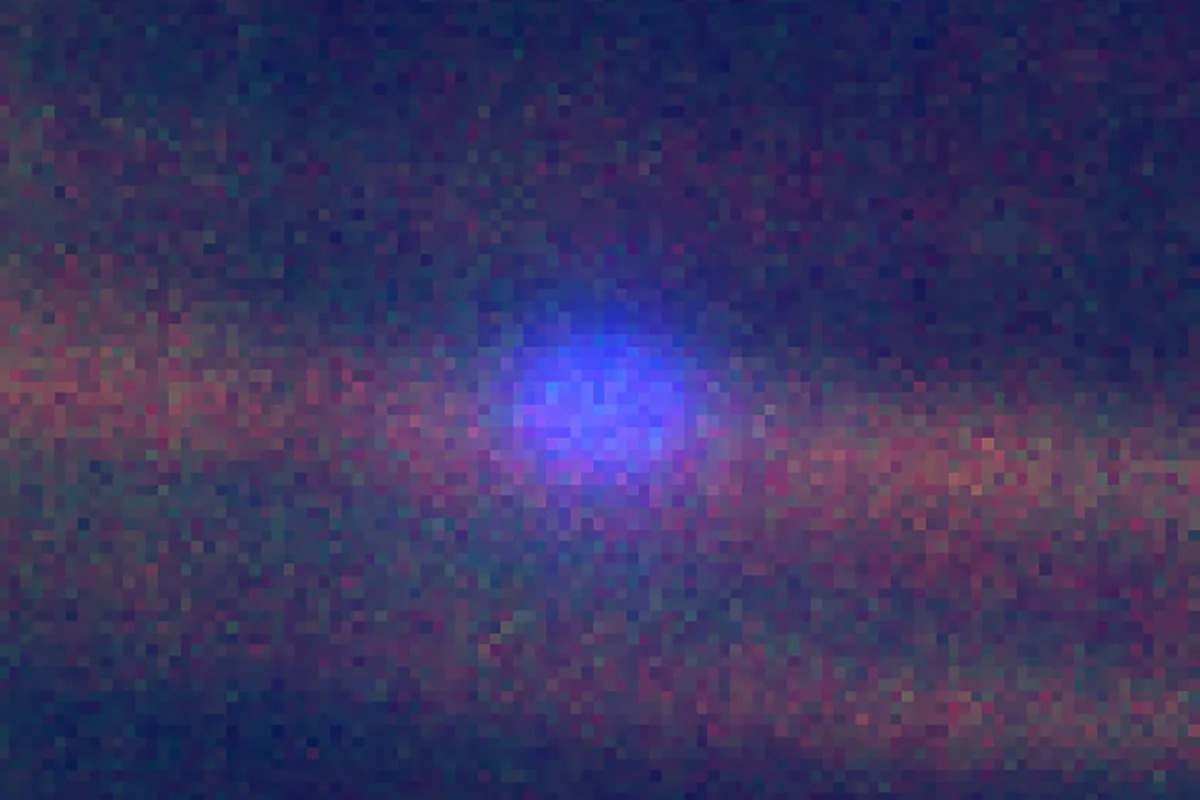
NASA has released a unique photograph of the interstellar comet 3I/ATLAS, taken by the Europa Clipper spacecraft, which is currently heading towards Jupiter. This accidental but incredibly valuable scientific photo was made possible by the fact that the probe’s instruments are already activated.
Comet 3I/ATLAS is a real sensation. It was first spotted on July 1, 2025, and it is radically different from anything we have ever seen before. It is not a resident of our Solar System. It arrived from interstellar space.
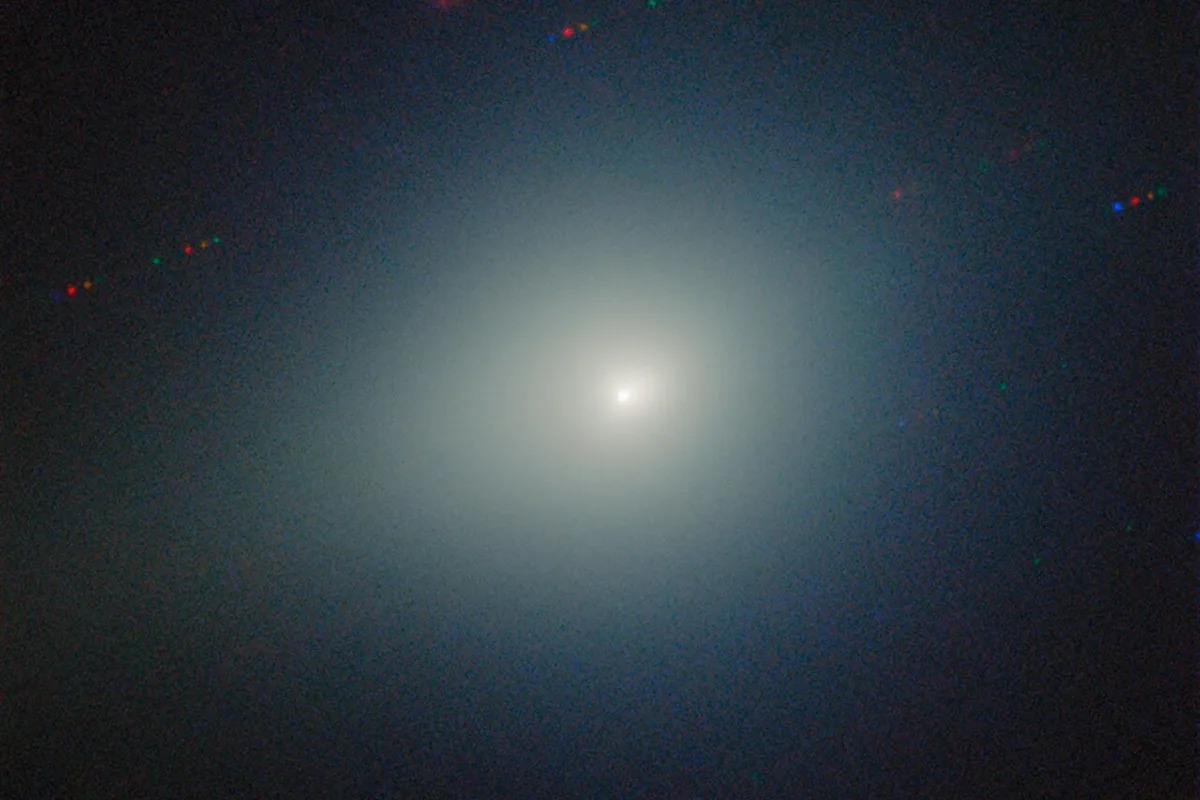
Scientists believe that this icy object has been traveling through space for about 7 billion years, making it older than the Sun. It is the oldest comet ever observed by humankind. It is now a temporary guest in our Solar System. Therefore, the world’s most powerful telescopes are trying to take advantage of this unique opportunity to study it before it disappears forever into the depths of the universe.
Chance encounter
Launched in October 2024, the Europa Clipper spacecraft is heading for Jupiter’s icy moon Europa, beneath whose surface a liquid ocean is believed to lurk. Its arrival is scheduled for 2030, but the instruments on board are already working.
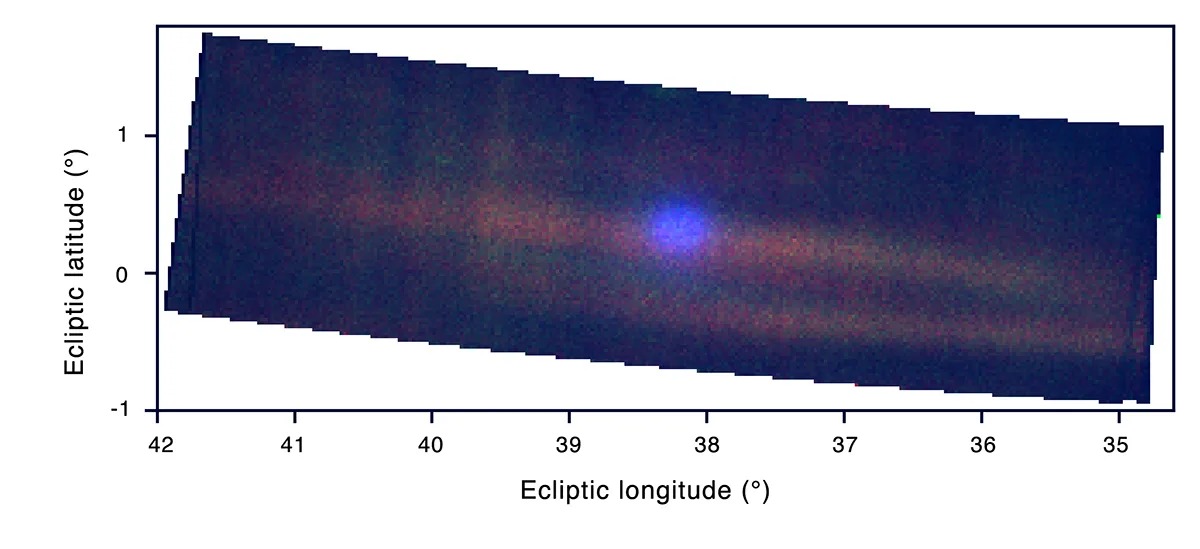
On November 6, 2025, the comet flew past the probe at a distance of 164 million km. This was a perfect opportunity. The Europa-UVS spectrograph spent seven hours collecting ultraviolet light reflected from the comet to reveal its chemical composition.
Scientific value
Comets are “dirty snowballs,” a mixture of ice, dust, and frozen gases. As they approach the Sun, they heat up, forming a glowing coma—a cloud of gas and dust around the nucleus.
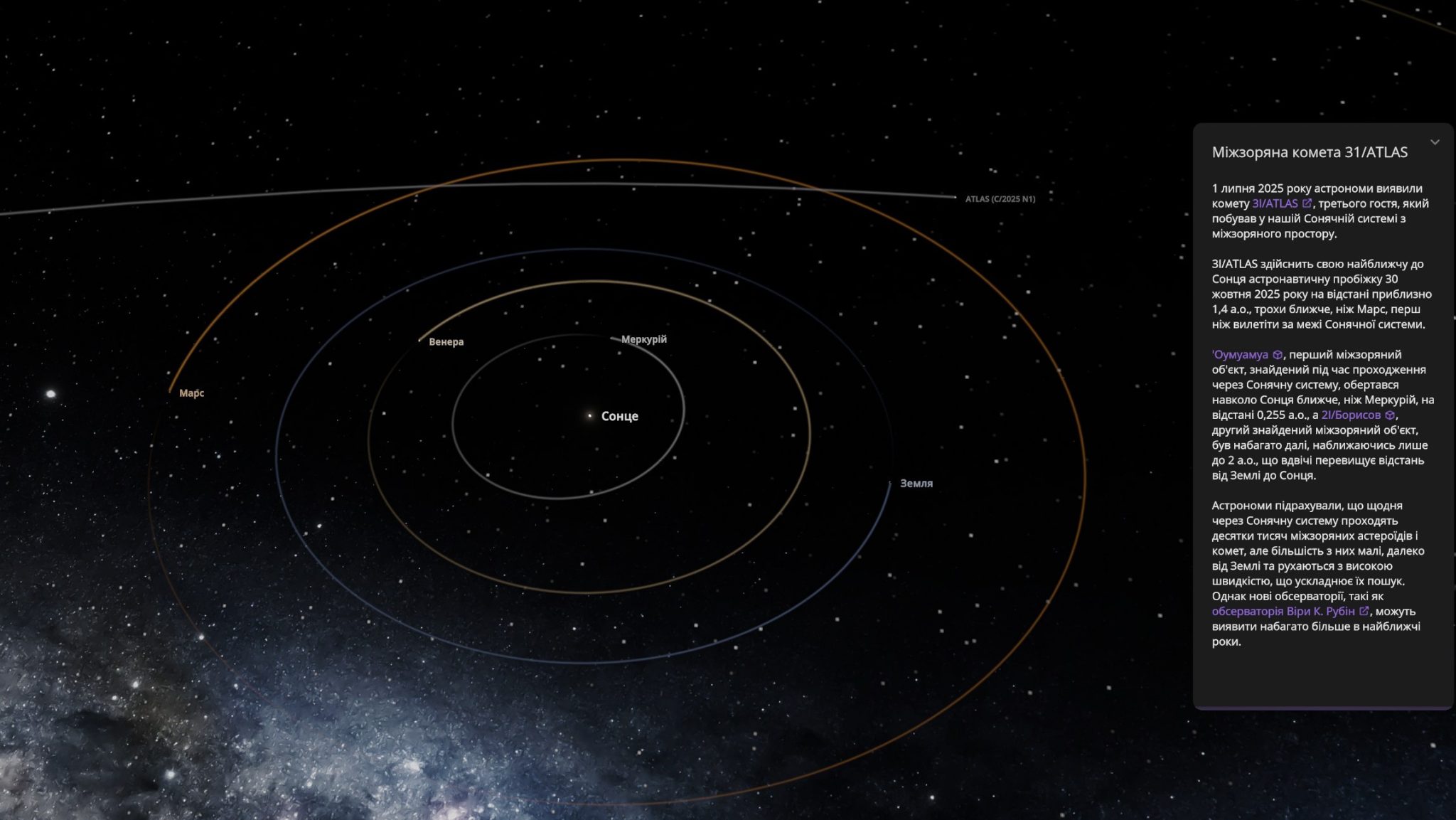
The Europa-UVS instrument breaks light down into a spectrum, allowing scientists to “read” the specific substances that make up the 3I/ATLAS coma. This provides insight into the original composition of matter in the other star system from which the comet originated.
Joint efforts in space science
This is not the first observation of an interstellar visitor by a spacecraft heading for Jupiter. Earlier, in December 2025, the European JUICE mission also took a picture of 3I/ATLAS.
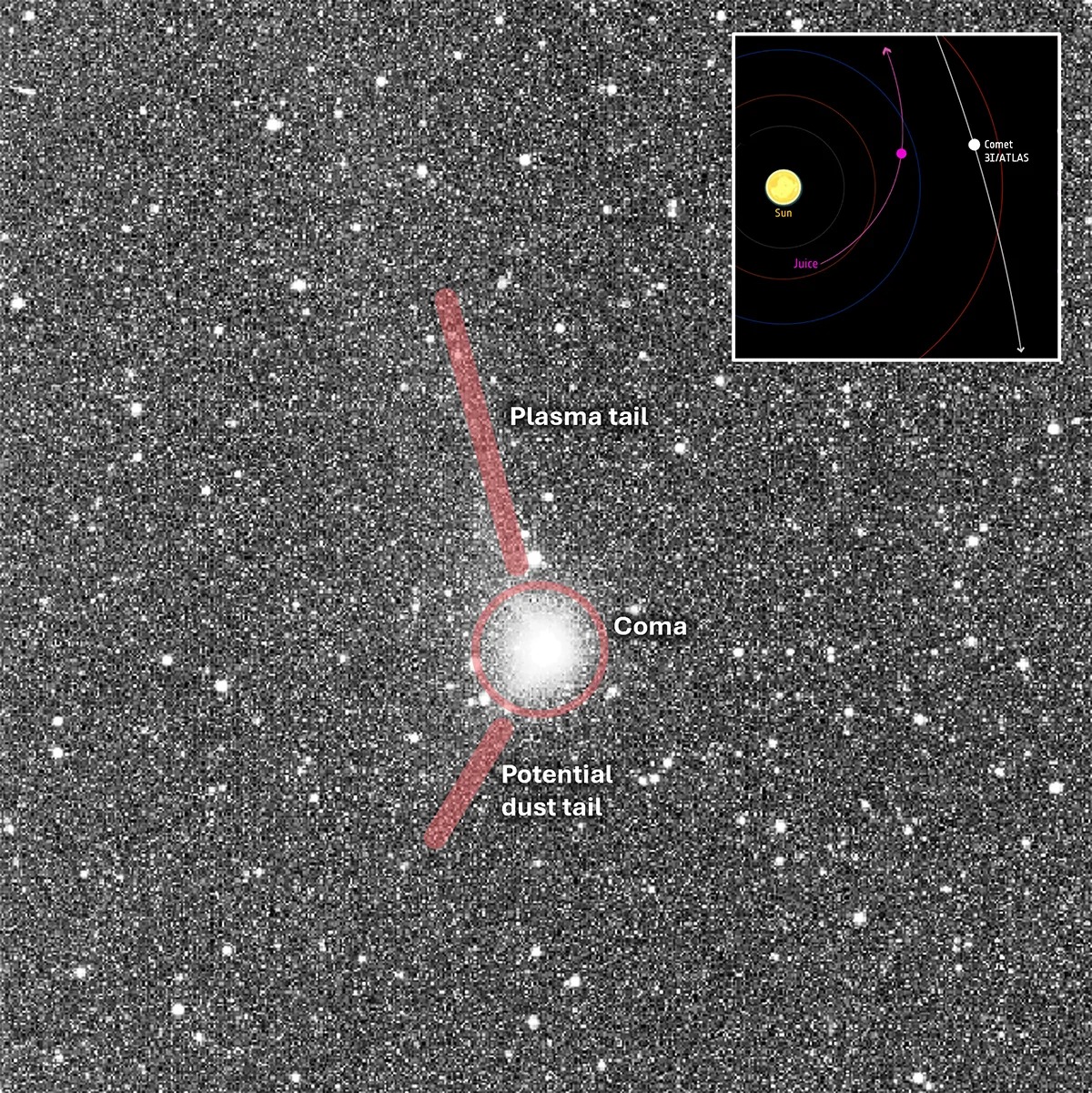
Although no one planned a special mission for this comet, the scientific community is skillfully using all available tools—both on Earth and in space. Each image is a piece of a puzzle that helps us better understand our place in the universe and the matter that makes it up.
According to skyatnightmagazine.com

