

Venus, our closest neighbor in space, holds many secrets. The planet’s surface is safely hidden from view beneath a dense, toxic, thick, and nearly impenetrable layer of clouds. But when the Akatsuki space probe, launched by the Japan Aerospace Exploration Agency in 2016, began actively studying this scorching world, it managed to capture something truly extraordinary.
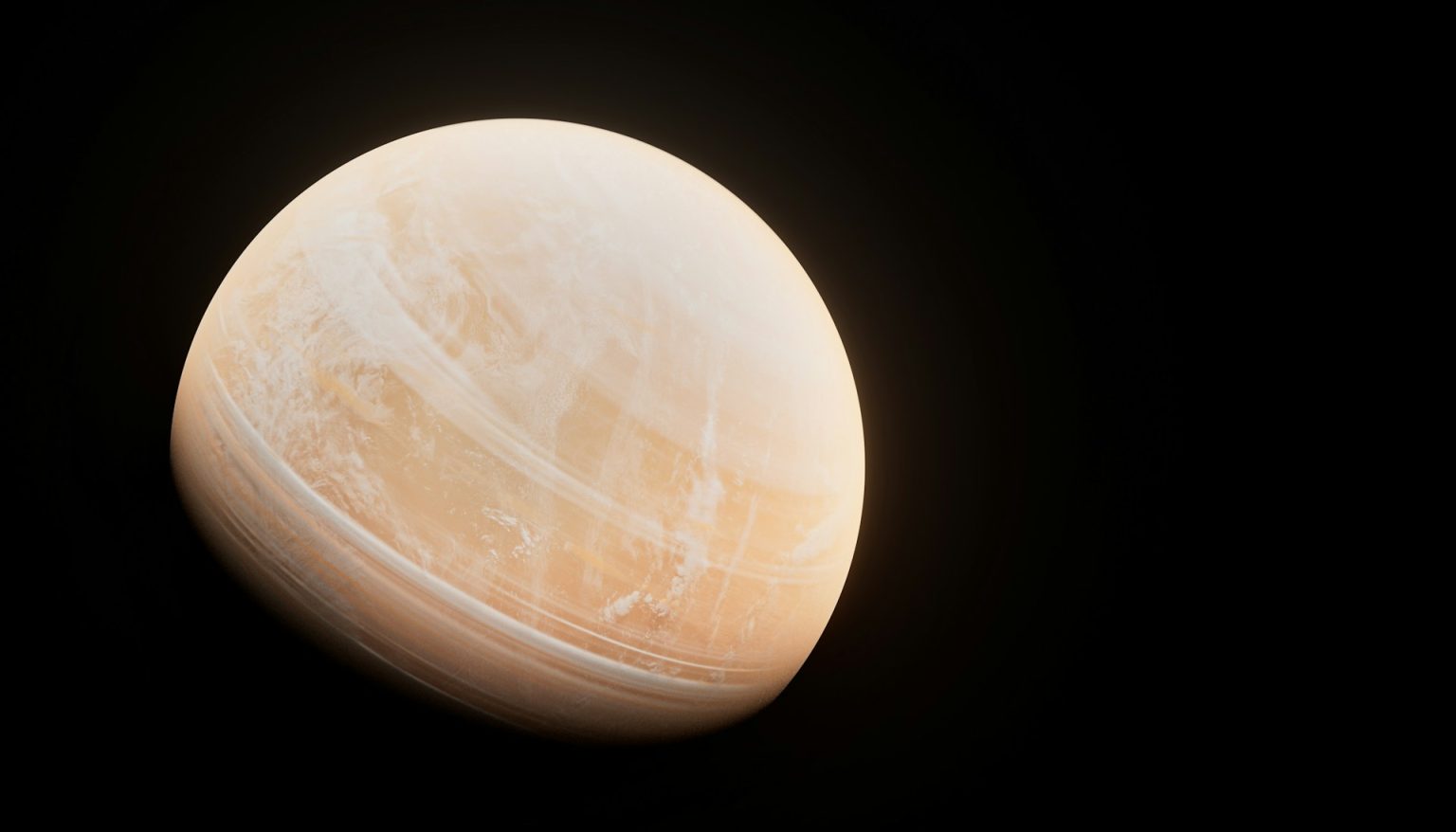
A colossal wave broke through the thick atmospheric veil concealing unfathomable alien landscapes. This atmospheric giant stretched an astonishing 6,000 km across and raged unceasingly for several days in a row. For a long time, the nature of this monstrous structure remained a complete mystery to astrophysicists.
Solution from the University of Tokyo
The answer to this complex question has only just emerged. In a new study, the results of which were published in the prestigious scientific journal Journal of Geophysical Research: Planets, a team of scientists led by researchers from the University of Tokyo offered a convincing explanation. The scientists hypothesized that this gigantic atmospheric formation was generated by intense turbulence in the lowest layer of Venus’s clouds.
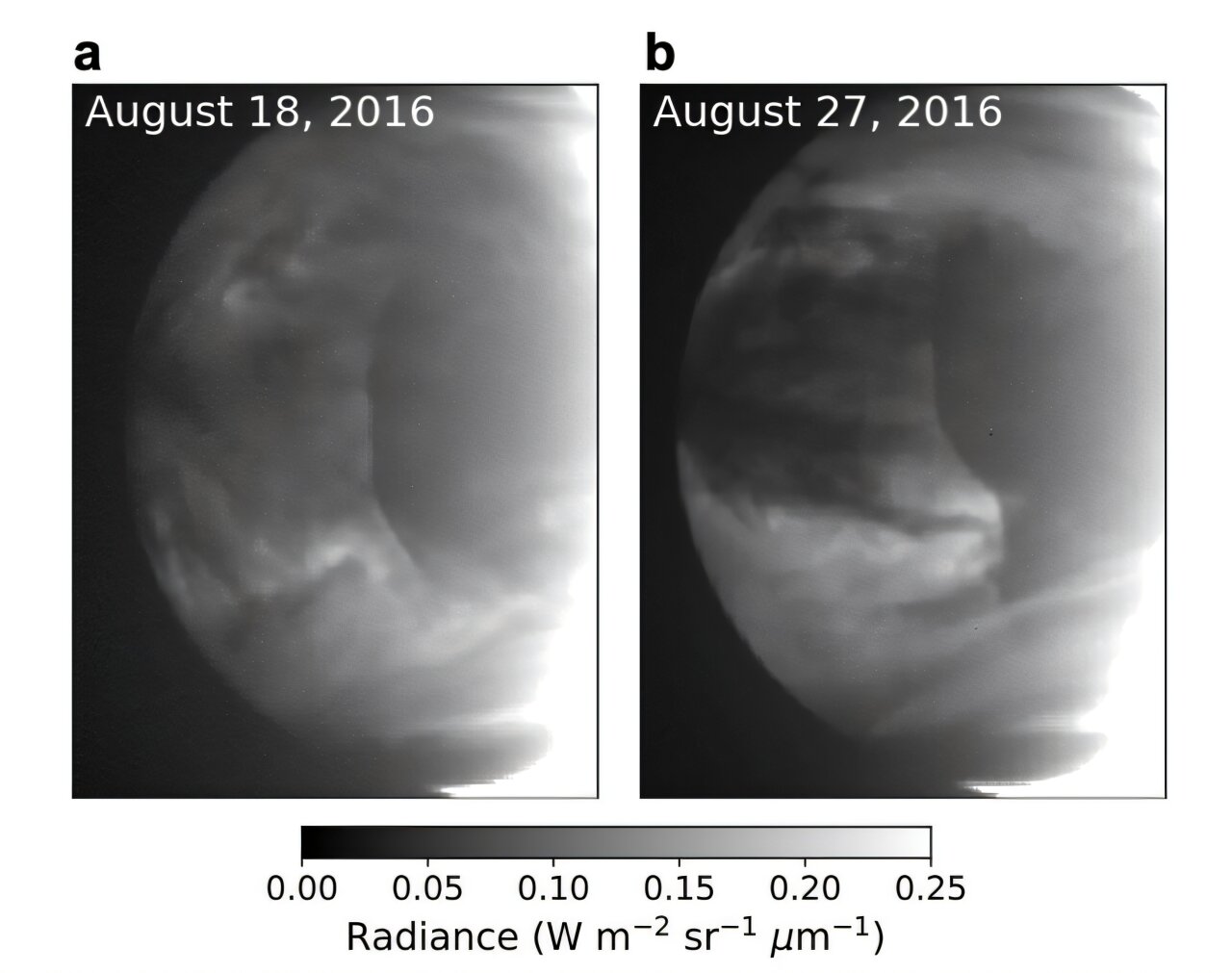
This refers to a specific physical phenomenon known as a “hydraulic jump.” It was this phenomenon that literally exploded as it broke through the cloud cover.
“We identified the phenomena, but for years we couldn’t understand it. However, thanks to this research, we’re now able to show that this cloud disruption is caused by the largest known hydraulic jump in the solar system,” notes the study’s lead author, Professor Professor Takeshi of the University of Tokyo, in a statement.
Venus’s extreme weather
To fully appreciate the significance of this discovery, it’s worth remembering just how toxic Venus’s environment is. Its atmosphere consists mainly of carbon dioxide, which creates an extreme greenhouse effect. This is the primary cause of the hellish temperatures on the planet’s surface, which are hot enough to melt lead with ease.

Within this dense gaseous envelope, there are three distinct layers of clouds composed of droplets of concentrated sulfuric acid. Their dynamics differ radically from those on Earth. Unlike the beautiful white clouds we are used to seeing in our sky, Venusian clouds are in a state of so-called “super-rotation.” They race around the planet at breakneck speed—about 60 times faster than Venus itself rotates on its axis.
For astronomers, such a stable yet extreme system serves as an ideal natural laboratory for studying the transient atmospheric processes that also occur on Earth.
Kitchen sink on a global scale
However, even by Venus’s wild standards, the formation of a gigantic cluster of acidic clouds thousands of kilometers in diameter is an extremely rare event. So how does this mechanism work?
Let’s consider hydraulic jump: you can regularly observe the simplest example of this phenomenon in your own kitchen sink. When a powerful stream of water from the faucet hits the sink, it initially spreads out in a thin layer and appears shallow. But at a certain distance, the water slows down abruptly, and its level rises suddenly, forming a characteristic ridge.
Now scale this process up to the size of an entire planet. The research team discovered that an atmospheric wave in the lower, densest layers of Venus’s clouds can suddenly lose stability and, as a result, slow down sharply. This sudden deceleration creates a phenomenally powerful updraft. Like a giant elevator, it pushes sulfuric acid vapor up into the highest levels of the atmosphere. There, these vapors quickly condense into a massive but sluggish cloud formation. Since this new structure moves much more slowly than the surrounding currents, it creates a distinct wave front, which was detected by Akatsuki.
Astronomers note that this is the first—and so far the only—confirmed instance of a hydraulic jump that has been observed on another planet.
We previously reported on how data from the Pioneer spacecraft led to an incredible discovery on Venus.
According to phys.org

