

An alarming warning was issued at the annual meeting of the American Association for the Advancement of Science (AAAS) in Phoenix. A senior NASA official responsible for planetary protection admitted that the real horror is not the asteroids we can see, but those we don’t even know exist. Despite technological progress, humanity remains virtually defenseless against thousands of invisible celestial bodies capable of wiping entire cities off the face of the Earth.
Kelly Fast, head of NASA’s planetary defense program, explained that astronomers are not overly concerned about giant asteroids — they are constantly monitored, and their trajectories are calculated years in advance. Small space objects that burn up in the atmosphere every day also do not pose a catastrophic threat.
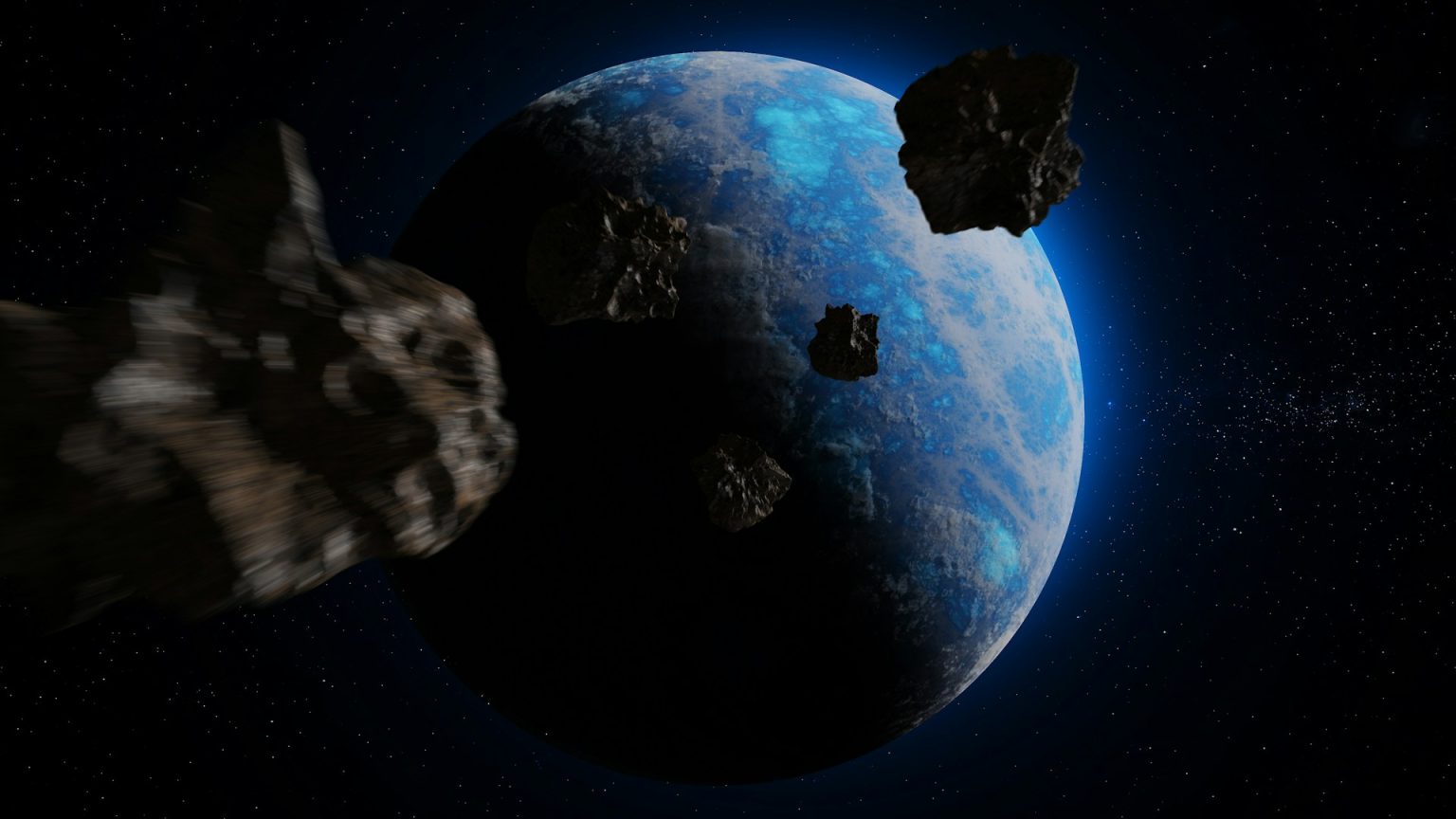
The greatest concern is caused by so-called “city killers” — asteroids with a diameter of about 150 m. They are massive enough to cause regional catastrophes and destroy megacities, but too small and dark to be easily detected in the vastness of space. According to Fast’s estimates, about 25,000 such objects are orbiting near Earth. And the scariest thing is that we only know the location of 40% of them. The remaining 15,000 rocks are potential time bombs that we know nothing about.
Optical illusion
It turns out that detecting such a body with conventional telescopes is incredibly difficult. Asteroids of this size often move against the backdrop of the Sun or are located in a sector of the sky where sunlight does not reflect off their surface, making them virtually invisible. They are simply lost in the bright light of our star.
To overcome this blind spot, NASA is preparing to launch the latest infrared telescope, NEO Surveyor (Near-Earth Object Surveyor), in 2025. Unlike optical systems, it will search for asteroids not by their reflections, but by their thermal signatures. Even the darkest space rock emits heat, which becomes its “passport” for scientists. This will enable us to detect objects that have been hidden from our view until now.
Shoot down or blow up?
In 2022, humanity took a giant leap forward: the DART (Double Asteroid Redirection Test) mission successfully collided a probe with the asteroid Dimorphos, changing its orbit. This proved that kinetic impact can work. However, as noted by a planetary scientist at Johns Hopkins University, this is still only an experiment, rather than a functioning planetary defense system.
“We don’t have a single ready-to-use method for actively deflecting an asteroid,” experts admit.
The main problem is not even technology, but economics and politics. To date, there is no permanent funding that would allow “planetary defense” to be maintained in a state of full combat readiness. We could be ready for impact, but to do so we need to start acting now, not when the asteroid is spotted on its final approach.
The Armageddon Scenario
We may need to hurry up with developing protective measures. Scientists’ attention is focused on asteroid 2024 YR4. Its trajectory is cause for concern: there is approximately a 4% chance that in 2032 it will collide not with Earth, but with the Moon.
Although the direct threat to our planet is small, the discussion surrounding this object is indicative. Space defense experts are already seriously discussing the possibility of preventing the moon from falling by means of a nuclear explosion — a scenario familiar to fans of the disaster movie Armageddon. And although it sounds like science fiction, it is precisely these risks that are driving NASA to seek answers to the question that keeps Kelly Fast awake at night: what should we do when we finally discover one of those 15,000 invisible “killers” heading straight for us?
Earlier, we reported on how a student mission could land on a killer asteroid.
According to The Times

