

The dust is gradually settling after the massive explosion of the giant New Glenn rocket, which shook Florida’s “Space Coast” and the entire space industry last week. The incident occurred on May 28, when Blue Origin was conducting routine fueling tests ahead of its rocket’s fourth flight. For reasons that are currently unknown, the situation got out of control, resulting in the complete destruction of the launch vehicle and catastrophic damage to the ground infrastructure at Launch Complex 36 (LC-36).
Fortunately, no one was injured in the incident. However, the loss of the spacecraft has dealt a serious blow to Blue Origin’s ability to meet NASA’s schedule. This schedule calls for critical support for the Artemis missions, whose primary goal is to return astronauts to the Moon’s surface. In addition, the incident is significantly slowing down the rollout of Amazon’s Leo wireless satellite internet network, which was designed to be a direct competitor to SpaceX’s Starlink system.
Destruction on a cosmic scale
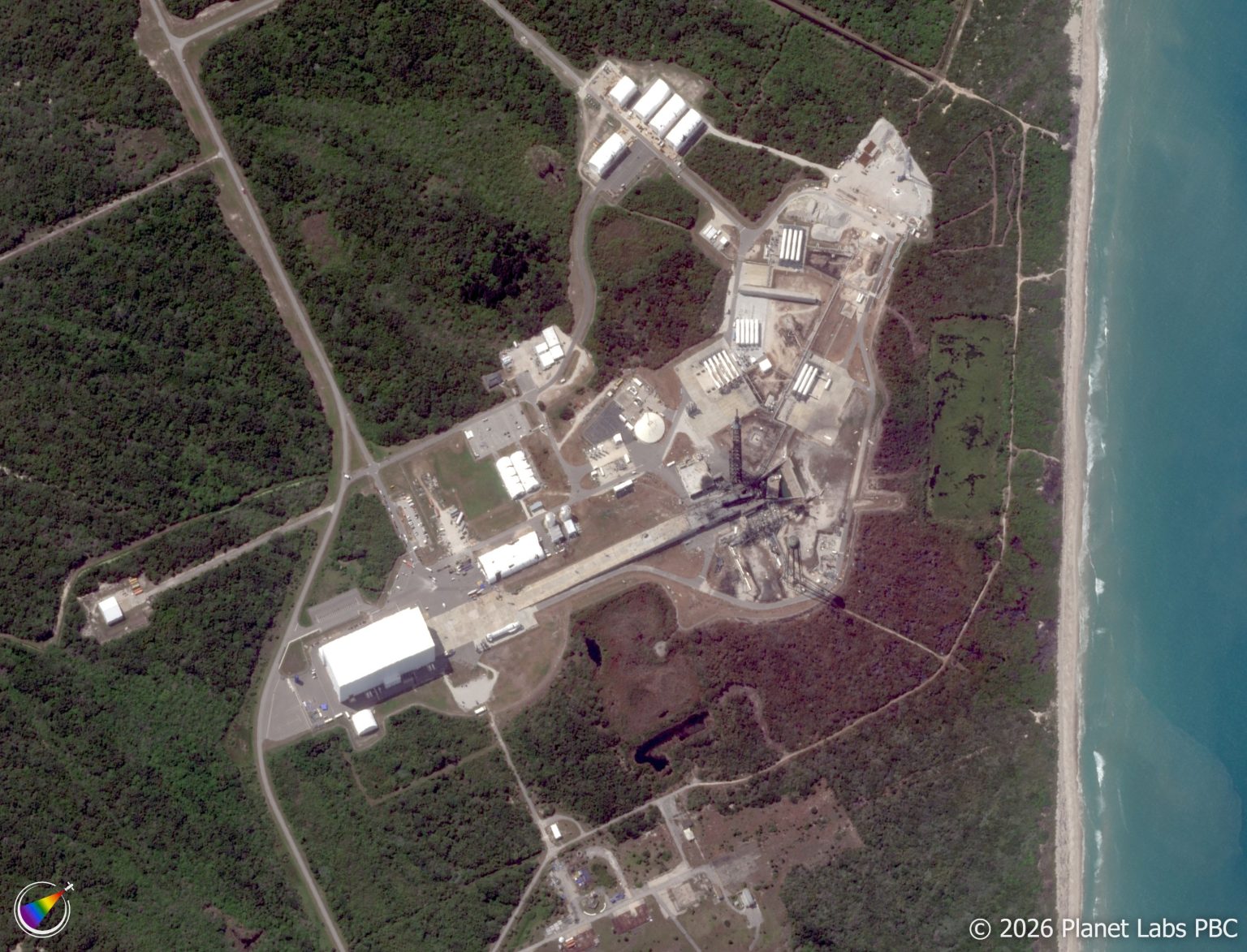
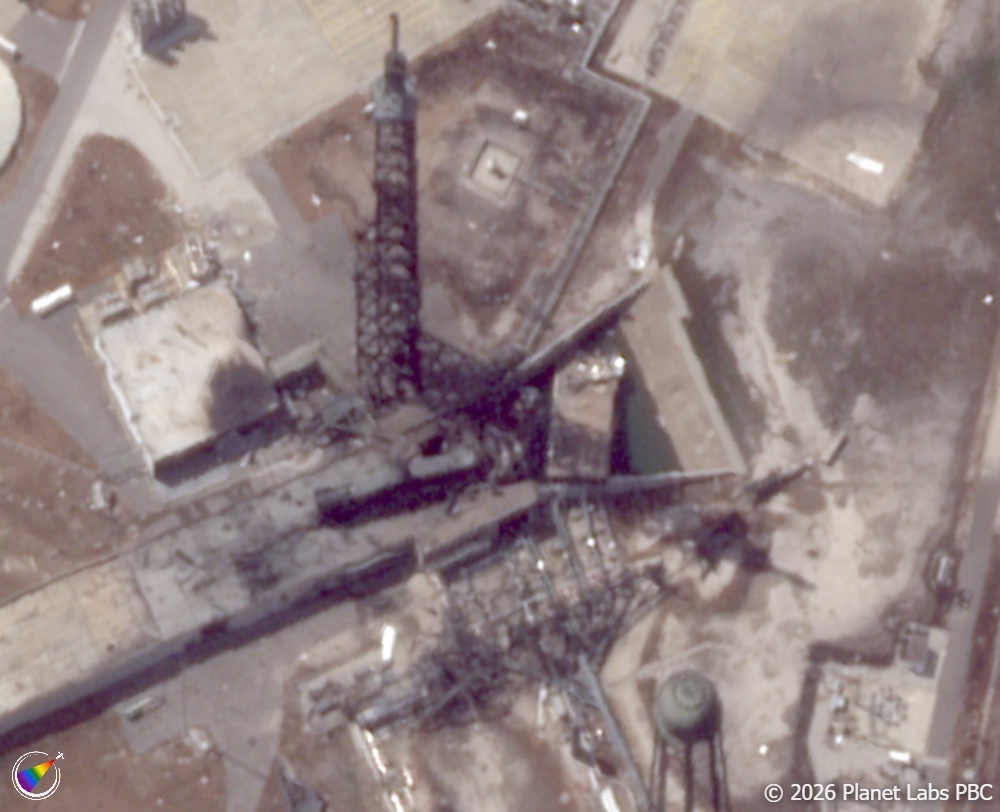
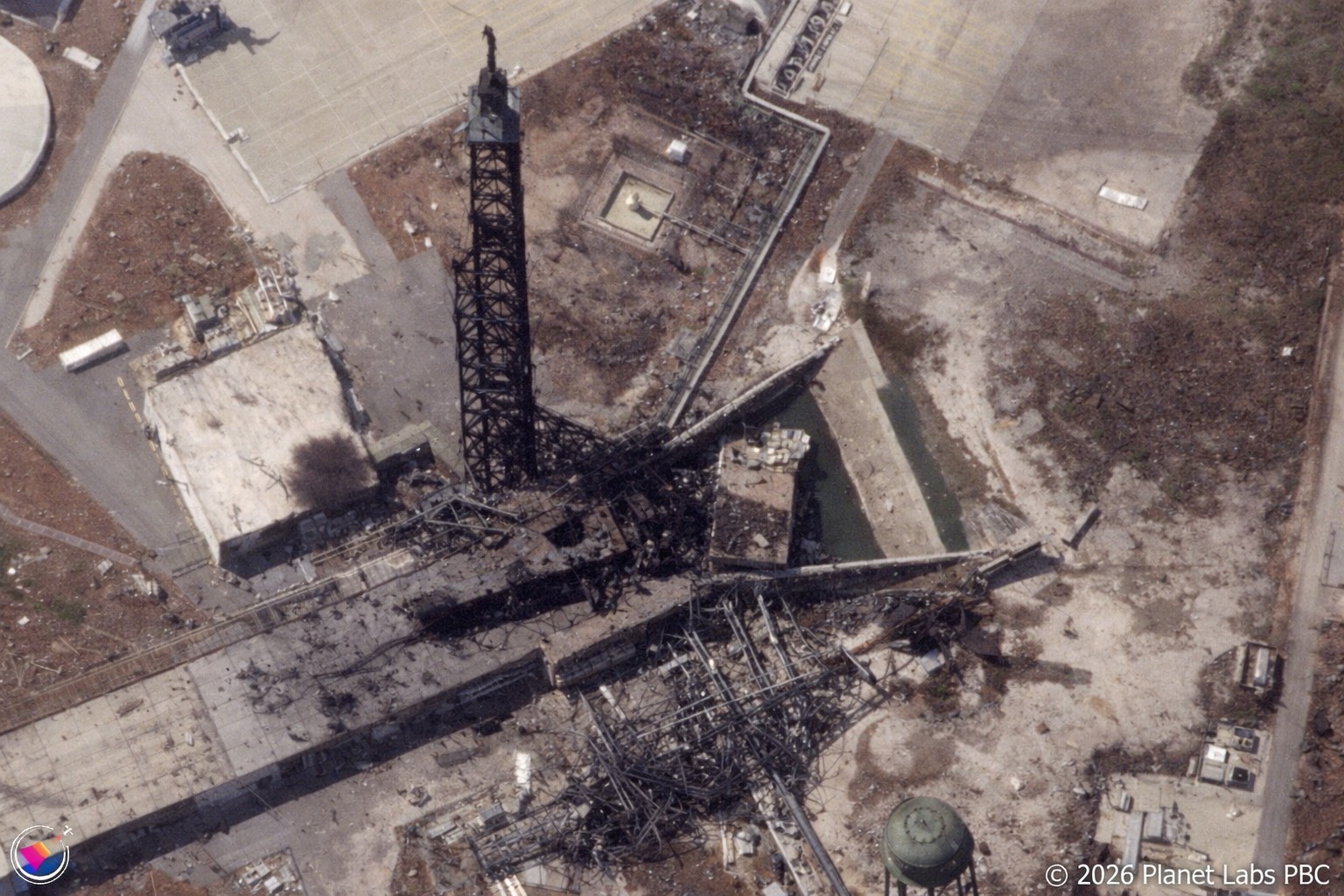
The explosion caused significant damage to LC-36—currently Blue Origin’s only launch pad capable of supporting the launch of a rocket the size of New Glenn. The scale of the destruction was so vast that it can even be seen from space. This is confirmed by images taken by Planet Lab’s SkySat-C9 satellite and processed by experts at Spacefromspace.
Satellite images show scorched vegetation extending in all directions around the site within a radius of about 1 km. The launch complex, which Blue Origin leases at the Cape Canaveral Space Force Station (CCSFS), has sustained significant damage. Visible damage has been observed on the launch tower, in the fire trench, and on other auxiliary systems at the facility.
A blow to the Artemis lunar program
The New Glenn rocket is one of the launch vehicles NASA is counting on to transport astronauts to the Moon during future Artemis missions. The Blue Moon lander, developed by Blue Origin, is one of two vehicles, along with SpaceX’s Starship, that have been awarded contracts by the agency to carry out these landings. Until LC-36 is repaired, the Blue Moon lander will not physically be able to reach space.
The company had planned to launch its first spacecraft, the Blue Moon Mark 1 (MK1)—a smaller cargo version of the future crewed MK2 model—as early as this autumn. That flight was supposed to deliver a NASA payload to the Moon. Now, the extensive restoration of LC-36 will most likely delay that launch by several months.
This will have a ripple effect on the Blue Moon module’s readiness for the Artemis III mission, which was scheduled to launch lunar modules into Earth orbit to practice rendezvous and docking maneuvers with the Orion spacecraft. As a result, this could lead to a delay in the Artemis III mission itself or make the timeline for obtaining certification for crew transport unrealistic ahead of the first crewed landing mission—Artemis IV.
History of accidents
The space industry has seen similar accidents before. When the Antares rocket exploded in 2014 and damaged the launch pad at NASA’s Space Flight Center, it took nearly two years to restore the infrastructure and conduct the next launch. A similar accident during static testing occurred with SpaceX in September 2016: at that time, a Falcon 9 rocket exploded at the LC-40 complex on the eve of the launch of the Amos-6 communications satellite. It took the company a little over a year to complete repairs, and it resumed missions from LC-40 in December 2017.
We previously reported that the size of the New Glenn rocket on the launch pad had amazed witnesses.
According to SPACE

