

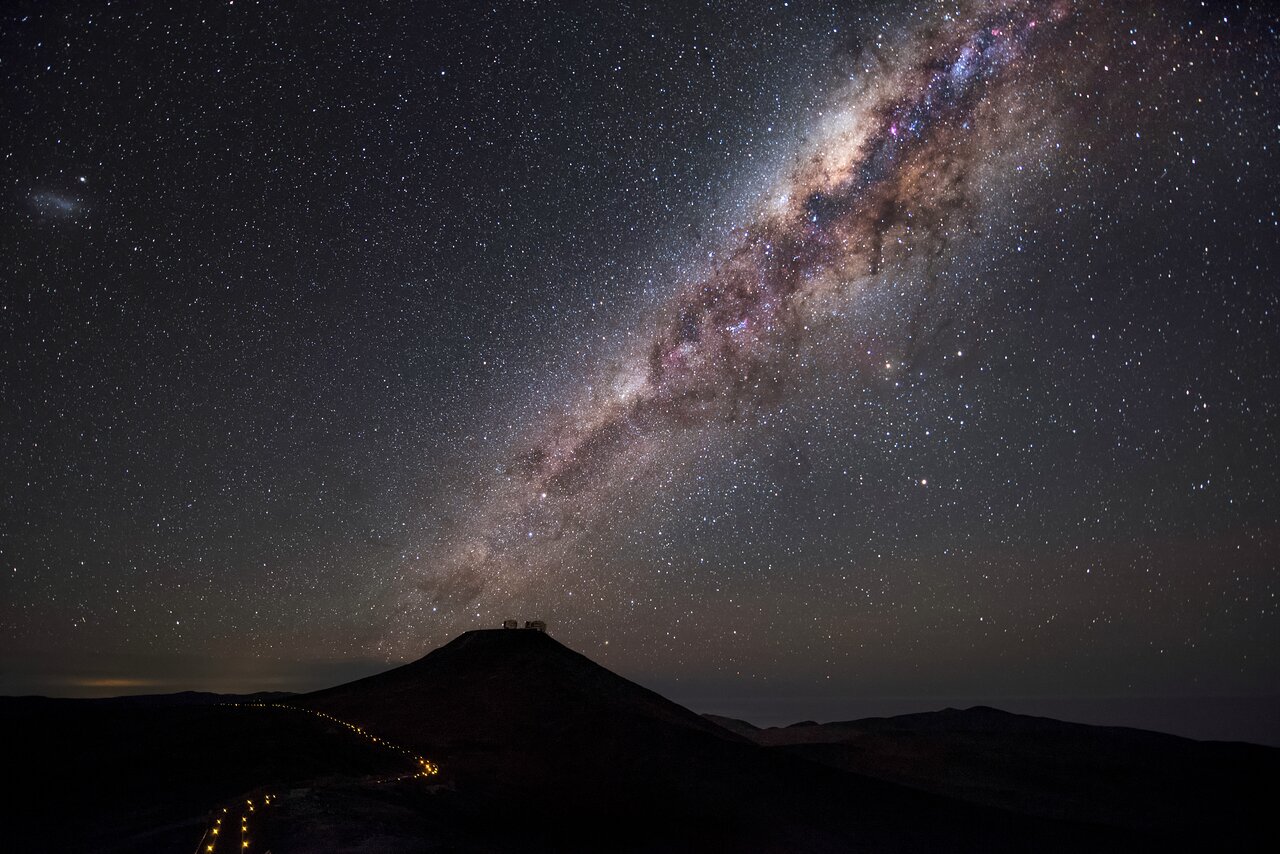
The bright band that stretches across the night sky on a clear night is neither a cloud nor a nebula. There are billions of stars. And all of them, together with our Sun, are part of a single gigantic structure – the Milky Way galaxy. We live inside it. And that is precisely what makes studying it so challenging and so fascinating.
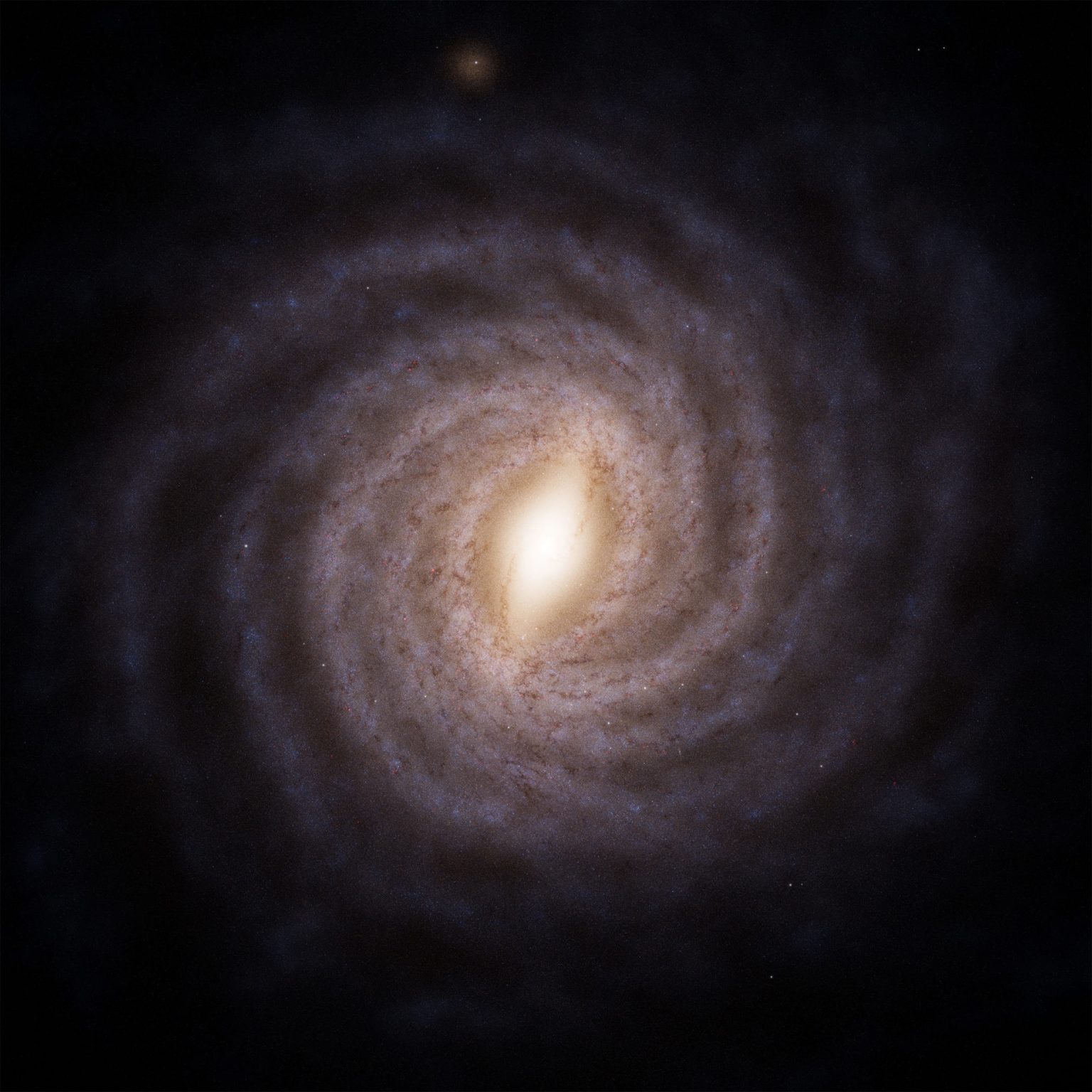
Imagine you were asked to describe the city where you live, but you were not allowed to leave your apartment or look out the window. This is exactly the situation astronomers found themselves in when they first began seriously studying the Milky Way. We are inside the Galaxy, approximately 26,000 light-years from its center, and we have no telescope that could be positioned beyond its boundaries. Everything we know about the structure of our cosmic home is the result of observations from within, mathematical models, and, ultimately, the detective work of several generations of scientists.
How did we even realize that we live in a galaxy?
For a long time, people did not know that the band in the sky was made up of billions of individual stars. Galileo Galilei took the first step in 1610 when he pointed his telescope at the Milky Way and saw countless stars that are invisible to the naked eye. But it is one thing to see the stars, and quite another to understand how they are arranged in space.
In 1785, British astronomers William Herschel and his sister Caroline attempted to map the Milky Way by counting stars. They pointed their telescope at more than 600 different sections of the sky and counted how many stars were visible in each direction. The logic was simple: where there were more stars, the Milky Way must be wider. The result was the first quantitative map of the Milky Way – and according to it, the entire galaxy was supposed to be only about 6,000 light-years in diameter, whereas its actual size exceeds 100,000. And we found ourselves almost at its center. Herschel simply did not know that there was dust between the stars that absorbs light and prevents us from seeing distant objects. That is precisely why the number of visible stars in all directions was roughly the same – hence the illusion that we are at the center.
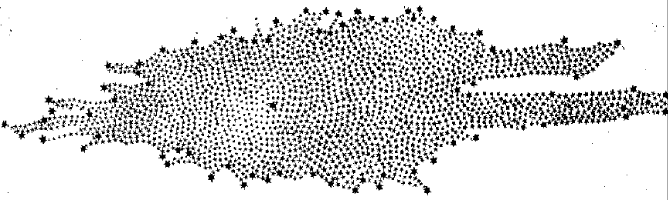
Source: Philosophical Transactions of the Royal Society of London
A true breakthrough occurred at the beginning of the 20th century. American astronomer Harlow Shapley turned his attention to globular clusters – huge groups of tens and hundreds of thousands of stars that are visible much farther away than individual stars. He measured the distances to 93 such clusters and discovered something unexpected: they are all distributed unevenly and concentrated on one side of the sky – in the direction of the constellation Sagittarius. If the clusters surround the center of the Galaxy, then that is where it must be. But the Sun is not there at all. Shapley showed that we are far from the center of our own galactic home.
Radio telescopes helped to finally reveal the structure of the Milky Way. Unlike visible light, radio waves pass through interstellar dust. In the 1950s, astronomers began mapping the Galaxy using the radio emissions of neutral hydrogen, and it was in this way that its spiral structure was first reliably confirmed in 1953.
Construction: bar, disc, and arms
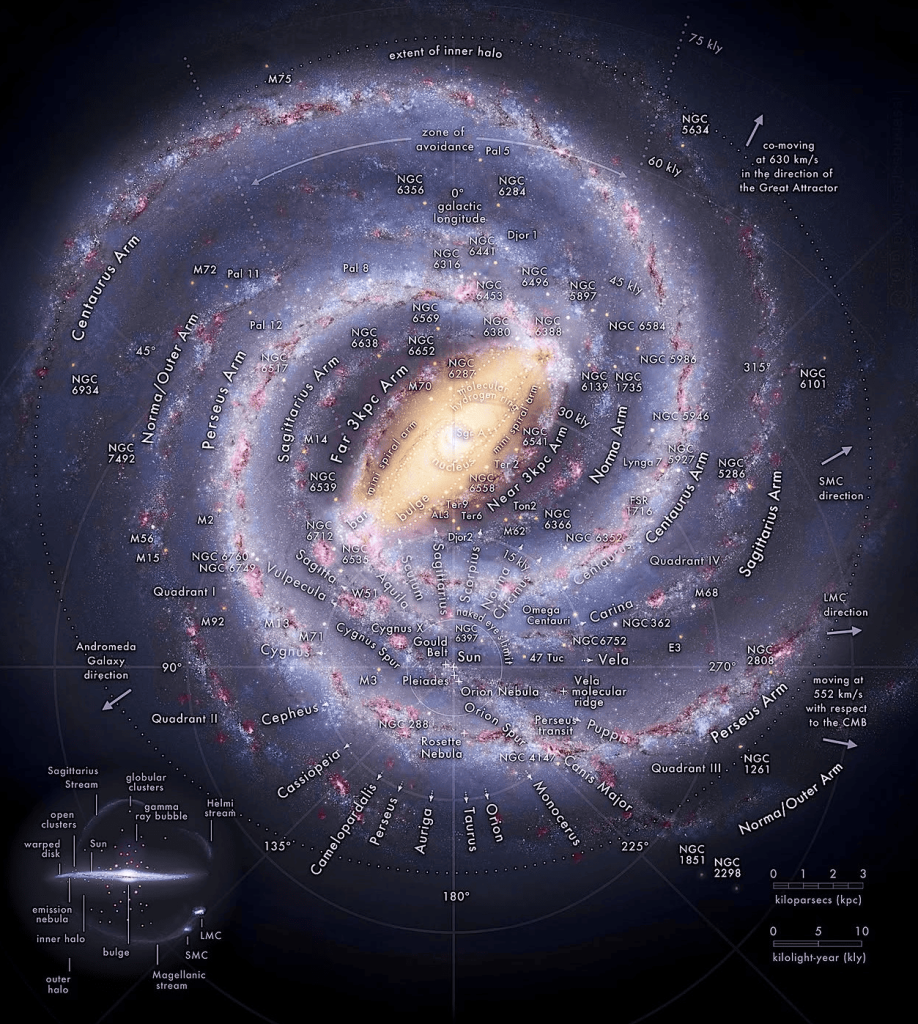
The Milky Way is a spiral galaxy with a bar. At its center lies not just a cluster of stars, but an elongated bar that stretches for tens of thousands of light-years, with spiral arms extending from its ends. This structure is found in about two-thirds of spiral galaxies. The presence of a bar in the Milky Way was confirmed by NASA’s Spitzer Space Telescope in 2005, revealing that it is larger than previously thought.
A disk extends around the bar – a flat, rotating structure where most of the Galaxy’s stars and gas are concentrated. The disk has a diameter of about 100,000 light-years, while its thickness in the region of the spiral arms is only about 1,000 light-years. Astronomers distinguish between the thin disk, where young stars and active star formation are concentrated, and the thick disk, which contains older stars.
The spiral arms rotate along with the Galaxy, but they are not rigid structures. They are more like density waves: regions of concentrated gas and dust where new stars are actively forming, shining very brightly, albeit for a short time. That is why the arms are so bright. There are also a large number of stars between the arms, but they are older and dimmer, so they do not create such a distinct pattern.
The Milky Way disk is not perfectly flat – at its periphery, it exhibits a distinct S-shaped warp, resembling a warped vinyl record. Astronomers have been aware of this phenomenon since the 1950s. Data from the European Space Agency’s (ESA) Gaia mission has revealed that this warp is not static – it slowly rotates, completing one full rotation every 600-700 million years. The most likely cause is the gravitational influence of a smaller galaxy colliding with ours. One of the candidates is believed to be the Sagittarius Dwarf Galaxy.
But even now, our picture of our own galactic home remains incomplete. The disk plane, filled with dust and gas, blocks our view in visible light – this region is called the zone of avoidance. It covers about 20% of the visible sky, effectively shielding everything beyond it from optical telescopes. What exactly lies there – individual galaxies or colossal structures such as the Great Attractor – can only be determined through radio and infrared observations. The complete picture of this part of the cosmos remains fragmented to this day.
Our galactic address
But before we delve into how the Galaxy is structured, it is worth understanding exactly where we are located within it. To be precise, our address in the Universe is roughly as follows: the Orion Arm, the Milky Way, the Local Group, the Virgo Supercluster, and the Laniakea Supercluster.
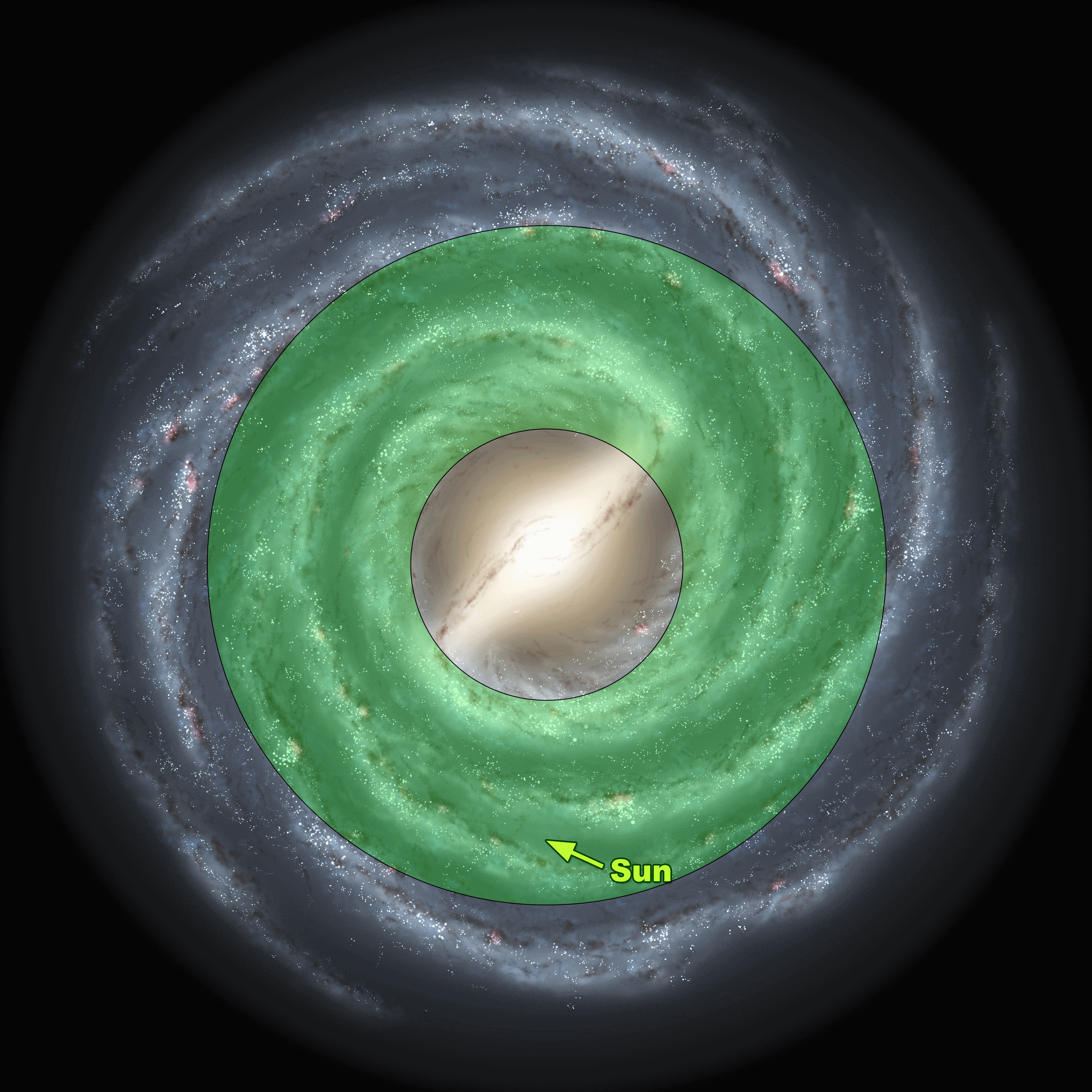
Begin with the closer one. The Sun is located in the Orion Arm – a relatively small spiral arm between two larger arms: the Perseus Arm (on the outer edge) and the Sagittarius-Carina Arm (closer to the center). We are about 26,000 light-years from the center of the Galaxy – roughly half the radius of the visible disk. Neither the center nor the periphery.
This is significant not only in an abstract sense. Astronomers identify what is known as the galactic habitable zone – a region at a certain distance from the center where conditions are considered most favorable for the existence of planets rich in complex carbon-based compounds. Too close to the core means intense radiation and a high density of stars with frequent dangerous events. Too far away means a lack of heavy elements necessary for the formation of rocky planets. The Sun is located roughly within this zone.
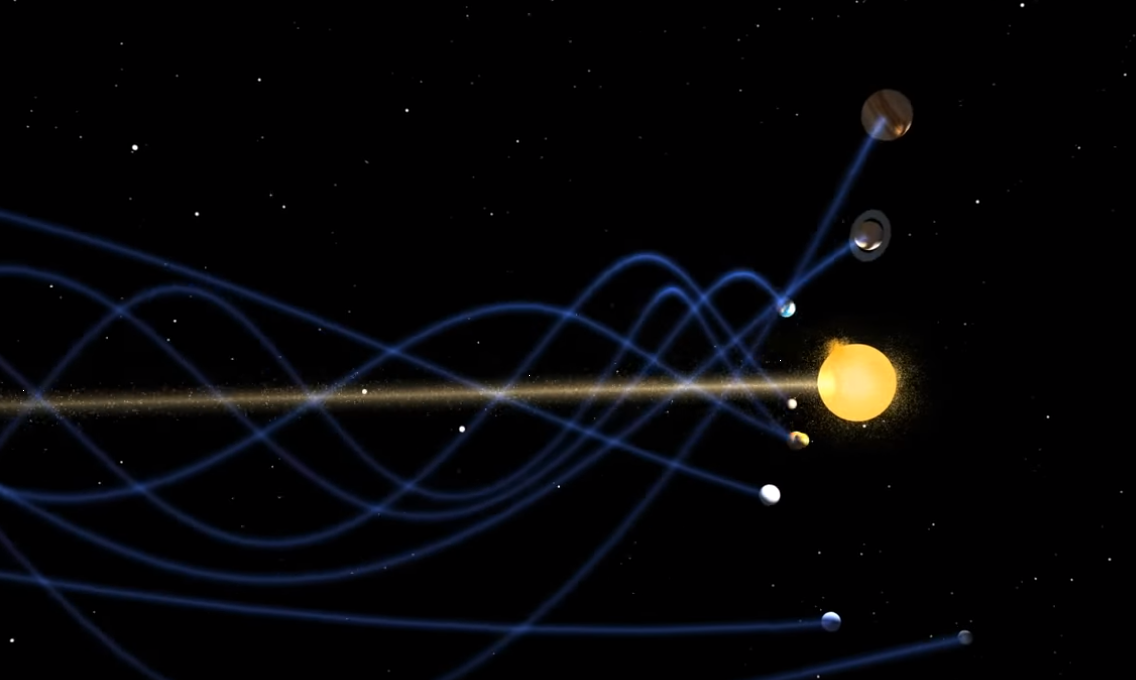
Our Sun does not stand still – it orbits the center of the Milky Way at a speed of about 828,000 km/h. Despite this speed, a single full orbit takes approximately 230 million years. Astronomers have even given this cycle a name – the galactic year. Over the course of Earth’s existence, our solar system has only managed to circle the center of the Galaxy about 20 times. When our star last completed this cycle, the first dinosaurs had just appeared on Earth, and the supercontinent Pangea had begun to break apart.
The Heart of the Galaxy: Sagittarius A*
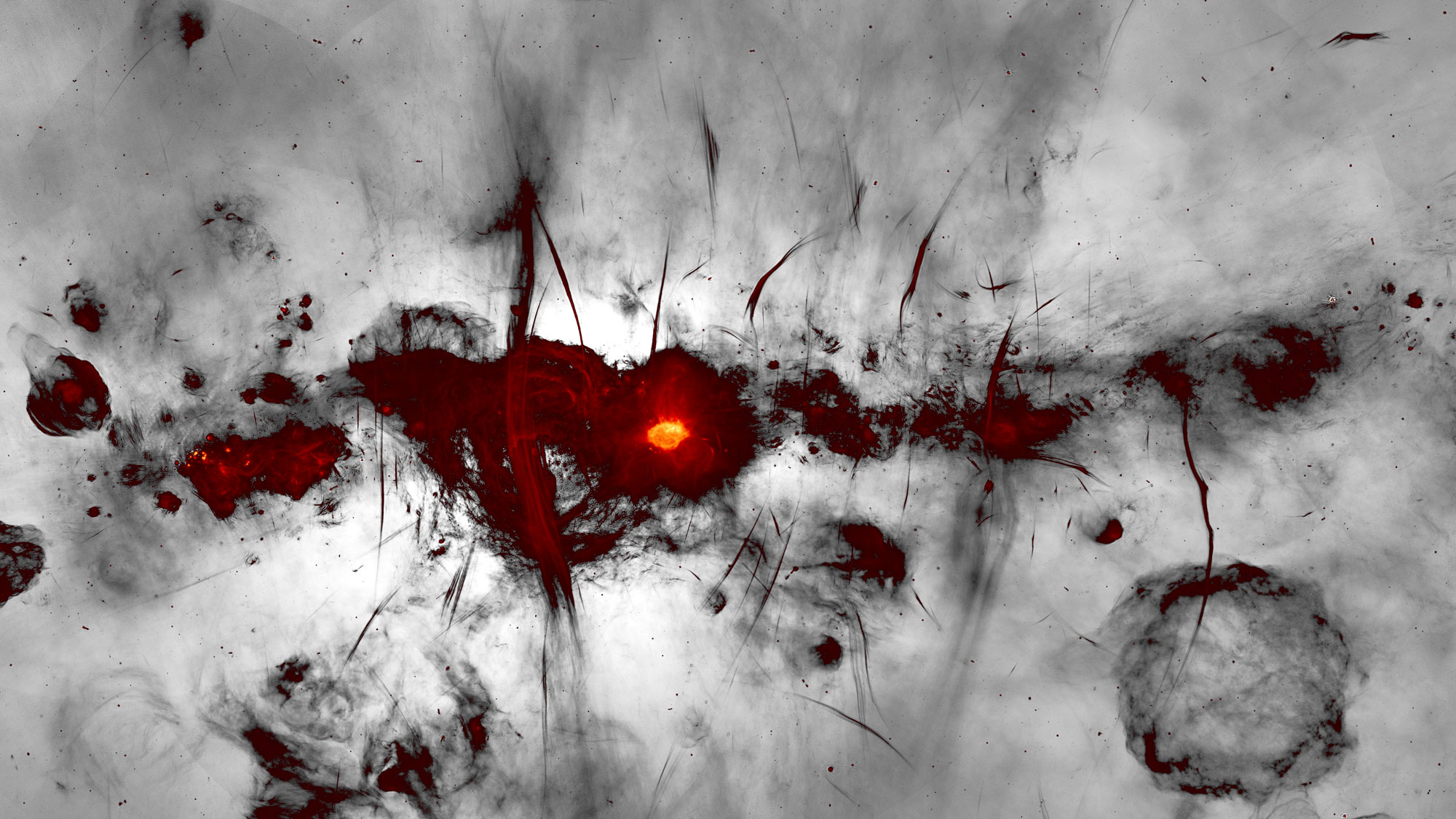
Hidden at the very center of the Milky Way is an object that cannot be seen directly – a thick cloud of gas and dust, opaque to visible light, stands between us and it. But astronomers have determined what lies there by other means.
Since the 1990s, telescopes have been tracking the movements of stars in the immediate vicinity of the galactic center. We call them S-stars, and they move extremely fast. One of them, S2, completes a full orbit in 16 years, accelerating at its closest point to nearly 3% of the speed of light. Another, S4714, reached 8% of the speed of light at its closest approach to Sagittarius A* – at a distance comparable to that between the Sun and Saturn. It was these observations that convinced the scientific community: a supermassive compact object is located at the center of the Galaxy. For this discovery, Reinhard Genzel and Andrea Ghez were awarded the 2020 Nobel Prize in Physics.
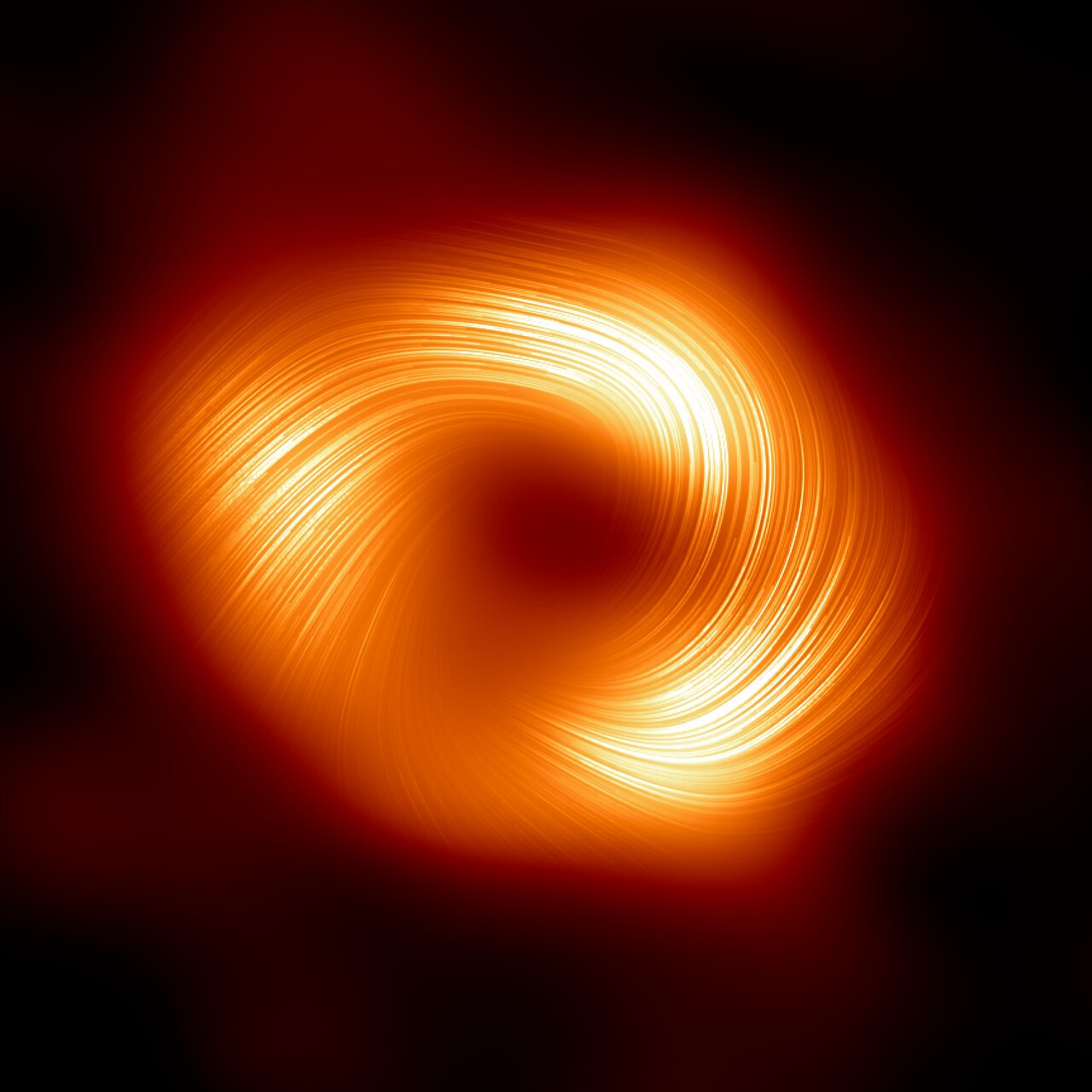
Calculations have shown that to keep S-stars on such trajectories, there must be an object at the center with a mass of about 4 million solar masses, compressed into a very small volume. This is Sagittarius A*– a supermassive black hole. In May 2022, the international Event Horizon Telescope collaboration published the first direct image: a ring of light surrounding a dark shadow – the shadow of the black hole itself.
The center of the Galaxy is an extremely dynamic place. In addition to Sagittarius A*, it contains dense molecular clouds, clusters of young massive stars, and, according to researchers, black holes formed from individual massive stars. A detailed picture of this region is still being refined.
Halos and absorption lines
The Milky Way is not just a disk with spiral arms. Encircling this entire structure is a galactic halo – a sparse spherical region containing old, isolated stars and globular clusters – that extends far beyond the visible disk.
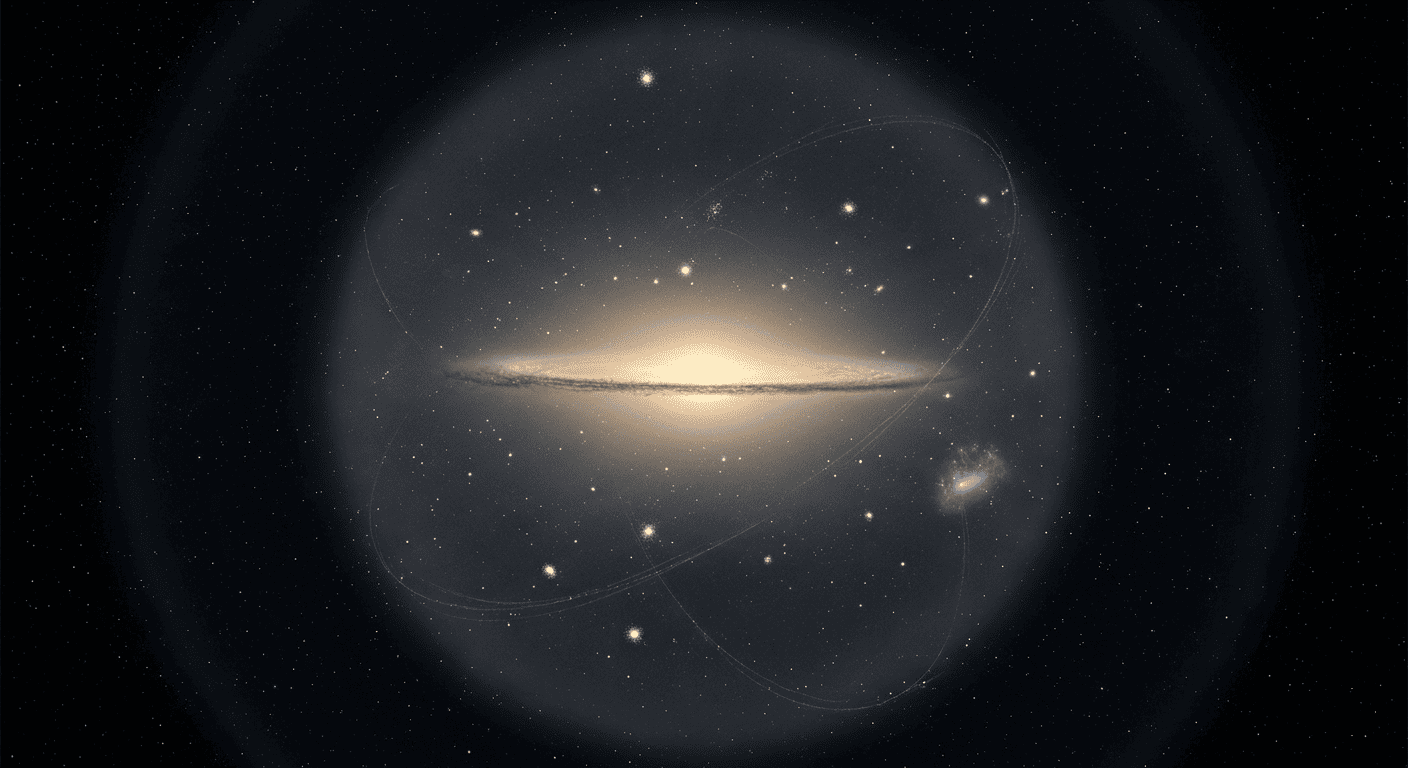
It is within the halo that traces of the galaxy’s past have been preserved. The Gaia mission helped reveal that approximately 10 billion years ago, the Milky Way absorbed a smaller galaxy, which researchers have named Gaia-Enceladus. Traces of this merger – the characteristic motion of large groups of stars within the halo – can still be detected in observational data. This is not the only such absorption in the history of the Galaxy, as it gradually accumulated its mass by incorporating smaller neighbors.
The Milky Way also contains about 150 known globular clusters – dense spherical groups of hundreds of thousands of old stars orbiting the Galaxy in elongated orbits. It is these clusters that have been key to understanding the true size of the Milky Way – astronomer Harlow Shapley used their distribution to determine the location of the Galaxy’s center.
Today, several satellite galaxies orbit the Milky Way. The most prominent of these are the Large and Small Magellanic Clouds, which are visible to the naked eye from the Southern Hemisphere. These are small structures gravitationally bound to us. The Sagittarius Dwarf System is also part of this family, and, according to research, has crossed our disk several times, leaving behind stellar streams – long chains of stars stretched out by gravity. Gaia has detected over a hundred such structures – silent witnesses to billions of years of accretion.
Age and place, among others
The Milky Way is one of the oldest members of the Local Group. The oldest stars in it are about 13.6 billion years old – almost as old as the universe itself. Yet its formation is still not complete.
In terms of size, the Milky Way is a large galaxy containing, according to various estimates, between 100 and 400 billion stars. We are the second-largest member of the Local Group – a gravitationally bound family of more than fifty predominantly dwarf galaxies. The largest galaxy in this group is Andromeda, and it is steadily approaching us. Our group is part of the Virgo Supercluster, which in turn is part of an even larger structure – the Laniakea Supercluster, with a diameter of about 500 million light-years.
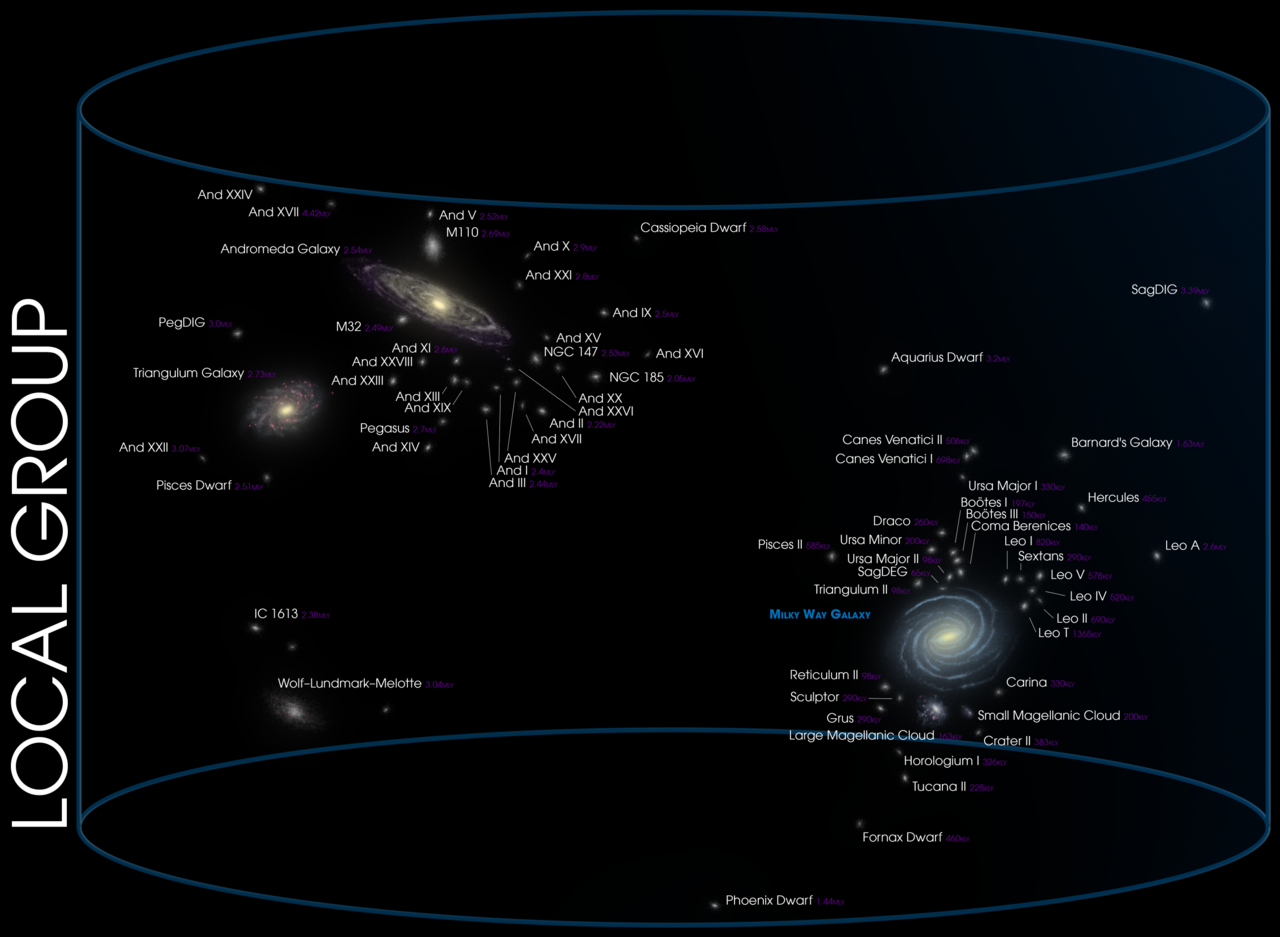
English version: uk.wikipedia.org
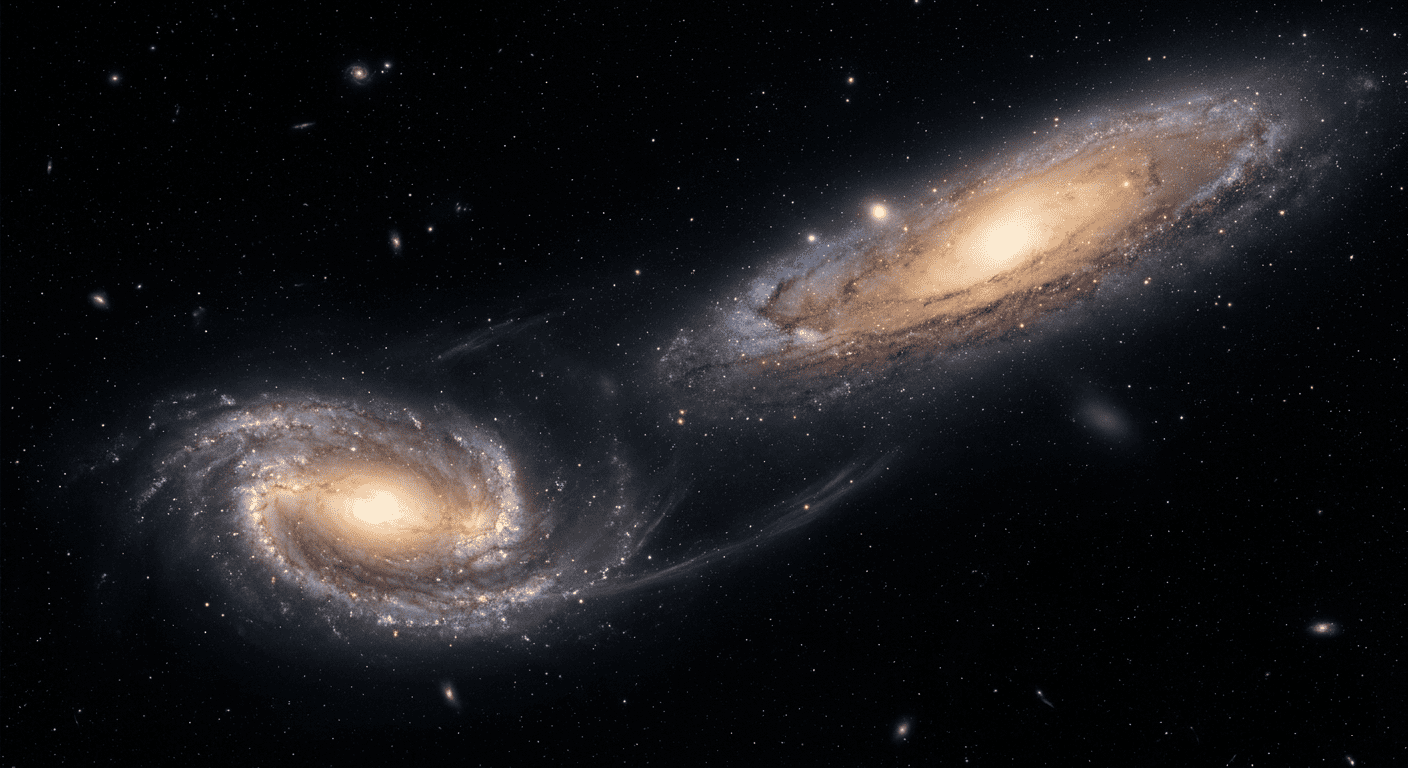
The Andromeda Galaxy and the Milky Way are approaching each other at a speed of about 110 km/s, or 396,000 km/h. Every hour, they cover a distance nearly equal to the distance from Earth to the Moon. It was long believed that a collision was almost inevitable and would occur in about 4-4.5 billion years. However, a 2025 study combining data from the Hubble and Gaia telescopes showed that the probability of a direct collision within this timeframe is only about 2%. In roughly half of the computer simulations, the two giants fly past each other and may only gradually merge under the influence of gravity. The future of our galactic home remains an open question.
The invisible skeleton
Astronomers have long noticed something strange: stars at the edges of the Milky Way move just as fast as those much closer to the center. According to Newton’s law of universal gravitation and Kepler’s laws, velocity should decrease as the distance from the center of mass increases.
In planetary systems, it makes perfect sense: the farther a planet is from its central star, the slower it moves. This is exactly how Neptune moves compared to Mercury. For a galaxy where most of the visible mass is concentrated at the center, the same rule should apply – stars at the edges should rotate more slowly than those closer to the core.
But they aren’t slowing down. In the 1970s, American astronomer Vera Rubin, along with her colleague Kent Ford, measured the velocities of stars in spiral galaxies and discovered something unexpected: stars on the outskirts were moving at the same speed as those in the center. The graph of these speeds should have dropped toward the edges, but it remained flat. Rubin checked dozens of galaxies. The pattern repeated itself. “What you see in a spiral galaxy,” she said, “is not what you get.”
There is one explanation: in addition to visible matter, galaxies contain a vast amount of invisible mass – dark matter. It neither emits nor reflects light, but it has mass and, therefore, gravity. It is dark matter that keeps the stars from flying apart and produces the flat rotation curve that Rubin discovered.
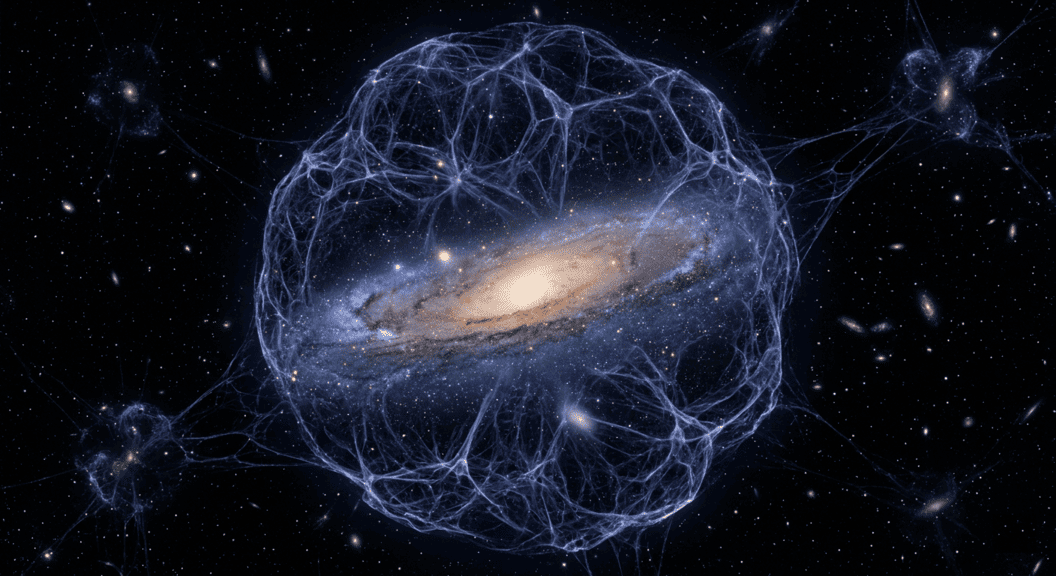
According to current estimates, dark matter accounts for about 85% of a galaxy’s total mass. It forms a gigantic invisible halo around the visible disk – a dark matter halo – which, according to calculations, can extend for nearly 2 million light-years. This is approximately 20 times larger than the diameter of the visible disk.
Exactly what dark matter is remains unknown. No one has yet managed to directly detect any of the particles that make it up. This is one of the biggest unresolved questions in modern physics.
The map is not yet complete
In 2025, the Gaia satellite completed its active phase of surveying the sky. Over the course of eleven years of operation, it recorded more than three trillion measurements of approximately two billion stars – the most accurate three-dimensional map of the Milky Way ever created. The next major data release, Gaia DR4, is expected in 2026.

And yet, even now, the picture is far from complete. The exact number of spiral arms, the detailed structure of the central region, and the full distribution of dark matter – all of these are still being refined. As one of the mission’s scientific visualizers noted: “Distant parts of the Milky Way remain educated guesses based on incomplete data.”
The Milky Way has been studied from the inside for several hundred years. Each new generation of instruments reveals details that their predecessors could not see. The next release of Gaia data will change some of what we currently believe to be known.

