

Comet 3I/ATLAS was discovered in early July 2025, when it was 670 million kilometers from the Sun. Since then, the interstellar traveler has flown over half a billion kilometers through the Solar System. All this time, it has been actively photographed by both ground-based observatories and spacecraft. The editors of Universe Space Tech have compiled the best images of the comet, showcasing its evolution over the course of its journey.
This interstellar comet was first observed in images taken by the automated ATLAS system that initially discovered it. They were taken on July 1, 2025.
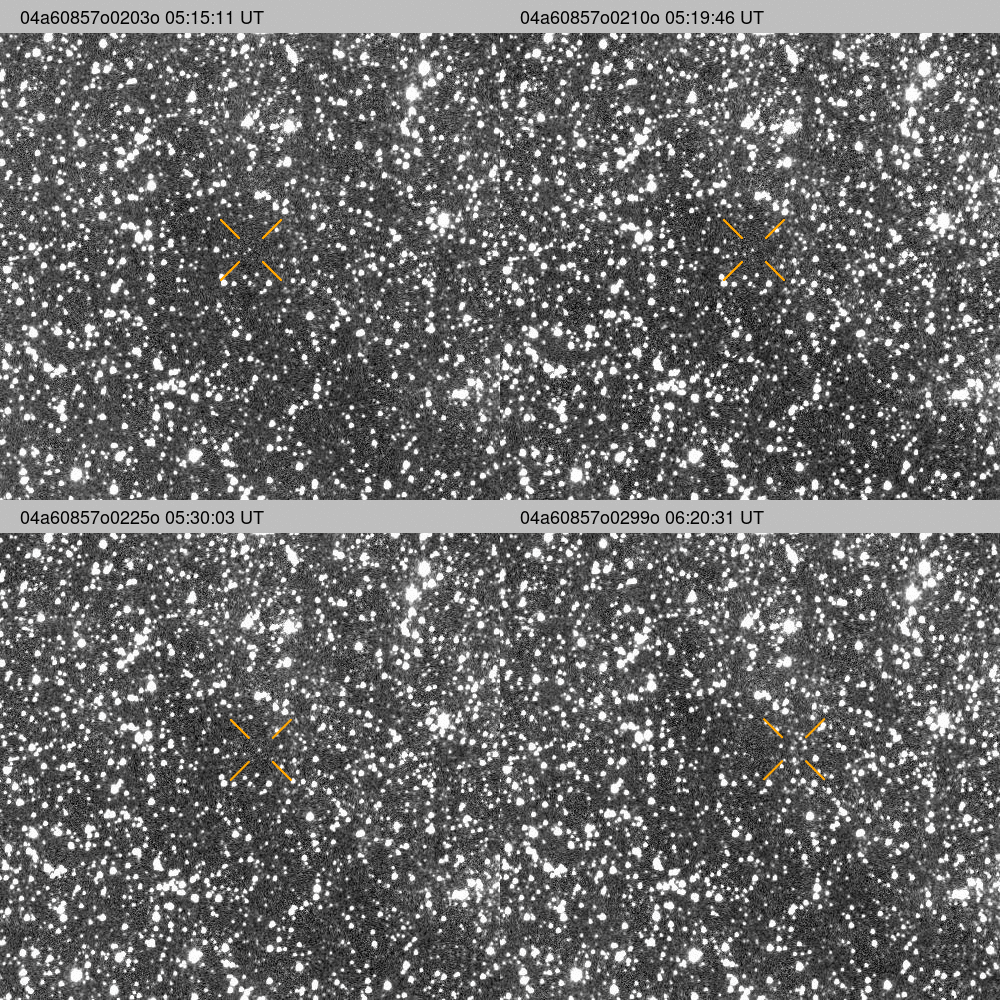
On July 3, the comet was photographed by ESO’s Very Large Telescope.
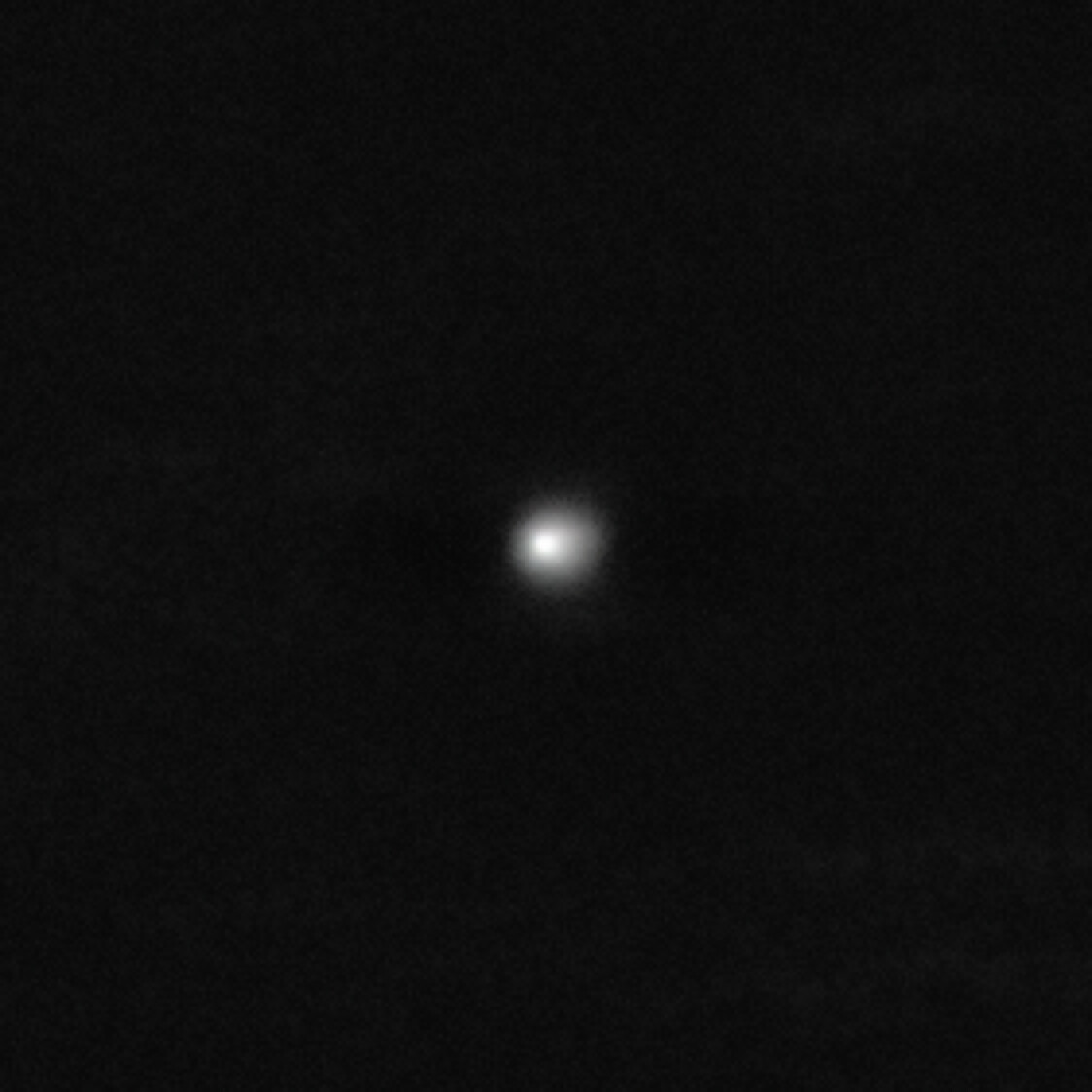
Source: ESO/O. Hainaut
A few days later, the comet was photographed by the Gemini North telescope. In this photograph, it was already possible to distinguish the gas shell (coma) surrounding its nucleus. It consists of dust and gas formed as a result of the sublimation of volatile substances.
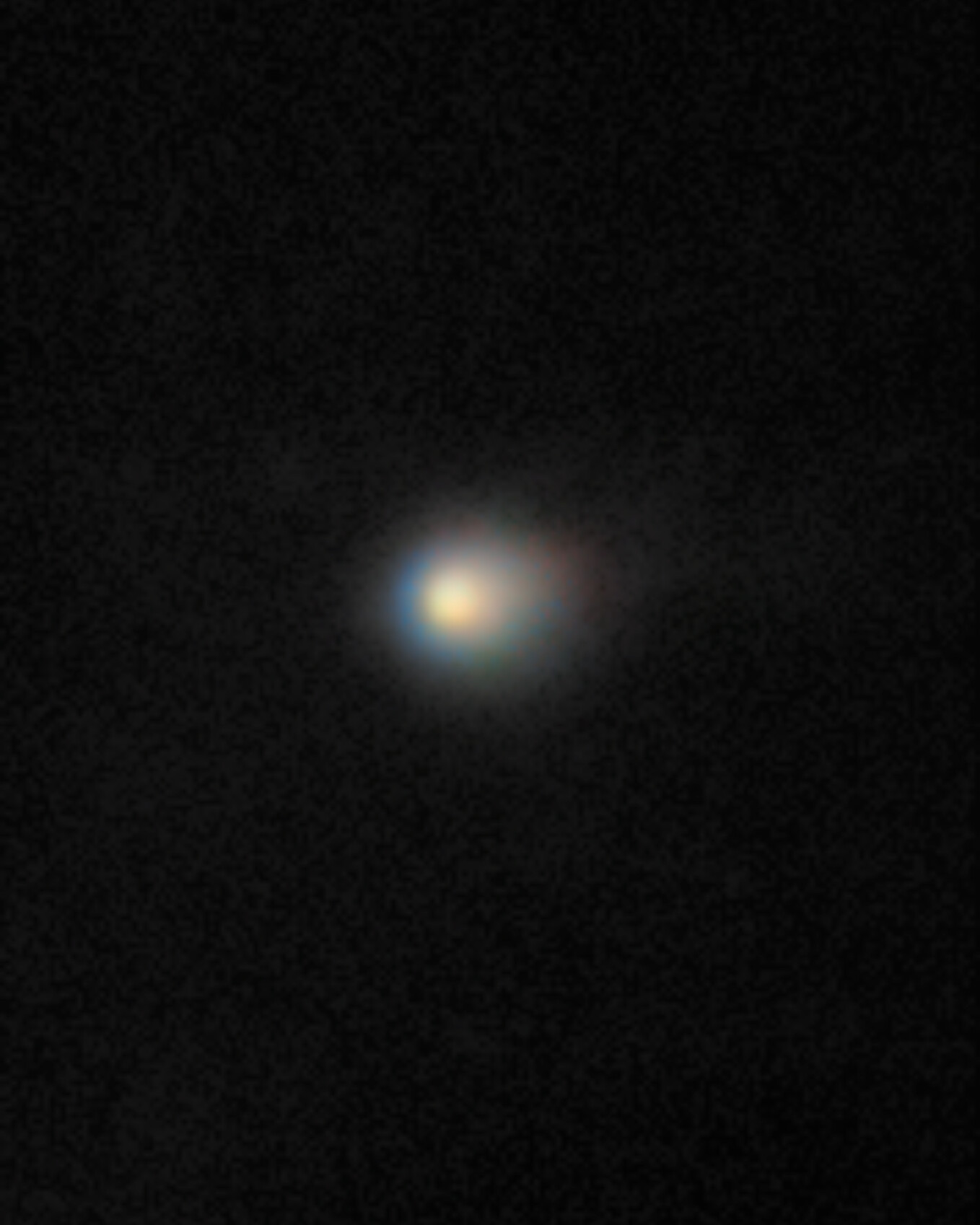
Source: International Gemini Observatory/NOIRLab/NSF/AURA/K. Meech (IfA/U. Hawaii)
On July 21, the comet was photographed by the Hubble Space Telescope. Its observations made it possible to determine the size of its nucleus. It ranges from 320 meters to 5.6 km.
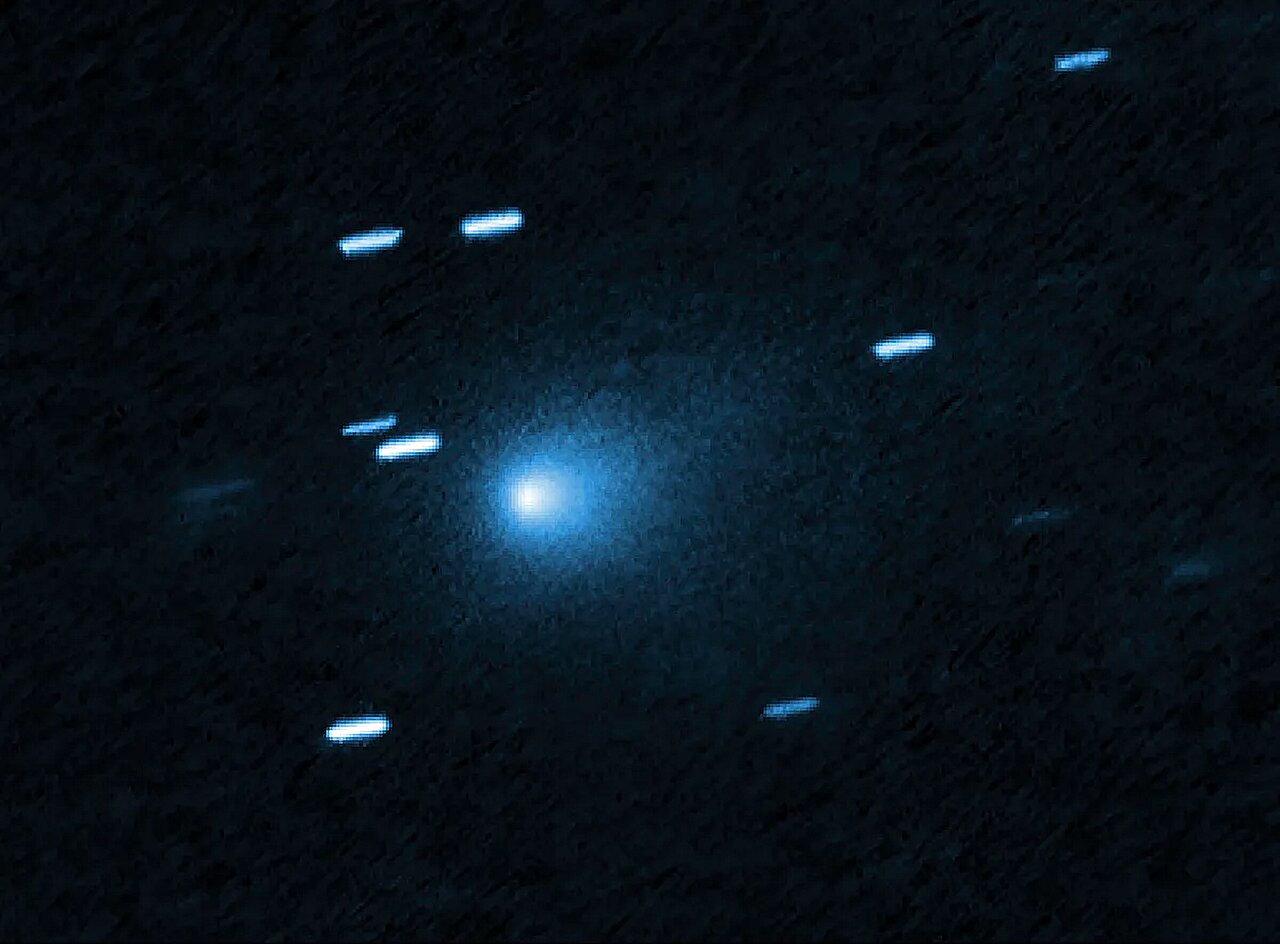
Source: NASA, ESA, David Jewitt (UCLA); Image Processing: Joseph DePasquale (STScI)
On August 27, the interstellar traveler was photographed by the Gemini South telescope. Its tail is clearly visible in this image.
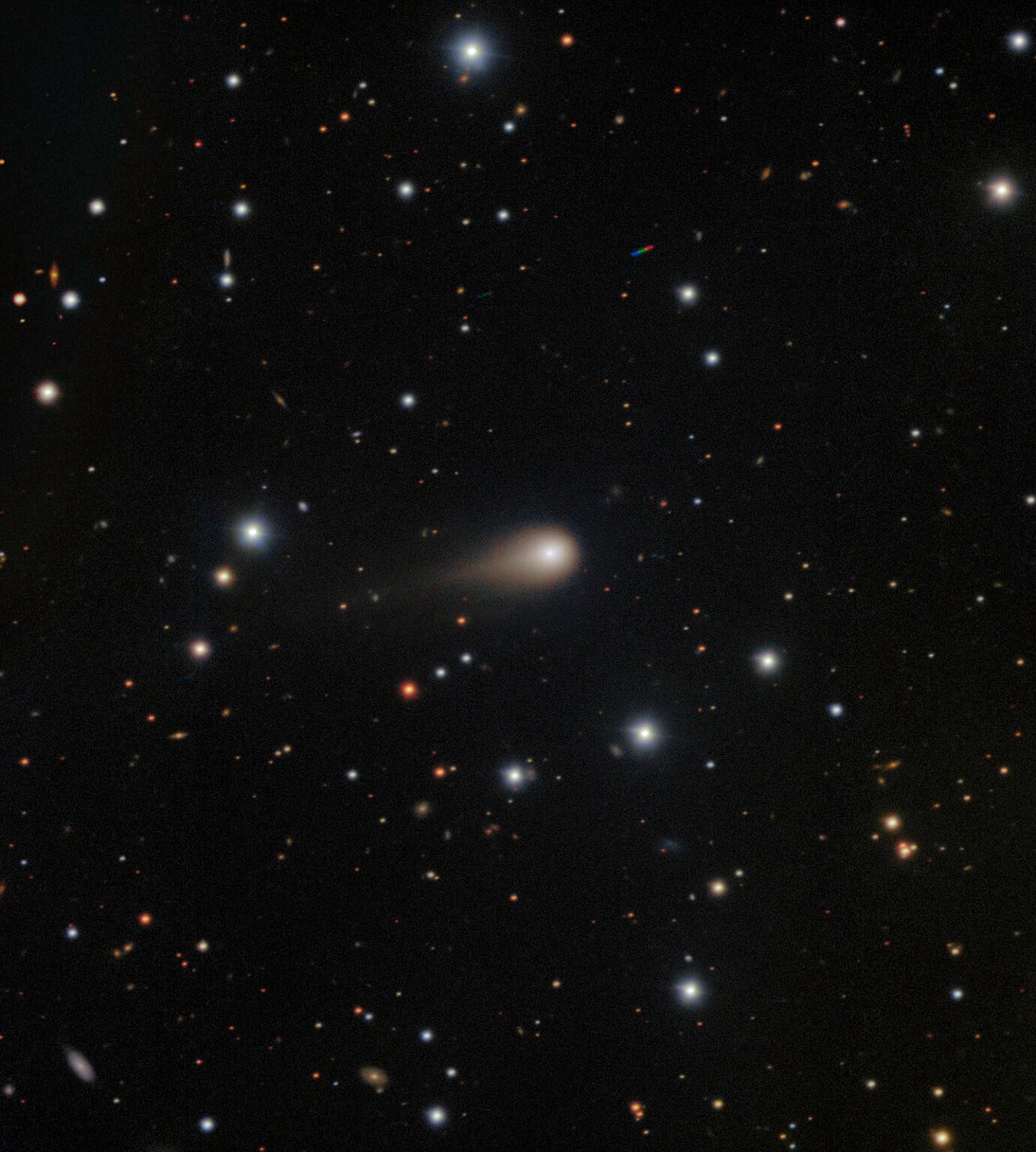
Source: International Gemini Observatory/NOIRLab/NSF/AURA/Shadow the Scientist
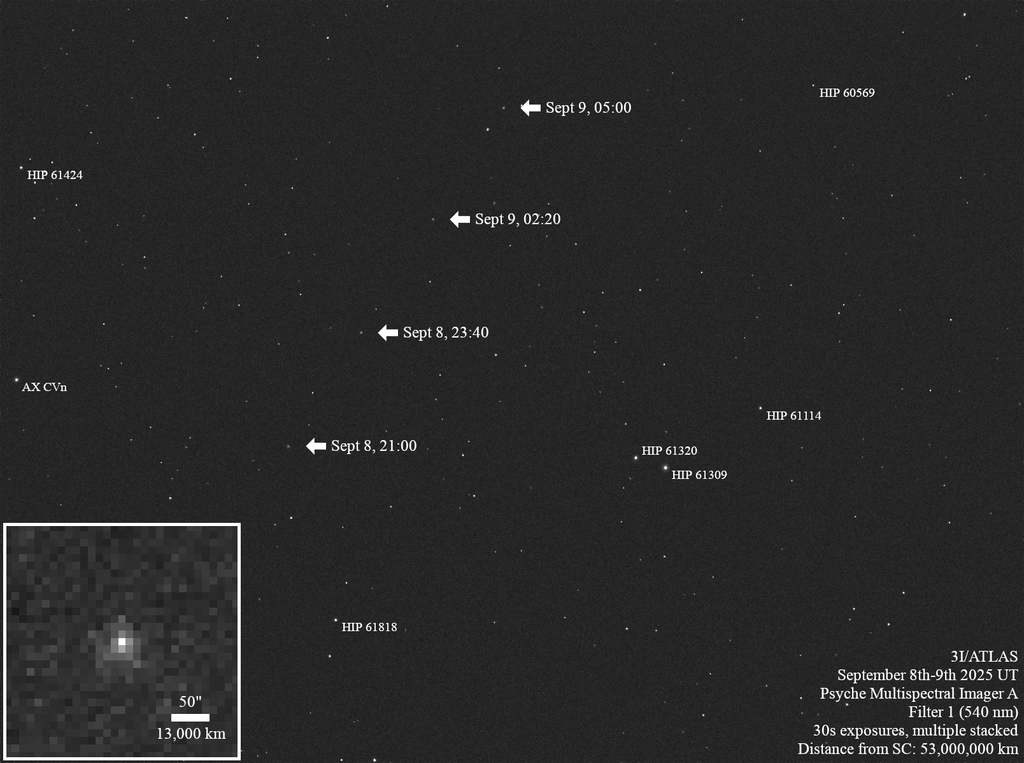
In September, NASA’s Psyche probe photographed the comet. At that moment, it was 53 million kilometers away from the probe. The observations allowed scientists to refine the comet’s trajectory.
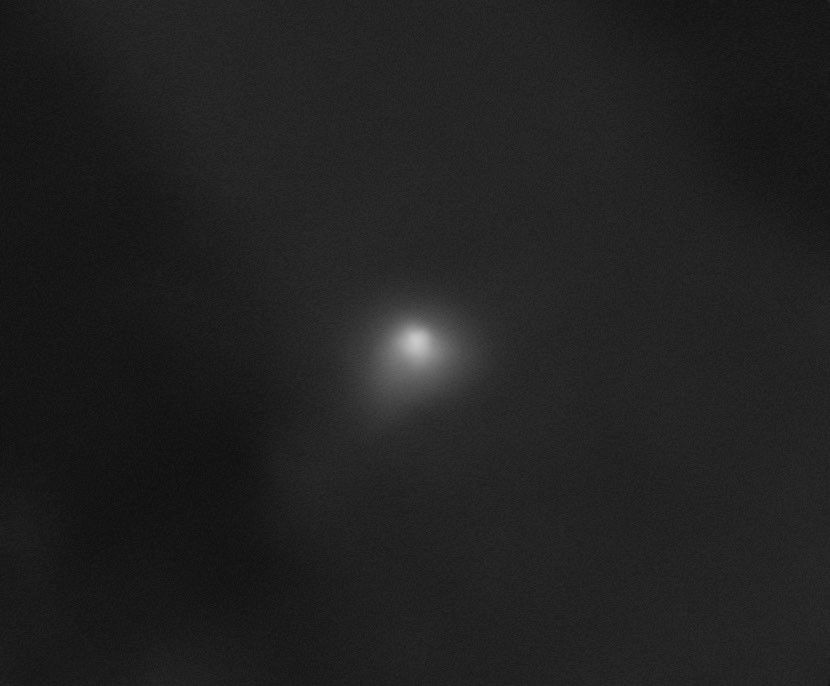
On October 3, 3I/ATLAS flew 30 million km from Mars. Space agencies took advantage of this opportunity by pointing their spacecraft cameras at it. The most detailed photo was taken by the MRO mission.
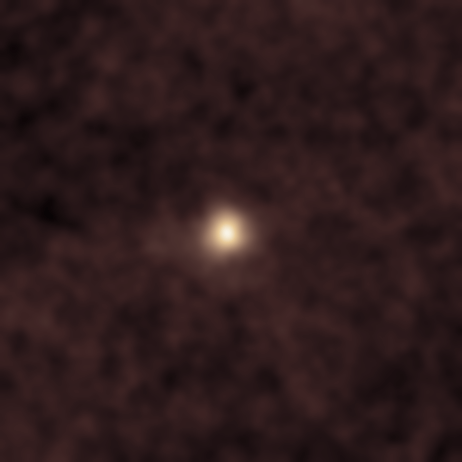
As it approached the Sun, 3I/ATLAS temporarily disappeared from Earth-based observers in its glare. But the spacecraft continued to observe it. Among them was the SOHO observatory. Its images confirmed that the comet had survived its close encounter with the Sun and continued its journey through the Solar System.
In early November, 3I/ATLAS became visible from Earth again. This image of the comet was taken on November 13.
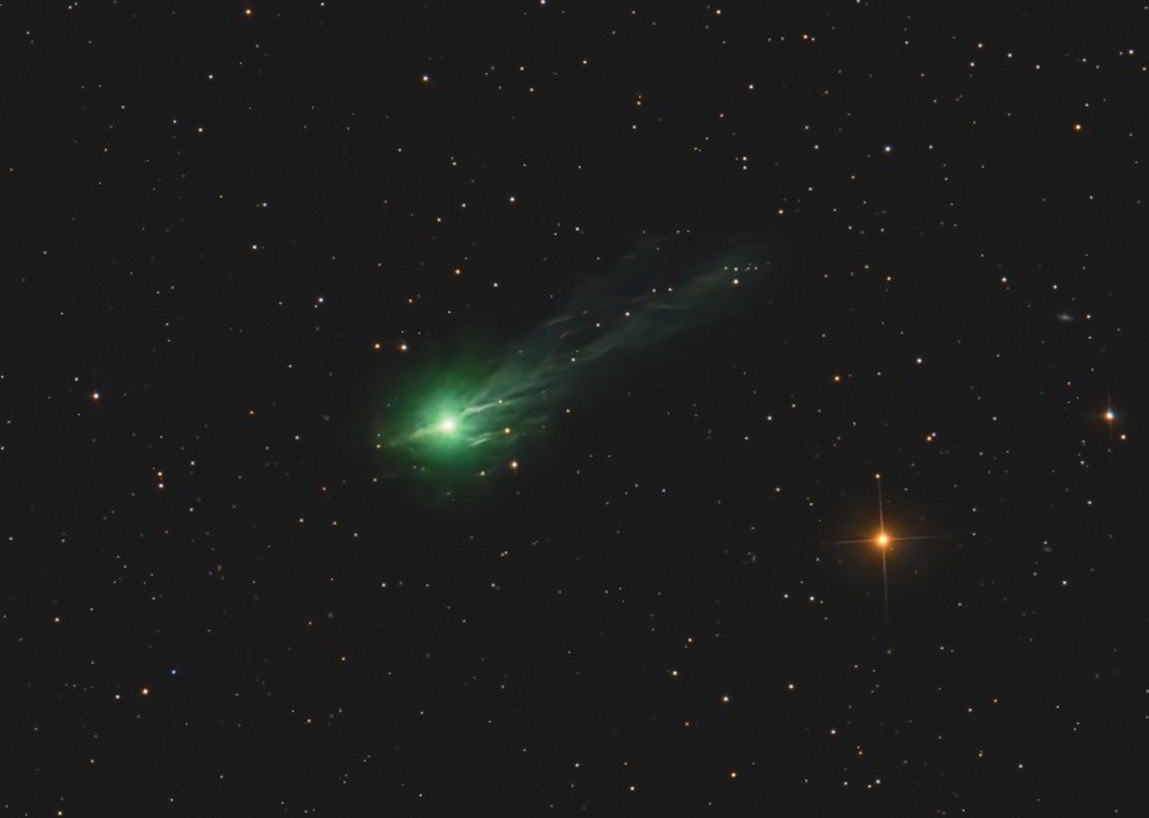
Thanks to the increased brightness of 3I/ATLAS, astronomers were able to examine its tail in much greater detail. The photograph taken on November 16 shows its complex structure, as well as the so-called anti-tail (it looks like a small spike in the picture). The anti-tail consists of larger dust particles that are less affected by the Sun’s radiation pressure and tend to remain approximately in the plane of the comet’s orbit, eventually forming a disc along its orbit.
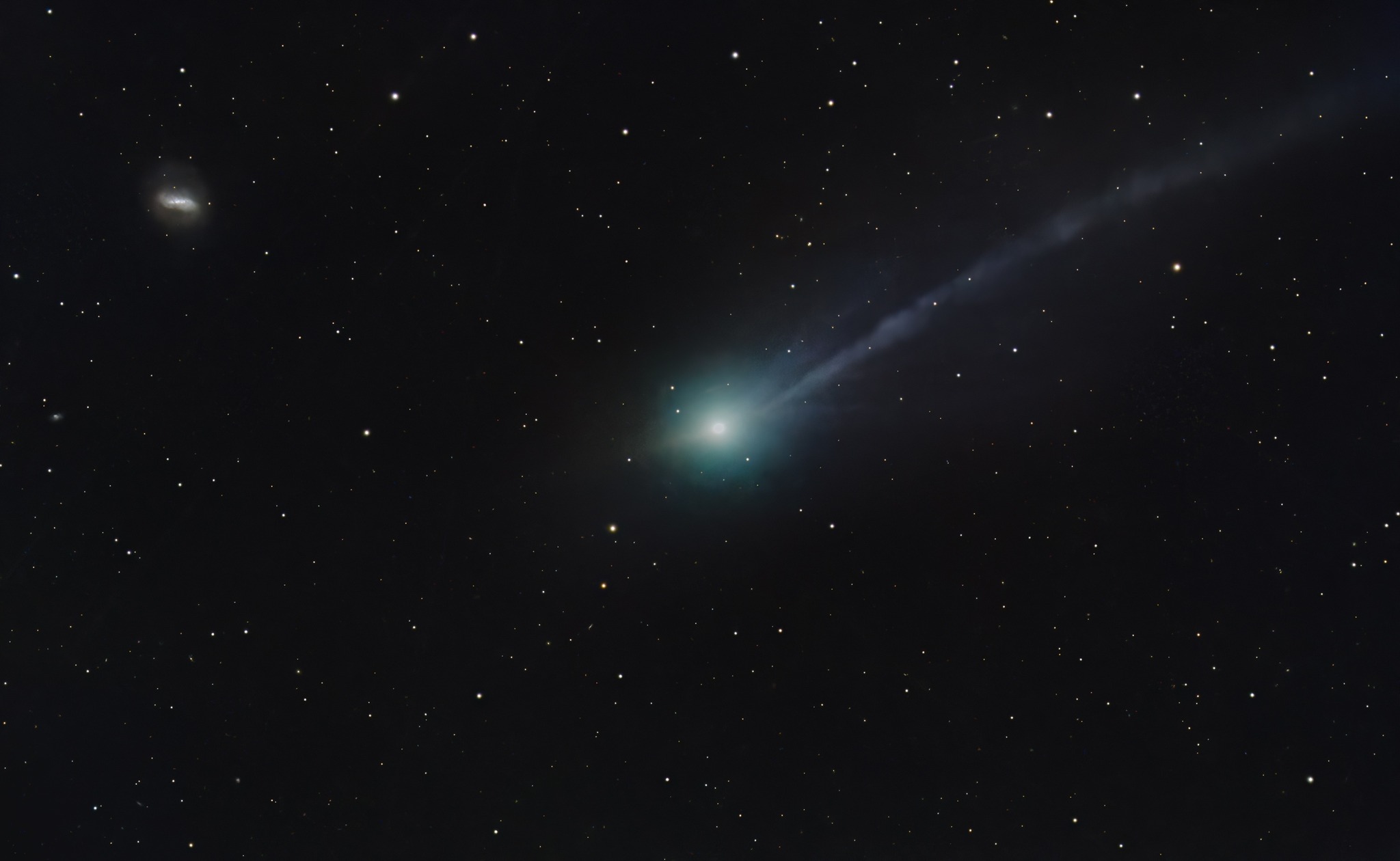
One of the latest images of 3I/ATLAS was taken on November 19. As you can see, its tail has grown even larger. The blue-green color is a characteristic feature of most comets known to us. It is explained by the glow of cyan atoms. In this respect, 3I/ATLAS is similar to comets from the Solar System.
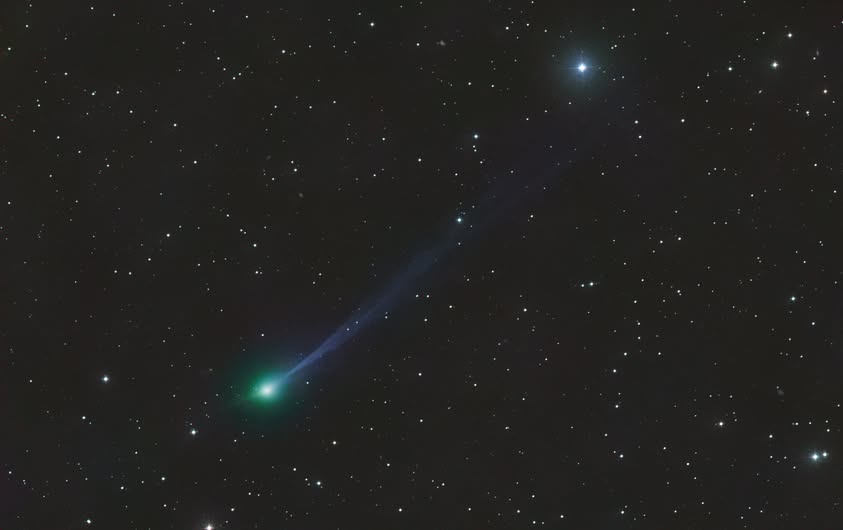
In mid-December, 3I/ATLAS will approach Earth at a minimum distance of 270 million km. There is no doubt that astronomers and scientific organizations will take advantage of this opportunity, and in the near future, we can expect even more detailed photos of this messenger from another star system.

